Baskets

I recently stumbled onto an alarming development. By this stage in life, I should be immune to the craziness of life in America. I am not.

When, I wonder, did Easter baskets morph into the size of wastebaskets and wash tubs?

I somehow had wandered into the seasonal aisle at Walgreens and was staring at a jaw-dropping display of Easter baskets on steroids. A large litter of Saint Bernard puppies would have fit easily into any one of them.

I imagined these behemoth baskets filled with chocolate eggs, jellybeans and peeps. Then I fantasized what a child who consumed these Easter sweets would look like….a cross between a Macy’s Parade balloon and a Pillsbury doughboy. Any group studying the causes of childhood obesity in America would be well advised to check the dimensions of these monster baskets.

I asked some younger moms I know if they are alarmed by the supersizing of Easter baskets. “Well they just aren’t for candy you know. They have to be big enough for the toys, too,” was the typical response. I guess teaching children to consume seven times their share of the world’s resources has to start early.

The best Easter with our children is forever lodged in my memory. We overheard our kids say “they always hide the baskets in such easy places!” Easter dawn arrived and we heard small feet patting around the house and exclamations of “it’s not here.” This scene was repeated for a long time and frustration started closing in.

“Give up yet?” we asked from our warm bed. We did toss out a few clues and the basket was located….on the roof.

Disclaimer: No child was injured in the fun of this basket hunt. Our roof was so low on the sides of our house that it could be reached by standing on a kitchen chair.


0

Edge

“People like to live on the edge,” I told the fourth graders as a prelude to our study of Lake Michigan.

“Tell me some major American cities,” I suggested. For almost every city the students called out, I named the ocean, lake or river that was nearby. The kids quickly made the connection that most of us live near the water, that critical substance to our existence. Coasts and shores draw our species like magnets.

One cloudless night I was on a flight to New Mexico. As we flew south to Albuquerque, what appeared to be a long necklace of sparkling jewels pierced the vast desert darkness below: the lighted cities of the Rio Grande Valley spill down the riverbanks for hundreds of miles.

Most of us are attracted to water for its beauty as well. When we drive on an unfamiliar road, round a bend and catch a view of a sparkling ocean, lake or river, our spirits soar. Real estate prices also soar for waterfront property.

Our lovely blue planet has a fixed supply of water. But, unfortunately for us, the water can change locations and form. The glaciers can melt, lakes and rivers can evaporate or flood and the oceans can rise. The weather news these days is grim. Extremes grab the headlines. Mega storms, mega droughts and mega temperatures are the new norm.

I recently read a brilliant article about global climate change. John Hockenberry, an award winning journalist, wrote in a recent issue of Metropolis of the small scale houses of indigenous people all over the world. These structures can often withstand extreme weather and earthquakes far better than our modern marvels of engineering. Mr. Hockenberry sums up his observations with these thought provoking and hopeful lines:

We have serious challenges to our well-developed human resilience in a seven-billion-person world that finds itself concentrated in cities close to the water’s edge. It may require enormous energy and investment to retool our collective sense of resilience, to scale our expectations, and to be more ready than ever in human history to embrace sudden new realities and alternatives. But if we look carefully at the record of human success, it is our adaptations that distinguish us more than our loyalty to ancient traditions and values. The greatest monuments are the ones that vanished, succumbing to the narrative of erosion and change while humanity moved humbly forward. Despite the challenges of our era and the potentially grim mathematics of changes perhaps already in the cards, resilience, it can be said, is alive and well.

Since most of us are not ready to forsake our love affairs with water, we best be open to the possibility of putting our homes on stilts.

0

Tools

“I just don’t have the right tools,” my husband remarked as he was updating the graphics on my website. It was not the first time I have heard him express similar frustration regarding the lack of proper equipment. I am beginning to suspect his words may be the universal primal cry of the male species.

As always, I sympathized, but in this case didn’t know what to say next. When he is fixing the kitchen faucet and lacks a tool, I just suggest a trip to Fleet Farm for a new wrench. Do computer tools come from that mysterious cloud?

I am fully aware that poor tools make jobs less efficient and, in some cases, more dangerous.”Those blunt little scissors won’t help your kindergarteners learn how to cut,” I advise teachers and parents. “You can’t paint with a brush that is having a bad hair day”, is also one of my admonishments.

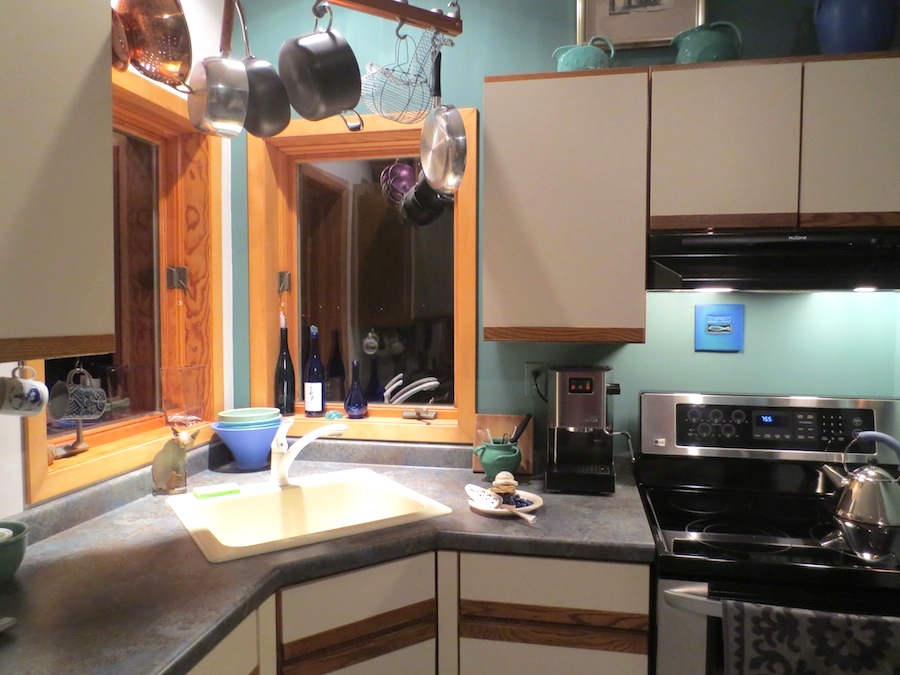
But I have a conundrum. Despite a love of cooking, I have woeful kitchen tools. A “Swing-a Way” can opener (purchase recommended by my mother-in-law who swore by them), a 49 year old hand mixer (a wedding present), a 30 year old blender (a Christmas gift from my Aunt Jane), an antique apple corer (a favorite of my dads), a tarnished silver pie server (an inheritance from my Aunt Vi who never baked a pie in her life)…..that’s a representative sampling of my culinary implements.

My counters are not lined with state of the art kitchen tools. My drawers and cupboards are, however, filled with direct links to my family’s cooking history. Sometimes there’s more to tools than the cutting edge.


0

R.E.A.D.

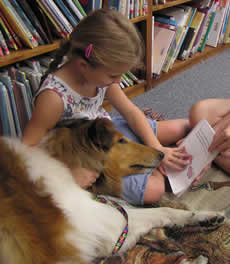
I am looking forward to  summer in the libraries with kids and dogs. Yes, dogs! When I visit libraries to present programs for children, a dog is frequently visiting on the same day. “The Reading Dog” is a huge success in children’s rooms across the country.

The dogs don’t read. Kids cuddle up to the dog and read to them. I have no doubt that many children truly believe that the dogs understand every word read to them.

Being a library, book and dog lover, I think The Reading Dog idea is inspired. A shy or poor reader gains confidence, skill and practice in reading. The dog gets the undivided attention of a child….and sometimes a small snooze.

Reading Education Assistance Dogs started in 1999. Studies show that these registered therapy dogs can improve the literacy skills of children. The qualities of a good R.E.A.D. therapy animal are listed in the R.E.A.D. Manual. Among them are “calm, quiet, obedient, tolerant of chaotic environments and exuberant handling and neutral to the presence of toys, crayons, books AND LUNCH REMNANTS IN TRASH CANS.” Obviously, these dogs are special.

I know of no library that has a reading cat. Perhaps because our little felines have been domesticated a mere 5,000 years as opposed to the dogs’ 10,000 years, cats are more wary of  human ideas. This fact did not deter me from having my own reading cat moment.

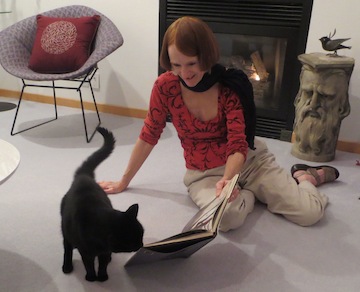
I recently picked up a lovely coffee table book on the Taj Mahal at a library used book sale. “The perfect book to read to my cat, Taj,” I mused. I believe that he enjoyed each page.


0

Emote

I am not feeling blue. I’m not a blueblood, either, nor am I seeing red or green with envy.

On the other hand, I am in the pink and even have been tickled pink. A purple haze is not my style, but I wouldn’t mind being a golden girl. And if a difficult situation arises, I won’t be yellow.

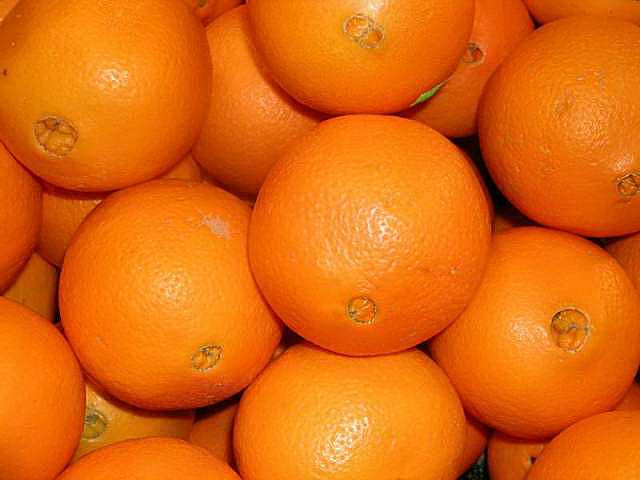
Metaphorically, we human beings emote in a rainbow of colors…..with one exception. Perhaps orange has hung out with pumpkins, oranges and fall leaves for so long that it can’t relate to human feelings or we can’t relate to it. I can’t think of an instance when someone has said to me, “Are you feeling a bit orange today?”

But the world is a huge place with myriad nations, regions and languages.  Somebody out there probably uses orange to express an emotion. If you know about this, kindly let me know.

0