Found

As my husband and I wander the world together, we try to keep our eyes open for signs of love. We look for “found hearts” which are scattered randomly about the planet by our fellow travelers, Mother Nature and pure chance. It is always a surprise and a delight when they appear. Many hearts are out there, waiting to be discovered.

For Valentine’s Day, we have made a short video of our found hearts. Those of you who are on our four times a year snail mail list will get a distinct feeling of deja vu as you view the video. And if you are a lover of snail mail and not on our list, just send your street address to mtooley@artinasuitcase.com


0

Frieda

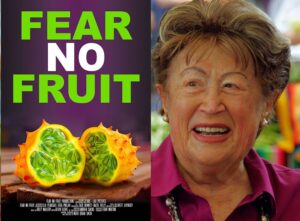
If I say “Frida”, the last name “Kahlo” might pop into your mind. However, this blog is about another Frieda. She is not as well known as Frida Kahlo, but she was a trailblazing woman,  and almost every one of us has directly benefited from the fruits of her work. Literally.

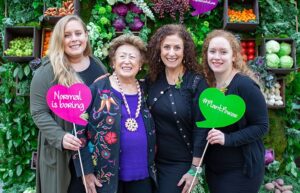
Freida Rapoport Caplan, a.k.a. The Kiwi Queen, died on January 18 at the age of 96. The daughter of Russian immigrants who settled in California, she graduated from UCLA and worked as a bookkeeper in her relatives’ produce business. Wanting more flexible hours when she became a mother, Frieda took a job as a vendor at the downtown Los Angeles wholesale produce market. Her work day started at 2:00 AM and she arrived dressed in a skirt and heels. She immediately realized that breaking into the all-male, “testosterone-doused” competition would be challenging.

Freida Caplan shrewdly made a niche for herself by selling items no other vendor carried, and, in some cases, never even knew existed. She brought an Australian fruit known as the Chinese gooseberry into the American market and renamed it Kiwifruit. This was “the first commercial fruit…introduced into the United States since the banana in the 1880’s.”

With brilliant marketing, hard work and patience, she made that fuzzy brown fruit a superstar. And she didn’t stop there. In 1967, she became the first woman in America to own and operate her own produce house. Her specialty fruits and vegetables all sported eye-catching purple labels. As she tells it, brilliant purple was the only color her sign maker had on hand at the moment. That hue became her signature color for both her labels and her wardrobe.

The list of produce Frieda Kaplan has brought to American tables over the decades is huge. Examples include spaghetti squash, jicama, jackfruit, starfruit, donut peaches, alfalfa sprouts, daikon radishes, purple potatoes, sugar snap peas, blood oranges, Meyer lemons, shiitake  mushrooms and scores more. Her three criteria were taste, food value and shelf life and all her offerings were accompanied by information and recipes.

She confesses that there were some notable flops as well. In her words, “Believe me, I’ve had a couple bombs. There were the fruit-flavored fortune cookies that only dogs in Dallas wanted. And the colored walnuts.”

In 1990, Frieda turned her business over to her daughters. But she still came into the office, dressed in her purple outfits, until she was well into her nineties. Frieda’s story is an immigrant family’s story and a reminder of how much America has to gain by keeping our doors open to immigrants…..even the ones who start out poor.

0

Faux

Last week my cousin and I went to visit a relative at a care center. The receptionist looked at us as we signed in and said, “My aren’t you ladies looking fashionable today! Are you wearing Dennis Basso’s?”  Large, blank expressions simultaneously crossed over both our faces.

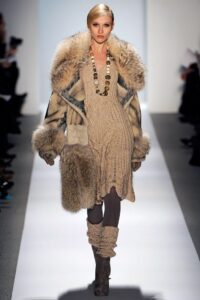
“Who’s he,” I piped up. She immediately brought us up to fashion speed. “He,” she said, “is the fabulous designer of faux fur coats, and I thought your coats were by him.”

In fact, my coat was 30 years old and a thrift store five dollar special. My cousin’s faux Basso probably has a better pedigree, but she is a bargain hunter as well. Since the wind chill was hovering around minus a thousand that day, we had both independently chosen to bundle up teddy bear style.

Our wonderfully upbeat receptionist went on to tell us about Dennis Basso’s fame in the fashion world. And, she noted that he’s from New Jersey.

“Yes,” I replied, “by chance, I have a number of close friends from New Jersey, and all are unique and wonderful.”

Now it was her turn to laugh. “I’m from New Jersey,” she informed us, “and who would have thought that kid in my high school class, Dennis Basso,  would get so famous.”

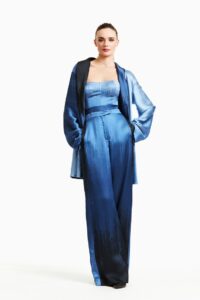
Naturally, I googled Mr. Basso when I got home. That Jersey boy is indeed famous, and he designs much more than just fake furs. The first thing that popped up on my screen was a Vogue article about his new Spring 2020 collection. The next site reported on his wedding at the Pierre Hotel in New York which featured a three-foot-tall wedding cake. His lavish wedding was apropos, as he is also known for creating gorgeous wedding gowns.

I guess my cousin and I have our work cut out for us. We must begin searching for a real “Basso” as we check out the thrift store racks.


0

Gray

We are decidedly in the thrall of the gray time of year…gray skies and snow covered with gray road sludge. Even our beautiful Lake Michigan often sheds its blue for shades of steely gray.

Perhaps it is a good time to think about the color gray and discover some of its more positive aspects.

Needless to say, gray is not for extroverts. But one of my favorite art professors, an unassuming, gentle man who painted almost exclusively in shades of brown, put gray in perspective for us art students one day. “Nothing is lovelier”, he said, “than when my wife wears a gray dress with a bright red scarf.”

Another example of gray’s contribution to subtle beauty can be found in what is called black and white photography. It’s the myriad shades of gray in these photographs that make them so elegant. Gray does not scream at us but is surely capable of creating drama. Every photograph by Ansel Adams and other masters of the media attests to this.

A similar effect is achieved in the ancient art of Sumi painting. A simple cake of black ink, water, a mixing stone and brush are all that is needed to make images of plants, animals and landscapes. The results are magical: we view the paintings as highly realistic reproductions of nature, but rainbow hues have been entirely eliminated.

Gray can be a trickster. Our first home was owned by an architect who had painted his studio gray. When we moved in, we wanted to paint that room white and bright yellow for our young daughter. Four coats of white paint were necessary to get the walls white, proving that gray also can be extremely assertive.

We are surrounded in our current home by many lovely grays, but here are our favorite ones.

0

Recycle

I have just discovered the ultimate way to recycle a Christmas tree. My husband and I have had real pine trees for 56 consecutive years. We are guilt free about this, knowing the trees are grown on tree farms specifically for holiday use. No old growth forests are being chopped down to bring us holiday tree joy.

Various ways of recycling the trees exist. In our case, sheltering fish is the most viable one. Mother Nature does this all the time. Shore erosion and big storms send trees catapulting into the waves. In the past two years, high and stormy waters have yanked over 40 trees from our cliff, including many huge ones. The lake bottom is a mass of dead trees where fish find safe spots to hide and spawn. Our annual Christmas tree toss is nothing compared to what nature is doing on an ongoing basis.

Tree farms in our area also use lake disposal for their unsold merchandise. A huge glacial lake, Lake Winnebago, receives many of these trees. It’s 30 miles long by 10 miles wide and a fisherman’s paradise. In addition to sinking trees to create fish habitats, fishing clubs collect trees to use as navigational markers. For ice fishing, 75 miles of roads are plowed on the lake. Hundreds of trees mark the roads.

For those not living in lake abundant states, other recycling options include:

  • Chipping for mulch
  • Composting
  • Turning the tree into a bird feeder for wildlife
  • Cutting off boughs to protect perennial flowerbeds
  • Cutting the trunk into discs for flowerbed borders

But here is the ultimate reuse of a Christmas tree. Give your tree to a TIGER! Sheer bliss will follow. These pictures were taken at the Valley of the Kings big cat sanctuary in Wisconsin. My husband and I have been supporting members of this amazing place for over 35 years. They know how to make tigers (and all their other animals) extremely happy.


0