Snowflake

How would you like to live inside a star or a snowflake? If you think the holiday season has melted my brain, guess again. It is entirely possible to live within either of these shapes.

Here is an aerial view of the village of Bourtange in the Netherlands. Built by William the Orange and completed in 1593, Fort Bourtange cut off a supply route on the only road to neighboring Germany, an enemy at the time. The fort functioned until 1851 when it was converted into a stellar village, a suburb of Groningen. It’s not the only star-shaped village in Europe, and all were built for defense purposes.
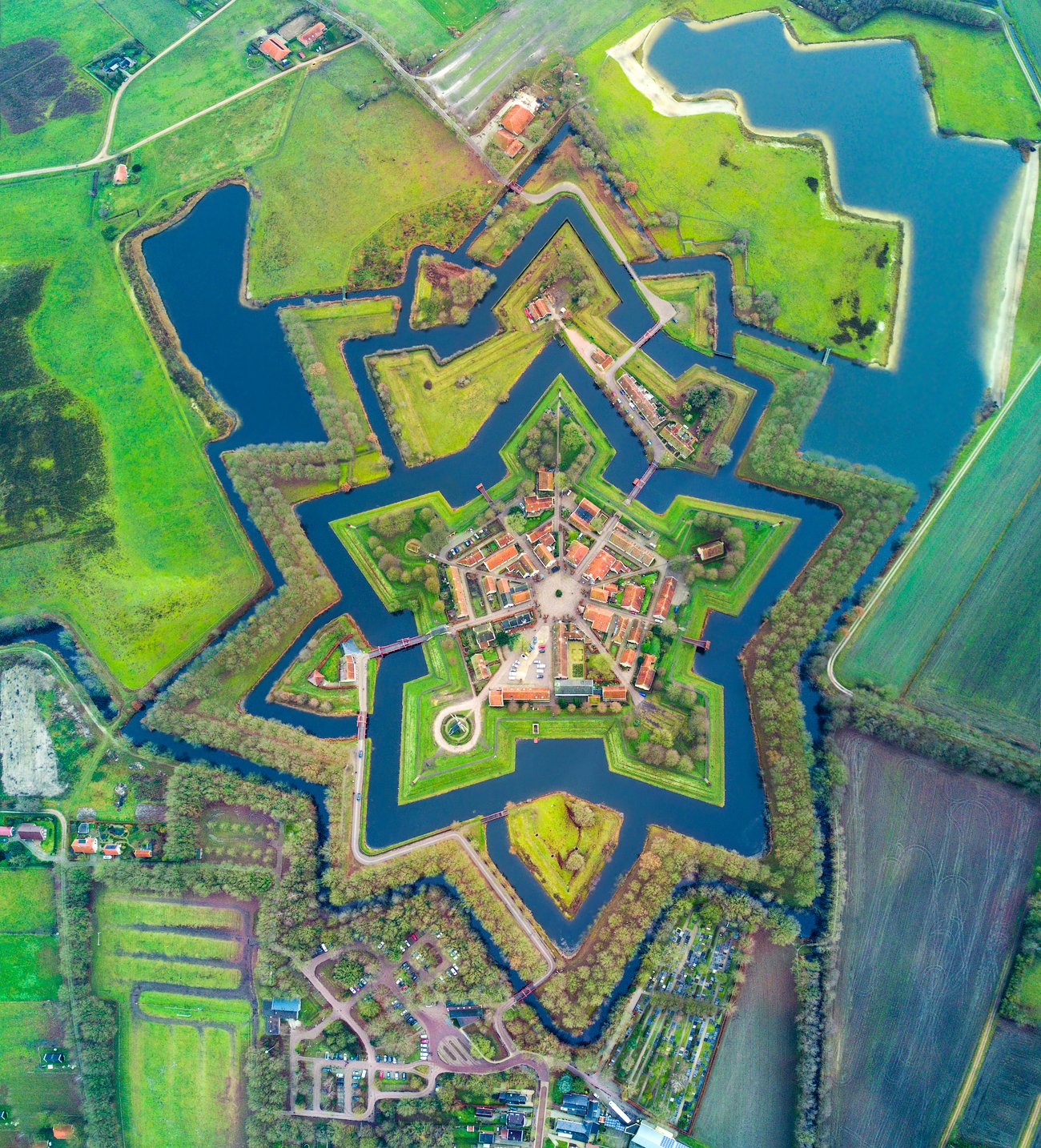
Wikipedia- Bourtange

Snowflakes are infinitely more complex shapes than stars, but a town exists that mimics that shape as well. Naarden, 30 minutes east of Amsterdam, also began as a fortification. With a beautiful church at the center, the city radiates out to six triangular points.
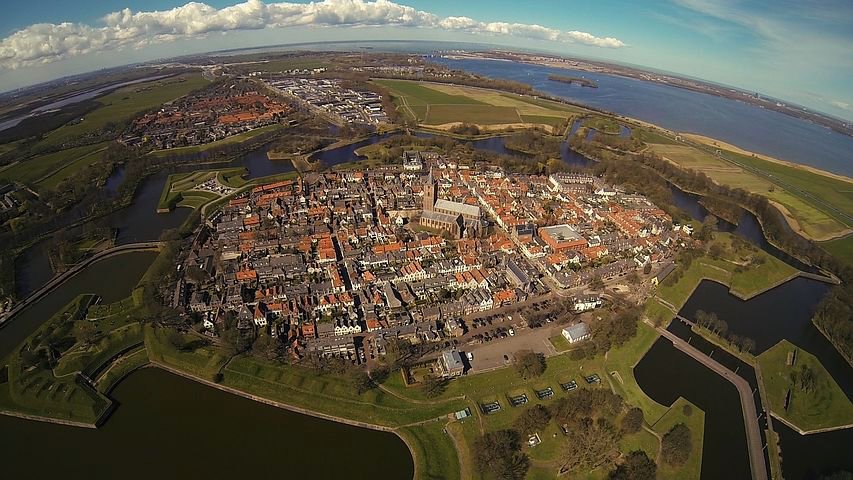
Wikipedia- Naarden

If stars and snowflakes aren’t your thing, you could move to Brasilia, a city that was built from scratch starting In 1956. Plotted by Lúcio Costa,  it is the shape of a bird or airplane. The wings are residential neighborhoods, the body hosts federal and civic buildings. In 1959, Brasilia’s population was 64,000. Today it is home to over 2 million residents, and suburbs ring the original avian shape.
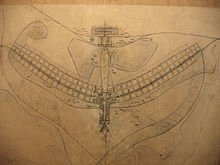
Original plan of Brasilia

And, finally, popular folk mythology purports that the city of Cuzco, Peru, was built in the shape of a puma, an animal sacred to the Incas who founded the city. Although no historical proof of this exists, the local residents totally embrace the idea that they are living in a puma-shaped town. I, too, would love living in a big cat
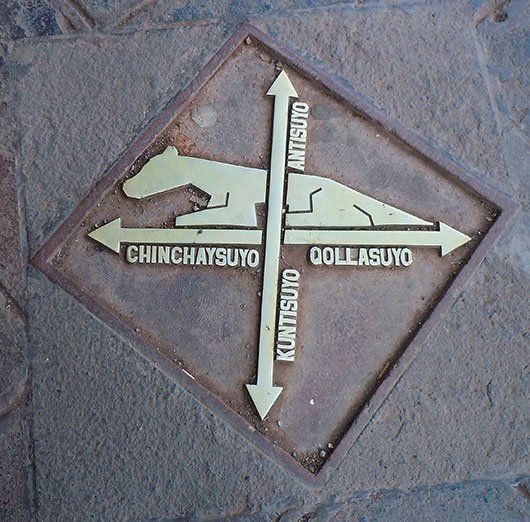
Street sign in Cuzco


0

Fabulous

A wonderful Christmas festival like no other is held in Evian, France. Located on the southern shore of Lac Leman (Lake Geneva),  Evian is famous as a spa and a producer of bottled water which is shipped worldwide. But for the holidays, Le Fabuleux Village (The Fabulous Village) is the star. Evian builds a fantasy town within the town as a magical holiday happening.

The celebration is centered around a whimsical legend. Father Christmas was said to be flying over Lake Leman when two of his reindeer started a squabble resulting in a watery crash. Goblins known as Flottines rescued them from drowning, and, ever since, Father Christmas comes back for a Yule visit.

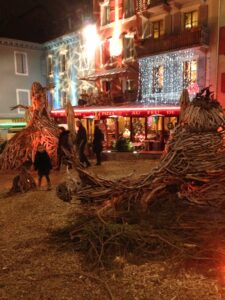
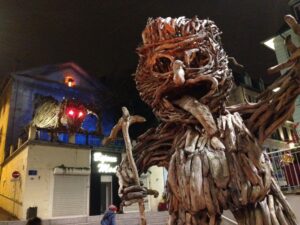
Highlighting the celebration are fifty massive sculptures scattered all around Evian. Built completely out of driftwood collected from Lake Leman, these clever assemblages are of amazing animals, mythical beasts, elves, gnomes and more.

The center of town becomes Le Fabulous Village. When night descends, actors stroll the streets with lighted torches and perform street theater. A magical alternative world suspends reality for a brief while.

I personally love searching for interesting driftwood pieces on the shores of Lake Michigan and creating animals of modest size. With Le Fabuleux Village as inspiration, perhaps I should start thinking on a bigger scale.

The driftwood cat sculpture on our deck. There will be no flaming torches.


0

Toasted

Last month there was a big brouhaha in Britain. It all started out quite innocently on one of Nigella Lawson’s cooking shows. She simply showed the nation the best way to butter their toast. An uproar soon followed.

I found out about this incident from my husband who knew I would be 100% on Nigella’s side. That is because he and I have a serious understanding about toast and butter rules.

Early in our marriage, he kindly buttered my toast and placed it on my breakfast plate. I could not hide my dismay and was honest with him. “But the butter doesn’t reach the edges of the bread,” I lamented. To which he confessed to me, “In my opinion, you don’t make toast, you make warm bread.”

So ever after, we live in toast harmony. I always put his toast down for more toasting and he puts loads of butter to the far, far corners of my bread.

The populace and media were unrestrained in their scorn that Nigella thought they needed instruction in toast buttering. Since these same people invented little racks for cooling toast, I think they do need advice about buttering… plus any other tips on toasting they can get.

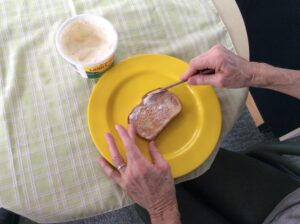
Nigella’s buttering instructions are as follows: Spread butter on HOT toast as soon as it comes out of the toaster. Before letting it settle, apply a SECOND layer of butter and finish with a sprinkling of salt. The second layer of butter, she declares, “will stay in some golden patches on the surface.”

Go, girl! Those puddles of butter make getting up in the morning worthwhile. The world needs fewer pleasure police and more small joys.

0

Fill’er-up

No one in America views gas stations as exotic places. Filling up the gas tank is about as mundane as tasks get. This, however, was not always the case.

When the century turned from 1899 to 1900, horses ruled the roads and the newly invented automobiles were regarded as novelties. But these horse replacements still had to be fed. Early drivers bought gasoline in cans from blacksmith shops or from lone gas pumps which starting appearing curbside. It took the popularity of the Model T to put the concept of a filling station in motion. An organized network of gas stations needed to be established, and architects had no prototypes for these buildings.

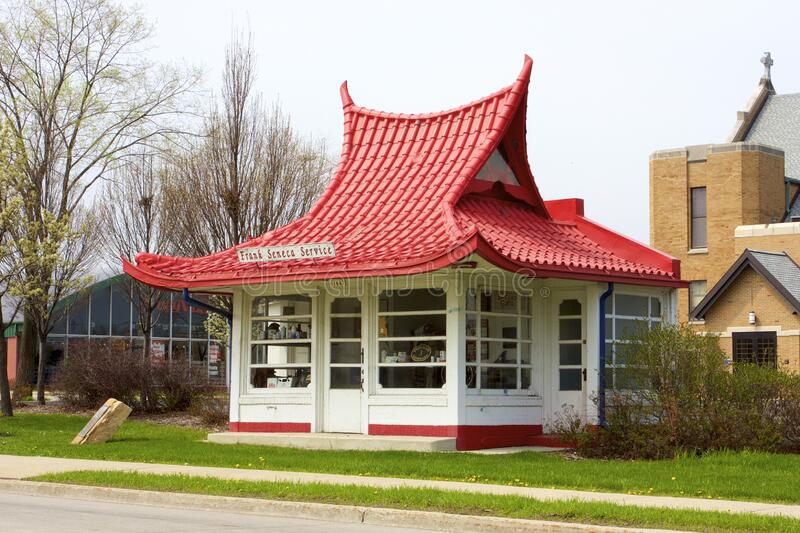
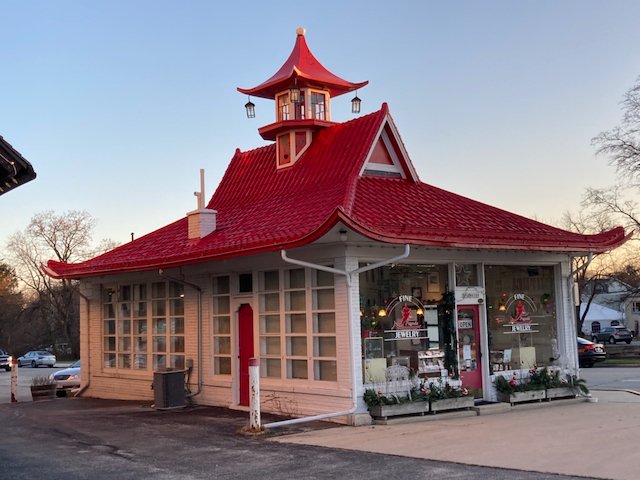
Between 1917 and 1930, the distinguished Milwaukee architect, Alexander Eschweiler, designed more than 100 Oriental style gas stations for the Wadham’s Oil and Grease Company. Each building had a unique design, but all were topped with a pagoda-style roof of metal tiles. Some even had lanterns dangling from the upturned corners of the roofs.

Photo – dreamstime.com
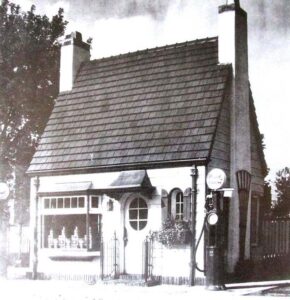
Photo – Mary Tooley

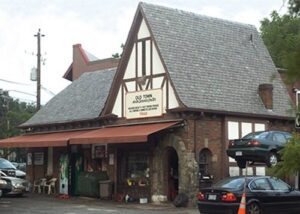
Other historic styles also were employed to create this new group of buildings. Pure Oil stations mimicked quaint English cottages with white stucco walls and blue tile roofs. Tudor revival stations popped up in many residential neighborhoods, and the Eastern seaboard saw the rise of miniature lighthouses to beckon drivers to the pumps.

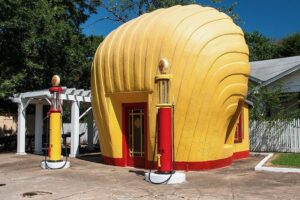
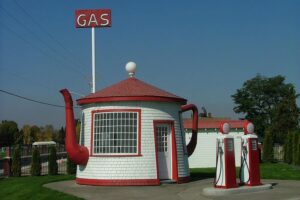
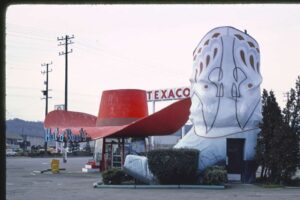
More unique and imaginative designs soon followed. Shell Oil built eight stations shaped like, you guessed it, giant seashells. Only one remains today in Winston-Salem, North Carolina. Other oddities include stations shaped like a teapot and cowboy hat and boots.

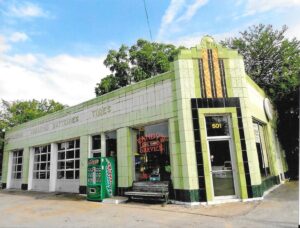
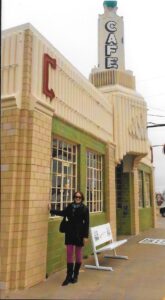
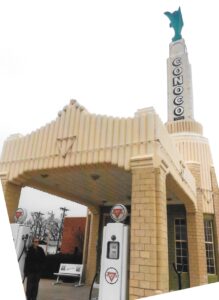
Art Deco stations proliferated in the 1930s, and they were elegant. This beauty in Traverse City, Michigan, is still operative. The Conoco Tower, in Shamrock, Texas, on Route 66, is fully restored, but as an architectural landmark, not an operative gas station and cafe.

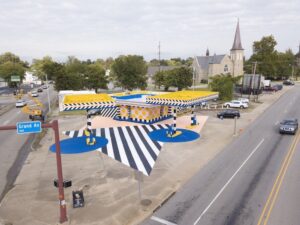
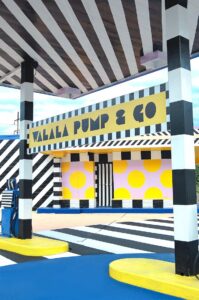
All of these exotic, quaint, quirky and decorative stations make our current ones seem totally uninspired. However, I have found one exception. Camille Walala, a much-in-demand French artist, has done a makeover of an abandoned 1950s filling station in Fort Smith, Arkansas. It’s a giant art installation, sans working gas pumps.  Alas, what fun it would be to fill’er-up here.


0

Wishbone

It’s hard not to love Pop Art, that genre that began in the mid-50s and extended until the late 70s. Ordinary, popular objects and images were painted and sculpted, often at a massive scale. Pop artist Jim Dine defined the movement as “the American Dream, optimistic, generous and naive.”

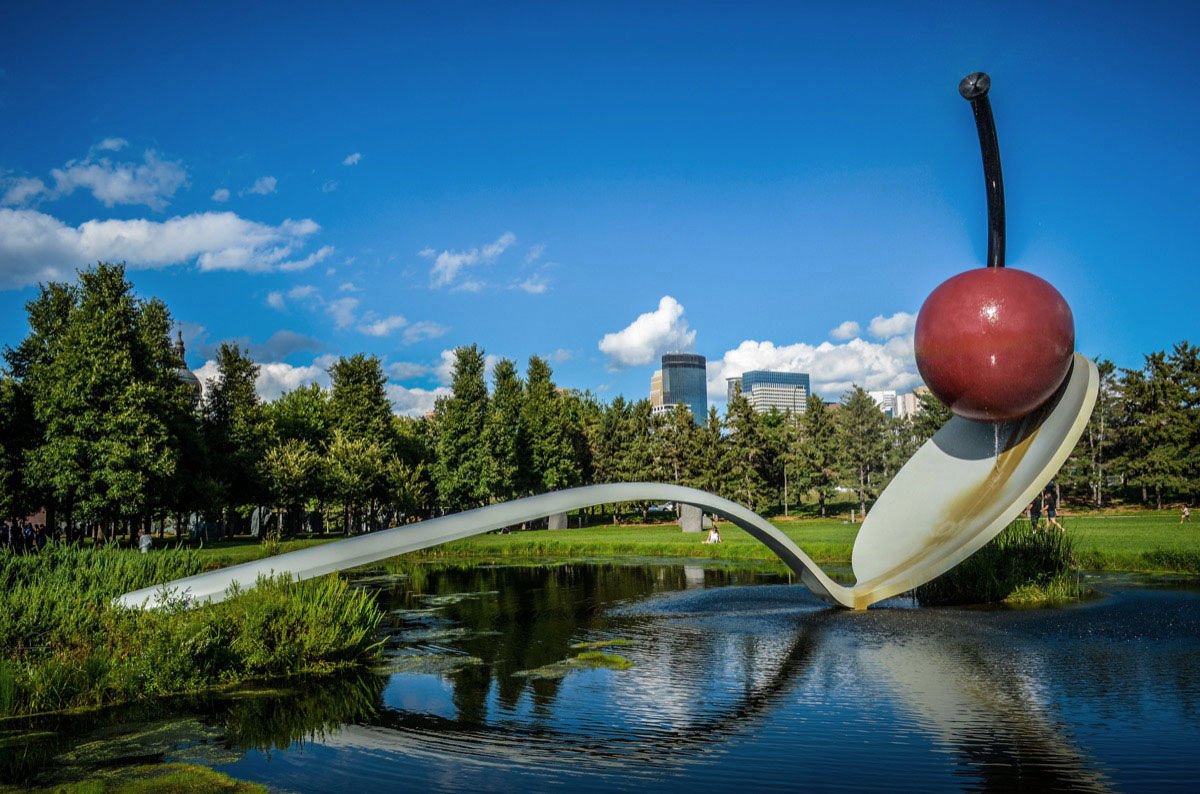
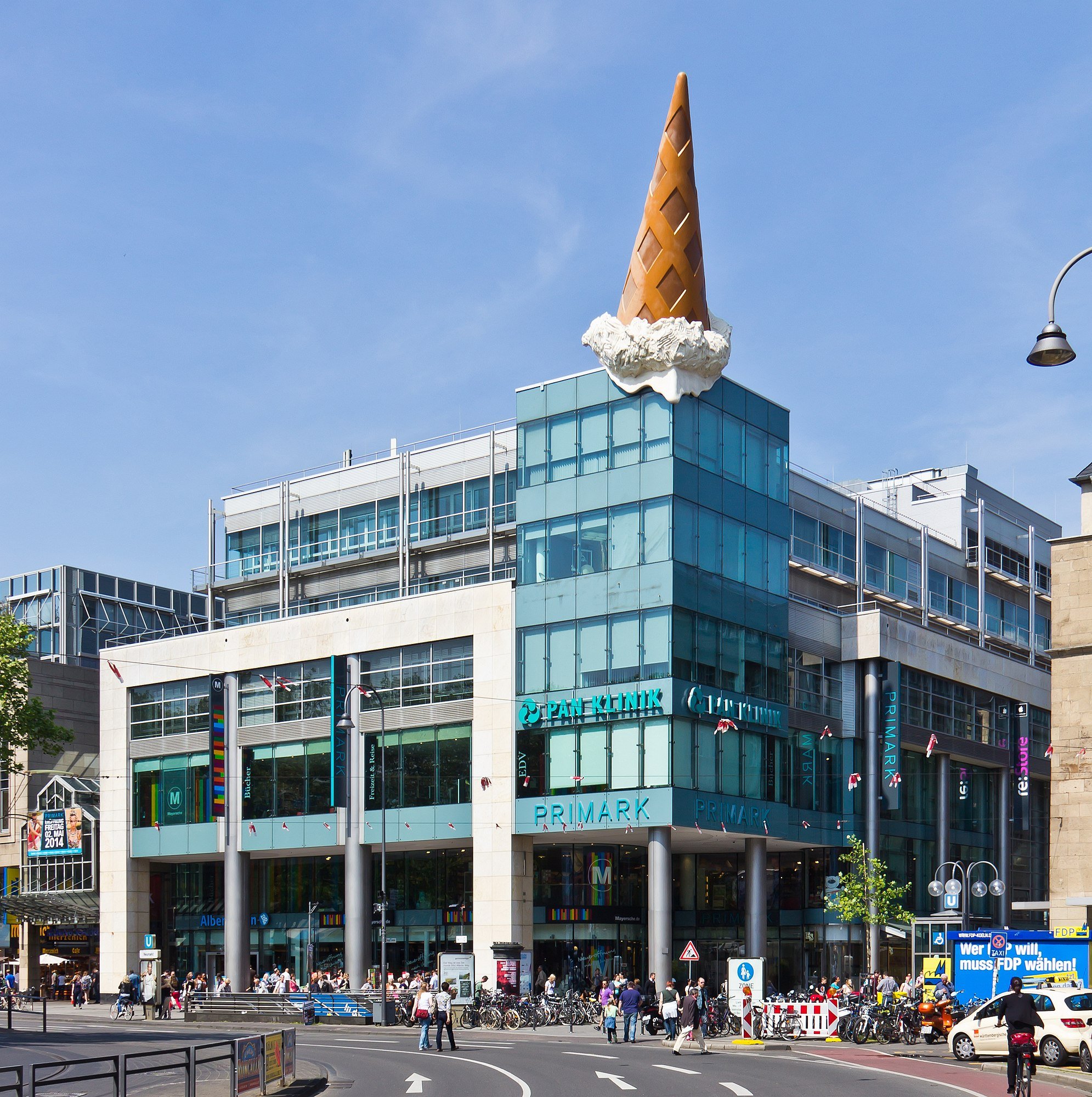
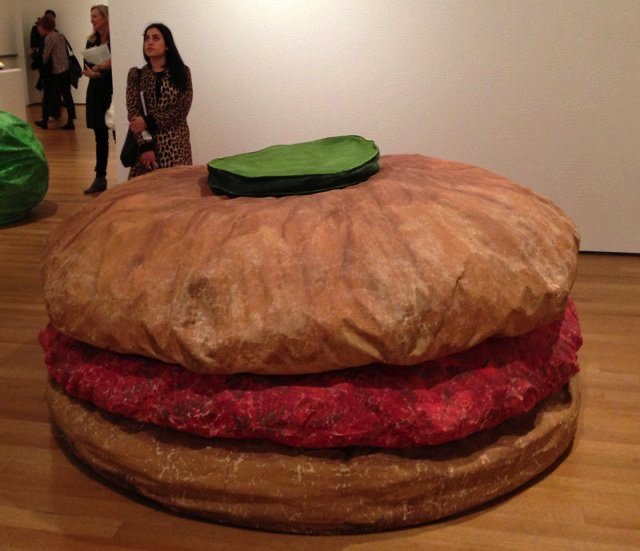
I always have been particularly delighted by the “big food” Pop Art sculptures. It’s hard not to smile when encountering a giant spoon holding a cherry, a massive, melting ice cream cone plopped down atop a building or a Paul Bunyan size hamburger. Credit for these whimsical creations goes to Claes Oldenburg and Coosje van Bruggen.


Pop Art is defined as a fine art, sells for exorbitant sums and can be found in museums and public spaces worldwide. However, another group of big foods exists that seems identical in nature, but without the fine art pedigree. I’m equally fond of these objects known as roadside attractions. If any of them were relocated to the lawn of an art museum, I think they would immediately be “transformed” into fine art.

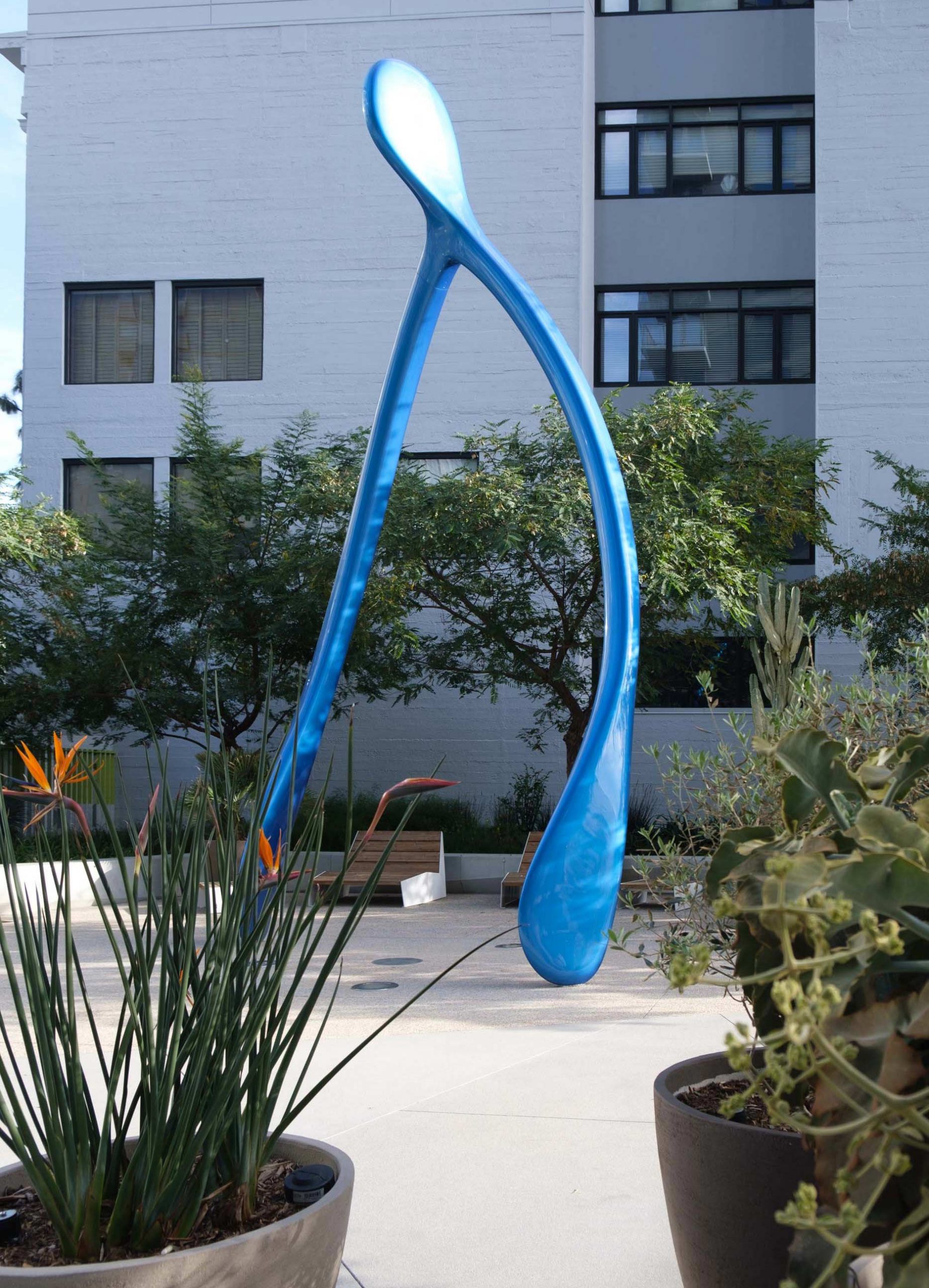
A newly minted, 24-foot tall, food sculpture recently came on the scene in downtown LA. Entitled Lucky Break by American artist Jonathan Paul, it is extremely apropos for this week. You can decide for yourself if it’s fine art or another roadside attraction. Good Luck!

Metropolis Magazine
0