Pastries

While zipping along in my car the other day, I heard a delightful report on Wisconsin Public Radio. The reporter was giving the lowdown on our two most important state pastries.

Make no mistake. We fear no calories here, we do not banish carbs and we know that sugar is not evil. Our state was flooded with European immigrants in the mid and late 1800s and they brought their superb baking skills with them. We are a state of multiple temptations.

However, until listening to WPR, I was not aware that we had an official state pastry. Our state legislators had so many to choose from…kolaches, potica, baklava, crullers and oliebollen. But on June 30, 2013, kringle, that delectable Danish oval of goodness, was named the Official State Pastry.

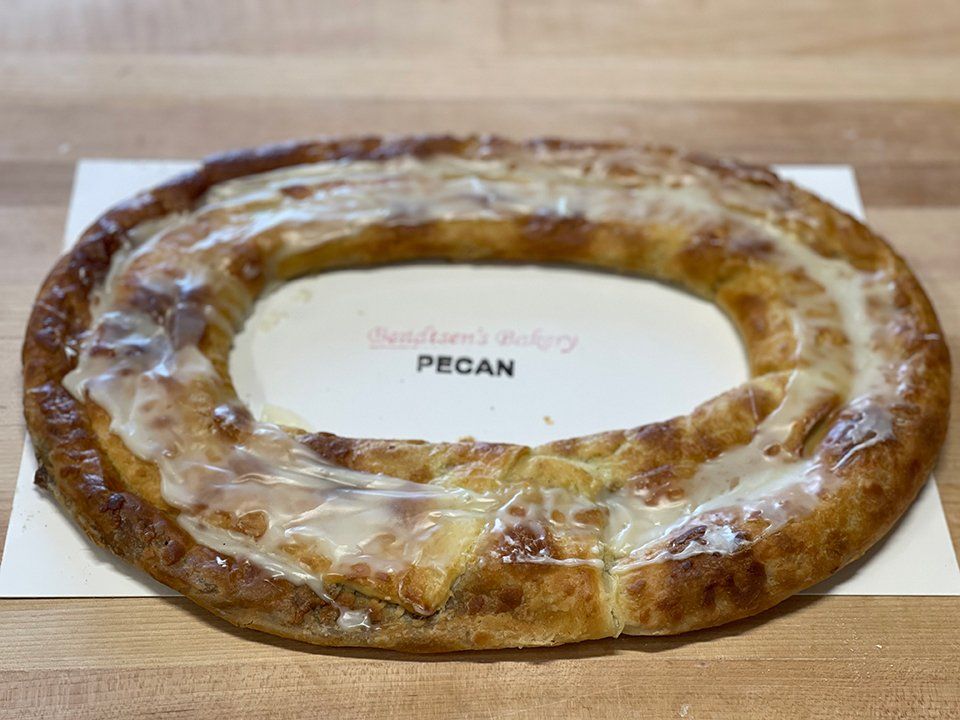
Racine, Wisconsin, is the epicenter of kringle bakeries, more specifically, the Danish section of town known affectionately as Kringleville. Families here often pledge allegiance to one specific bakery. This explains why I will always enjoy kringle from Bendtsen’s when I visit my cousin in her Kringleville home. Her excellent review of Racine kringles follows this blog.

The original kringle was shaped like a pretzel. In America it has morphed into an oval consisting of 32 layers of buttery, flaky dough with a variety of fillings. Choices include pecan, almond, apple, cherry, strawberry, raspberry and cream cheese. There’s something for every sweet tooth.

Wisconsin is equally famous for another sensational pastry, but it is a seasonal favorite. That would be the Wisconsin State Fair cream puffs, the must-have snack of all the fair-goers. This tradition dates all the way back to 1924.

Wisconsin is “America’s Dairyland” and the Fair’s job is to promote our agricultural products such as CREAM. To that end, 400,000 cream puffs will be baked and consumed in 11 days. More than a ton of whipping cream will be used.

I can only conclude that we are a very sweet state. Visit us, but don’t bring your scale.

Here is my cousin’s review:

The best is Bendtsen’s, I believe the only one still totally hand-made. It’s the flakiest. I believe still in the original family. Once visited by the Food Channel. Bendtsen’s website

Best known is O&H, family owned but it’s a factory, shipped all over, sells at Trader Joe’s and on QVC. They have very creative flavors (like Wisconsin with cranberries etc). Unfortunately, it can’t mimic the flakiness of a true kringle, it’s more like a coffee cake. And $23.99? Plus $9.99 for shipping! Are they spinning gold flakes in that kringle?

3

Snowfest

People like beer. People like music. People like food that is bad for them and people like lots of other people. Therefore, an excuse to do all of the above was needed, and the “fest” was invented.

During a Wisconsin summer, festivals proliferate every weekend. There’s Summerfest, Germanfest, Irishfest, Fly-In-Food Fest, Butterfly Fest, Venetian Fest, Owl Fest and Brat Fest…plus many, many more.

Up here along the lake, we work hard to dig up ideas to start a fest. Sputnikfest, for example, celebrates the “momentous” night of September 5, 1962, when a small burning chunk of Sputnik landed on a downtown Manitowoc street.

The other day, we were driving to Two Rivers, a town north of us, and spotted numerous signs for something called “Snowfest”. Since snow is not a common occurrence here in July, our curiosity was piqued. What could they possibly be celebrating?

A local newspaper article enlightened us. Snowfest began way back in 1937, paused during the Second World War, resumed from 1958 to 1999 and was revived again in 2021. The event celebrates the July day in 1936 when workers in Two Rivers were digging a hole and discovered “the most perfect pile of snow underground.” This unexpected cache made national news and committees were formed to plan festivities. A parade was held, a queen was crowned and snowball fights ensued. (Snow was buried in winter as a stash for the summer snowballs).

This year’s Snowfest has come and gone, but yesterday I saw a sign for the upcoming “Moosefest”. Note that a moose has never been spotted even remotely near our town. Beer drinkers, however, seem to be everywhere.

4

Birthday

The other day, a clerk noted my husband’s July birth date on his driver’s license and asked, “What are you doing on your birthday?”

His answer was immediate and succinct…”blueberries”. She looked perplexed, and I nudged him to add a bit more. He explained, “They’re my favorite fruit and I want to eat lots of them on my birthday.”

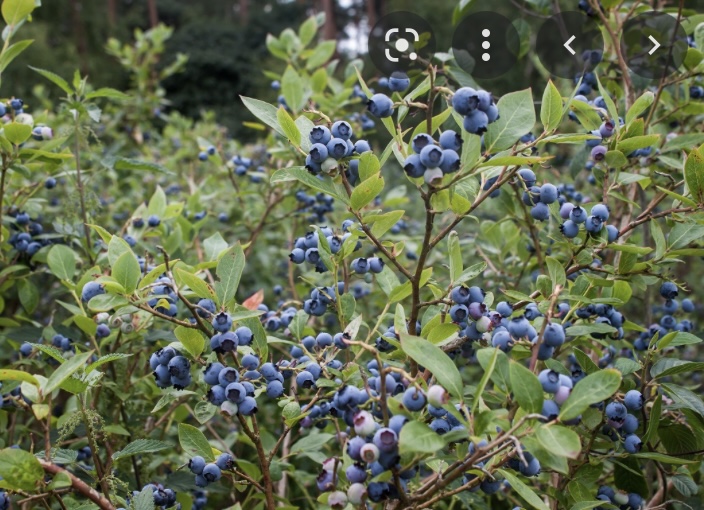
My guy is lucky on three counts. First, he has a summer birthday, a good thing if you live in a northern clime. Second, July is National Blueberry Month. And third, we are only a five hour drive from one of America’s largest blueberry growing regions, southwest Michigan. This year we will be going there to get his berries fresh from the fields.

There are many good reasons to be a fan of this interesting fruit. Here’s the scoop on blueberries.

Blueberries and cranberries are the only two commercial fruit crops that are native to North America.

America is the world’s largest blueberry producer with Canada coming in second.

In America, blueberries are the second largest berry crop. Strawberries are number one.

People have been eating blueberries for over 13,000 years.

Native Americans called blueberries “starfruit” because of the perfect star shape at the blossom end of the berry. They would smoke the berries to preserve them for winter.

Early colonists would make gray paint by boiling blueberries in milk.

Five major types of blueberries are grown in America. The northern highbush variety is most common.

A single bush can produce as many as 6,000 berries a year.

A cup of blueberries is 80 calories. Compared to 40 other fruits and vegetables, blueberries have the highest level of antioxidants. They are an extremely healthy fruit, but not a miracle cure for everything that ails you.

Hammonton, New Jersey, claims to be the blueberry capital of the United States, but Washington State and Michigan are the top producers.

Blueberry muffins are the official state muffin of Minnesota.

New Jersey proclaims blueberries as their official state fruit.

4

Cones

Ice cream is always the star of the show with the cone being the supporting actor. But the cone comes with an interesting history filled with mystery and myth. The precise origin or inventor of the cone can not be targeted. But it is known that the cone’s invention resulted from multiple attempts to create an edible treat that did away with dishes and spoons.

Ice cream gained popularity in the 19th century. Street vendors in London sold “penny-licks”, small stemmed glasses filled with ice cream. The glasses were reused with no washing between customers, a frightfully unsanitary practice. It’s possible the edible cone was invented to avoid breakage and sanitation problems.

An alternative to the penny-lick was the hokey-pokey, a square of ice milk thickened with cornstarch and wrapped in paper. Italian immigrants introduced the hokey-pokey to America. Sold by peddlers off carts, it was a success, as was the next Italian innovation, an ice cream square between two sweetened wafers. The ice cream sandwich was born.

The next innovation came in 1901 when Antonia Valvona invented the biscuit (cookie) cups for ice cream. He and his American partner, Frank Marchiony, soon had factories churning out these edible dishes.

The World’s Fair of 1904 in St. Louis saw the ice cream cone come into its full glory. The new “cornucopias” were wildly popular and soon became staples of fairs and gatherings all across America. Historical researchers have combed the Fair’s archives, but have been unable to pinpoint who made and sold the cones. The invention story that comes closest to the event was published in 1916 in The New York Produce Review and American Creamery.

“A certain young lady had a fairground concession selling a sweet cake which she baked flat on a waffle iron-like device. Her brother sold ice cream at a nearby stand. One customer who had bought some cakes from the sister asked the brother to put a scoop of ice cream inside of them. The brother made it work by rolling up the cakes while they were still hot in the shape of a cornucopia and pinching over the end…. He then joined forces with his sister, putting the two concessions together, and they soon did a rushing business in ice cream cones, as they were very promptly dubbed.”

All this cone history brings us to 2022 and Joy. That’s the Joy Baking Group, a third-generation business that produces 60% to 70% of all the cones sold in America. They only stick to three basic classics; the cup cone, the sugar cone and the waffle cone. Their flagship factory in Hermitage, Pennsylvania, turns out between 15 to 20 million cones a day. That’s a whole lot of joy.

3

Judith

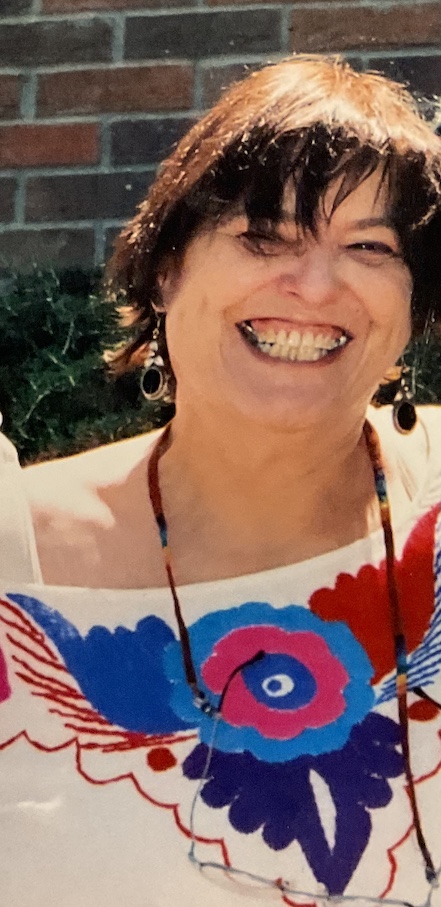
A year ago this July, one of my best friends died. I am finally able to write about her with joy that is not consumed by the sadness that comes from losing a remarkable person.

Judith L.A. Hayes was a full-throttle western gal. Her personality was huge, her laughter was raucous and her smile was like she’d just eaten all the cookies in the cookie jar and gotten away with it. She dove into life headfirst, never second guessing herself. Her heart was huge, her mantra was kindness, and, in her words, “Patience is not one of my virtues.”

Born in Chickasha, Oklahoma, Judith was one-quarter Cherokee and three-quarters European ancestry. Her family moved to Los Angeles when she was a youngster, and she loved the California lifestyle. That life ended when her father walked out of the family. Judith and her mother ended up in Alamagordo, New Mexico, the state that became her life-long and beloved home.

As a young woman in Alamagordo, Judith met many members of the local Soka Gakkai Japanese Buddhist community. Their message and work for world peace soon led her to become a practicing Buddhist. Her desire to help others also led her to become a social worker.

Our paths crossed at an assisted living facility in Albuquerque where I visited each month to care for my aunt. Judith’s apartment was across the hall. It soon became apparent to me that Judith was giving my aunt more care and love than the staff at the home.

One day I ramped up my courage, ditched my manners and asked her, “Why are you here?” I could not fathom why this highly intelligent, witty and caring fifty-year-old needed assisted living.

“I’m recovering from brain damage,” was her reply. While pruning her grape arbor, she had been bitten by a black widow spider. The venom traveled to her brain causing a stroke. Coming out of a coma, she had to learn how to walk, talk, read and get dressed. Judith was a Mensa, and her intellect was not affected, but every coordination function was impaired.

When I met Judith, she was remarkably far along in her courageous recovery. Soon after we became friends, she was able to move into her own apartment with only one hour of help a day from a caregiver.

For over twenty years we shared fun, laughter and adventures. Before we would go to the Santa Fe Opera, she would fill me in on the storylines. “Turandot’s about this evil queen who had her prospective suitors killed if she did not like them. She was really something else, you’ll love it.”

Judith was a born storyteller with an acute understanding of the human condition. She would tell me how she would ride her motorcycle up to remote places in the mountains to visit her social work cases. Some of her clients tried to con her, but they never got away with it. She did, however, on rare occasions, look the other way.

We could sit for hours discussing Shakespeare’s plays, books, Aboriginal art, history, poetry or politics. Judith had a brilliant mind, and, because of a spider, found herself trapped in a body that struggled to button her buttons, get into her bra, find her keys or drink her beer without tipping over the glass.

I can sum up my love for her with one short story. I drive her to see her brain doctor and wait in the car. She comes out and relates to me that he shows her a scan of her brain, points out a dark spot on it and morosely tells her that it will never come back. To which she replies, “Well it looks like there’s a lot left around it.”

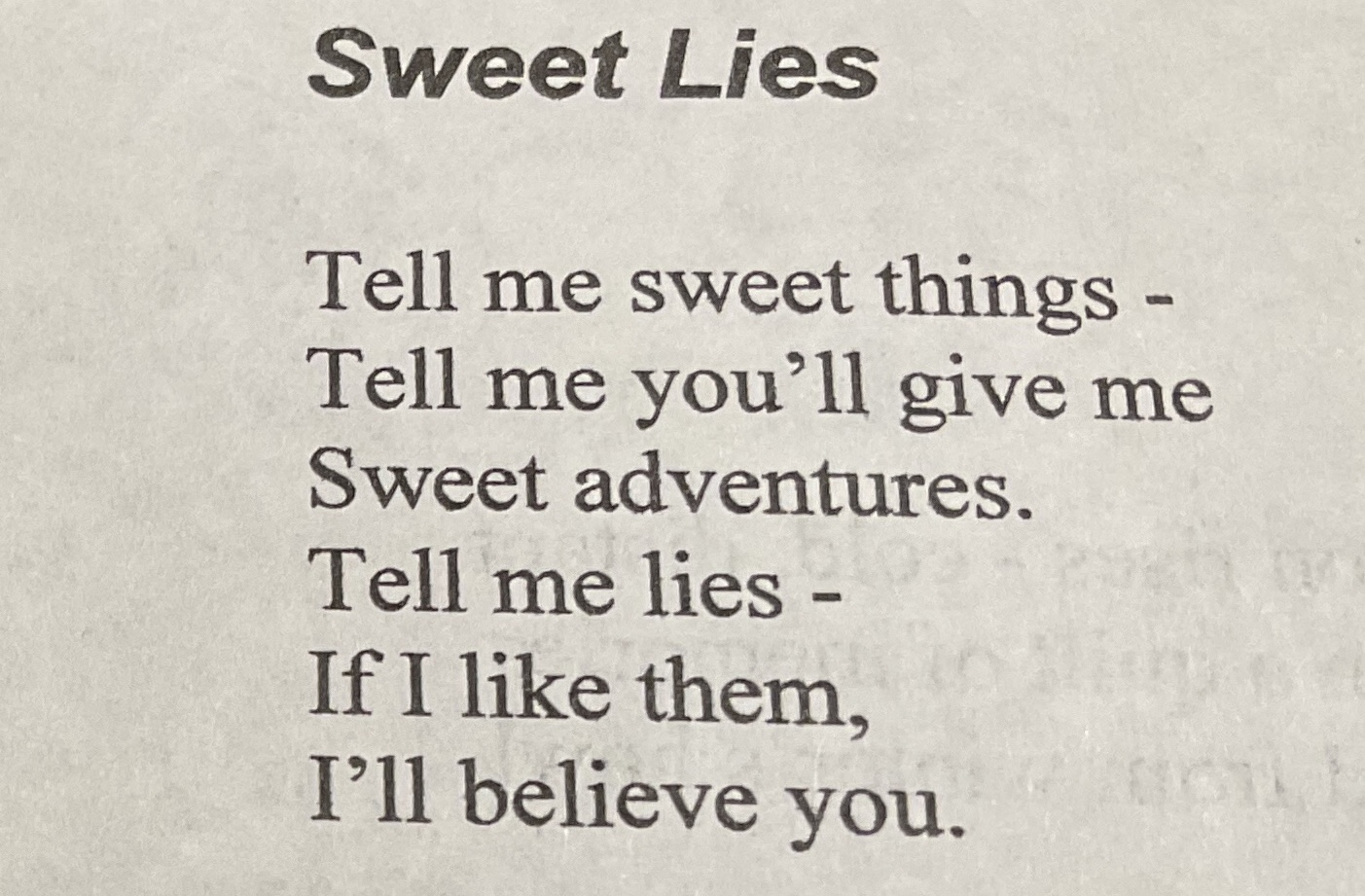
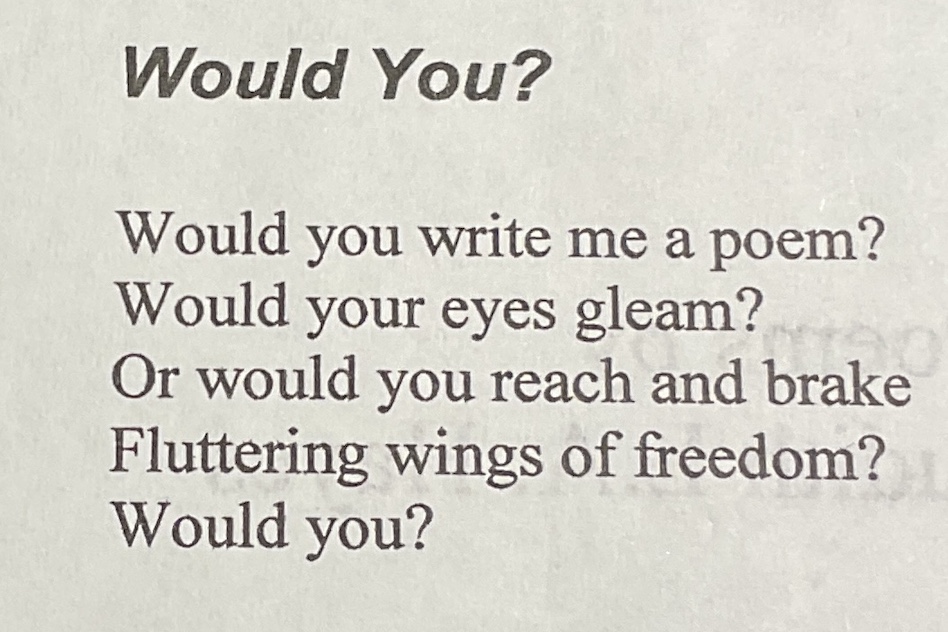
Judith wrote lovely poetry. Here are two of my favorites.

4