A year ago this July, one of my best friends died. I am finally able to write about her with joy that is not consumed by the sadness that comes from losing a remarkable person.
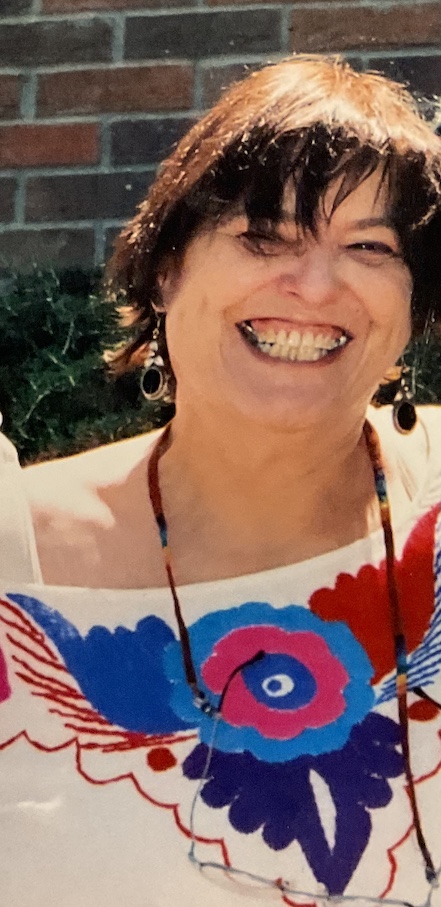
Judith L.A. Hayes was a full-throttle western gal. Her personality was huge, her laughter was raucous and her smile was like she’d just eaten all the cookies in the cookie jar and gotten away with it. She dove into life headfirst, never second guessing herself. Her heart was huge, her mantra was kindness, and, in her words, “Patience is not one of my virtues.”
Born in Chickasha, Oklahoma, Judith was one-quarter Cherokee and three-quarters European ancestry. Her family moved to Los Angeles when she was a youngster, and she loved the California lifestyle. That life ended when her father walked out of the family. Judith and her mother ended up in Alamagordo, New Mexico, the state that became her life-long and beloved home.
As a young woman in Alamagordo, Judith met many members of the local Soka Gakkai Japanese Buddhist community. Their message and work for world peace soon led her to become a practicing Buddhist. Her desire to help others also led her to become a social worker.
Our paths crossed at an assisted living facility in Albuquerque where I visited each month to care for my aunt. Judith’s apartment was across the hall. It soon became apparent to me that Judith was giving my aunt more care and love than the staff at the home.
One day I ramped up my courage, ditched my manners and asked her, “Why are you here?” I could not fathom why this highly intelligent, witty and caring fifty-year-old needed assisted living.
“I’m recovering from brain damage,” was her reply. While pruning her grape arbor, she had been bitten by a black widow spider. The venom traveled to her brain causing a stroke. Coming out of a coma, she had to learn how to walk, talk, read and get dressed. Judith was a Mensa, and her intellect was not affected, but every coordination function was impaired.
When I met Judith, she was remarkably far along in her courageous recovery. Soon after we became friends, she was able to move into her own apartment with only one hour of help a day from a caregiver.
For over twenty years we shared fun, laughter and adventures. Before we would go to the Santa Fe Opera, she would fill me in on the storylines. “Turandot’s about this evil queen who had her prospective suitors killed if she did not like them. She was really something else, you’ll love it.”
Judith was a born storyteller with an acute understanding of the human condition. She would tell me how she would ride her motorcycle up to remote places in the mountains to visit her social work cases. Some of her clients tried to con her, but they never got away with it. She did, however, on rare occasions, look the other way.
We could sit for hours discussing Shakespeare’s plays, books, Aboriginal art, history, poetry or politics. Judith had a brilliant mind, and, because of a spider, found herself trapped in a body that struggled to button her buttons, get into her bra, find her keys or drink her beer without tipping over the glass.
I can sum up my love for her with one short story. I drive her to see her brain doctor and wait in the car. She comes out and relates to me that he shows her a scan of her brain, points out a dark spot on it and morosely tells her that it will never come back. To which she replies, “Well it looks like there’s a lot left around it.”
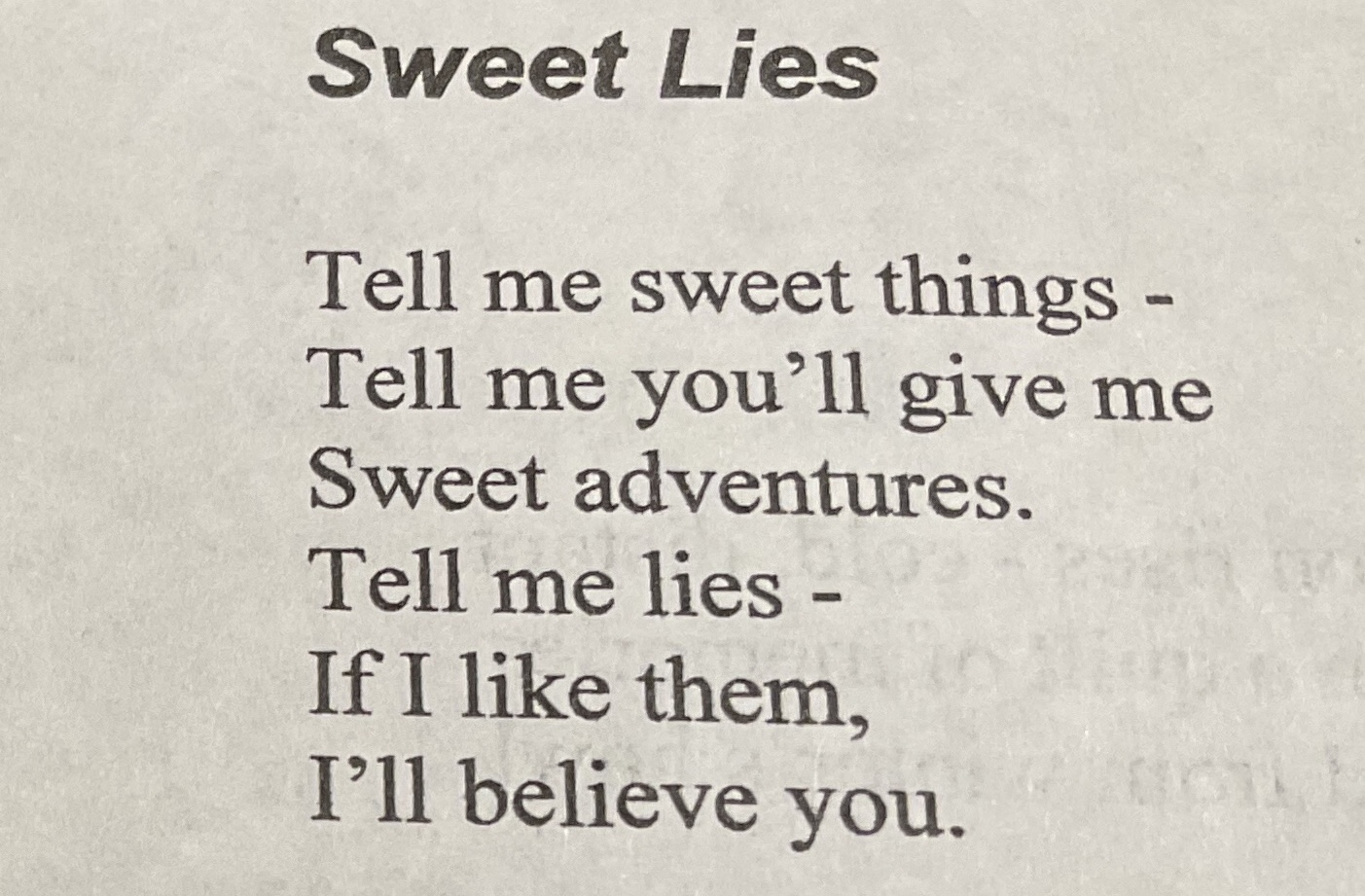
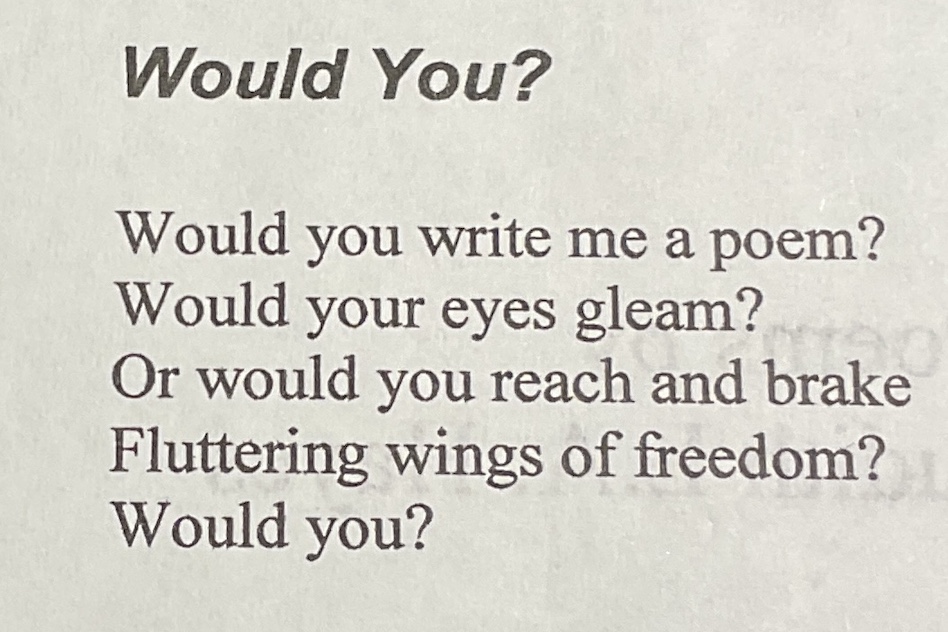
Judith wrote lovely poetry. Here are two of my favorites.
I was so glad that I was able to meet and celebrate life with Judith. Thank you, Mary, for expanding my life experiences with such a great example of a survivor who made the most of what she had, not what she had lost. We loved seeing her on our occasional visits to Albuquerque and I remember great evenings at the Flying Star Cafe. She was a remarkable woman. What an example of living life to our own limits. Thank you for giving her so much love and comfort. I wish I was able to see her more often.
Linda
Sorry to hear about Judith.