Elegance

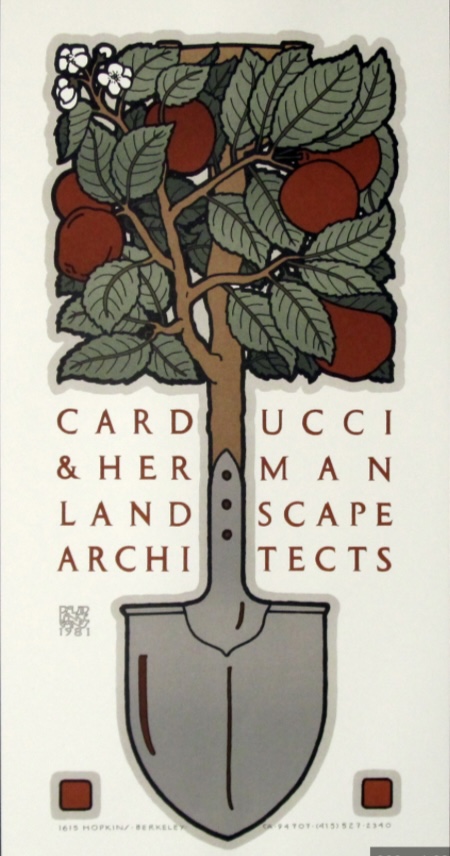
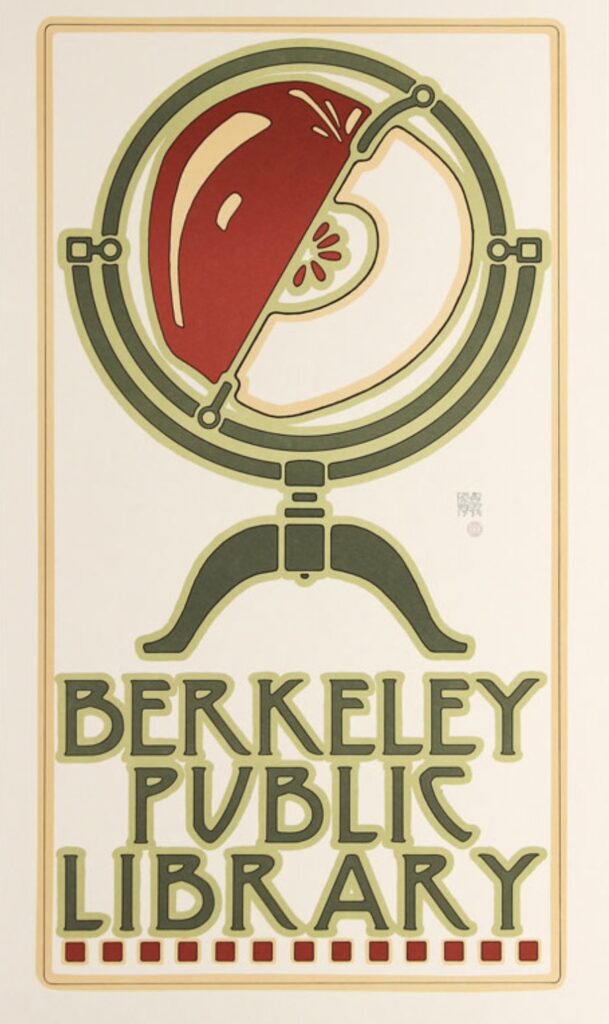
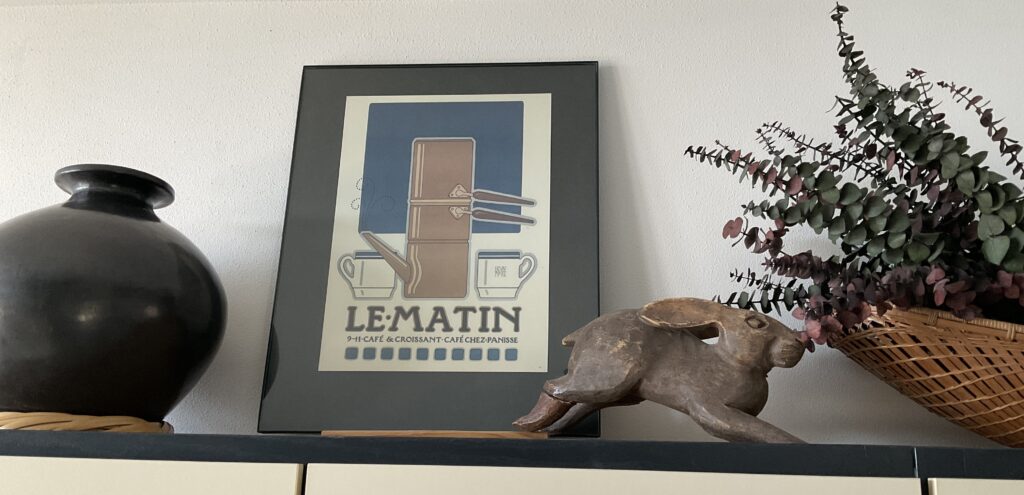
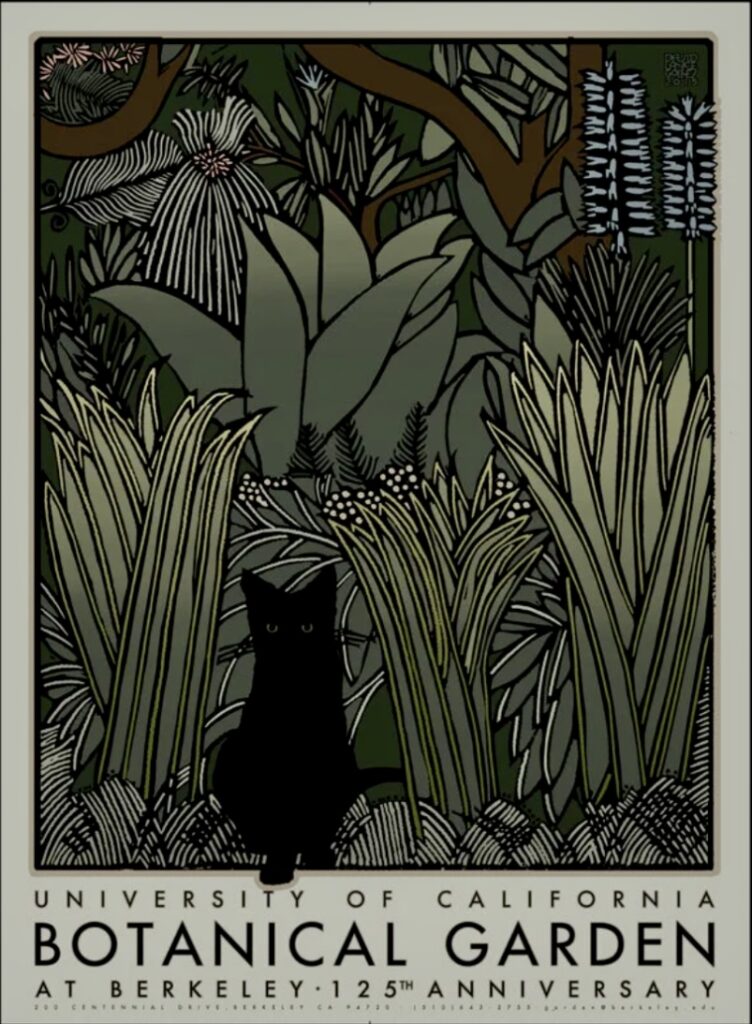
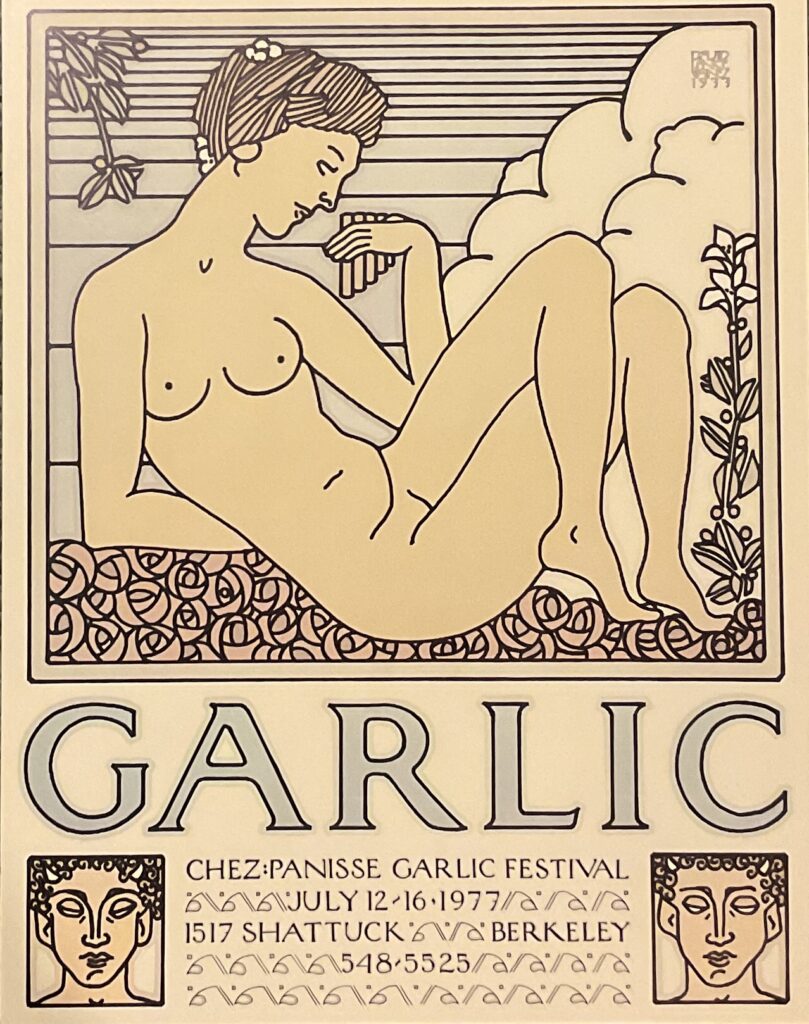
Elegant, exquisitely composed and lettered, the posters of David Lance Goines are the result of consummate craftsmanship. I first encountered one in the early 1970s. Awed by its beauty, I thought it was an antique from the Arts and Crafts movement. But then I noticed it was advertising a brand new restaurant called Chez Panisse in Berkeley.

Alice Waters, the restaurant’s creator, was in a relationship with David Lance Goines, and he made an anniversary poster for her famous establishment. Their romance didn’t last, but their friendship endured until David’s death this past February. He made anniversary posters for Chez Panisse every working year of his life, and in return never paid for a meal in her restaurant.

Describing her first meeting with David in 1966, Alice Waters states, “It was almost as if he had dropped in from another century, his considered speech, his manners, everything. “

David Lance Goines was born in Grants Pass, Oregon, in 1945. The oldest of eight children, his mother was a skilled calligrapher and artist. He attributes his love of letters and the arts to her. In his second year of studying classics at the University of California in Berkeley, he was expelled for his participation in the Free Speech Movement. For the next three years, he apprenticed with a lithographer in a small print shop in Berkeley. In 1968, he opened his own business in the same building and named it St. Hieronymus Press. (St. Hieronymus, aka St. Jerome, is the patron saint of librarians and scholars.) David Lance Goines remained there the rest of his life, walking the ten blocks from his home each workday.

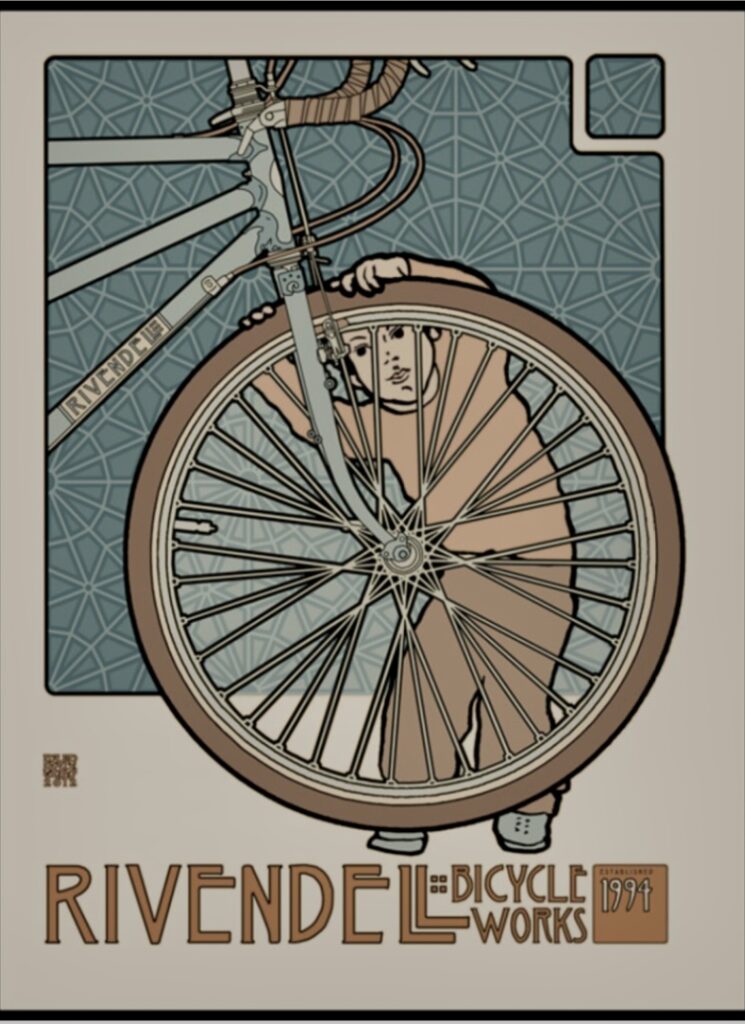
His work ethic was incredible. One of his posters would take two months of full time work. Most of his meticulously created work was for businesses and community groups in the Berkeley area, such as bakeries, film societies, bicycle shops and bookstores.

Despite his serious approach to his art, David had a grand sense of humor. The sign on his shop door read, “Sorry, We’re Open”, or “Yes! We’re Closed”. And one of his more famous pronouncements was, “People who run for buses will never make calligraphers.”

I can only fantasize about how beautiful the world would be if all our mundane businesses were advertised by this amazing man’s artwork. See for yourself.
4

Manners

Manners matter. They grease the mechanism of our human interactions. Unfortunately, manners do not follow a universal rulebook. What is polite in one culture can be rude or worse in another.

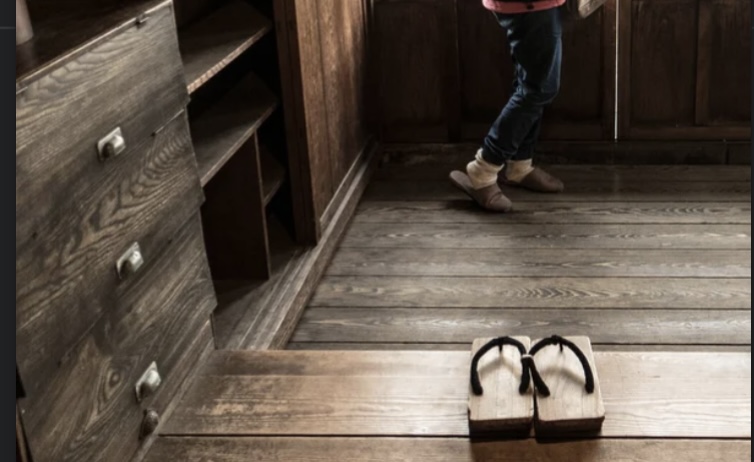
I have been guilty of violating other people’s cultural mores. My first faux pas was in Japan, a country known for a plethora of behavior rules. I was entering a home and knew my shoes had to be removed. But when I walked in, sans shoes, my hostess looked shocked. Unfortunately, she could not tell me what rule I had broken. The Japanese do not reprimand guests.

Fortunately, my traveling companion, a Japanese American, hastily whispered my transgression…stockinged feet are unacceptable. I returned to the front hall and put on slippers from a cabinet filled with multiple sizes of them.

I was back in grace but almost sinned again. My friend further informed me that the borrowed slippers were never to be worn in the bathroom. “Be sure to take them off and put on the provided bathroom slippers,” she instructed me.

Restaurant etiquette in Japan is complex as well. For example, blowing your nose at the dining table is the epitome of grossness. You MUST exit the scene. On the other hand, loudly slurping noodles is totally acceptable. Noodle shops are noisy places.

My next big mishap occurred in the Czech Republic. While accepting the keys for an apartment in Prague from the rental agent, I lightly touched the man’s arm as I said thank you. His instant recoil spoke volumes: touching is forbidden in casual encounters.

America is not immune from cultural traditions, and one that I would love to see changed involves the last serving in the bowl or platter. Everyone is too polite to take it. I always encourage guests to enjoy it if they wish. I simply say, “If no one wants it, the raccoons will be happy tonight.” Small servings of leftovers at our house are destined for the wildlife in the Tooley Cafe.

As a guest, what you do with what’s on your plate differs radically from country to country. In China, finishing your plate is a signal to your host that you are still hungry. In India and Japan, it is rude and disrespectful not to eat everything on your plate. And in Ethiopia, there is no plate. Food is shared from one communal plate, scooped up with flatbread.

I recently read a lovely anecdote about table etiquette in Janet Malcolm’s new book, Still Pictures. She and her family were Czech immigrants.

“I remember a story my mother told me about American alienness. She was at a dinner in an American household. The time for second servings arrived. When my mother was offered the platter, she declined. This was Prague etiquette, a charade called nutcení had to be performed. The hostess would press you to take another helping, and after many demurrals, you finally gave in helplessly to her urgings. But here, “No, thank you” was taken to mean just that, and the plate of delicious American food was whisked away before my mother’s sad eyes.”

The moral here is clear: don’t barge into another culture without doing your cultural homework. You could disgust an entire room of diners with one nose blow. Or you could go hungry.

6

Deluxe

My husband and I agree. “Deluxe” is a delightful word that is also fun to say and banter around. Defined as “of special elegance, sumptuousness or fineness, high or highest in quality, the word is borrowed from the French “de luxe” which translates to “of luxury” and the Latin “luxe”, meaning excess or abundance.

However, when the word was incorporated into the English language, marketers quickly realized its use could confer “added value”. In other words, attach the word to anything you’re selling and the cash register will ring. Thanks to the profit motive, the lovely word deluxe has become comical.

Everything from cat food to vacuum cleaners, screwdrivers, cars, hotel rooms, juicers, yoga mats and macaroni and cheese comes in deluxe models. There is even a “GOD’S WORD Deluxe Wide-Margin Bible”.

A bizarre computer site called YourDictionary lists “The best 209 deluxe sentence examples.” Consider these two gems:

“The deluxe Santa Claus costume is best suited to individuals who plan to use the outfit again and again and need the extra durability and high-end manufacturing to withstand extensive use”.

“The Deluxe Rooms offer guests either a queen or two double beds, a private marble bathroom, an in-room safe, wireless internet capabilities and many other conveniences that make the hotel feel homey.”

The fast food industry is another hotbed of deluxe overuse: their ad folks throw the word around like confetti. The competition is sizzling between Chick-Fill-A’s Deluxe Chicken Sandwich and MacDonald’s McCrispy Chicken Sandwich Deluxe.

I can only conclude that I have to up my game. Stay tuned next week for the new deluxe version of my weekly blog.

5

Frustration

I have a severe case of the recycling blues. And I don’t think it will clear up anytime soon.

Everywhere I turn, I am being told to “Save the planet.” It is akin to the advertising campaign, “Only you can prevent forest fires”, but on a larger scale. Plus, there is no Smokey Bear to cheer me along.

It’s not that I don’t want to save the planet. But the twin forces of money and greed appear to be thwarting my meager efforts leaving me mired in frustration.

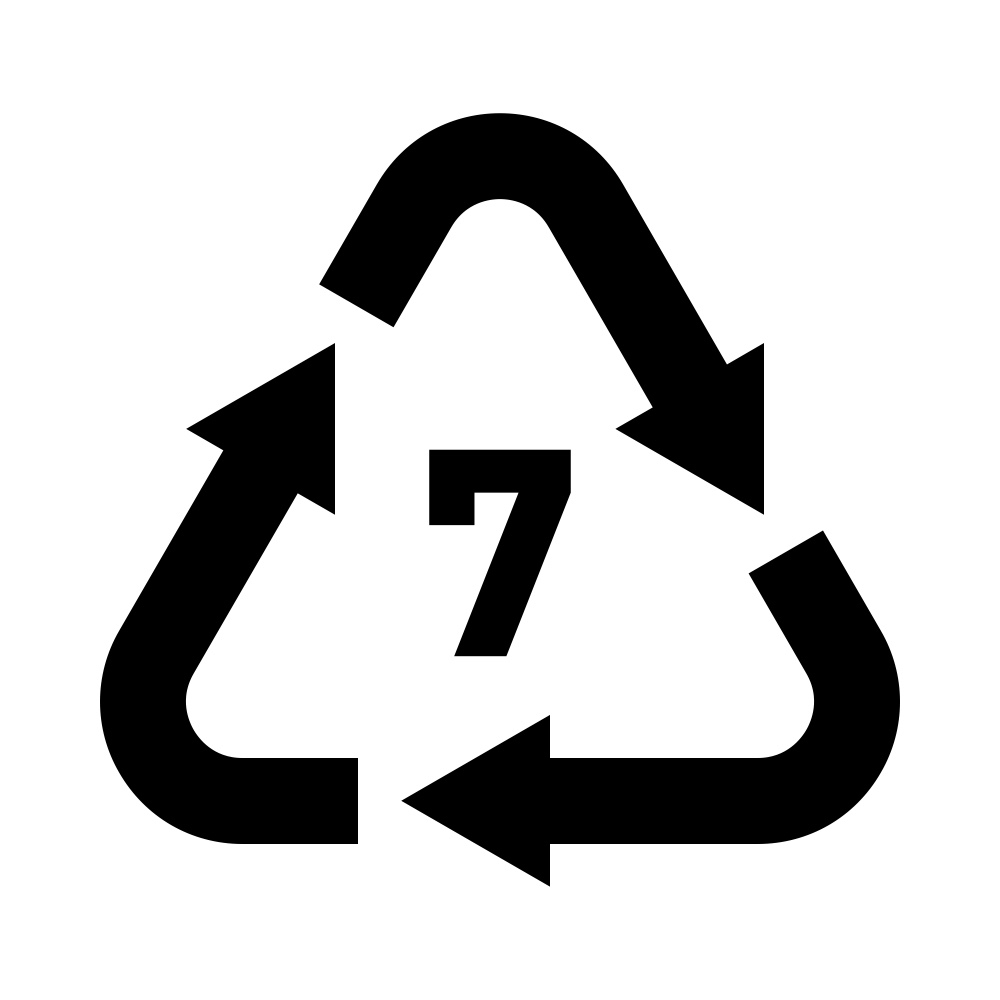
I don’t believe I’m alone in these feelings. Does this situation sound familiar? I’m standing in my kitchen trying to locate a tiny triangle on some plastic box or bottle. Once found, the number in the triangle is impossible to read. After several attempts, I get my reader glasses. The number is a 6. More frustration sets in, and here’s why.

All various plastics are universally categorized into seven major groups. Although easy to recycle, number 1 can be recycled only once. Numbers 2, 4 and 5 are considered the safest to recycle using standard recycling procedures. Numbers 3, 6 and 7 cannot be recycled using standard recycling procedures, and if recycled, may cause harm to the health and environment.

Bottom line: No matter how hard I try, this is a disaster. In addition, my local recycling center only takes numbers 1 and 2. Driving miles and miles to recycle 3, 4, 5, 6 and the evil 7 seems beyond ludicrous.

To make matters worse, plastics are only one part of the recycling nightmare in America. Where do those lightbulbs go that are supposed to last 14 years and burn out in three? And how about that perfectly good shirt except for the frayed collar? Or the tattered old teddy bear or that spare roll of carpeting that no longer matches the original?

Since I don’t live in a country like Sweden where recycling is a national priority and almost everyone in residential areas is no more than 300 meters from effective recycling stations, I have to find a way to cope.

My plan is as follows:

  1. Take a deep breath.
  2. Recycle to the best of my ability.
  3. Pour a generous glass of wine.
  4. Drink the wine.
  5. Remember that I am not Atlas and can’t hold up the entire world on my shoulders.
3

Logos

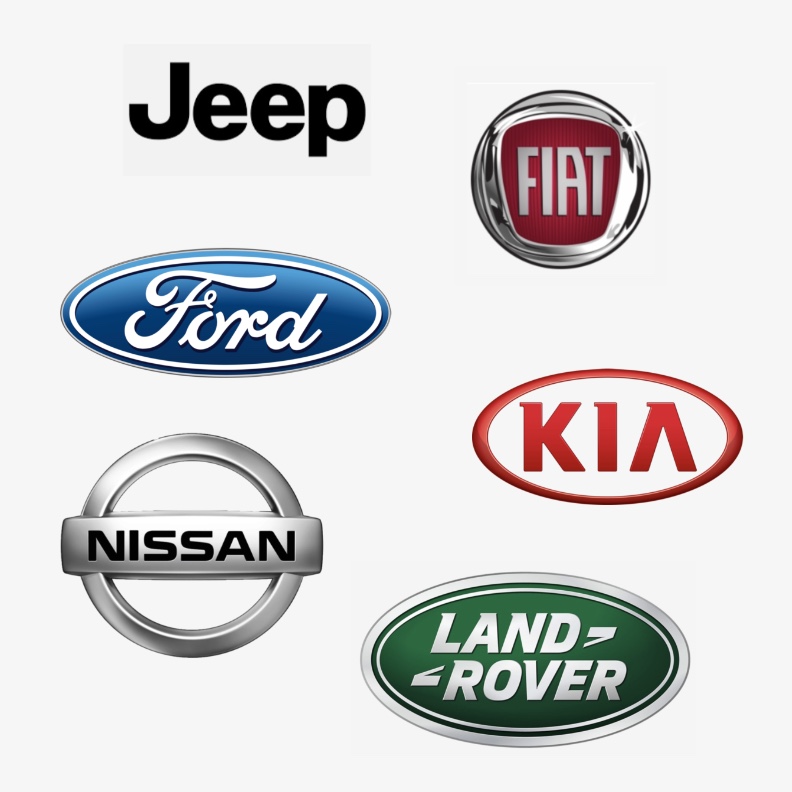
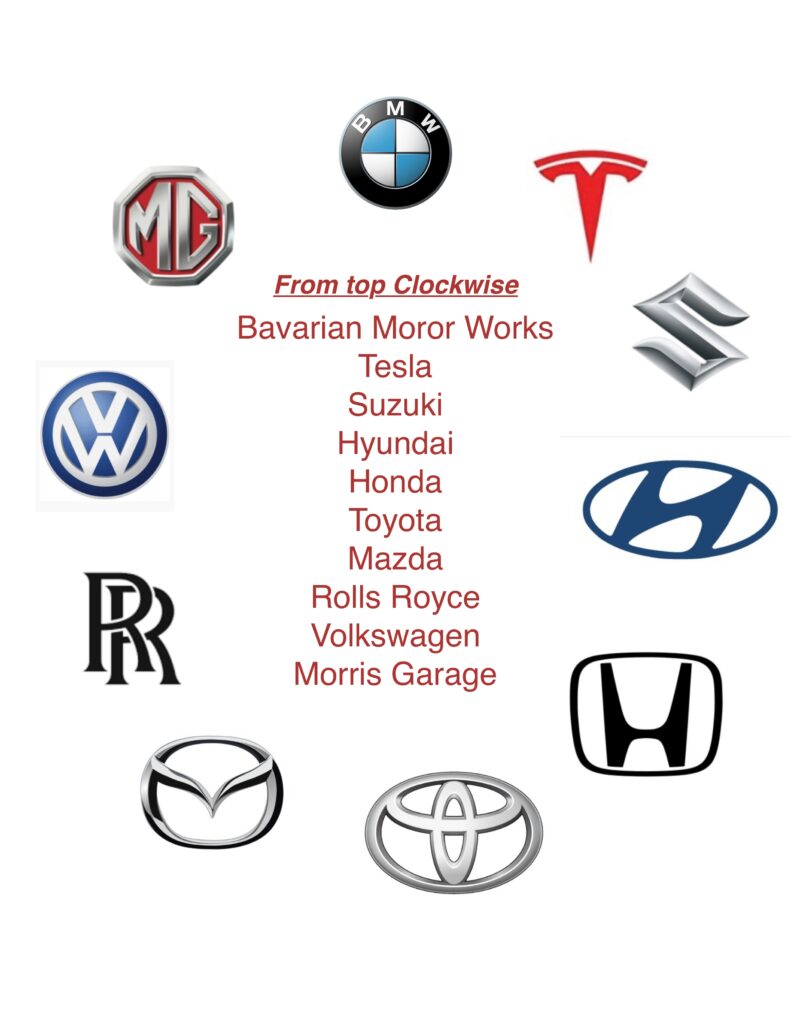
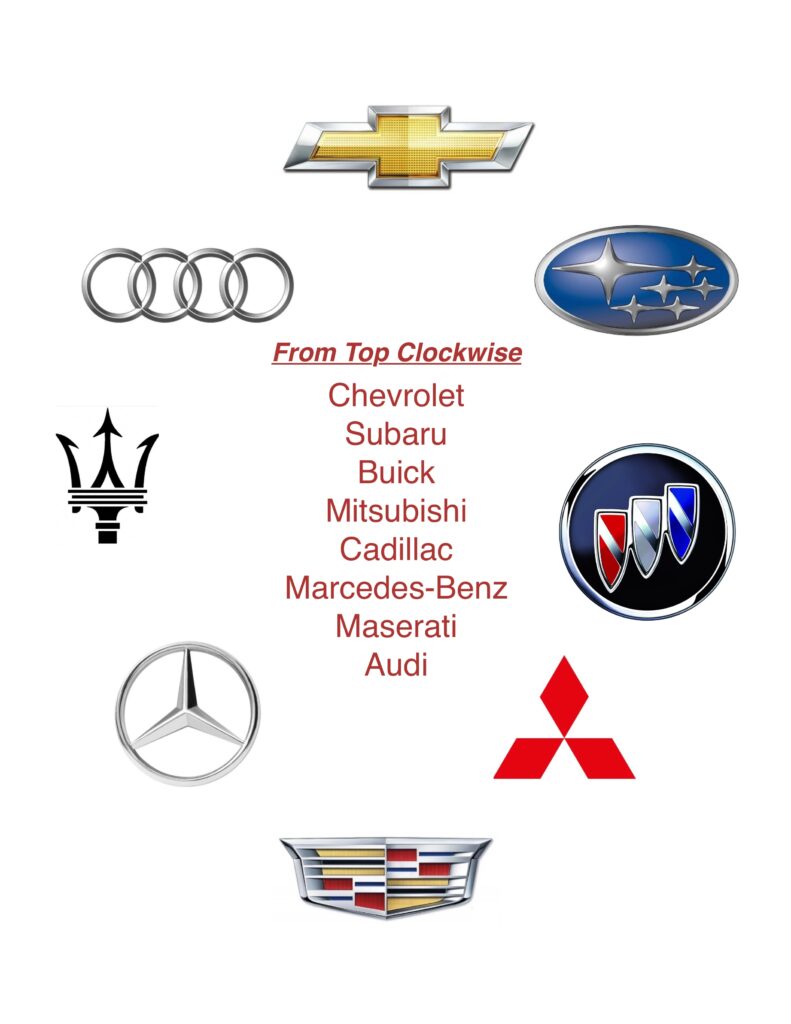
I love logos, those shorthand identifiers for the products we see and use every day. And in the past months, I’ve had a crash course in car logo design. Our beloved Honda Fit turned over 220,000 miles, and a replacement was needed. Looking for a successor, I began checking out all the different cars currently on the road. In the process, I learned to identify automobiles by their logos and realized that logo designs could be put into three categories.

The name is the logo.

Initials are the logo.

A symbol is the logo.

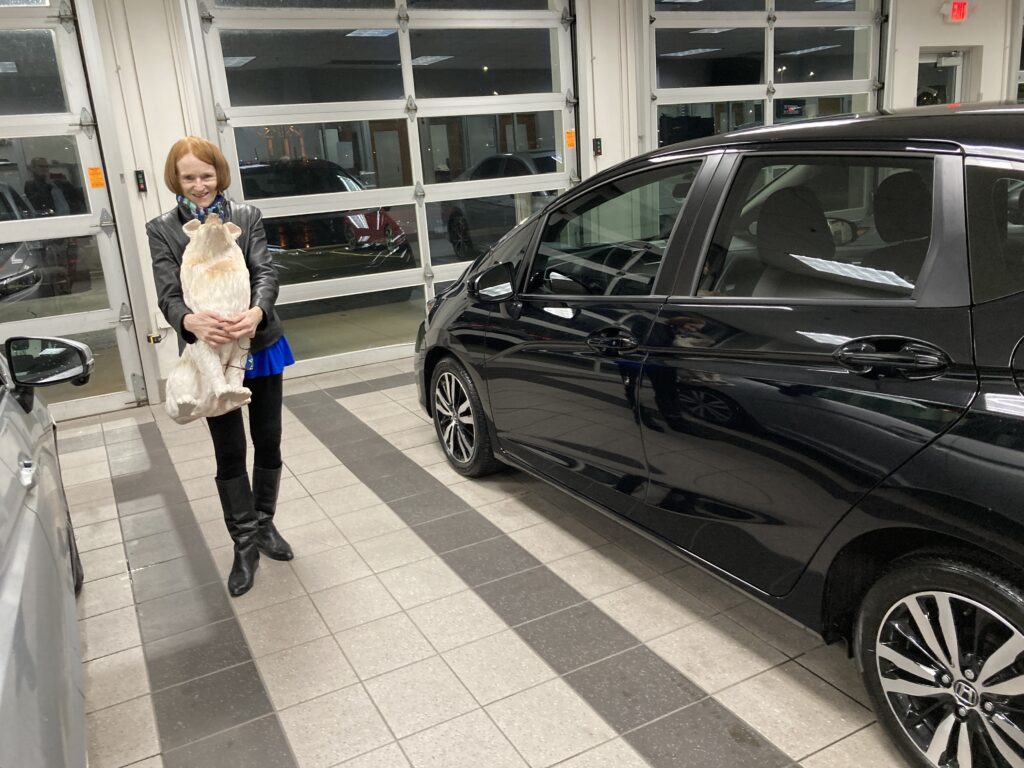
I enjoyed my quest into the world of car logo design, and we did end up with a “new” car, a used Honda Fit. Our faithful 2016 one was replaced with a 2022 model. No iconic Audi or Mercedes logos for us.

Rex at the car dealer ready to jump into the backseat of his new ride
3