Ruth

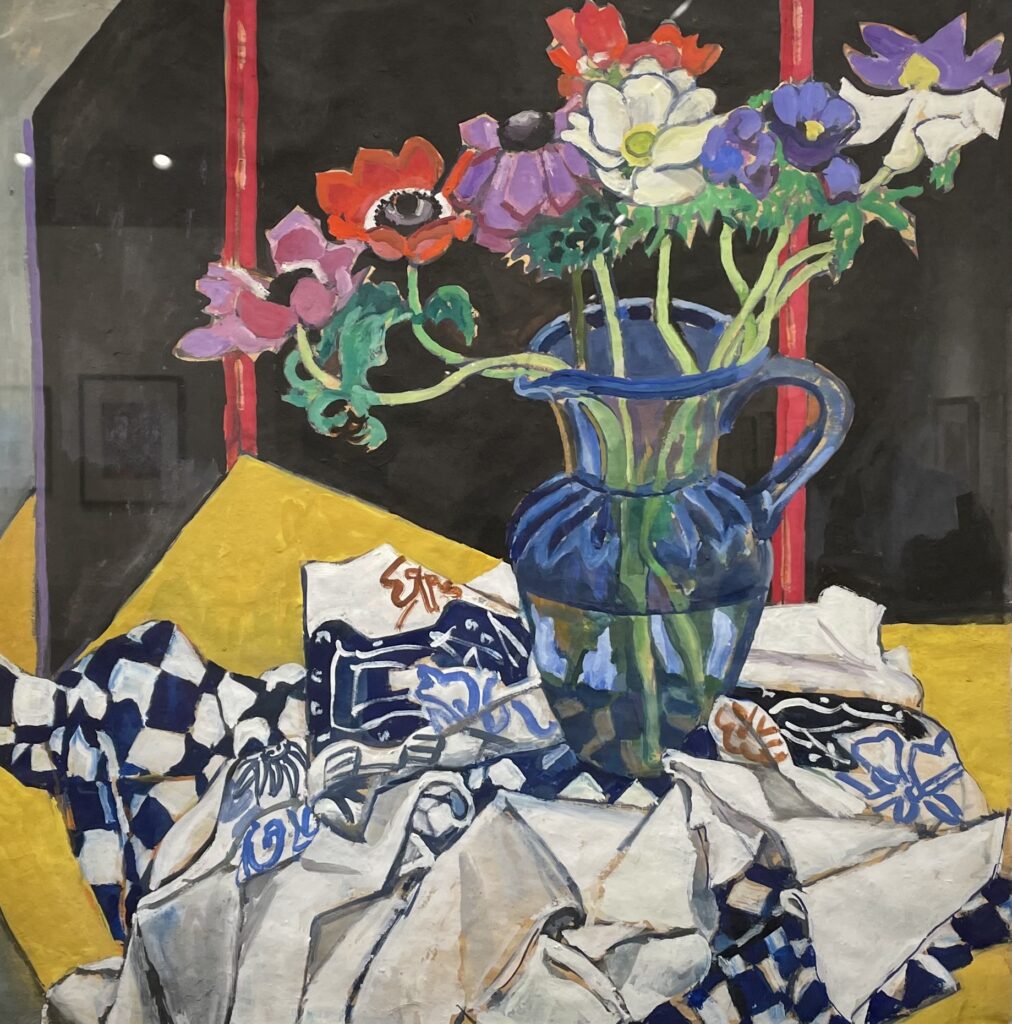
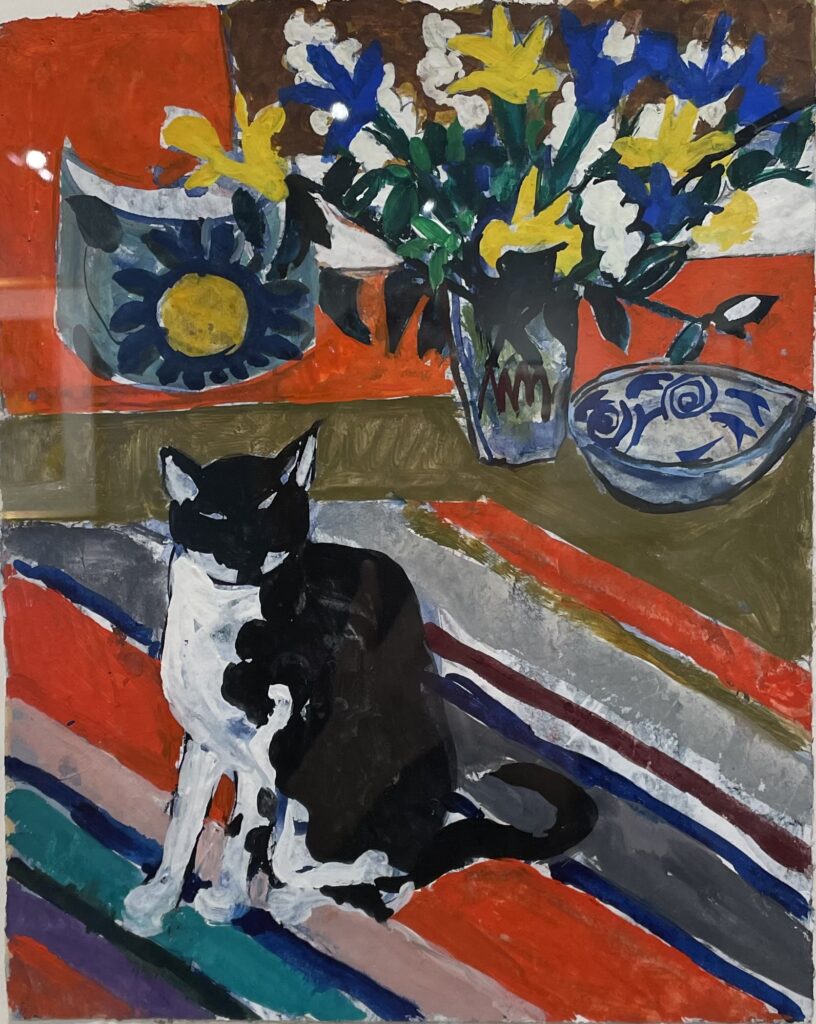
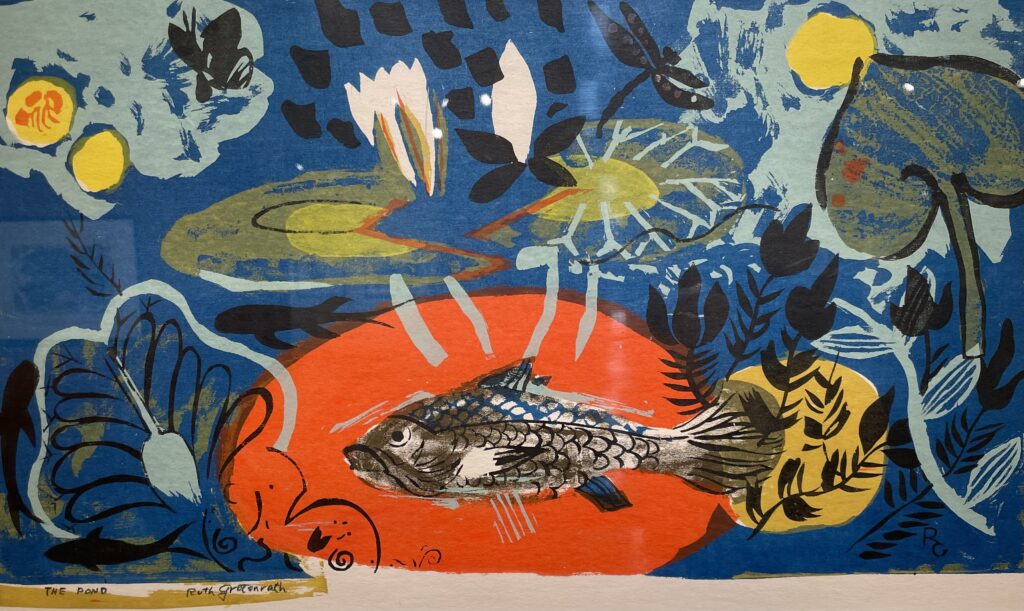
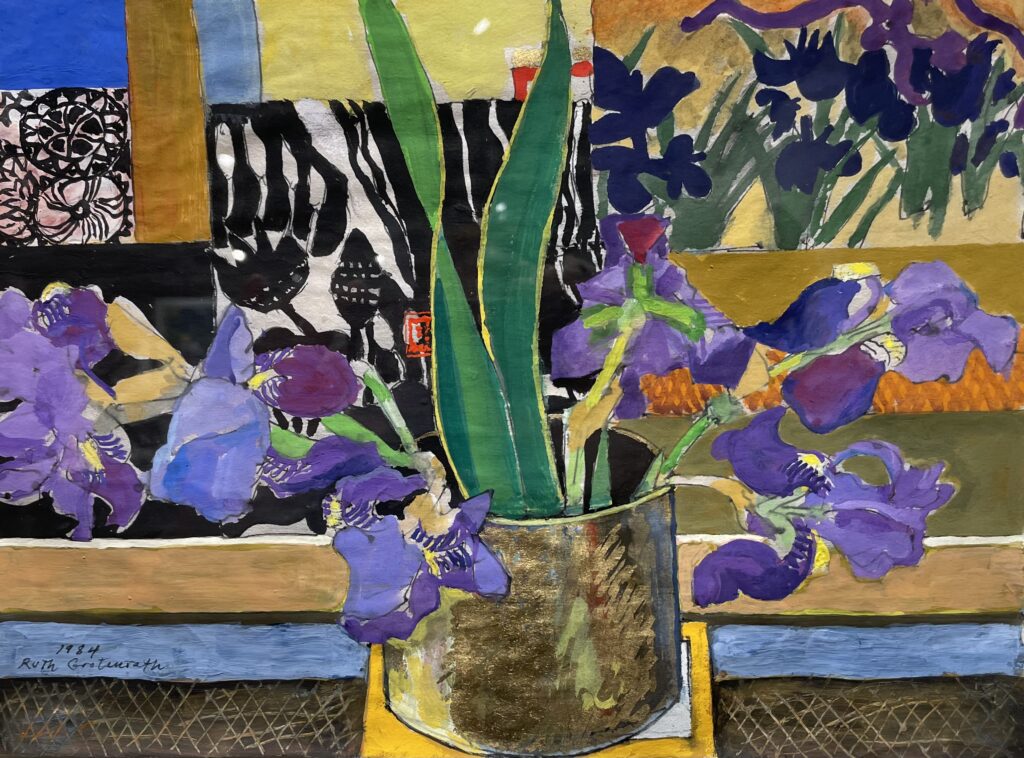
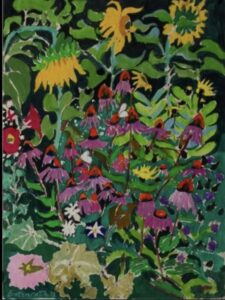
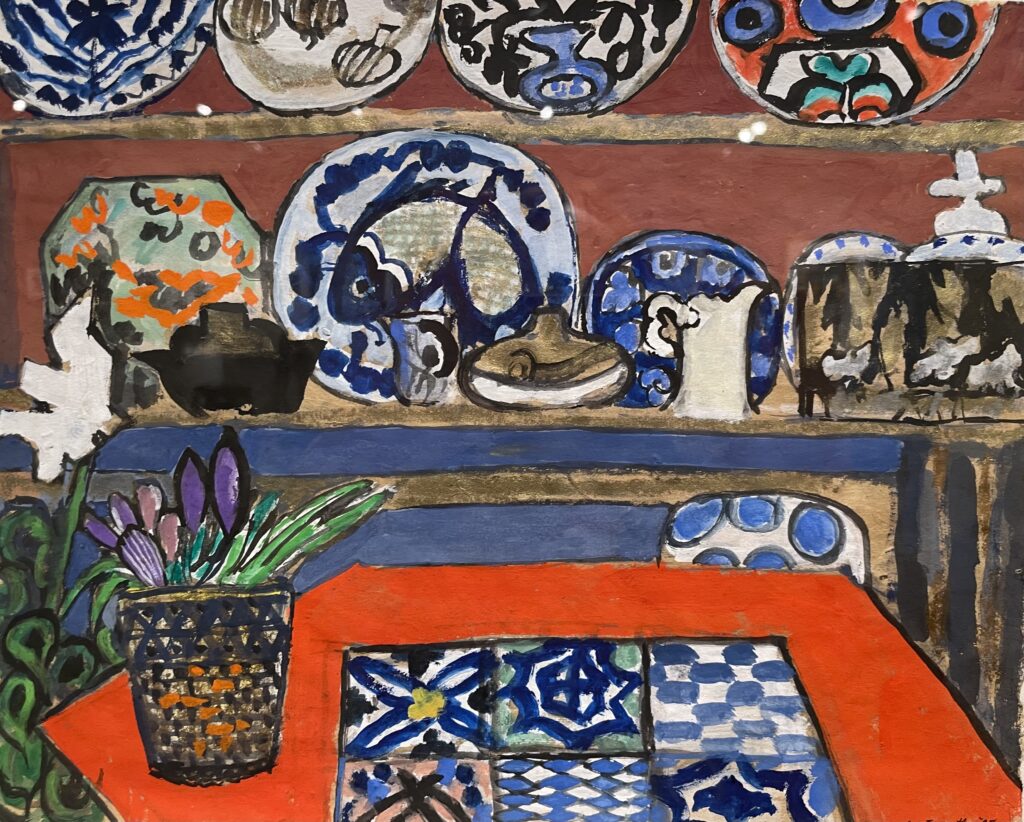
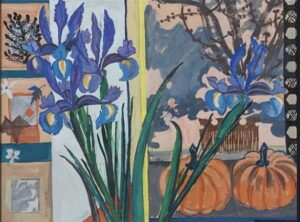
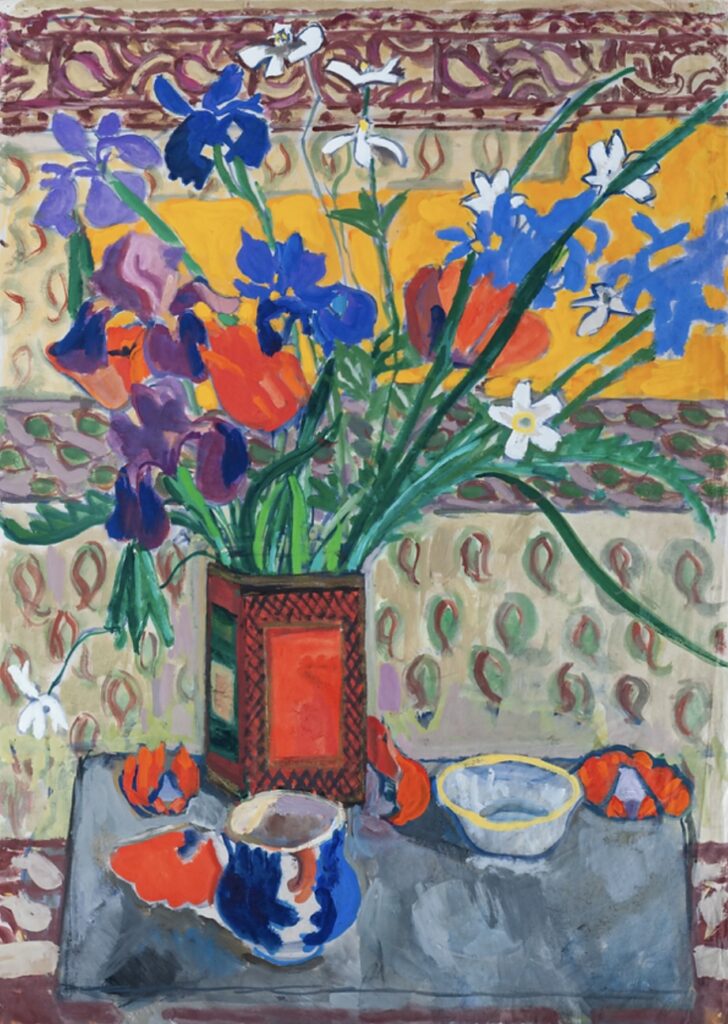
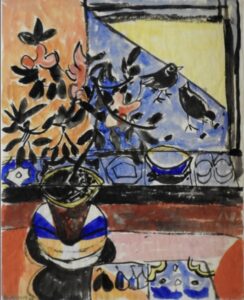
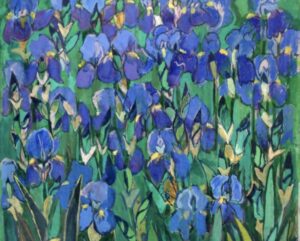
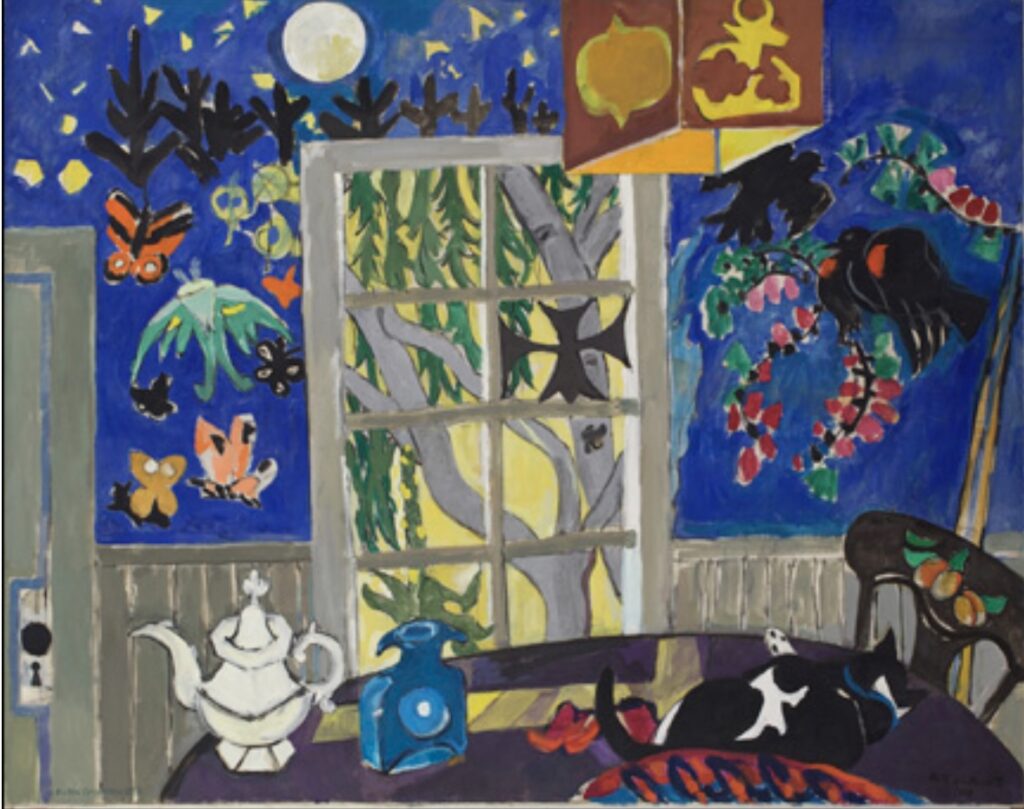
The sky was unleashing buckets of rain with intermittent salvos of sleet as my husband and I were driving to Milwaukee. It was the perfect day for the mission we were on. We were headed to the Warehouse Art Museum and the exhibit entitled, Rediscovering Ruth Grotenrath: All Things Belong To The Earth. We knew the artwork of this amazing artist could light up even the gloomiest of March days.

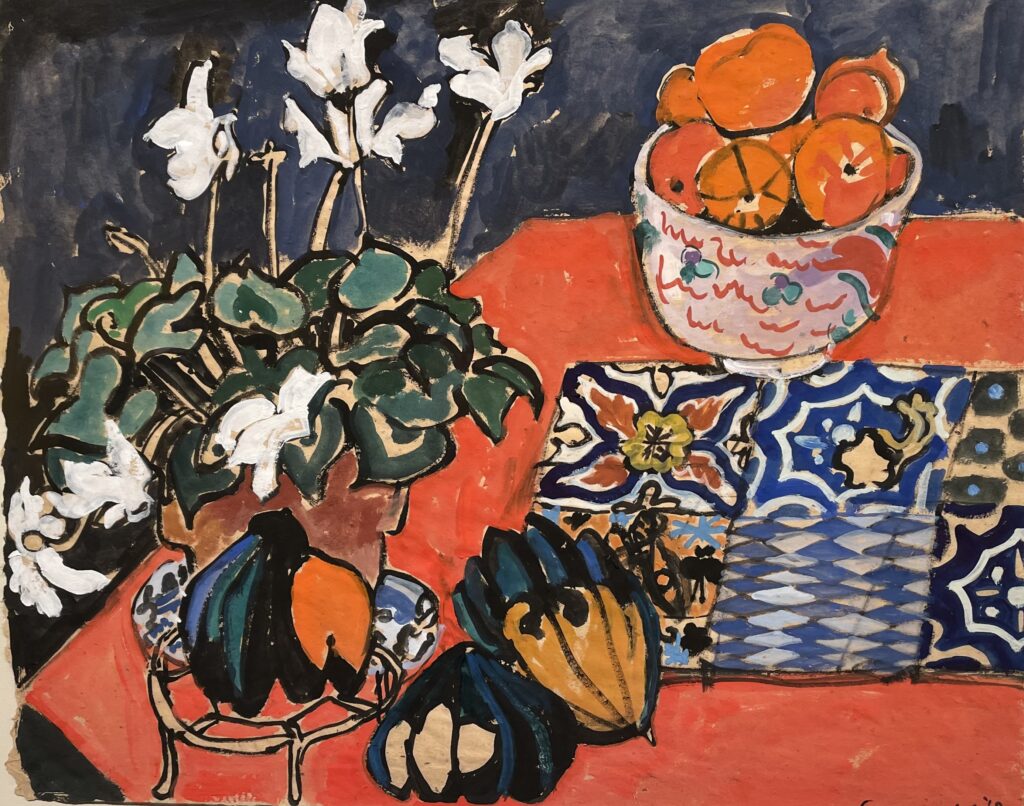
Ruth Grotenrath was born in Milwaukee in 1912 and was a leading figure in the Wisconsin art scene for over 50 years. However, the current exhibition is the first comprehensive, solo retrospective of her work. During her lifetime, Ruth’s artwork was frequently displayed but was shown in conjunction with the work of her husband, Schomer Lichtner.

Ruth was introduced to her future husband by their mutual drawing teacher in college. They married the year after her graduation in 1934, the height of the Depression. During those tough times, they were employed by the Works Progress Administration to paint murals in Post Offices across the Midwest.

Over the years, both artists developed unique styles and each worked in separate studios. Schomer’s dominant themes were cows and ballet dancers. Ruth’s art was greatly influenced by the Fauves and their vivid colors. She was especially intrigued by the work of Matisse. After frequent visits to Taliesen and conversations with Frank Lloyd Wright, Ruth became fascinated with the arts of Japan. Both she and her husband spent two months in Japan in the 1960s. That trip provided her with inspiration for the rest of her career.

Ruth Grotenrath died in 1975. She was a pioneer, a woman who succeeded as an artist in a time when men dominated the art world.

Feast your eyes on these exuberant works. Ruth has left a legacy of great beauty and joy.
5

Conquered

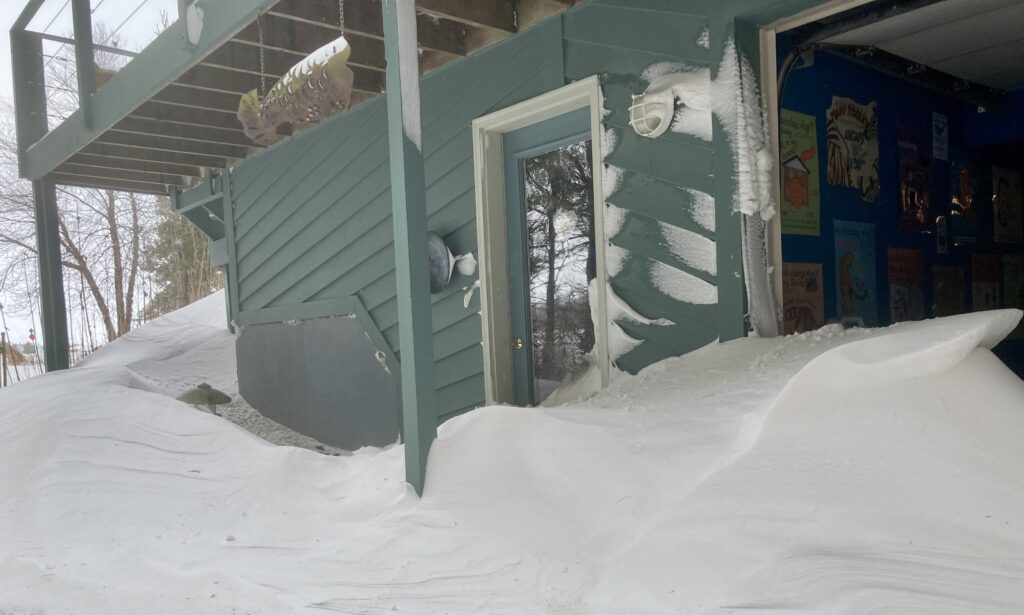
We had a serious bit of snow last week, and the wind molded it into formidable drifts. Monumental shoveling was needed to get us out of the house and the car out of the garage.

Our herd of cats has a large outdoor enclosure (the catio), and it was also piled high with drifts. We kept the cat door to the catio firmly closed while the storm raged. But the next day, when the temperatures rose and the winds subsided, I decided it was time to open the cat flap.

What happened next needs some background information. Most of our cats were ferals. They started their lives as outdoor felines, unwanted and unloved by humans. Five years ago, during a spell when the temperatures plunged to -20 degrees, three feral tabbies showed up in our garage seeking shelter from the brutal temperatures. Since they came at separate times over a two week period and were different ages (according to our skilled vets), we knew they were not part of one litter. We adopted all three.

We named the last one to arrive Tabbytoo, because when I found her on our garage doormat, I exclaimed, “There’s another Tabby here, too!” She is the smallest of our rescues and very feisty, batting at any other cat who gets in her space. I must confess we have nicknamed her Bad Girl as she is our little troublemaker.

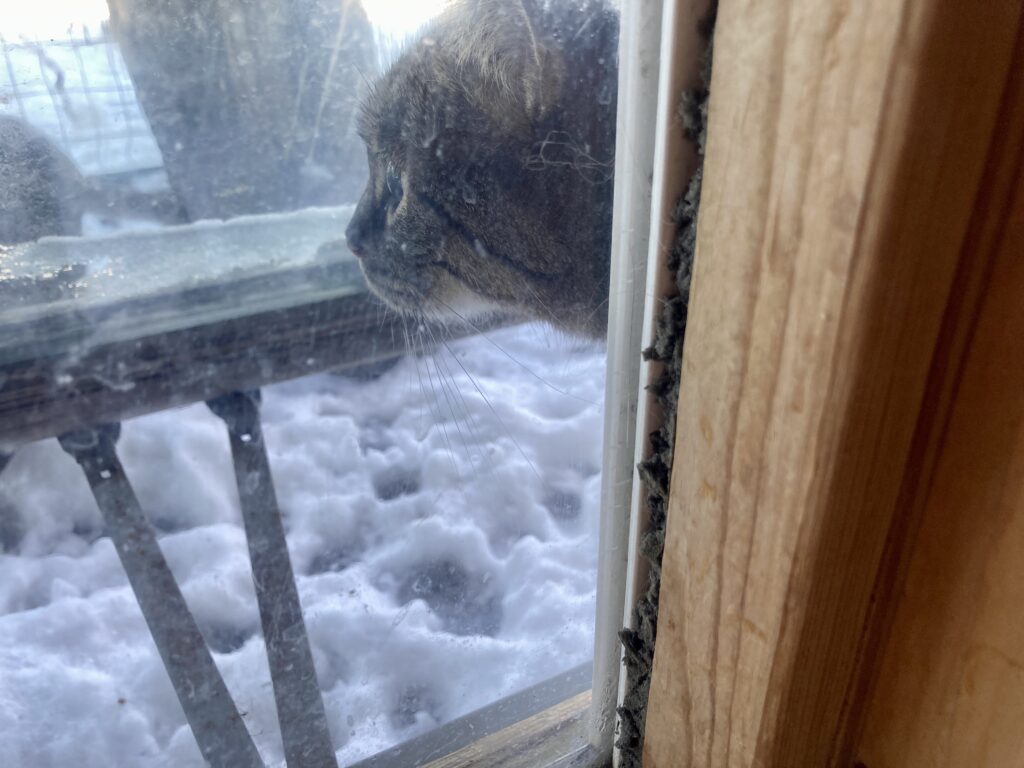
When I opened the cat flap to the enclosure, Tabbytoo marched right out, sunk up to her tummy in snow and keep plowing forward. Encountering a 4-foot high drift, she took charge. Her ears flattened down, ready for battle. She attacked the drift like it was prey and whacked it with her paws. Her head and body were soon covered with snow, but she kept charging the drift. After cutting the snow bank down to size, she marched inside to warm up.

Although not overly fond of her cat roommates, she did a terrific job of opening up their play space. Our little girl is fearless.

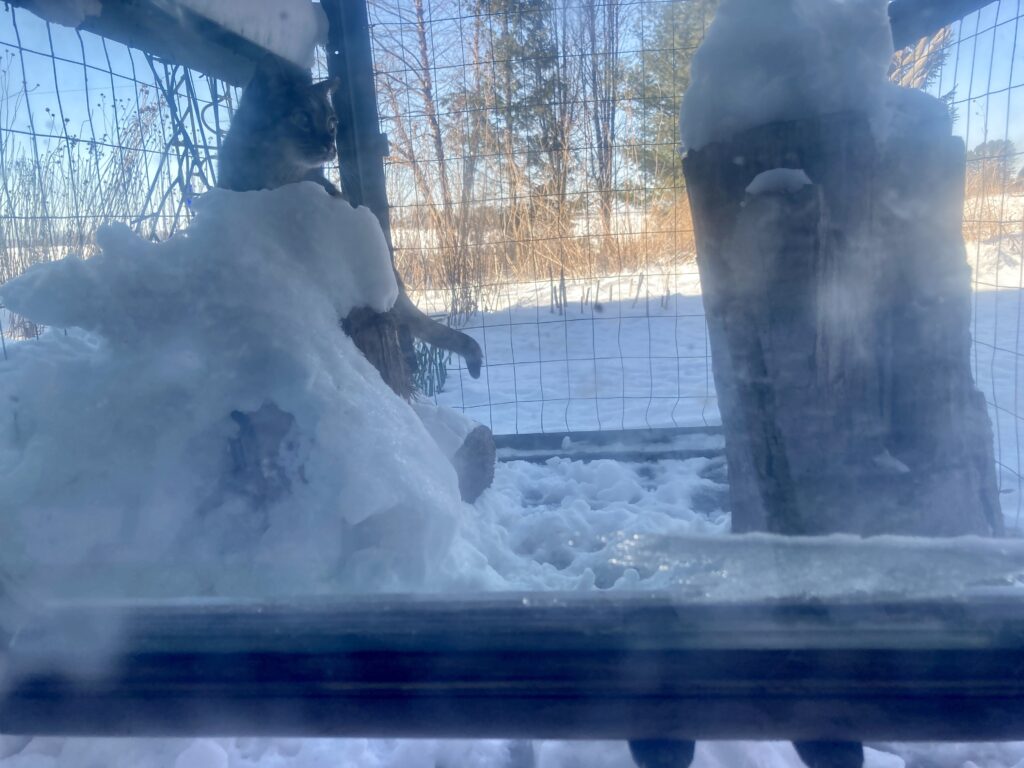
I had so much fun watching her take on the snow that I never thought of taking pictures. But here she is heading out the next day. Note that the snow is only cat-ankle deep now. Snow bunnies have nothing on our little girl.

6

Snowflakes

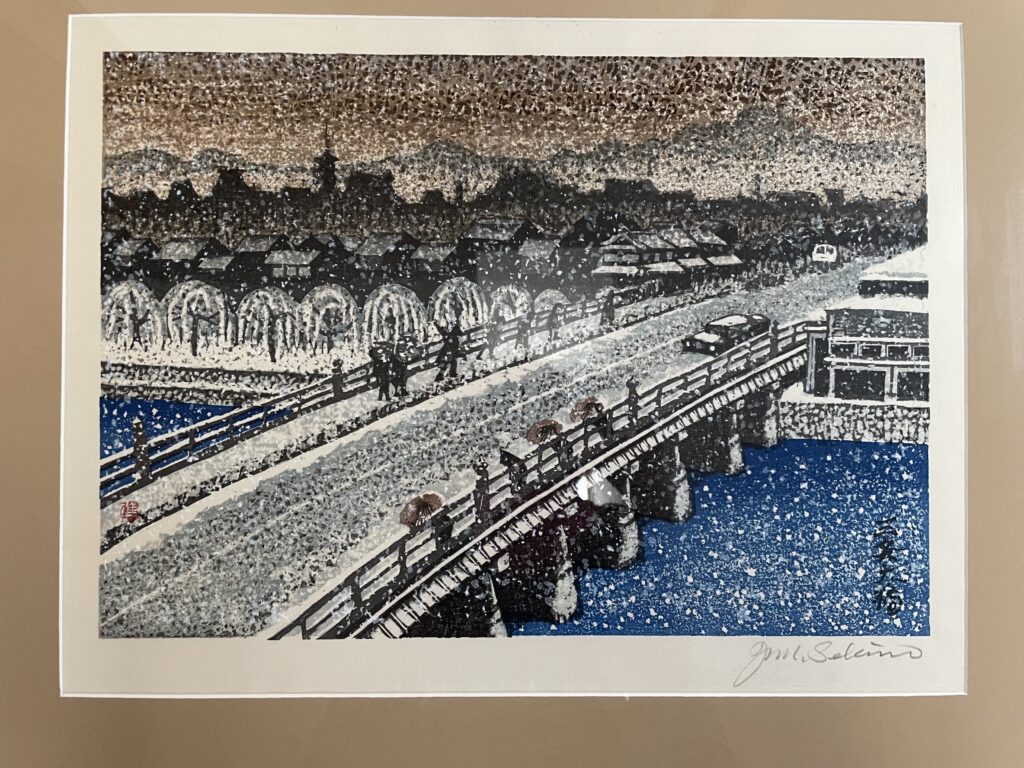
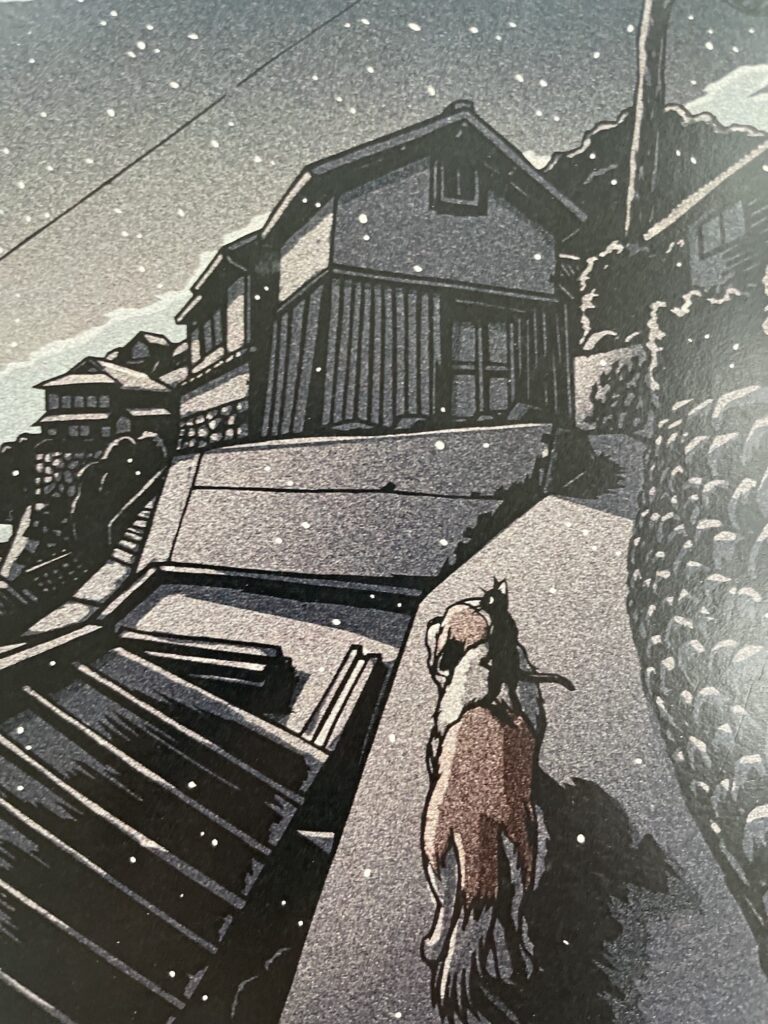
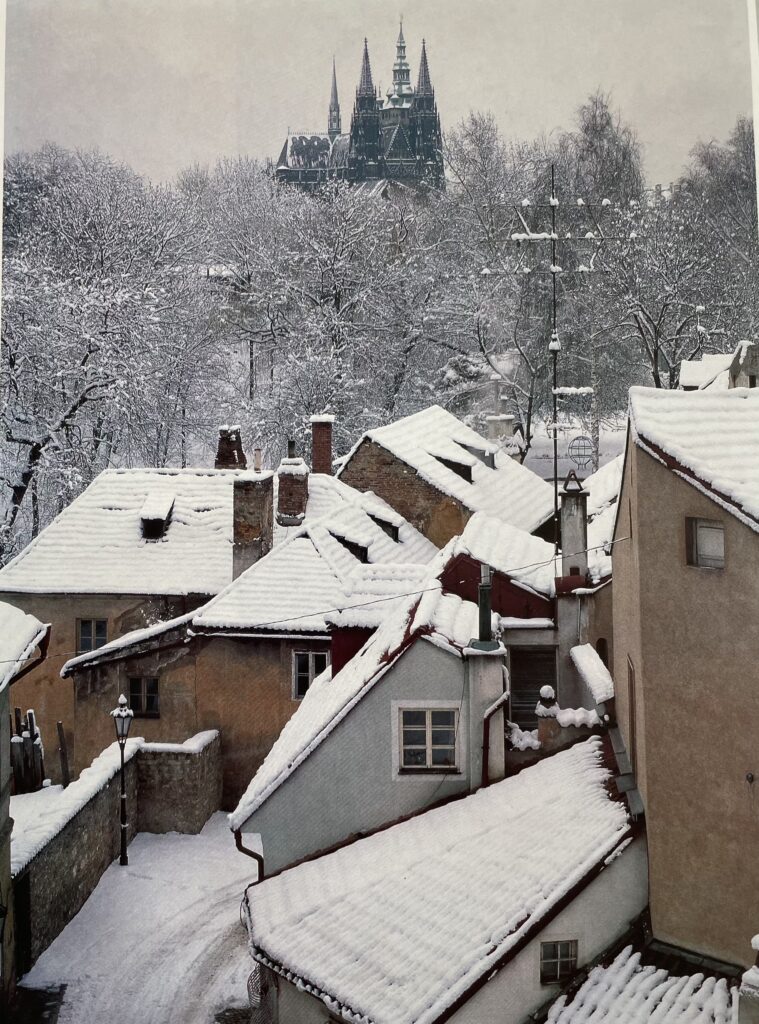
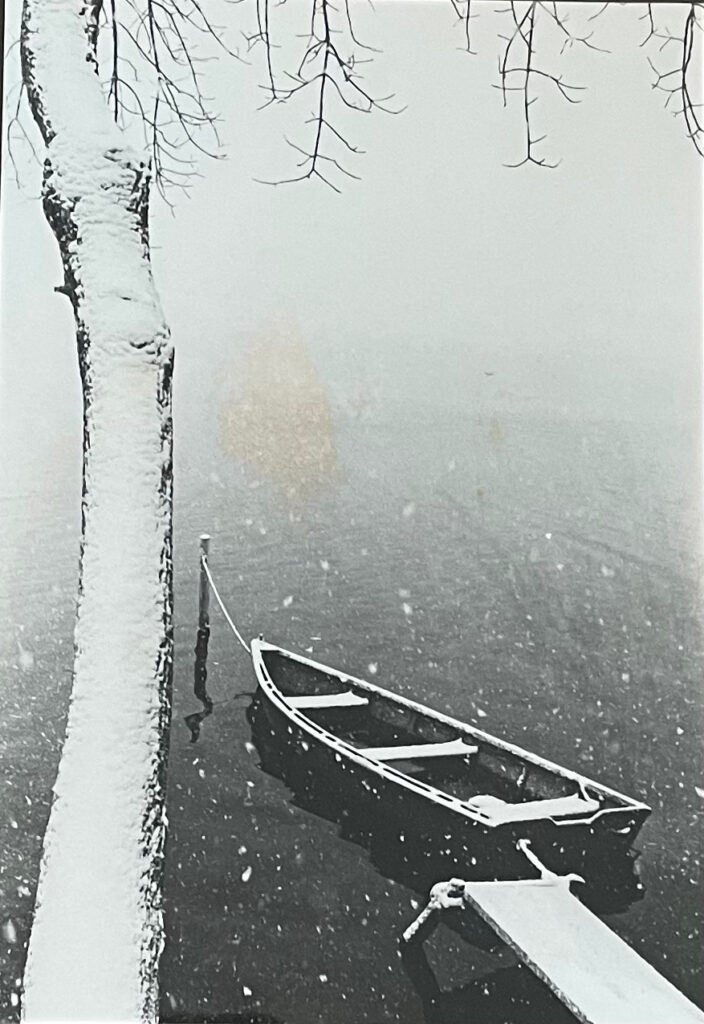
Here’s an enigma. How do you paint white snowflakes on white paper or canvas? Artists young and old have struggled with this challenge for ages.

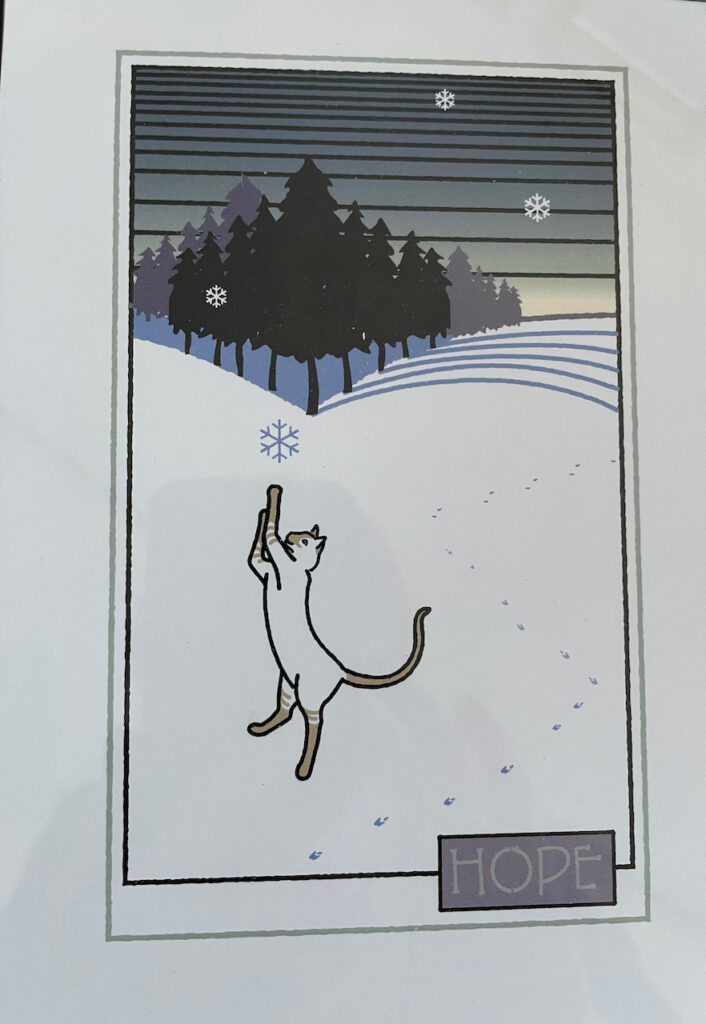
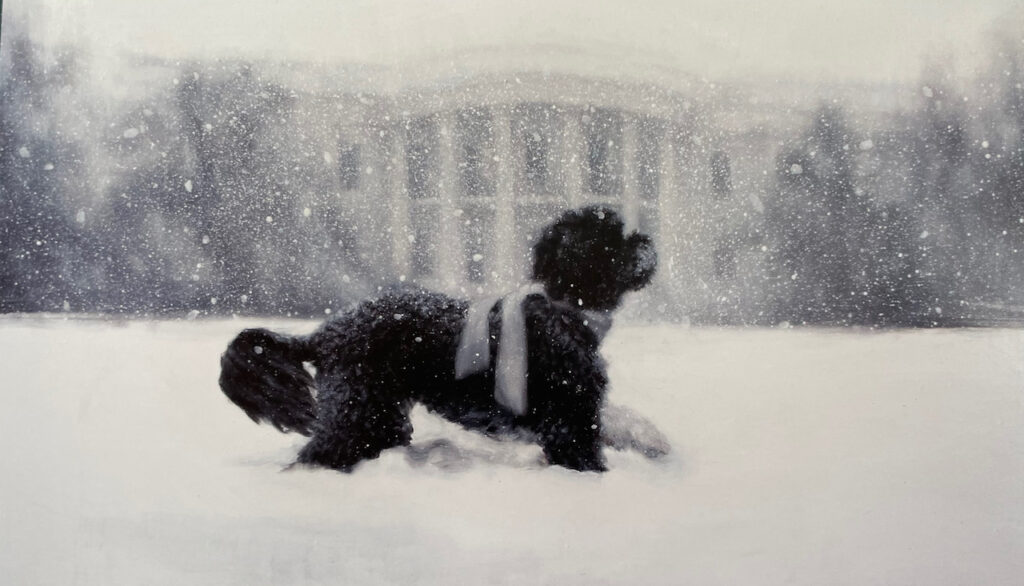
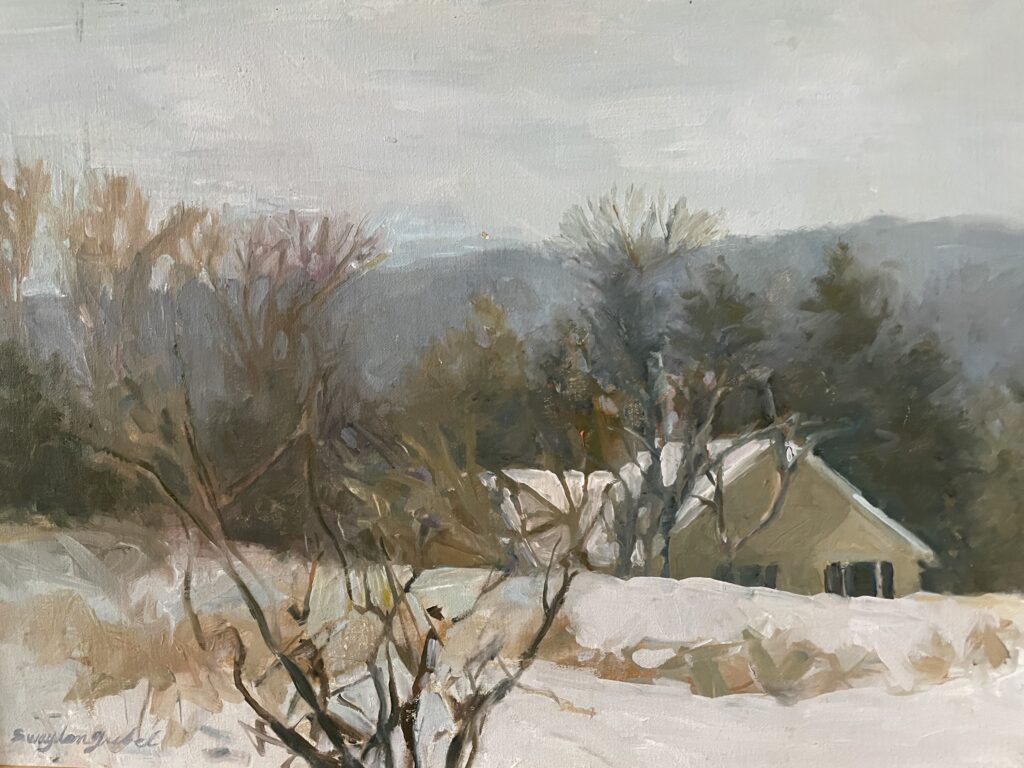
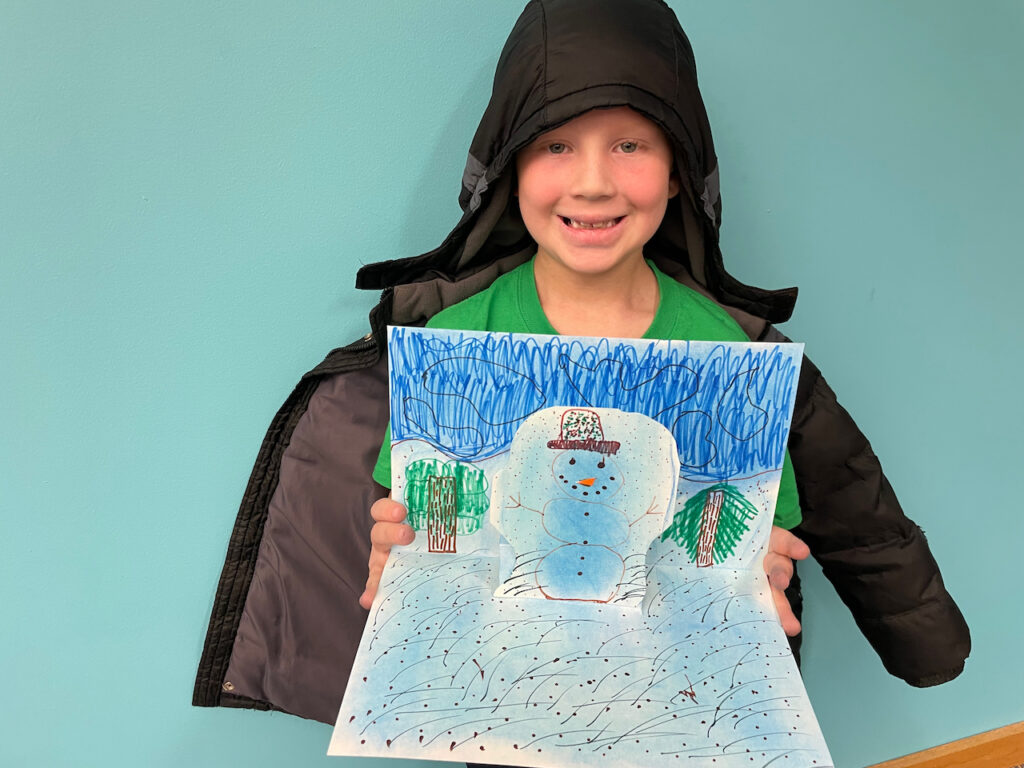
I’m fascinated by their approaches and have collected snow scenes over the years. A few are from art galleries but most are magazine pictures, postcards, greeting cards, photographs and children’s art.

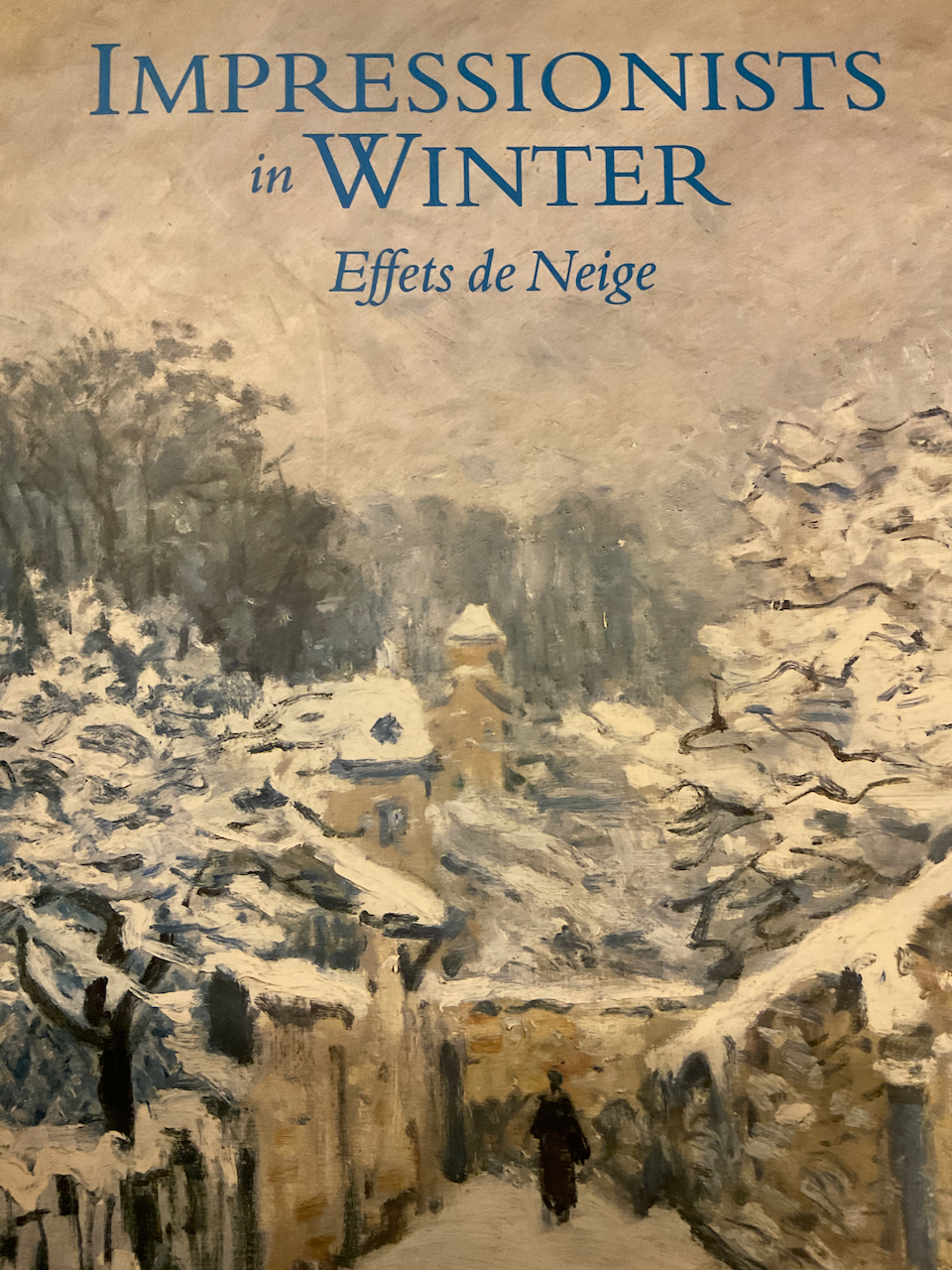
I also have a fascinating book on the topic of painting snow entitled “Impressionists in Winter”. Although most associated with sunlight, waterlilies and fair days, the Impressionists did paint wintry scenes with their gray, snowy skies. The winters of 1879-80 and 1890-1891 were unusually severe in France, and the artists recorded the rare conditions with their paintbrushes. Monet, Sisley and Pissarro were especially dedicated to capturing winter light.

Many of you who are reading this live in places that have no snow or where the first signs of spring are breaking out. We in the upper midwest are still in winter’s embrace. And, despite the miseries that freezing temperatures, snow-packed roads and blowing winds can bring, snow remains a magical thing. For me, the best snow days are those when big flakes drift down lazily from a perfectly still, quiet sky.

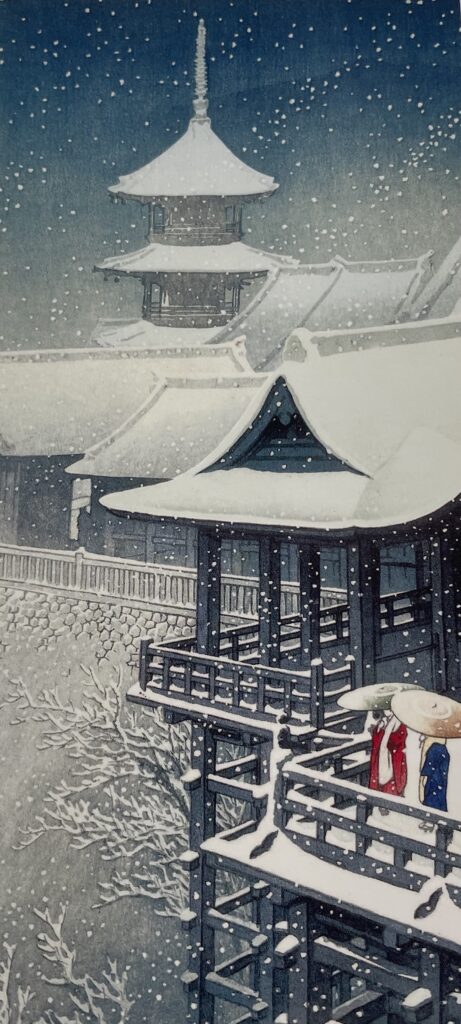
Here are pictures from my collection of the many ways artists solved the problem of capturing those elusive snowflakes on paper, canvas, and film.

2

Relationships

Robert Waldinger knows a lot about happiness. He is the fourth director of the world’s longest running study of happiness. Officially called the Harvard Study of Adult Development, the research began in 1938 with 268 Harvard undergraduates (all male as the school did not enroll women then) and later 456 14-year-old boys who had grown up in one of Boston’s severely disadvantaged neighborhoods. The study continues to the present day and has expanded with over 1,300 direct descendants of the original participants.

The goal of the project is to find out what factors are most important in making a happy and meaningful life. When entering the study, all participants were and are interviewed and given medical exams. Throughout their lives, they receive brain scans, blood tests and frequent interviews. With eight decades of scientific research now amassed, the results are being revealed.

Waldinger admits surprise at the most important factor in happy and healthy lives…it is social relationships. Here is a summary of the findings from the Harvard Gazette:

“Close relationships, more than money and fame, are what keep people happy throughout their lives. Those ties protect people from life’s discontents, help to delay mental and physical decline and are predictors of long and happy lives more than social class, IQ, or even genes. That finding proved true across the board among both Harvard participants and the inner city participants.”

The reverse of these findings is also true. Loneliness can end lives more quickly. Dr. Waldinger points out the importance of consciously working on our social relationships, for example, not putting off that call to a friend or striking up conversations during casual encounters.

I am a firm believer in science and enjoyed reading and sharing these findings. But a funny thought occurred to me when writing this piece. A song from the 1964 musical Funny Girl did predict the study’s findings. That song entitled “People” contains the famous line “People, people who need people, are the luckiest people in the world.” Now we all know that is a proven fact.

Happy Valentines Day. It’s important.

Picture: Sue Rowe

4

Type (Part Two)

A true treasure chest of a museum is straight up the road from our house. The gigantic building is filled with cabinets of skinny drawers. The drawers contain wood block type, 1.5 million pieces of type in over 1,000 styles. This wonderful place is The Hamilton Wood Type and Printing Museum, the largest museum dedicated to wood type in the world.

The story of the museum begins on a back porch. In 1880, young Edward Hamilton of Two Rivers, Wisconsin, was asked by the town’s newspaper editor if he could make some large decorative type. The type was needed to create a broadsheet advertising a grand ball at the local Turner’s Hall.

Hamilton had run his own woodworking business making wall brackets and other wood pieces. He took the editor’s sketch and gave it a try. Using his foot powered scroll saw on his mother’s back porch, he cut out the ornate letters and mounted them on blocks of wood.

His letters printed beautifully, and he decided to make more and see if printers were interested. After receiving his second order, he quit his job at a chair factory and founded the J.E. Hamilton Holly Wood Type Company. His process produced quality wood type at half the cost of his competitors. Twenty years later, in 1900, the Hamilton Company was the largest producer of wood type in America.

Through the years, the company successfully expanded into areas such as metal office and medical furniture, gas clothes dryers and children’s furniture. However, an offshoot of Hamilton continued to handcraft type until 1993, well into the computer age.

The Hamilton Manufacturing Company was demolished in 2014, but with much hard work and many miracles, the type collection and presses were saved by the Two Rivers Historical Society. A spacious building on the lakefront was purchased and a massive move installed the collection in its new home.

Make note that this is not a dusty museum of type languishing in displays. It’s a working museum with artists coming from all over America and the world to use the type and presses.

The wood type letters still have a lot to say! Here is a quick video tour of the museum.

.

8