Cocoon

Summertime has officially arrived and with it comes the world’s most charismatic insects, the butterflies and moths, a.k.a. the Lepidoptera family.

Thanks to a wonderful exhibit at a Chicago natural history museum, I can finally and clearly understand the difference between a cocoon and a chrysalis. Unfortunately, these words are often used interchangeably in our American speech, books and schools despite the scientific fact that a cocoon is not a chrysalis.

Both butterflies and moths, like all insects, metamorphose, or change, at different times in their lives. They cycle through four stages; egg, larva (caterpillar), pupa and adult. The pupa stage is where our confusion sets in.

Both butterfly and moth caterpillars truly are hungry; they eat voraciously. They outgrow their skins and molt numerous times.

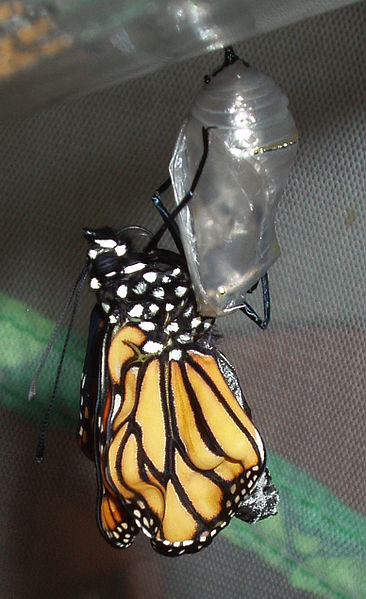
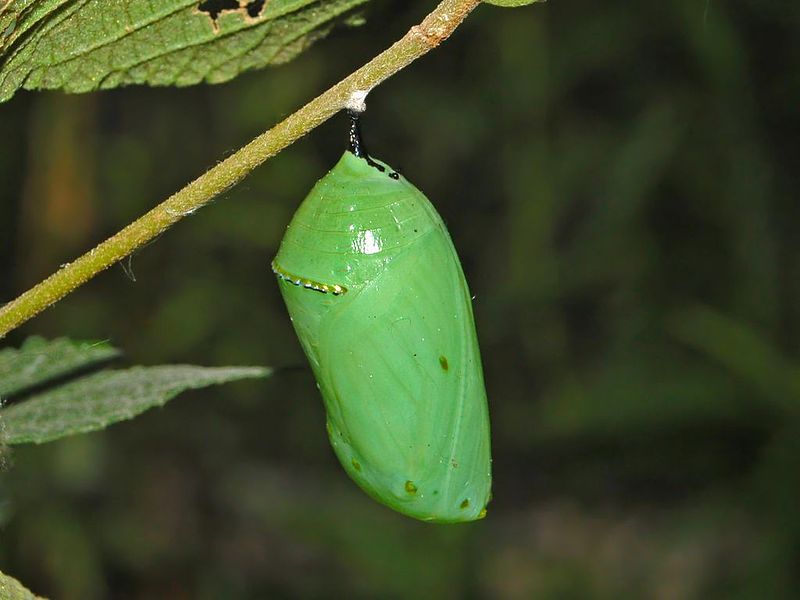
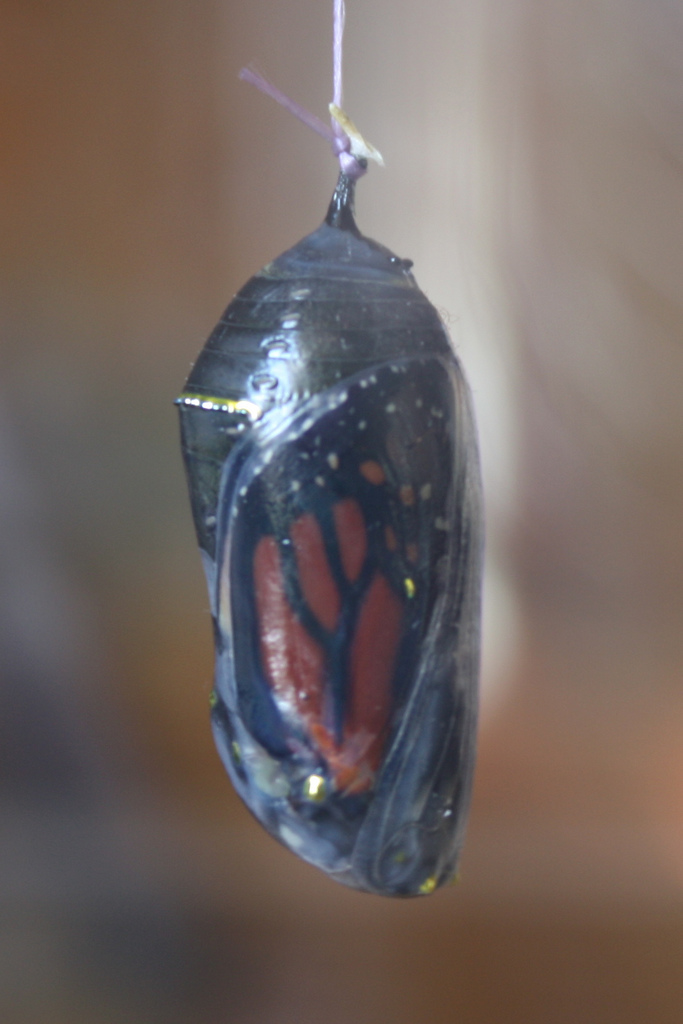
When butterfly caterpillars molt for the last time, their new skins harden into protective chrysalises. They morph right beneath their own skins. “The chrysalis is not a container, IT IS AN ACTUAL INSECT.” Some chrysalises are stunningly beautiful. The brilliant green and gold rimmed Monarch chrysalis could easily be mistaken for a pendant crafted by a master jeweler.

Most moth caterpillars do things a bit differently. They create a cocoon from silk they spin, leaves or other materials before they enter the pupa stage. Think of the cocoon as a sleeping bag around the pupating moths. The moths cut their way out of the cocoons or secrete a fluid that softens the structures. Both the butterfly and moth need to hang from their resting places until their wings stretch out and dry and their bodies harden.

I love Eric Carle and his Very Hungry Caterpillar, but his famous caterpillar made a cocoon and then emerged as a butterfly. It should have made a chrysalis.
0

Dunes

We have been ripped off. The sandy bluff in our front yard on the western shore of Lake Michigan is 70 feet high. Across the Lake and about 60 miles north, one of the dunes in Sleeping Bear Dunes National Lakeshore in Michigan is 450 feet high.

The prevailing westerly winds are the culprits. They create sand dunes that pile up spectacularly on the eastern Lake Michigan shores. A few years ago when we saw the skyscraper height dune at Sleeping Bear for the first time we were speechless. We stood on the top and the people who had ventured down to the the beach looked the size of ants. Watching them climb back up 40 stories of shifting sand was painful. The upward trek takes about an hour, and many people abandon walking and crawl up.

Every time we visit our reaction is the same. Our minds can’t grasp what our eyes are seeing, much the same way that Niagara Falls and the Rio Grande Gorge are sights which have no reference points and can produce wonder again and again.

This year we noted a new sign had been posted at the top of the phenomenal incline. It read:

WARNING
STEEP, ERODING BLUFF
KEEP OFF
MAY CAUSE INJURY OR
HEAT ILLNESS
RESCUE FEES WILL BE CHARGED

In other words, if you are macho enough or thoughtless enough to think the climb up this dune is a cakewalk, you will pay dearly for your stupidity.

Fortunately, neither my husband nor I harbor any needs to conquer that sand mountain. We just soaked in the view from the observation deck above and played in the upper parts of the world’s tallest sandbox. We also laughed at this line from the park’s visitors guide: “Wisconsin is 54 miles due west, but thanks to the curvature of the earth, you will not see any cheeseheads waving back at you.”

Dune-People
Note the people in the upper left hand corner to get some sense of the scale


0

Mailboxes

It’s hard to be creative with your mailbox. Postal, city, town and village regulations dictate the parameters for proper mailboxes and posts.

These are necessary rules, as our faithful mail carriers should not have to go on scavenger hunts to find the place to deliver our mail. Happily, creative people are not hampered by a few rules. They embellish their stock issue mailboxes or enhance the space around the boxes.

Our own box is the largest, black, rural mailbox that Fleet Farm sells, a true utilitarian object. Loving mail, I wanted the biggest size box to safely shelter magazines, book deliveries, presents and The New York Times.

We decided to dress up our plain box with numbers in an attractive, modern type style. Beautiful fonts at $30 per digit were readily available online. Finding affordable “peel and stick” digits involved a long computer search.

To help visitors find our home, we needed a marker. Lake Michigan obliged by washing up a huge driftwood pole to which we attached four black metal “scare cats” with marble eyes. The cats were a gift from my beloved Aunt Jane who was fond of ordering items from mail order catalogs. The cats’ purported purpose was to scare birds from fruit trees and gardens. Fortunately, they don’t scare anything away.

IMG_2545This last, brutal winter took its toll on the cat poll. The county’s enormous plows pelted snow down on it until the cats were walking parallel to the ground. When the ice melted, the pole crashed, and we hauled it into the garage for repairs.

A week later we found a note slipped into our mailbox. It read,”I enjoy the cats every time I drive by. I hope they will be coming back.” The note was signed, “The Silver Miata.”

We do not know anyone who owns a silver Miata, but we are happy that whoever they are likes our cats who are once again back and walking proudly up their pole.

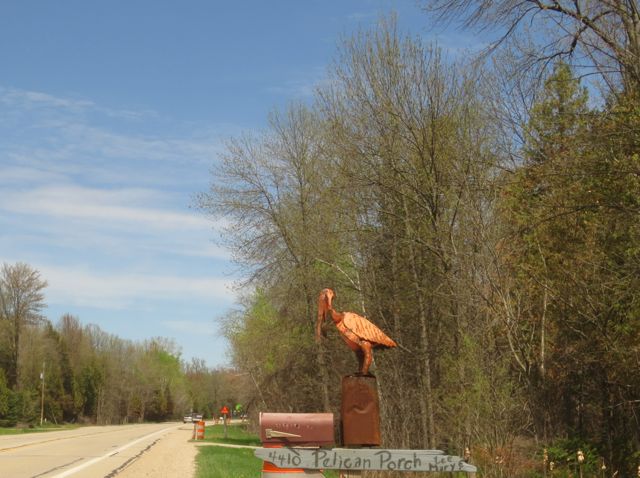
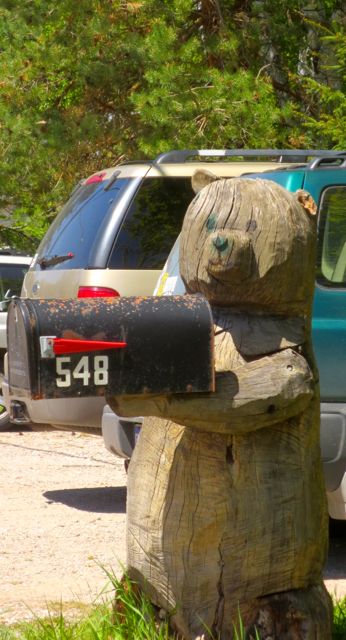
Here are some of the unique mailboxes I’ve photographed in the Lake Michigan area. There must be something in the water. (Click to enlarge images)

0

Petunias

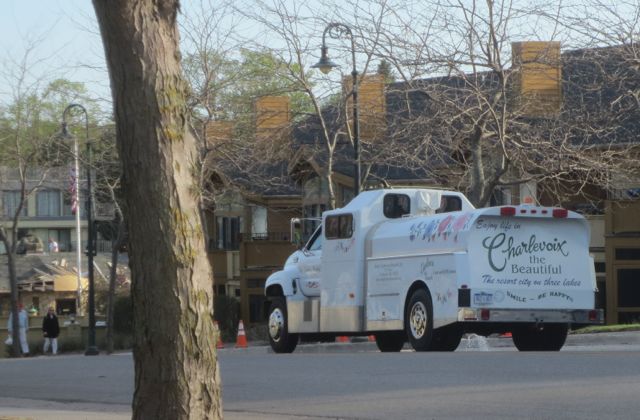
Good things can happen when people work together. In the case of Charlevoix, Michigan, a small town on the northeastern shore of Lake Michigan, a sensational thing has happened.

In 1982, a town meeting was held to brainstorm ideas for making the town more attractive. Mundane ideas were suggested until Dale Boss, a retired milkman, brought up his idea. He suggested that five miles of petunias be planted between the curb and the terrace grass all along the length of US 31 which runs through the town.

His idea brings to mind a quote from Daniel Burnham, the great architect and Director of Works for the 1893 World’s Columbian Exposition in Chicago. “Make no little plans; they have no magic to stir men’s blood…”

Apparently blood was stirred as five miles of narrow beds were dug, filled with good soil and fertilized. Volunteer crews planted thousands of petunias, and Mr. Boss in a watering truck gave the plants a drink every morning starting at 4:00 AM.

Fast forward thirty years to 2013 and Operation Petunia as it is called had its thirtieth anniversary. The beds have been widened, the petunias are up to 62,000 (1,200 flats) and the community is on its fourth watering truck. Mr. Boss still gets up at 3:45 AM to water the blooms seven days a week…..except if there has been rain.

Last Thursday, May 29, 2014, we were heading into Charlevoix at 11:00 AM. When we hit the northern edge of town, NO PETUNIAS were in sight as in past years. There were cultivated beds with perfectly evenly spaced holes in them. The empty beds spanned the entire town.

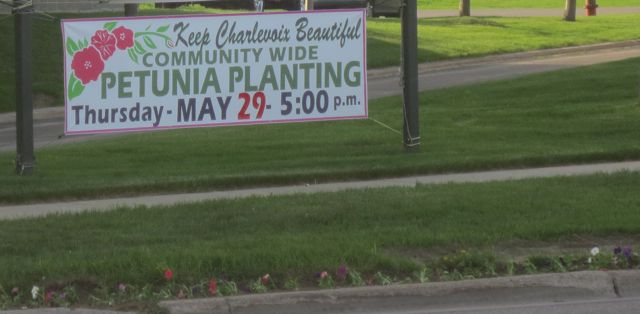
We continued on our road trip, petunia-less, to Traverse City, Interlochen and Lake Michigan enjoying the blossoming fruit orchards and tidy vineyards. By seven in the evening, we were again approaching Charlevoix on our way back north. We could hardly believe our eyes. The petunias were all in place, all five, perky, colorful miles of them. And then we saw the banner that read:
IMG_2510
The planting had been delayed a week due to an extremely late spring. 800 plus volunteers had put all the petunias in the ground. And to top it all off, we saw the watering truck coming down the road, spraying the newly planted flowers as it went.

We circled back and followed it for a while. Teamwork can work wonders.

IMG_2515IMG_2519

0

Piggy

“I think we are in trouble menu-wise,” I said to my husband at the end of a recent week. I had just returned home from the Milwaukee Art Museum where I had unsuccessfully attempted to have a light lunch after doing a school tour.

The posted menu had many meaty items including a featured entree of pork belly. I don’t want to impose my almost vegetarian eating style on others, but I do appreciate a few non beast entrees on a menu.

That entire week had been an eye opener. I had stopped at a charming coffee shop in Madison to get a drink and snack before my long drive home. Cold pork and quinoa salad was the lunch special. Pulled pork loomed large on the following day’s noon menu. By Friday I was convinced that a menu without three pork concoctions was considered declasse.

My hunch was confirmed when we were out of the state the following week. We stopped in a delightful looking restaurant named Prep and Pastry for breakfast. The limited breakfast menu featured two pork belly items; a breakfast sandwich with pork belly, cheese and eggs and a pork belly biscuit. We ordered eggs and toast, but wanted to try a pastry; after all, this establishment had the word “pastry” in its name. My husband went to the pastry trays to select one for us. He came back with no pastry and a troubled look on his face.

“The one I picked out turned out to be a bacon croissant,” he explained, “so I decided to pass.”

What can I say except that piggy menu items are very, very trendy now. And if I were a pig, I would be running for the hills.
piggy

0