Origami

Although it is always associated with Japan, origami, the art of folding paper squares, began in China after the invention of paper in the 2nd century. The paper was folded, not cut, so no piece of the paper was wasted.

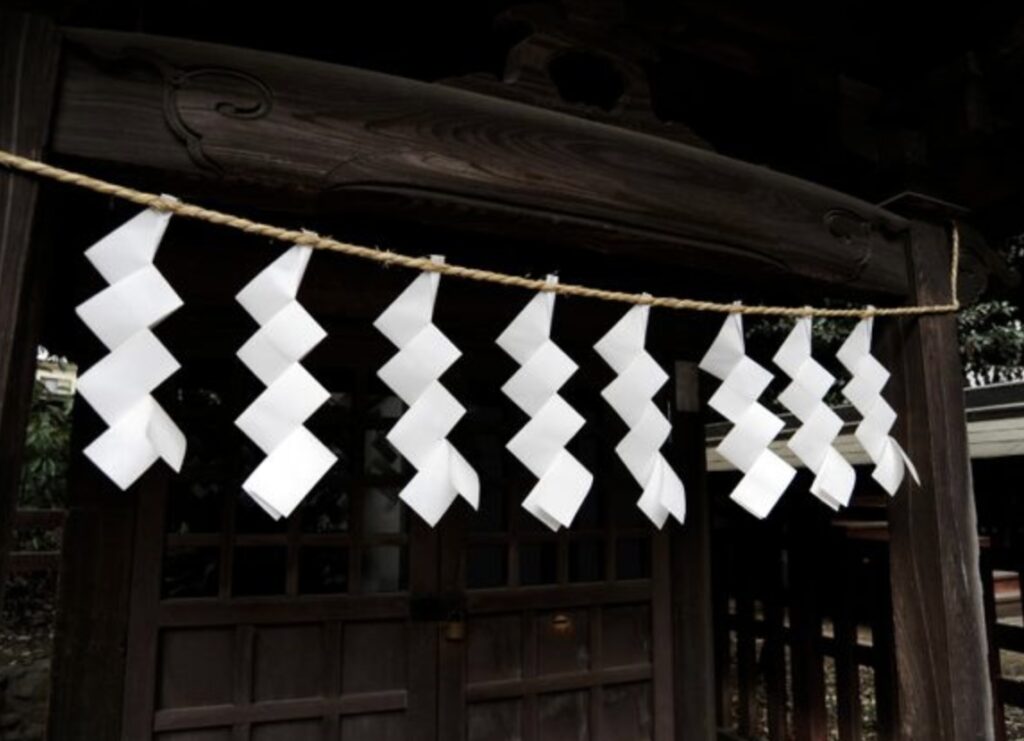
Buddhist monks brought paper folding from China to Japan in the 6th century. At that time, paper was rare and expensive. Origami creations were used to decorate shrines. When more paper was produced in the 17th century, common people were able to enjoy practicing the art. By the mid-20th century, Akira Yoshizawa created a step by step system to diagram the folds. His work led to origami being practiced worldwide.

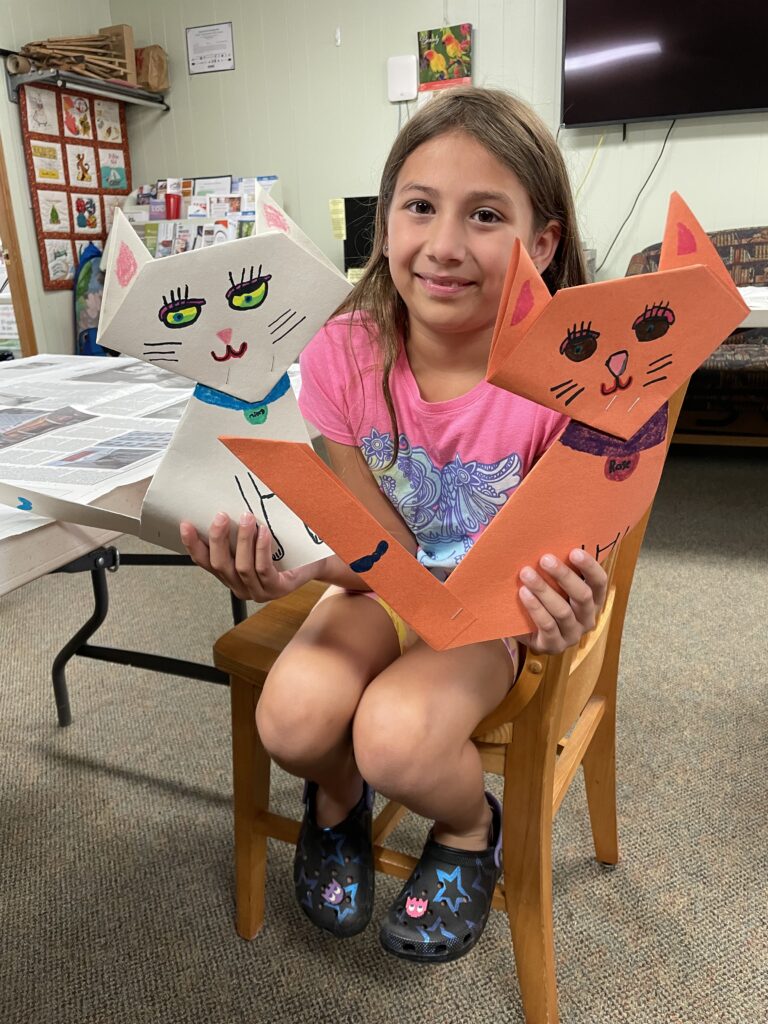
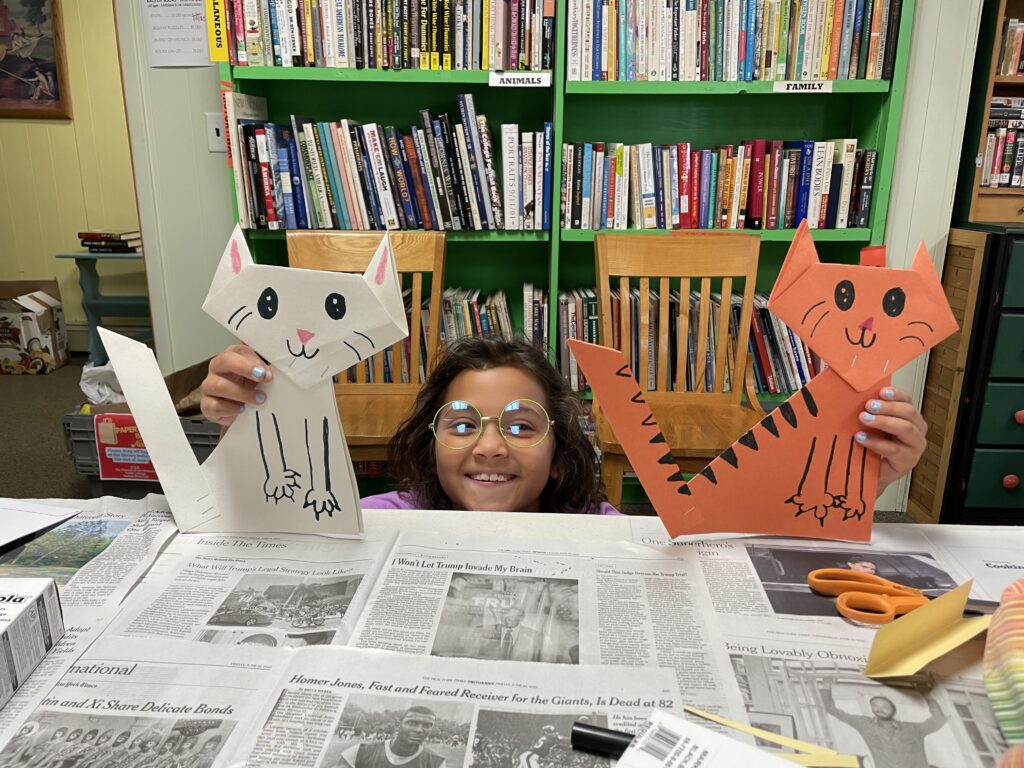
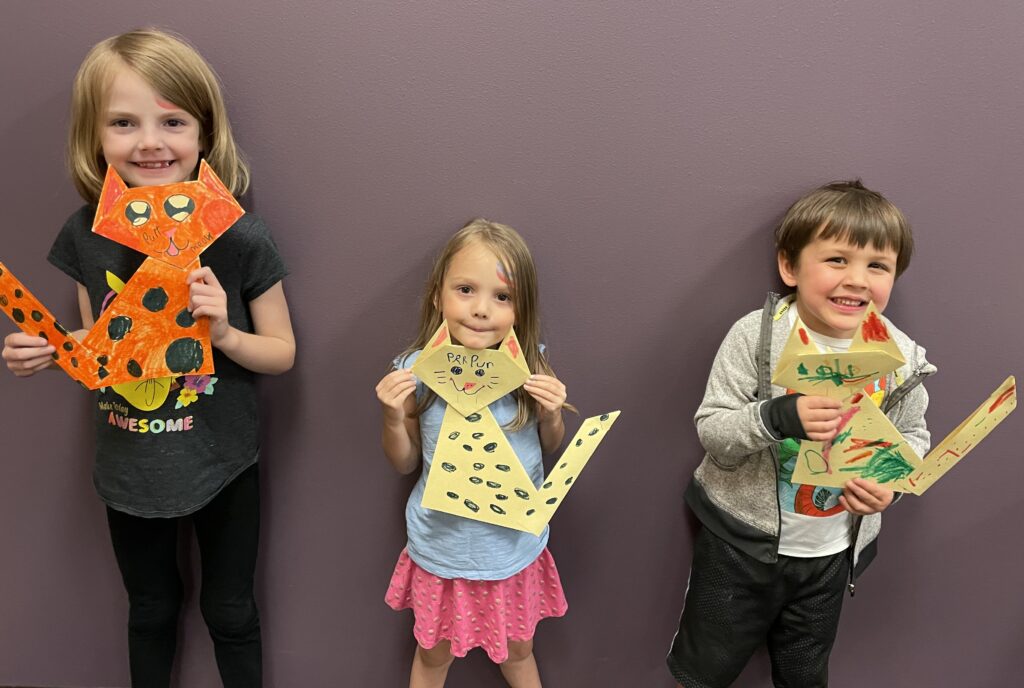
I must admit that origami is not my forte. I usually get puzzled around the fourth step in any of the diagrams. Nevertheless, I chose to spend many days this summer doing origami with groups of children. I needed an art project as a finale to “Purrs and Roars”, my library summer reading program, and found an origami cat on the kindergarten level, exactly my competency zone.

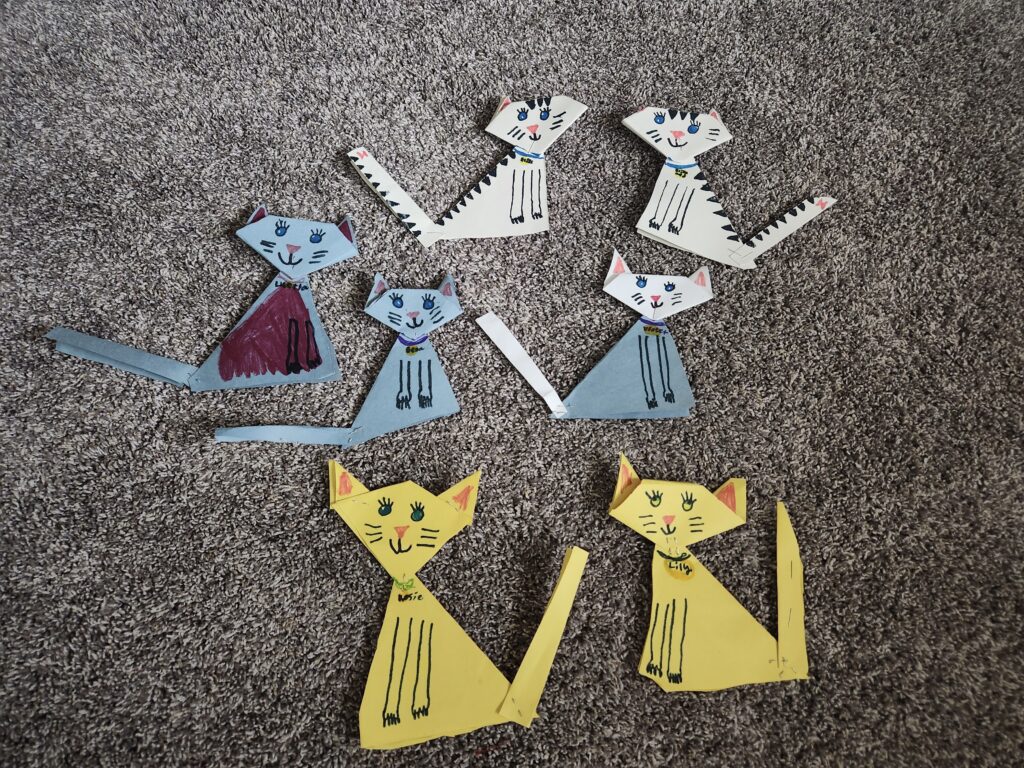
The cat had four folds for the head and one fold for the body. The pattern for the cat had no tail, and I did not want all the felines to be Manx cats. I fortuitously had long rectangles of paper left over from cutting out the squares and, with two folds, these became tails.

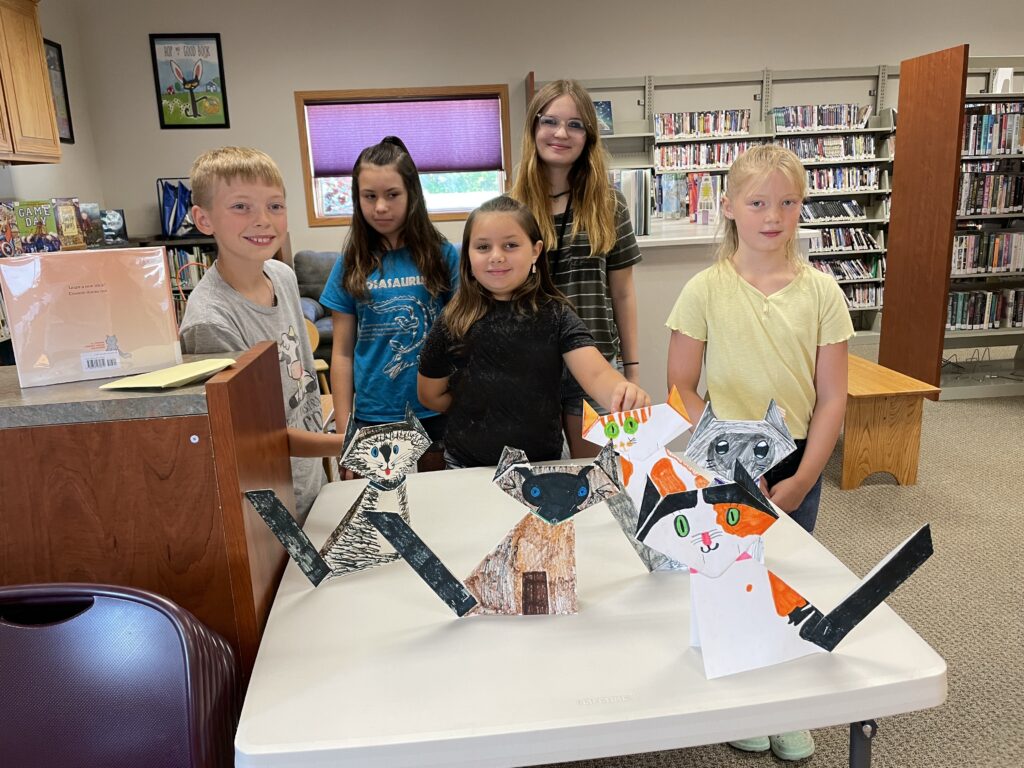
I happily can report that all the cats the children and I made turned out. And no one, including me, cried any tears of frustration. We took the steps very s l o w l y, and I asked the big kids to make sure the little kids did each step correctly.

After everyone had a cat, it was time to get creative. “Decorate your cats any way and any colors you want,” were my instructions. The finished cats were all delightful and unique. One group of siblings had five cats at home and carefully reproduced all the colors and markings of their own kitties. Another young child made a lovely purple cat. And one young lady finished her cat and asked me if she could make a kitten. I quickly cut a small square and a kitten was born.

The morning after, I received an email from the girl’s mother. Her daughter had come home from the library and spent all afternoon making kittens…and naming each one.
5

Fading

“I can’t believe summer is going by so fast,” are words I’ve been hearing a lot lately. For those of us in northern climes, summer can never last long enough.

The calendar is saying that 32 days of summer remain. But the first goldenrods are sporting their yellow flowers, and the insect chorus gets louder every night. Autumn’s imminent arrival cannot be denied.

Each summer is unique; nature brings surprises, some good and others not. At this moment, our vistas are awash in myriad shades of green. Summer had a slow start, but the rains finally came. The corn now looks like tall green walls lining the roadsides, and gardeners can’t pick their veggies fast enough.

The annual parade of flowers continues at full steam. At this moment, Queen Anne’s lace (wild carrot) is ruling the roadsides and reigning in the meadows. In many places, it resembles a summer snowfall. I had to pull some in our prairie so it wouldn’t take over, and that culling released an intense carroty smell.

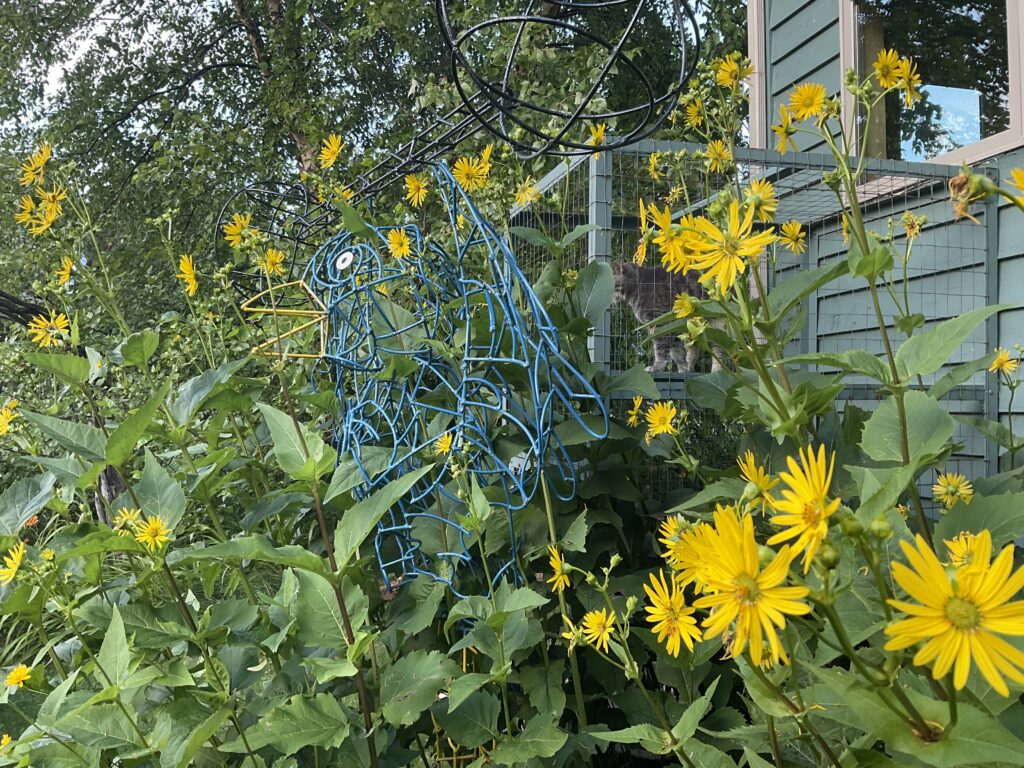
Our cup plants are thriving as well, producing a bumper crop of flowers. We welcome the bees who are having a massive party in them.

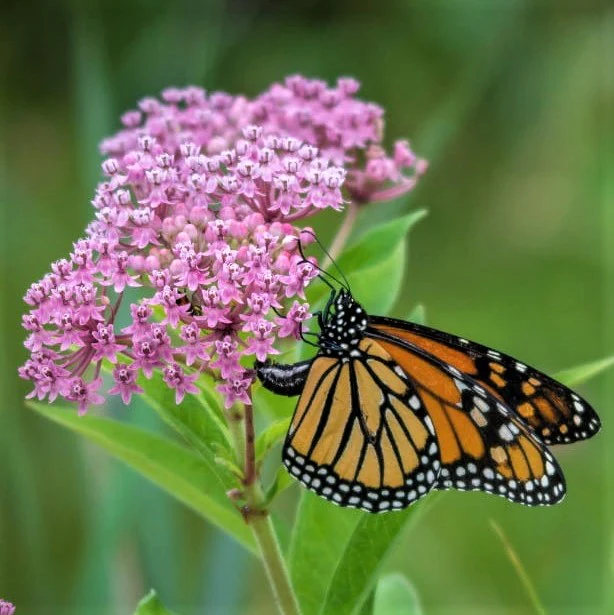
On a sadder note, butterfly numbers were down this summer. Our milkweed thrived, but the usual masses of monarchs did not come to lay eggs and feast. The swallowtails were scarce as well, and only a few red admirals fluttered through the yard.

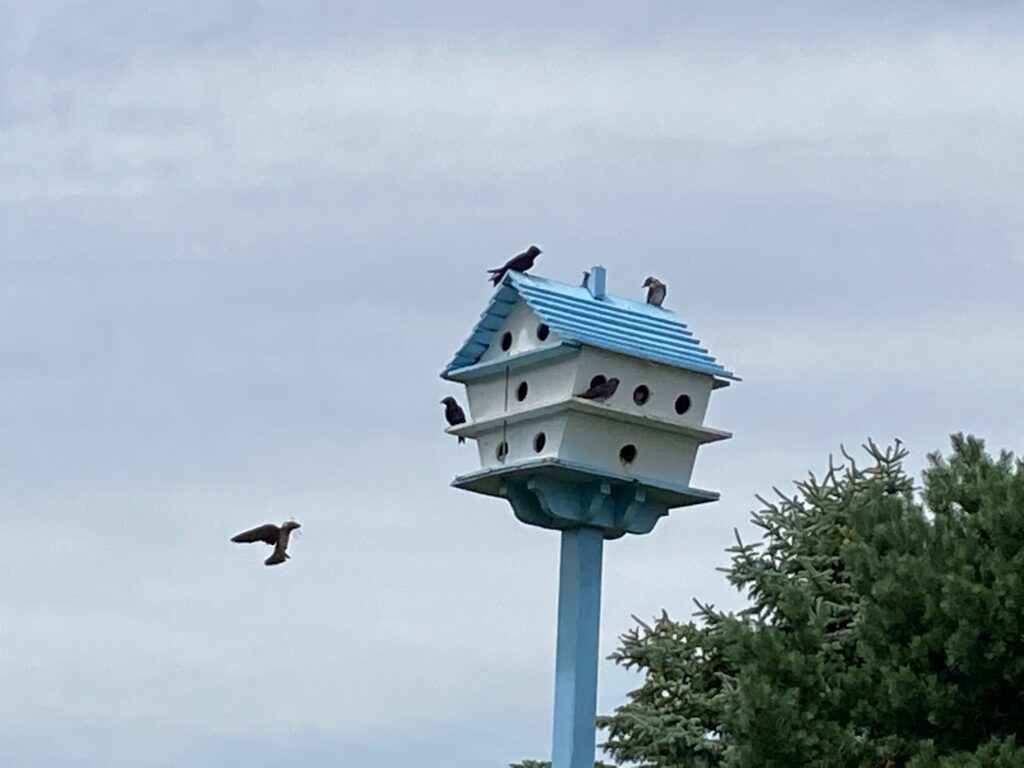
Much better news can be reported on our purple martins. Both our houses were occupied, and many babies were raised and fledged. The families have all set off now on the long journey to their winter homes. It’s a poignant moment when we realize that their lovely chirping no longer fills our yard, another indicator that summer is slipping away.

The birds that remain are sending signals, too. The seeds in our feeders quickly vanish. It’s time to stoke up for migratory flights or a long winter. I did, however, see a flock of geese going north the other day and the male goldfinches still have their sexy, bright yellow feathers…two clues that summer is still with us.

This summer will be remembered for an alarming event as well. Smoke from devastating Canadian wildfires filled the skies for many weeks covering the sun and turning the sun into a fiery red ball at sunset. Mother Earth is sending an urgent message… Take care of me if you want future summers of joy, not sorrow.

6

Hidden

My husband recently shared a fascinating article with me. The topic was hidden symbols or objects in familiar logos. It was an eye-opening indictment of how we humans are always looking but often not seeing all that is to be seen.

I’ve spent a lifetime in the arts but will admit that my powers of observation aren’t the best. And I know that my brain is tripping me up. A glance at something and the brain says, “You’ve seen this before, no need to waste time looking harder.”

Here are some excellent examples of what we miss. You will never look at these logos the same way again.

We all know that Baskin Robbins has 31 flavors, one for each day of the month. But did we see the big numeral 31 incorporated in their logo?

Fed Ex speeds packages forward. How speedily can you spot the arrow in their logo?

Hershey’s sells chocolate kisses. That’s why one kiss is hidden in their lettering.

Here’s an easy one. Find the two people, a chip and a bowl.

This one is harder to spot. The word “mom” is on the girl’s collar and is meant to project that “home-cooked feeling”.

A bear is lurking in Toblerone’s logo. That is because the chocolate company originated in Bern, Switzerland, a city symbolized by a bear.

Who hasn’t seen the Amazon logo? But who has noticed the arrow from A to Z indicating that they sell everything from A To Z?

Look hard to discover the letter R is a bike rider while the letter O and the yellow circle are the bike.

I love both Goodwill and their new logo. The smiling face in the upper left corner is also a lower case letter g.

It’s the letters LSO, but it’s also a conductor with his arms raised…Bravo!

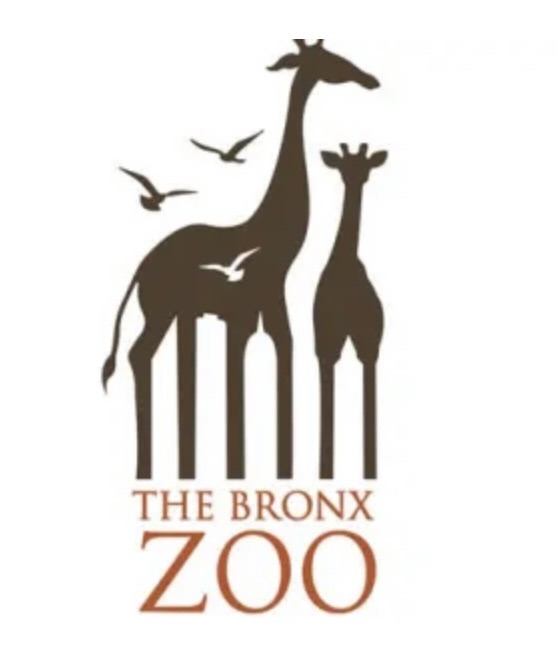
Can you find the gorilla and the cheetah?

Did you spot the New York skyline?

A map of Australia is in this graceful logo.

The odd logo of the French grocery store chain Carrefour has puzzled me for years. Here’s the scoop. Carrefour means “intersection” in French. At first glance, the logo looks like arrows pointing left and right, but in the negative space in between is a big, beautiful letter C. Voila!

5

Trending

I love spotting trends. Whether in food, fashion or language, trends often have murky origins. But they spread more rapidly than germs in a daycare.

This summer I’ve detected two trends in speech, a sentence and a buzzword that have proliferated in conversations.

My summer has included many long drives with public radio as my companion. During these drives, I noticed an amusing speech pattern. On numerous programs when someone was being interviewed, the initial response was, “That’s a great question.” One day I counted that response six times in one program.

I must be either extremely enlightened after hearing the answers to all those great questions or merely overexposed to a new language fad.

The second trend is a buzzword that pops up in restaurants, drive-through windows and cafes. The order is given, and the server replies, “Perfect”. I can report that I’ve placed a goodly number of perfect orders this summer. Somehow, I can’t believe I’m a genius for picking out a decaf cappuccino from Starbucks’ array of drinks. That cup of coffee may be right for me, but it is not perfection incarnate.

Bear in mind that I am a champion of all those underpaid, overworked cafe and restaurant employees. I also would probably be spouting inanities if I had to be interacting with a steady stream of the American populace. I will not be pointing out the idiocy of praising my drink or menu order.

Yesterday, I was grocery shopping and the young cashier dutifully asked, “Have you found everything you were looking for?” I smiled and said, “Yes”, to which he replied, “Perfect”.

It’s spreading.

4

Sheep

I am resigned to turning myself into a faux sheep, and it’s all my fault. This story begins twenty-seven years ago and undoubtedly will continue as long as we live in our beloved home.

We dreamed of having a natural yard, a small prairie of native plants and a meadow. Moving into our new home, we had no funds left for a commercial landscaper. We needed a quick fix for our construction-ravaged, eroding front yard so we turned to the miracle plant of that time, crown vetch. That plant was highly recommended by highway departments, nurseries and horticulturalists all across the country.

Vetch was already growing on our cliff. We clambered down and brought up four small plants in hopes of stemming the erosion in our front yard.

Fast forward to the present. We have realized our dream and have a little blue stem prairie filled with native plants. But the vetch has also flourished and wants to take over the entire yard. Now all those plant experts are warning about the aggressive tendencies of crown vetch.

All my attempts to remove the vetch have failed. I’m not sure even a small nuclear device would budge the stuff. I have asked numerous people at UW Extension, landscapers and master gardeners how to tackle this problem. “Get sheep” was the best advice. They love to eat vetch, and the plant has to work so hard regrowing that it can’t spread.

Since I’m already caring for nine cats, the thought of adding sheep to the animals in our care is overwhelming. The only option is to pretend I am a sheep and keep tearing the stuff out of our prairie. That is exactly what I do every week. And I am trying to take this wise advice from a horticulturist. She said, ” Just readjust your emotional reaction to the plant”.

She’s right. It could be worse. Bees love vetch and it is beautiful. And it’s not kudzu.

4