Beets

Pulling into my driveway, I spotted a bulging plastic bag beside the door. After getting the car into the garage, I peered into the mystery bag to discover a big pile of dirty brown lumps. “Terrific,” I thought, “my neighbor has given us beets freshly dug from his garden.”  Unwashed beets are truly the ugly ducklings of the vegetable world.

I was delighted to get a gift of beets, but I know that many people would not be. I understand how veggies in the cabbage family can be loathed, their powerful aromas can linger in a house for days. But how can ruby red, mild flavored beets induce distaste? Perhaps some beet haters can enlighten me.

Beta vulgaris or beets can be loosely classified into four groups: the table beet, eaten for its root, the leaf beet, or chard, the sugar beet and the mangel-wurzel. (No, I did not make up that last one.)

Beets go far back in history. The earliest Romans ate only the leaves, by the time the Christians showed up, the Romans were indulging in both the leaves and the roots.

The sugar beet is an improved variety of B. vulgaris. It is long, skinny, white and indebted to Napoleon Bonaparte for its popularity as a source of sugar. An English blockade of France had cut off France’s sources of cane sugar. Napoleon solved the sugar crisis by having 70,000 acres planted in sugar beets. A refinery was set up in Paris and the Parisians again could have their cake and other sublime pastries as well.

The mangel-wurzel, a.k.a. mangold, is large, coarse, yellow to reddish-orange and best eaten if you are a member of the cattle or pig family. The English, however, use them for sport as well as animal fodder. In the village of Silverston each October, teams of three players hurl mangel-wurzels in turn, aiming to hit a large, leafless mangel-wurzel known as “the Norman”. (Grudges do have a long shelf life!) Check out The Mangold Hurling Association website.

At our house we prefer to eat our beets, sprinkled with grated orange zest and dotted with butter.


0
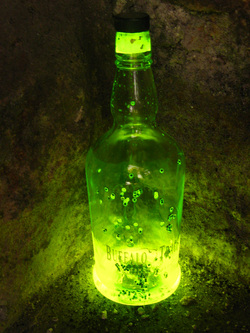
Potions

One of my favorite Halloween poems is by Nancy Willard, children’s poet extraordinaire. She delightfully describes the trickiness of concocting a perfect potion:

You must take special care of potions,
syrups and essences and lotions.
You know the work will not go well
if you should mispronounce a spell.
A single lapse in common sense
can have a fatal consequence.
The last apprentice took no time
to learn a complicated rhyme
that turned a lily to a lock.
He turned into a hollyhock.
For magic free of aggravation,
practice.

If I could brew up a potion, it would not be a love potion. People can make that kind of magic happen all by themselves.

A kindness potion is what I would stir up. I figure a concoction to melt hearts of stone is sorely needed in the world at this moment. People who delight in taking school lunches away from hungry children and food stamps from poor families would get a good dose of my potion. All the immigrant-haters, racists and homophobes would also be served along with the folks who believe that every problem can be solved with a gun.

The main ingredient in my magic potion would be empathy with vibrant tones of compassion, tolerance and charity stirred into the brew.

Wouldn’t it be wonderful if magical thinking worked in the real world?

magic

0

Rosettes

“Smell goes into the emotional parts of the brain and the memory parts, whereas words go into the thinking parts of the brain.”

My grandmother lived downwind from a large cookie factory. Her neighborhood of tightly packed, austere German flats was populated by blue collar workers and their families. Delicious cookie aromas enveloped the neighborhood at almost all hours of the day and night.

Once every week or so, a small sign appeared on the door of the factory: “Broken Cookies Today”. Crowds would begin lining up and snaking down the sidewalk hours before the door opened. No fancy marketing here.

Once inside, you handed $2.00 to a man standing behind a counter and received in return a large, brown, grease-spotted bag. The bag was stapled firmly shut, its contents a mystery. And since adults ruled the world back then, the bag remained closed until it was safely home.

Then… bliss!  Or maybe not. If the coconut “washboard” cookies were over baked, broken or imperfect, they could fill up the entire sack.

What the neighbor kids and I all wished for was a total breakdown in the Rosette division. Rosettes were marshmallow and raspberry jam cookies entirely dipped in chocolate. We prayed that the factory workers would mangle, squish, overdip  or make the Rosettes unsaleable.

When I met my husband many years later, I soon discovered that he had a penchant for Rosettes. His mother loved “store cookies” and bought them frequently. His were not seconds.

johnston

0

Storyteller

Judy’s story came to an end on October 7, 2013. My lovely friend, the amazingly gifted storyteller, writer  and children’s librarian, Judy Farrow Busack, has died.

I met Judy over 25 years ago. She brought her storytelling programs to schools and libraries all over our state and beyond.

I am not a storyteller. I’m the nonfiction lady, doing educational programs on art and natural science topics. But Judy and I were frequently booked at the same events and a lasting friendship bloomed.

Here are two stories that I hope will convey this woman’s exceptional gifts.

When Judy was a children’s librarian, she ran theater workshops as her teen summer reading programs. Every children’s librarian knows that attracting teens to library programs is difficult; an event with 12 kids is considered a resounding success.

One summer morning I was scheduled to do a program for the younger children at her library. I arrived early to find fifty teenagers eagerly waiting for the library doors to open so they could work on their play. Judy had them fully engaged, allowing them to be creative, make mistakes, learn from their mistakes and ultimately take pride in their productions. Her theater programs continued for many summers, and some of “her” kids went on to careers in the theater.

Judy was a spellbinding storyteller. I was once asked by a school where I did frequent art programs if I could suggest a presenter for a middle school assembly. I knew this group of kids well. Sadly, many of them made the school’s anti-bullying program a dismal failure. I recommended Judy and candidly told her, “If you take this job the most charitable thing I can say is that it will be challenging.”

Judy arrived with no costumes or props to face 100 kids sitting in the bleachers with their usual “I dare you to make me interested in anything” attitudes. Judy had every one of them captivated in three minutes. She only told one story, a folk tale about brothers that were turned into swans. The story lasted more than a half hour. I am still in awe, a word I seldom use.

Magicians and trained dog acts now have become the hottest bookings for children’s library programs. If storytellers are hired, they often are not advertised as such for fear no audience will show up. I know few things with certainty, but I know this: we all, young and old, need our stories and our storytellers. And if you have been touched by a storyteller as gifted as Judy, you indeed are blessed.

fairytale

0

Wasps

We’ve been eating breakfast between the bees and wasps lately. The days have been sunny and unseasonably warm allowing us to eat outside on the front deck. Our table is two yards from the paper wasps’ nest next to the door and one yard from the prolifically blooming asters in front of the deck.

All of us have been enjoying our morning meals….granola, raspberries, yogurt and Sheboygan hard rolls for us, nectar from the asters for the bees and insects and nectar for the wasps. Life is good: pura vida.

The wasps have been with us all summer. Their house construction began in late spring. Walking out the door to our front deck, I noticed one perfect hexagonal cell attached to the upper frame of the window beside the door. Since no one was building at the moment, I quickly knocked it down in hopes that the project would resume farther from our outside dining area.

The Queen wasp, however, had chosen her building site with “location, location, location” in mind. The next morning a new cell was in the same spot, plus more were under construction.

“Here’s the deal,” I said to her. “I will leave you alone if you will let our guests and us eat undisturbed this summer.”  The bargain has worked. Fortunately, paper wasps, unlike their cousins the yellow jackets and hornets, are not overly interested in sugary people foods.

The bees are a recent and welcome arrival. Bee populations are crashing all over America and we saw few all summer despite our “bee friendly” yard. But last week, scores of bees were converging from all directions. Aster nectar in the bee world must be like French champagne to us.

By this time next month all of our breakfasts will be indoors. The bees and wasps will no longer be with us, and the jewel like fall colors will have faded. We know that change is the only constant, but, fortunately, each moment remains our only reality.


0