Baguettes

What could be better than a crusty chunk of French bread with a generous slathering of butter?

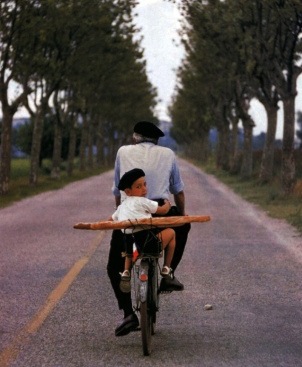
The French have been bread artisans and connoisseurs for centuries. So it was with shock that I read a recent newspaper headline, “A French Dining Staple is Losing Its Place at the Table”. France without bread lovers would be like Italy shunning pasta….unthinkable.

The average Frenchman is eating a mere half baguette a day now as compared to a whole one in 1970. Young people eat almost 30 percent less bread than a decade ago. The Observatoire du Pain, the French bread marketing lobby, is not taking this reduced bread consumption lightly. A campaign promoting bread has been launched.

“Coucou, tu as pris le pain?” (Hi there, have you picked up the bread?) is the slogan of the campaign, and the phrase has been plastered on billboards and bread bags across the country.

The marketing message rises to the seriousness of the situation, “Bread promotes good health, good conversation and French civilization.”

And, since this is all happening in France, love enters the discussion. “Remember that buying fresh bread on the way home is a simple way of showing loved ones that you have thought about them and of giving them pleasure during the day.”

French bread in France is not in danger of extinction. Ten billion baguettes are sold every year and a national bread festival is celebrated in May around the feast of Saint Honore, the patron saint of bakers. In addition, Paris holds an annual contest to find the best traditional baguette. The winner’s breads are served at the Elysee Palace for a year.

I find only one flaw in this noble campaign to encourage the consumption of fine breads. I believe the French should go global with their message……the world is sorely in need of a large serving of civilization at the moment.

french bread

0

Underground

I am a dedicated tunnelophile. I’ve been fascinated by tunnels since I was seven years old and took a trip out West on the fabled Atchison, Topeka and the Santa Fe Super Chief. The train went through many long tunnels cut through the Rockies. Being hurtled from brilliant desert sunshine into total darkness never failed to amaze me. To this day, I am always willing to detour in the direction of an interesting tunnel, especially ones I can drive through.

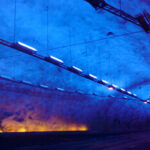
The longest car tunnel in the world at 15.23 miles is the Laerdal Tunnel in Norway. The final link in E16 connecting Oslo and Bergen, this super tunnel took five years to complete. The design is divided into four sections, separated by three large caves. The caves serve as turn around points, detriments to claustrophobia and rest spots. The tunnel roadway has white lights, the caves have blue lights with yellow on the edges to simulate sunrise. Tunnelophobes should find this soothing.

The scariest tunnels I have ever driven were in Italy in the cliffs above the Mediterranean. Many Italian drivers see no need to slow their 110mph speed when hitting the tunnel entrance; in fact, some speed up. Thrill seekers (of which I am not one) would adore this string of speed tubes.

The Ted Williams Tunnel under the Boston Harbor is my least favorite tunnel. Part of the “Big Dig”, it has various exits within the tunnel one of which connects to the airport. Make a mistake here and you can miss your plane.

The Gotthard Pass through the Swiss Alps is bilingual. Enter from the north portal and everyone is speaking German; exit to the south and the language has changed to Italian.

The eastern entrance to Pittsburgh on I-376 is the Squirrel Hill Tunnel. I love that name and tried without luck to find how the name originated. I always have images of squirrels cavorting over my head on the mountain as I drive through. I did discover the fact that because of its low height, Squirrel Hill Tunnel is notorious for trapping trucks thus creating tunnel chaos. A construction project to raise the ceilings began this June.

Below are images of the Laerdal Tunnel. A couple was so smitten with its eerie beauty that they had their wedding in one of the caves.

0

Week

The week is a human invention. Years, seasons, months and days are not our creations. Earth’s orbit around the sun, earth’s tilted axis, moon’s orbit around earth and earth’s rotation exist without us mortals.

What pressing need caused our species to invent the week? The best hypothesis is a simple one….shopping. The phrase “born to shop” is not newly minted. The ancient Babylonians needed another division of time, longer than a day yet shorter than a month. They needed a measure of time between market days. Seven days was their choice. West Africans held a market every four days so their week was four days long. The Romans had an eight day week but dropped it in the fourth century in favor of a seven day one.

People can’t resist naming everything in their sphere, so once the week was invented, the days were named. The first day is literally the sun’s day or Sunday. Early civilizations worshipped the sun, an understandable belief since we would all be nonexistent without it.

The moon gets day number two. The Romans called the day “lunae dies” or moon’s day. The Saxons in the Middle Ages called it Moneday.

Tuesday, day number three, was believed by the Babylonians and Romans to be ruled by Mars, the god of war. Many European countries still invoke Mars: Mardi in French, Martes in Spanish and Martedi in Italian. We English speakers get the Saxon version from “Tiu” the Saxon god of war. Tuesday started out as Tiwesdaeg.

Day four, Wednesday, gets more complicated. The Romans called it “dies mercurie” or Mercury’s day. It remains Mercury’s day in French, Mercredi; Spanish, Miercoles and Italian, Mercoledi. The Germans sensibly call it Mittwoch or midweek. English speakers get to honor the chief god of the Anglo Saxons, Woden, on Wednesday.

Think of thunder on Thursday. The Romans gave the day to Jupiter, the ruler of all the gods and the god of thunder. The Anglo Saxons chose powerful Thor, also the god of thunder, who brought rain to their crops. The Normans called Thor “Thur” getting us to Thursday.

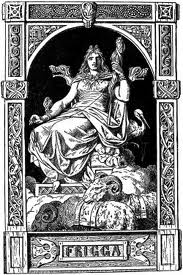
On day six, we finally get the feminine perspective. The Romans dedicated it to Venus, the goddess of love and beauty. Venus remains in the French, Venredi; Spanish, Viernes and Italian, Venerdi. The Anglo Saxons went for love as well, naming the day after Frigga, the goddess of married love, housewives, sky and clouds. Frigga was Woden’s wife and was responsible for spreading knowledge and justice.

The seventh and last day of the week belongs to the Roman god Saturn, father to Jupiter, Pluto, Neptune and Juno. Saturn remains firmly lodged in our word Saturday.

I’m grateful to the ancients for fabricating the week and giving character to its days. Who would want to live in a world without Fridays?

frigga

0

Ants

We have ants. Fortunately none are inside our house, their two residences are outside in the meadow beside our home. And perhaps, more correctly, I should have said, “The ants have us.” They were living on the land before we came and will probably be here after we are gone.

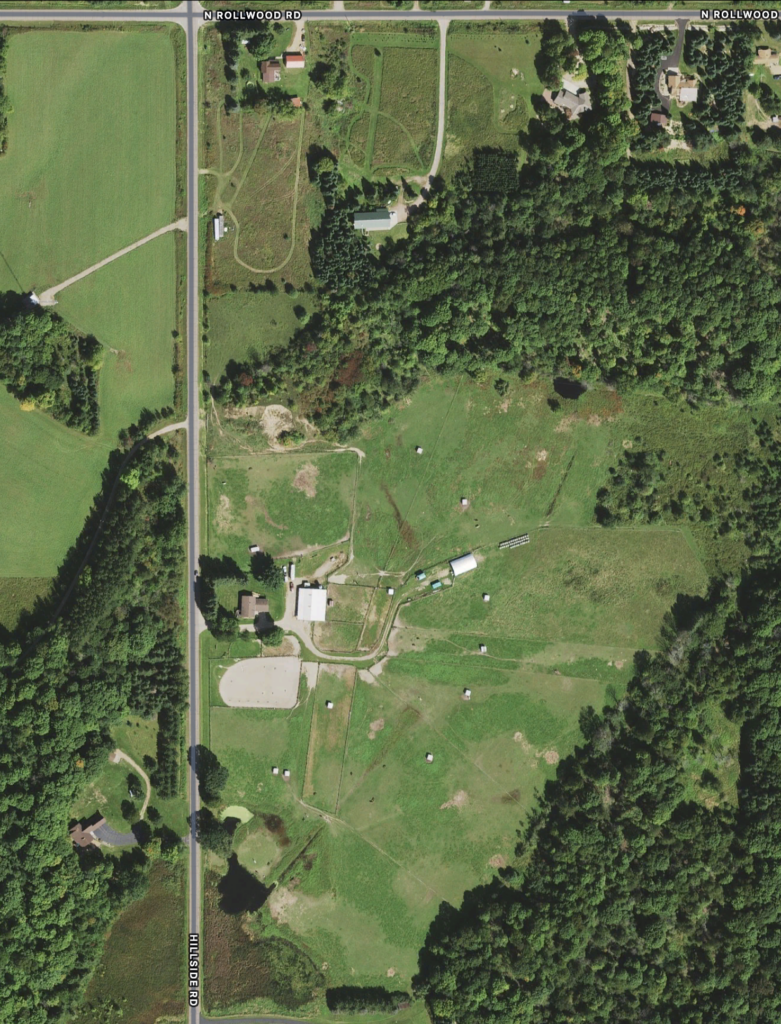
When we bought our acre lot 38 years ago, we noticed two gigantic mounds in the field. Closer inspection revealed that the yard wide, two foot high hills were massive ant colonies. We regard them as a bonus that came with the property.

Linnaeus, the great classifier, put all ants into the family Formicidae. That is now divided into about twenty subfamilies and 300 genera. Our ants are in the genus Formica (not to be confused with countertops) which includes field ants, wood ants and mound ants. I do not know the species of our ants; there are currently 12,762 ant species, and I am not an entomologist.

Formica ants are mostly beneficial to their habitats. Formica ants don’t sting, but they can bite and spray formic acid  from their abdomens. They use the acid to subdue their prey which are other arthropods, many of which are destructive to forests and plants that we cultivate. Their eating habits can be described as “predatory with a sweet tooth.” In addition to eating bugs, they also seek out honeydew which is a sugary liquid excreted by aphids as they feed on sap.

The top of the ants’ mounds is thatched, an amazing engineering job on the part of the colony. The thatched plant materials keep the rain out and are angled to heat the interior of the mound via solar energy.

Edward O. Wilson, one of the world’s leading authorities on ants, sums ants up best. He states in his book, The Ants, “Karl Marx was right, socialism works, it is just that he had the wrong species.”

0

Beans

“Better walk across your road and pick some beans,” my farmer neighbor advised. “The canning company is coming any day now to harvest them.”

I accepted his generous offer and yesterday walked down my driveway, across the road and into the massive field of green beans. I picked a modest bag full; some for dinner and some to freeze.

Since the day was sticky hot, I pondered what would make a good dinner entree with the just picked beans as a main ingredient. Our refrigerator is small, but it yielded some interesting ingredients, and the cupboards are always stocked with pasta. I created a cold pasta salad for our evening meal, and we ate it on the front deck as the sun set over the bean fields. We both pronounced the salad a success, a recipe to be written down and repeated.

The next morning we woke to a huge racket. All the cats were hiding from the clattering, clunking noises that were coming in the windows. Three giant Pixall harvesting machines were lumbering through the fields spitting beans into their hoppers. A semitruck was waiting to haul the multiple loads to the canning factory.

So it’s goodbye to the beans…but not quite yet. I have lived in the country long enough now to know I can second harvest. Those clanking machines won’t capture every bean.

Just Picked Bean Salad

(This is a general plan, not a specific recipe, feel free to improvise)

  • About two cups each of cut, lightly cooked green beans and al dente cooked pasta
  • 1 large carrot, shredded
  • 1 handful snap peas, cut into bite sized pieces
  • 3/4 cup shredded Pecorino Romano cheese
  • Chopped chives or onions to taste
  • Celery salt to taste
  • Cajon seasoning to taste
  • Mayonaise to hold it all together


0