Favorite

If asked who my favorite author is, I would not hesitate a second. Alexander McCall Smith has given me boundless reading pleasure for so many years that I would happily nominate the man as a living treasure.

Born in Africa and a professor emeritus of medical law at the University of Edinburgh, Mr. Smith is also a bassoon player in “The Really Terrible Orchestra”. He is the author of over 50 books, and I hope many more will come.

I read at least one book every week, most of which come from my local libraries. Being naturally frugal, I love the concept of free books. But Alexander McCall Smith’s books are an exception. I walk into a Barnes and Noble (my daughter is a B&N manager and I am loyal) and buy many of his new releases almost as soon as they hit the shelves. I read my new purchases within days and eagerly await the next ones.

I must note an extremely odd fact: I find several of my favorite author’s series completely unreadable. Despite repeated attempts, I cannot get into the 44 Scotland Street or Corduroy Mansions series. The No. 1 Ladies’ Detective Agency and Isabel Dalhousie novels are the ones that draw me to the booksellers.

Precious Ramotswe and her husband, Mr. J. L. B. Matekoni of Tlokweng Speedy Motors, are my most beloved fictional characters. Mr. Smith’s newest arrival in the No. 1 Ladies’ Detective Agency series is The Minor Adjustment Beauty Salon. My favorite passage in the book follows. I believe its true hilarity may be understood best by traditional women of my age, but kindly give it a try.

Mma Ramotswe comes home from work and finds her husband in the kitchen.

“What are you doing, Rra?”

He turned around almost guiltily.

“I am cooking the potatoes, Mma Ramotswe. I am helping you with the evening meal.”

She looked over his shoulder and into the pot. It was tricky working out exactly what he was doing. “What is happening inside this pot, Mr. J. L. B. Matekoni?”

He shot her a puzzled glance. “I thought we might have mashed potatoes. I know you like those.”

“I do.  So are you mashing them now?”

He nodded. “And it is rather hard work, Mma.”

“You’re mashing them even before you have cooked them, Rra?”

He frowned. “You cook them first?”

Mma Ramotswe reached around him and took the pan out of his hands. It was half filled with water in which fragments of raw potato floated morosely, like a soup. Very gently she poured the mixture down the drain. “I will show you how to start with new ones,” she said. “You cook the potatoes first and then you take them out and mash them up with butter and salt. That is how potatoes are made, Rra.”
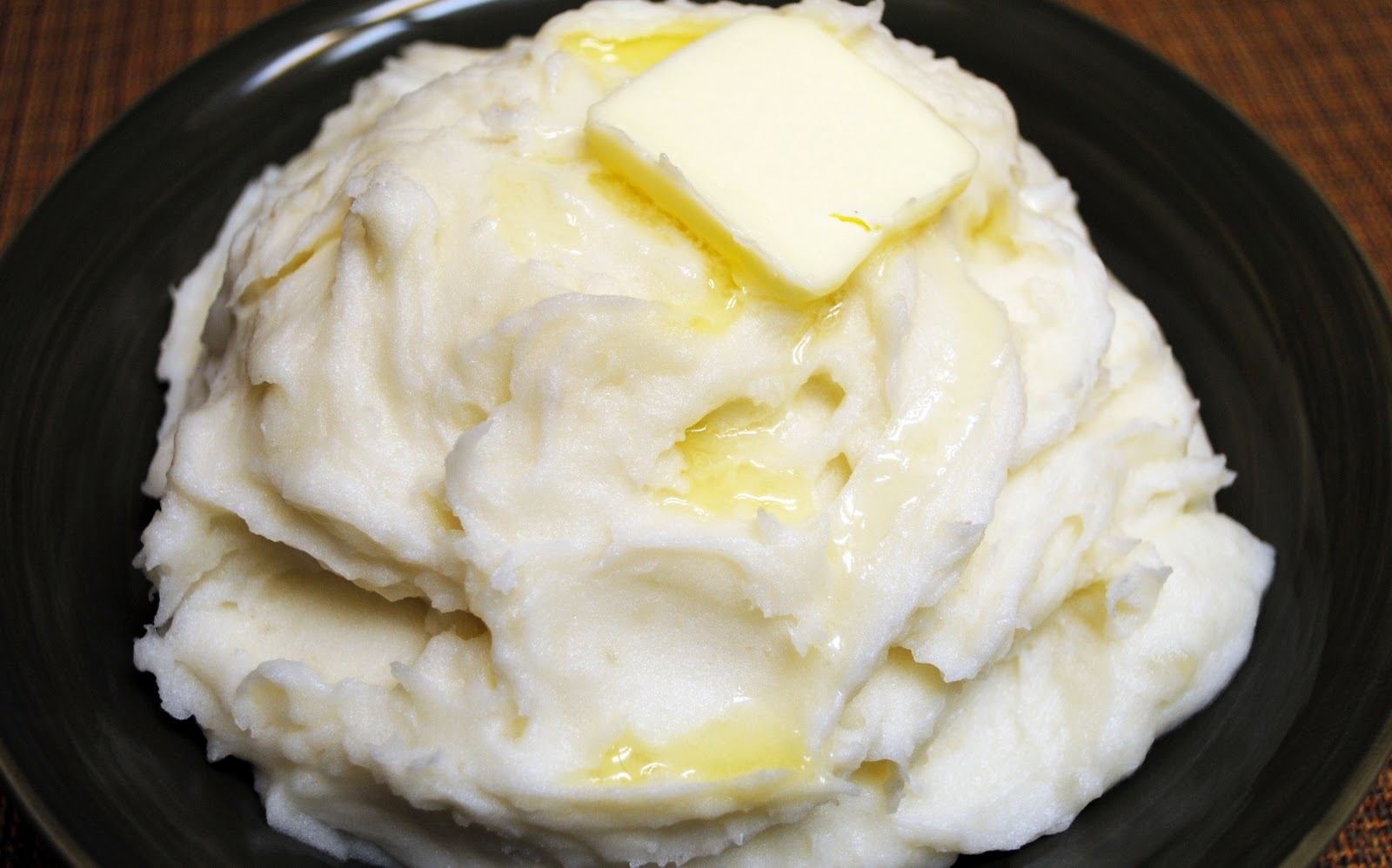
 mashed

0

Tangerines

I have tried extremely hard for many years to like them. But now I am prepared to admit: I hate tangerines.

My distaste for this fruit makes no sense which is why I have given them many chances.

I love all the other citrus fruits. The arrival of the new orange crop in late fall is an anticipated event, and we eat them nonstop all through the winter months. Limes are simply sublime, my favorite member of the citrus family. Lemon juice and zest are critical ingredients in many of my favorite recipes. And blood oranges with their ruby interiors and sensational flavor are an extraordinary treat.

Tangerines always start out well; slick zipper skins, neatly breaking segments. But then I pop a piece into my mouth and once again am disappointed.

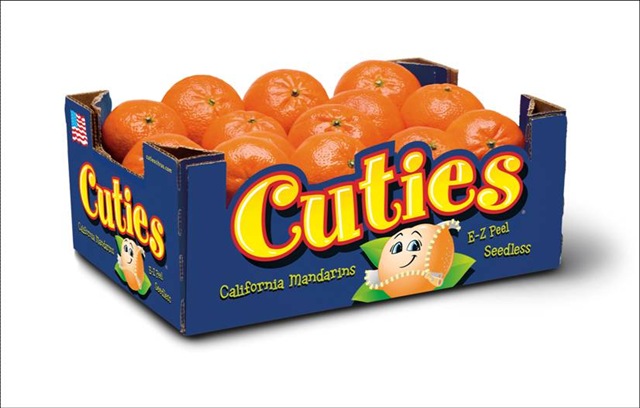
It gets worse. Around the holiday season everyone is raving about the arrival of the Clementines a.k.a. Cuties. They are packed neatly into sweet little wooden boxes and look so appealing. I bought some only to discover after one bite that they are only tangerines without seeds. At least I can salvage the box for some art project.

Food preferences are not rational choices. So perhaps when I hang up my stocking, St. Nick will understand and give me an orange or two. He can stuff those Cuties into someone else’s sox.
cuties

0

Hands

I’m an art teacher and a firm believer in the amazing creativity of children. My first goal for my  youngest students is to keep their spontaneous, delightful art pouring out of them for as long as possible.

Naturally, I abhor coloring books, stencils, patterns and gimmicks that show kids how to make copy cat “art”. In an ideal world, adults inspire young artists to express themselves.

This introduction brings me to a classic example of how to destroy children’s  natural drawing abilities. I seethe when I see it: the turkey hand.

The children are taught to draw around their hand and turn their thumb into a turkey head and their fingers into feathers of prescribed colors. Many children shown this gimmick will never draw an original turkey again……why think about how to draw something if you don’t have to? That’s dumbing down, turkey style.

I was recently doing a class on landscape drawing with middle schoolers who never had an art teacher  during their elementary school years. As I was walking around the room looking at the evolving drawings, I was stopped cold at one student’s desk. An eighth grade boy was tracing around his hand making a landscape of turkeys.

“Guess what?” I said as gently and unobtrusively as possible. “Turn your paper over and draw anything original and I’ll be the happiest art teacher in the world.”

I don’t expect older kids all to be proficient artists, but I do want them to know what art is …….and isn’t.

I once suggested to a group of my young students to draw a picture of  ” Turkeys on the Tundra”.  These are my kind of  turkeys; did you know they rode snowmobiles?

Turkey Hands 2

0

Treasures

I’ve been a beachcomber all my life. As a child, spending a day on the Lake Michigan Grant Park Beach was bliss. I spent hours searching for treasures; unusual rocks, fossils, shells and beach glass.

My ardor hasn’t cooled one bit now that I live with a beach in my front yard. In fact, the number of treasures that I search for has expanded.

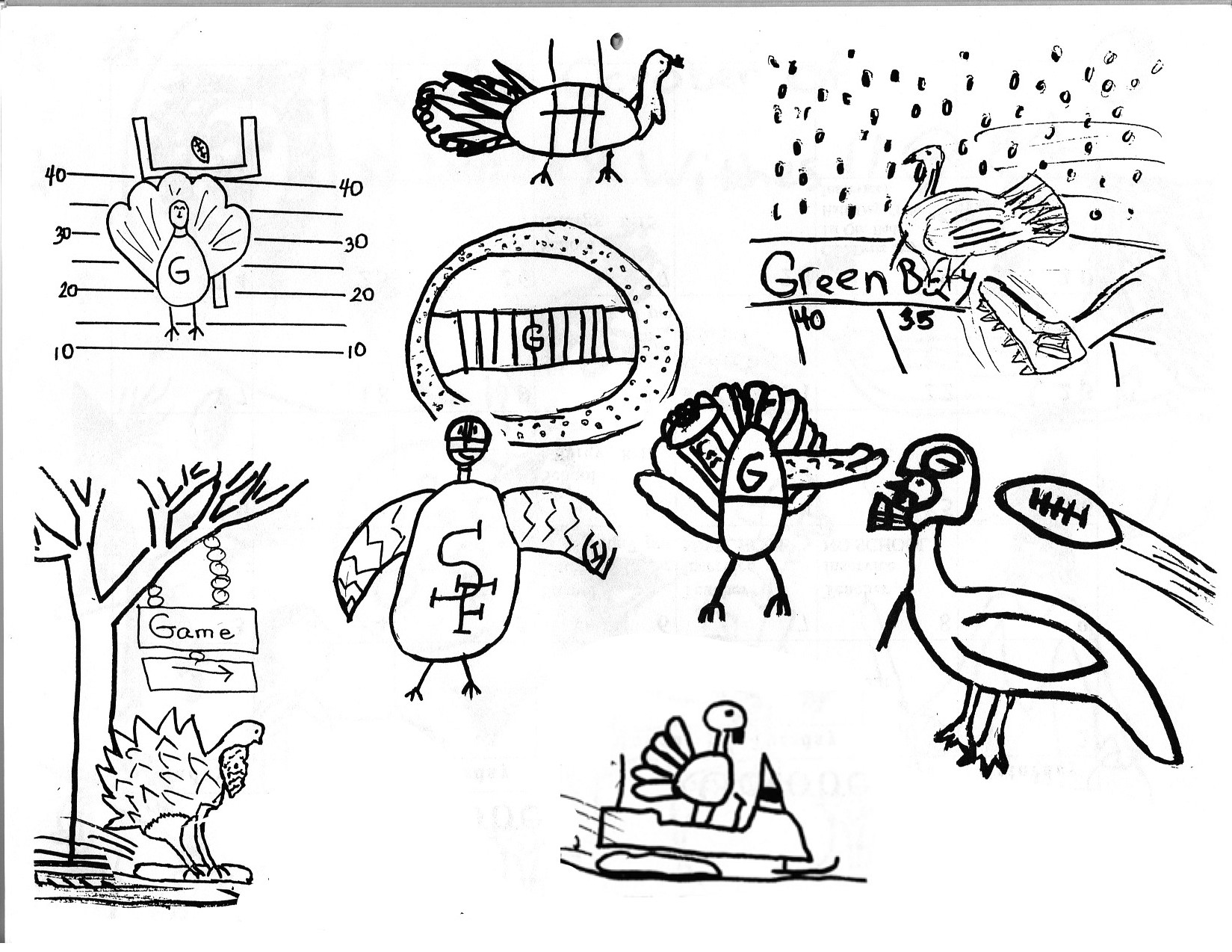
When we first moved to the lake seventeen years ago, I picked up a curious rock one day. The small gray rock was covered with raised white patterns which resembled crocheted chain stitches.

“Look at what I found,” I exclaimed to my husband. “Looks like some kind of industrial waste,” he replied. Nevertheless, I liked my rock and saved it.

This past summer I was browsing in a bookstore in Petoskey, Michigan, and came across “Rocks of Lake Michigan”. Flipping through the pages, I discovered a large photo of my industrial waste labeled “fossilized chain coral”.

Naturally, I had to gloat a bit. “Check out this rock,” I said, showing my guy the rock book.

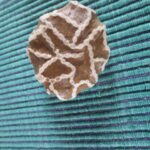
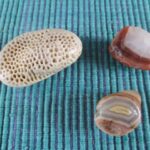
By a lovely coincidence, the day after we returned home I found another beautiful specimen of chain coral on our beach. That’s two in seventeen years; the rarity of finding these fossils is part of the fun of beachcombing.

A few weeks ago we found a completely different treasure washed up on the rocks. We are now the owners of a sturdy wooden chair, sans seat. One of our winter projects will be painting the chair and adding a piece of screen for a seat. We plan on putting the salvaged chair in The Tooley Cafe with sunflower seeds on the screen. It’s a sure bet that the birds will love it.

November is the wildest, stormiest month for Lake Michigan waters. I wonder what new gifts will arrive?


0

Poignant

It can only happen once in every year. I glance out the window and the first snowflakes of the season are lazily drifting in the chill autumn air. For me, this moment is the embodiment of the word poignant which comes from the French meaning “profoundly moving, keenly felt”.

The flakes look so innocent, ethereal and lovely. They delicately brush the ground and melt. In a few minutes none will be floating in the air. But I have lived in this place all my life and am not easily fooled. Those snow crystals have billions of friends waiting in the wings.

The import of the first snowflakes is immense. I can no longer hope for a few more rare days of Indian Summer. Even the hardy asters are doomed to freeze now and the last of the geese (or at least the smart ones) have deserted us.

Freezing ice, howling blizzards, treacherous roads, frozen fingers and weeks when the sun never makes an appearance all separate us from the next spring.

In Norse mythology hell (hel) is extremely cold. Hel is also the name of the Norse Goddess of the underworld who rules her frigid realm from her palace known as Damp with Sleet. I think she might have felt right at home during a Wisconsin winter.

sf

0