Linked

The other day my husband alerted me to a news item he knew I would find to be of great interest. The headline read, “Last Person to Receive a Civil War Pension Dies.”

Several decades ago, I read author Reynolds Price’s comments about reaching back and touching history. He described knowing a man who had been a slave as a child. For the first time in my life, I realized I could look back and make personal connections to America’s past. I wanted to know how far back I could go. As it turns out, it’s amazingly far… I can touch the Civil War. More on that later.

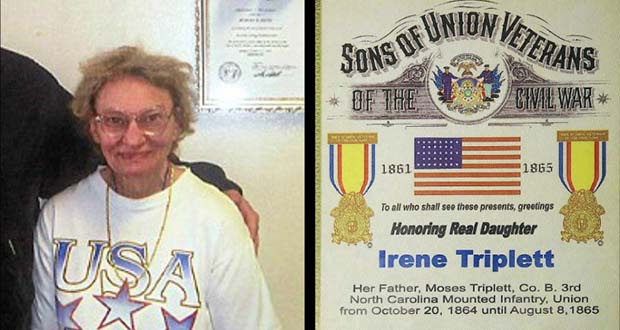
The last Civil War pensioner, Irene Triplett, died on May 31, 2020, at age ninety. The Department Of Veteran’s Affairs had been sending her a monthly pension check of $73.13 because her father was a Civil War veteran. Here’s the timeline.

Mose Triplett from North Carolina was both a Confederate and Union soldier, defecting from the Confederate forces halfway through the war and joining the Union army. When his first wife died, he remarried in 1924 at the age of 78. His daughter Irene was born on January 9, 1930, with mental disabilities. Mose died in 1938 at the age of 92 and Irene was eligible to get his pension.

These links a person can make through long periods of history are known as the Great Span. After learning about the concept, my next Memorial Day visit to the cemetery where my father’s family is buried took on a new dimension.

I never knew my paternal grandfather. His first wife died and he married my beloved grandmother who was years younger than he was. The fact that he passed away long before my birth makes him no less my grandfather. And he is my link to the Civil War.

Here is what is engraved on his tombstone:

Frank Horlivy
1864 – 1929

The Civil War was raging the year my grandfather was born. It officially ended on April 9, 1865.

William Faulkner said, “The past is never dead. It’s not even the past.” How powerfully his words resonate now. America is massed in the streets protesting injustices that began with slavery, flourished through the Civil War, Reconstruction, the Civil Rights movement and continue up to the current moment. Let us hope we can finally break this ugly chain and live up to our nation’s stated ideals.
 

0
Lefties

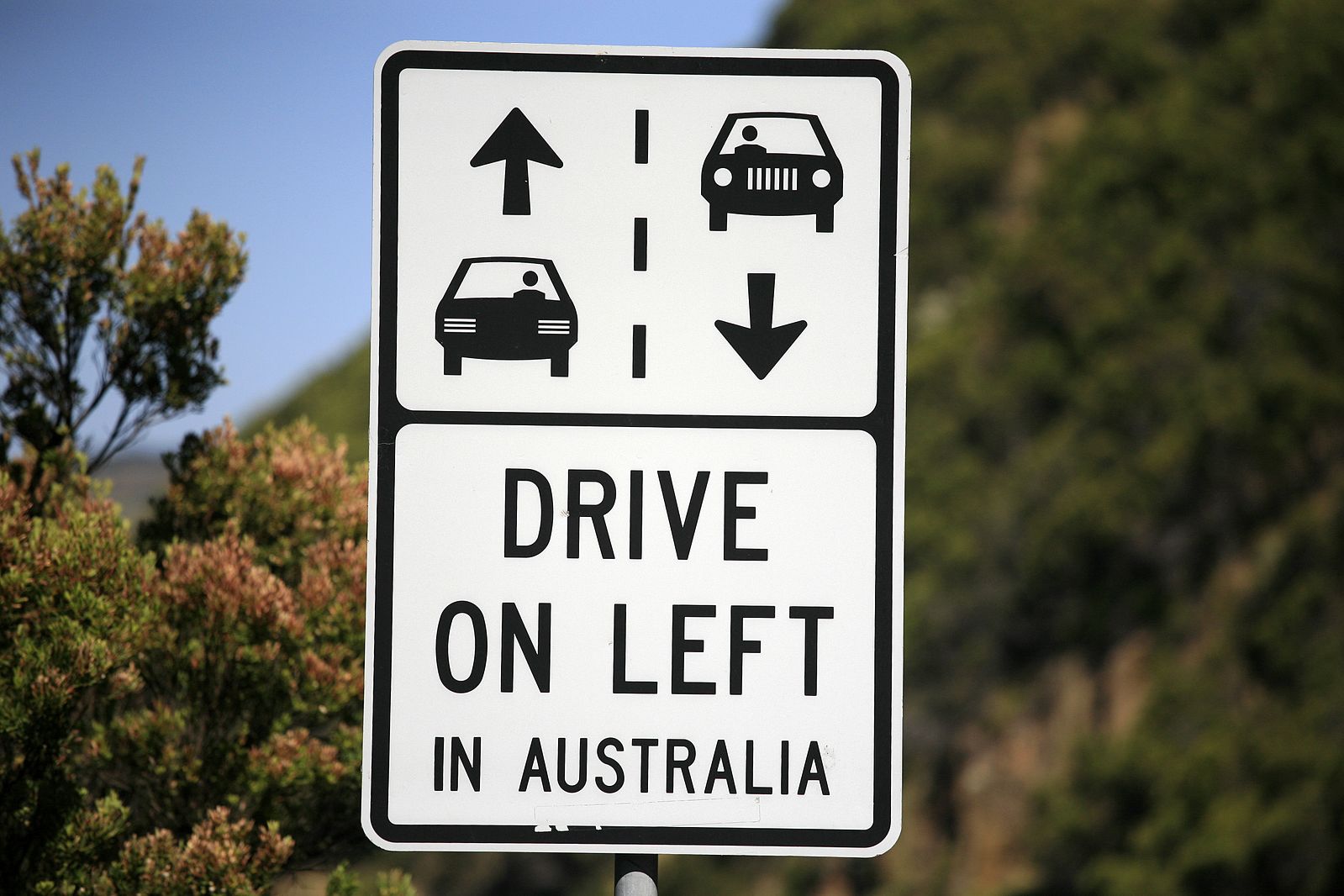
An important life skill is knowing with certainty those things you cannot or should not ever do. Right on top of my list is, “Don’t get behind the wheel in a country that drives on the left side of the road.” My husband has similar feelings.

Exploring new places with a rented car, an open-ended itinerary and a paper map is our idea of pure joy. But it took one rented car in the Turks and Caicos to enlighten us on our driving deficiencies. Fortunately, the car was a rent-a-wreck and the traffic was light. As my husband was headed out of the rental car lot, he noticed the attendant waving frantically to us. We were headed for the wrong lane. After we were rolling on the right side which was left, other problems popped up. I always knew when we were about to make a turn because the windshield wipers came on…all the instruments were reversed on the dashboard. Although we returned the car with no new damage, we were nervous wrecks.

All this means that there are 76 countries and territories in the world where we will not be doing the driving. 34 % of the world’s population drives on the left.

The British Isles and their former territories usually are the first to come to mind when thinking of left-hand driving. But here are some more facts on the lefties.

Japan drives on the left. The custom dates back to the Samurai era when the swordsmen needed their strong hand free to deal with approaching enemies.

Napoleon and his conquests are responsible for much of the right-hand driving in Europe. The aristocracy always drove their carriages on the left with the peasants shunted to the right. Napoleon wanted a whole new society and decreed that traffic would all be on the right.

In 1955, the Swedish government held a referendum on switching from left-hand to right-hand driving. It lost by 82.9 %. However, in 1963, the people were overruled when the parliament approved the change to the right. On Sunday, September 3, 1967, at 5:00 AM, the big switch occurred. This was called “Dagen H”, the “H” standing for Högertrafikomläggningen (right-hand traffic diversion). All traffic was cleared from the roads at 1:00 AM. Amidst fireworks, the first traffic, taxis and bikes, was escorted onto the empty roads at 5:00 AM by police escorts. Throughout the day the volume was increased until it reached near normal by night. Only 157 accidents were reported for the entire day, lower than for a normal Sunday.

And, finally, you can drive on the left in America, but you have to be in the U.S. Virgin Islands.

0

Distancing

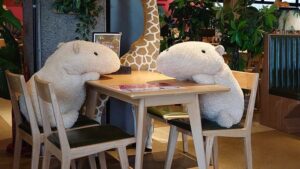
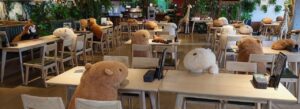
I recently read about a delightful way of social distancing in a restaurant situation. The Izu Shaboten Zoo in Japan has scattered capybara plush toy animals on chairs in their cafe. Capybaras were chosen as they are one of the most popular animals at the zoo.

What, you may ask, is a capybara?

Weighing in at about 110 pounds and natives of South America, capybaras are the largest living rodents in the world. Do not be turned off by the word “rodent”. These animals are charismatic; they look like giant cuddly guinea pigs, who are, in fact, their closest relatives.

Capybaras have been called the rodent version of the hippopotamus as they chew their veggie food while swimming in swamps. Being semi-aquatic, they are always found near water. Webbed feet and eyes on top of their super-sized heads make them well adapted to the watery life. They can dive and stay underwater for five minutes and even sleep underwater, nose up. But these creatures are no slouches on land, either, and can run as fast as a horse.

Capybaras are extremely social animals, living in groups of 10 to 20. They also mix well with other animals. This trait has earned them the nickname of “moving chairs”. All sorts of birds, monkeys, rabbits and even other capybaras have been seen hitching a ride on their host’s back.

Check out these pictures of the social distancing capybaras.

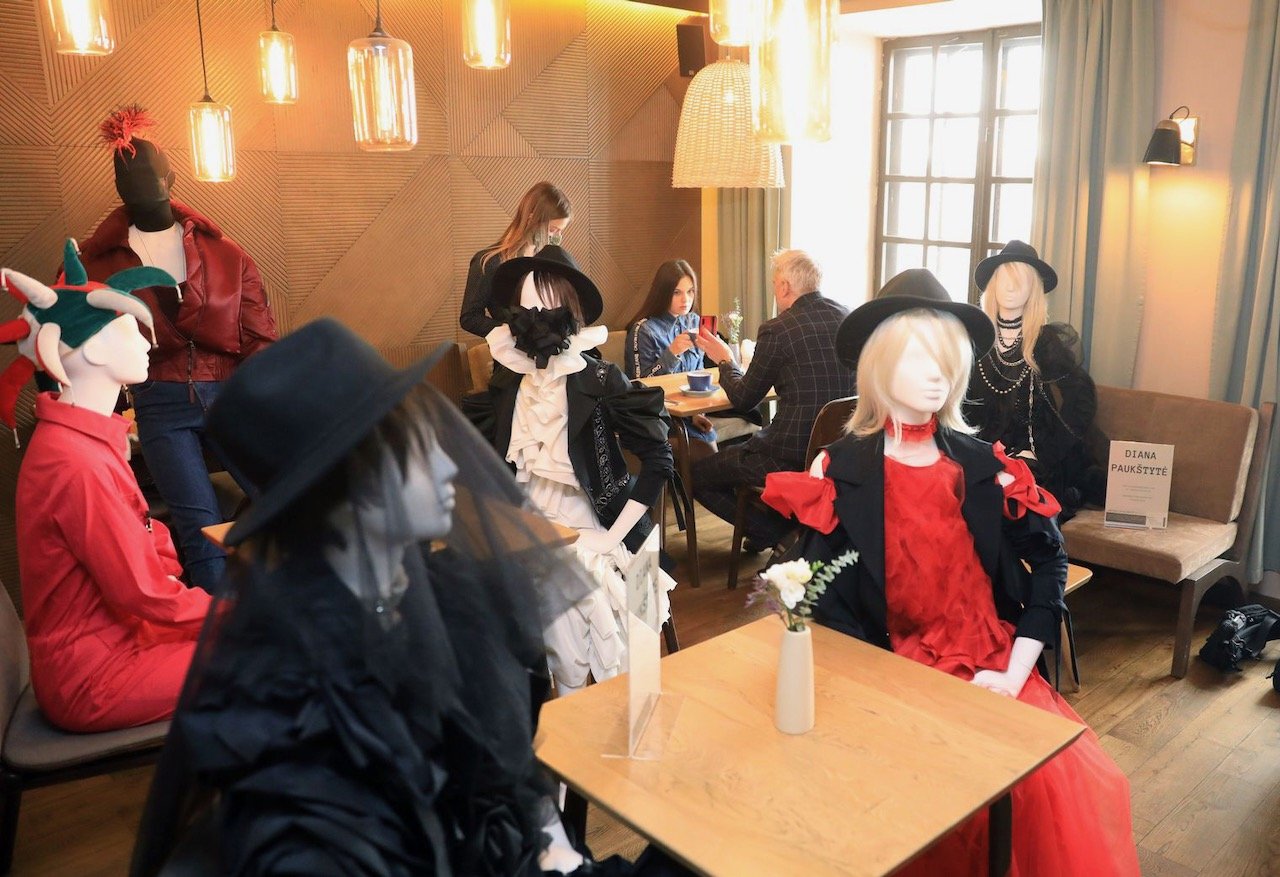
Other restaurants around the world are using mannequins and blow-up dolls to achieve the required open spaces. I’ll take the capybaras any day. Who wants to dine with a bunch of dummies?

0

Comfort

When it comes to cookies, I’m having a distinct feeling of deja vu. Life often tends to go in circles.

I stayed at home with our two children until the oldest was in kindergarten and the youngest turned three.  Then he and I set off to the same preschool; he as a student and I as the school’s art teacher. Altogether, I spent six years as a stay-at-home mom, and I’ve never regretted delaying the start of my teaching career. Our days were busy, happy and filled with small routines.

Cookie day, for instance, was Tuesday. Every week I would make a big batch of “lunchbox” cookies. That adjective was to distinguish them from Christmas cookies, the fancy ones that were only baked for the holidays. We would rotate among peanut butter, chocolate chip, oatmeal raisin, snickerdoodles and their ilk.

And every Tuesday I would remind everyone that no more cookies would be baked until the next Tuesday, in other words, pace yourself. Yes, I was one of those mean moms. To this day, neither of our children have to wince when they get on a scale.

When the news of the virus struck in March, I found myself to be just like a stay-at-home mom…only the children were missing. Once again, I have the gift of time, and cookie day has returned. It is still only once a week, but not on any set day. And I still make simple lunchbox cookies even though we never eat them after lunch but only for dessert at night.

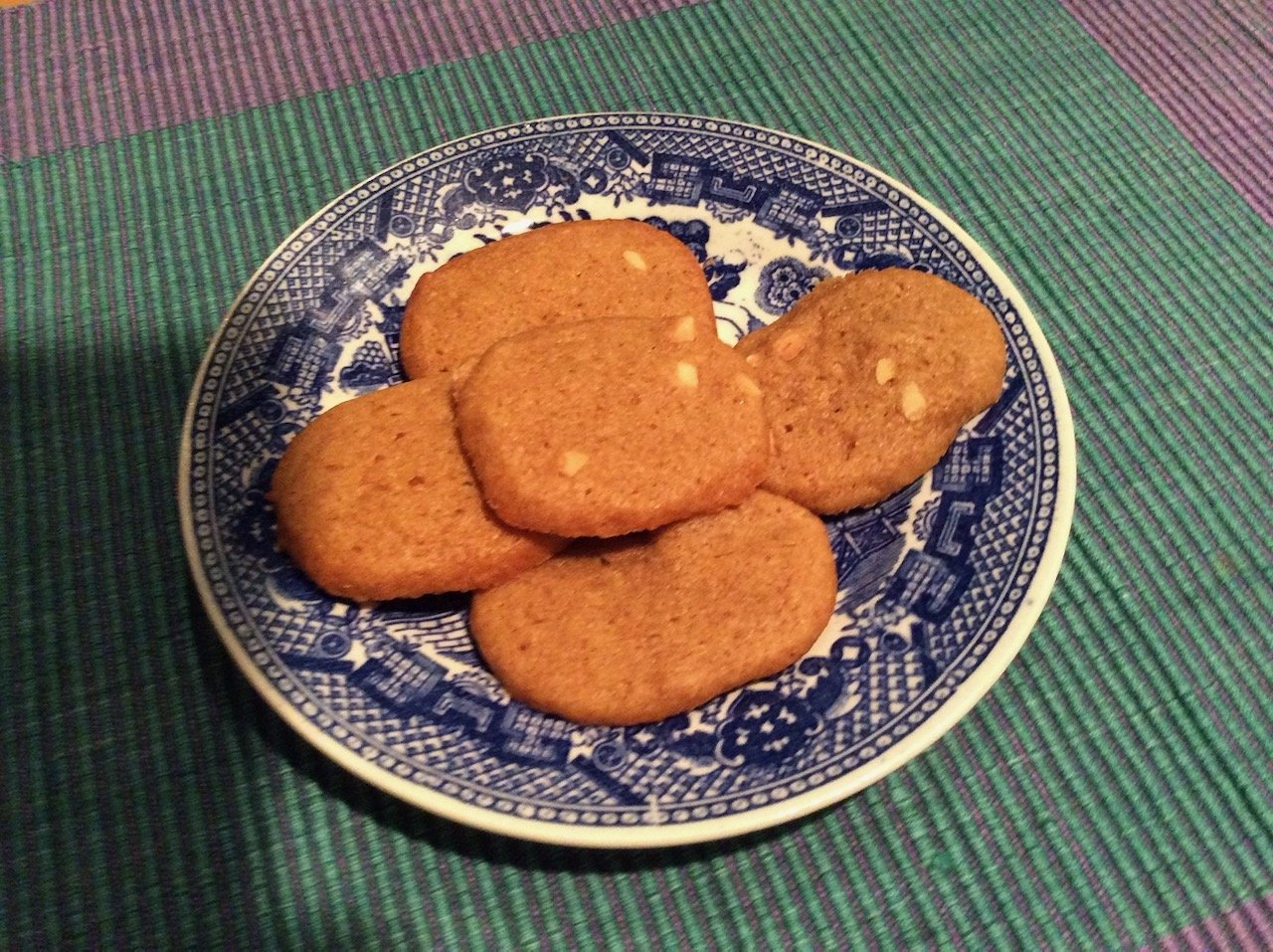
So if you also have been given that precious gift of more time, here is one of my favorite recipes. You can’t go wrong with a recipe from the 1959 Electric Company Cookie Book. It’s described as a refrigerator cookie, but after wrapping the bars of dough in foil or plastic wrap. I put them in the freezer to chill down. Just slice and bake as needed for cookie comfort.

Butterscotch Snaps

1/2 cup butter
1 cup firmly packed brown sugar
1 egg
1 teaspoon vanilla
1 1/2 cups flour
1/2 teaspoon salt
1 1/2 teaspoons baking powder
1/2 teaspoon ginger
1/2 cup finely chopped pecans, almonds or walnuts
Cream butter. Add sugar. Cream well.
Add egg and vanilla.
Add flour, salt, baking powder and ginger.
Add chopped nuts.
Shape dough into two rolls or bars. Chill or freeze before cutting in slices.
Bake at 375 degrees about 10 minutes.
0

Scary

On Mother’s Day, I looked out the window and the first thing I saw was snow. How could this possibly happen? There is an unwritten rule in Wisconsin (the lower half) that no snow occurs in May. We can accept snow until April 30; May snow is a travesty.

The second thing I noticed after the abominable snow was a black cat in our front yard. My heart sunk to my feet. I do not need another cat. I just spent four years worrying about four homeless cats wandering the neighborhood in danger from speeding cars, dogs, birds of prey, coyotes and sub subzero temperatures. We have finally succeeded in turning three of these cats into happy, loving, vet-cared-for and safe indoor felines. Our inn is full, and available time to clean out litter boxes is maxed.

When in despair, I turn to my loving partner. “Look outside”, I said, “you won’t believe this, there’s a cat in our front yard.”

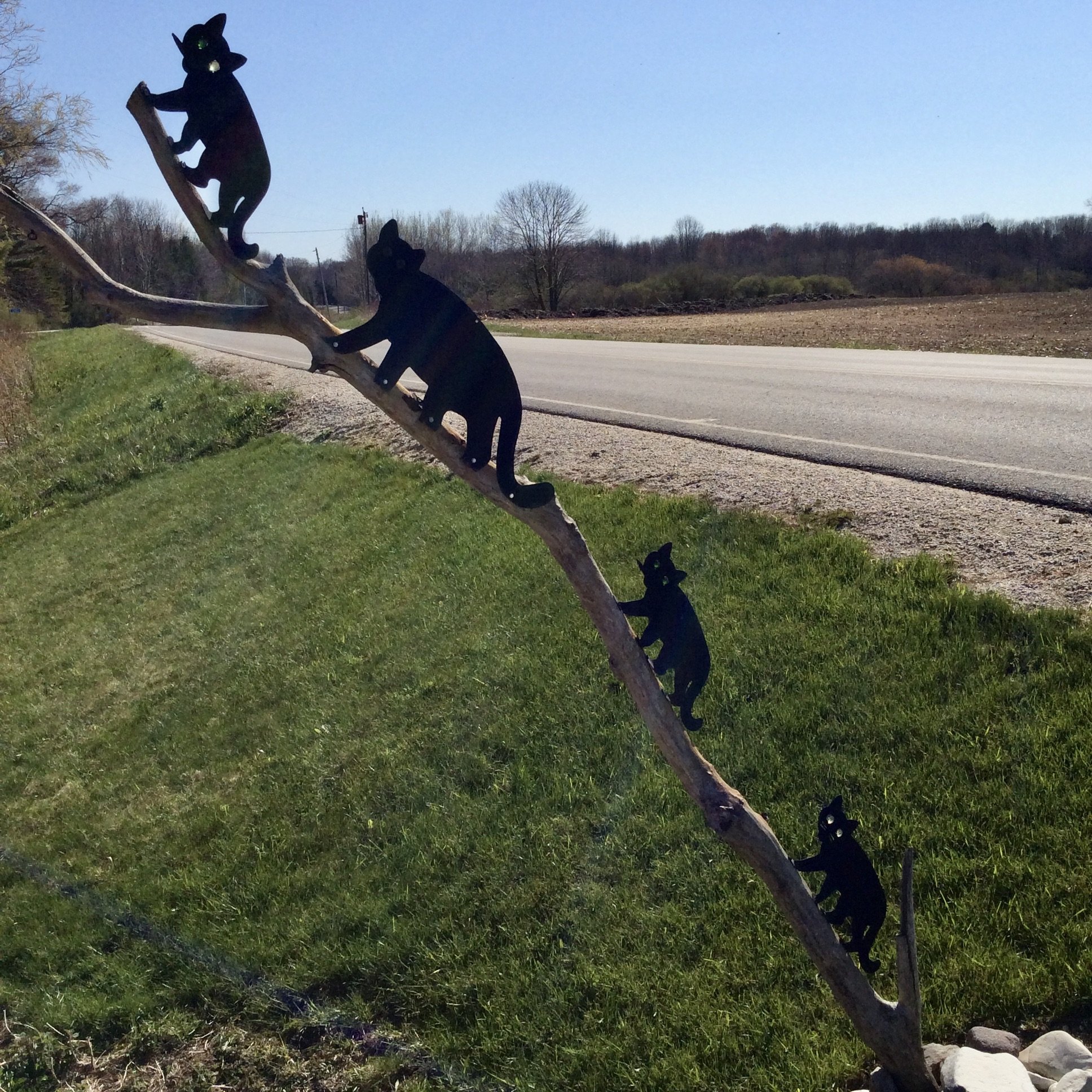
My husband checked out the view and confirmed that, indeed, there was a cat. He also told me that all was well. The “cat” was a metal scare cat that the wind had ripped off the cat pole next to our mailbox. It had miraculously landed bolt upright on its feet. Apparently, these scare cats really work. I was most definitely scared.

The day was uphill from then on. Both an oriole and grosbeak returned to our yard from their winter vacations. My husband got the downed cat securely fastened back on its driftwood pole, the snow stopped and our cats spent the afternoon purring and napping. Life remains good.

All who wander are not lost.


0