Hearts

Consider the heart.

By far, it is my favorite graphic symbol. Voluptuously shaped, lushly hued and succinctly ending, hearts are small bursts of visual joy. At this time of year, I am in heart heaven.

Children’s first attempts at art go round and round, circular lines which mimic the roundness of planets, orbits, moons, stars and galaxies. But before long, kids want to draw a heart. “Well”, I say, “can you draw an ear? Just try putting two ears together with no head in between.” Once the heart is mastered, many young children sprinkle hearts lavishly throughout their artwork.Hearts
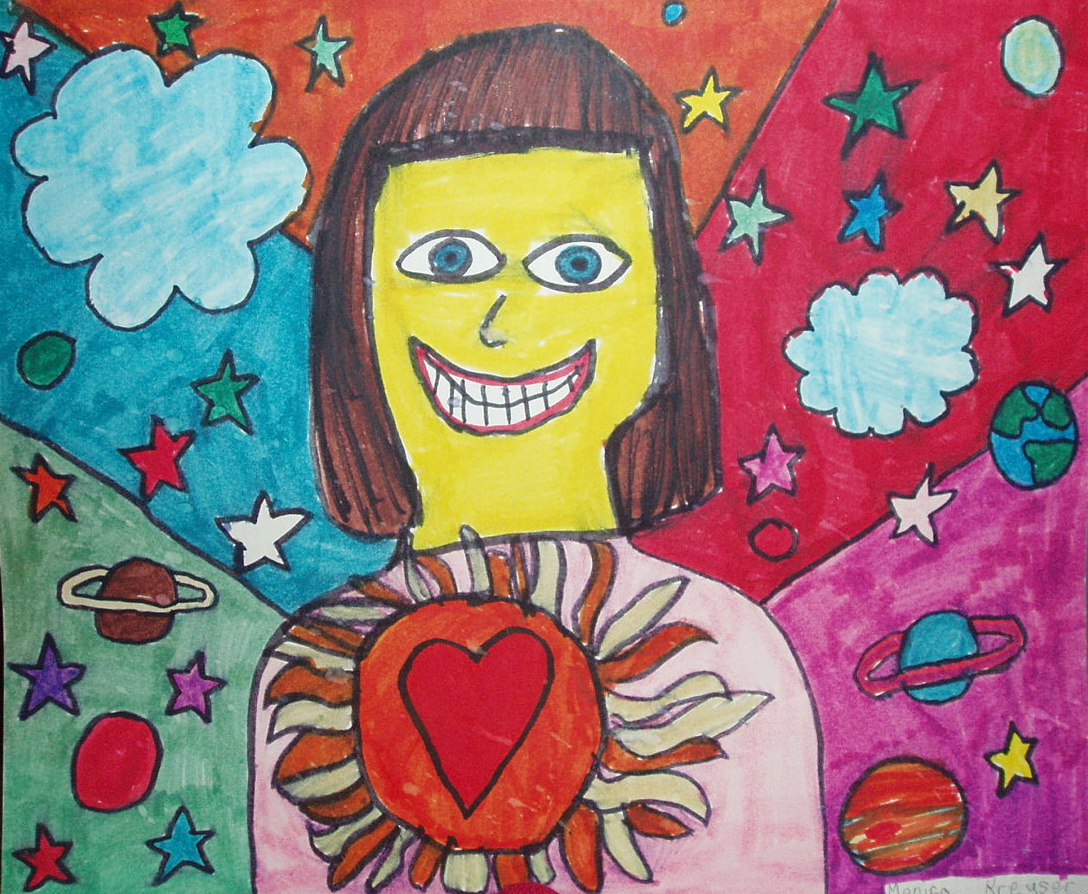
Hearts are not only satisfying to draw, they are also one of the first symbols children understand. Is it any wonder that young artists fill their pictures with “love”?

Older artists are not immune to the seductiveness of the heart. Wayne Thiebaud, for example, has painted many huge canvases with the heart as the sole subject matter. His signature includes a tiny heart as well.

But pop artist Jeff Koons has sculpted the ultimate Valentine gift, his 9 foot tall, 3,500 pound, stainless steel sculpture entitled “Hanging Heart”. Sadly, I will be unable to purchase this splendid heart for my true love. The selling price was $23.6 million.

0
Birdseed

A recent scientific study revealed what every backyard birder already knows: Many birds love black oiled sunflower seeds. Apparently birds are no different from us mammal types. We all head for the fat and protein.

But, unfortunately for us, we are big. Science also informs us that “small animals have faster metabolisms relative to their body size than do large animals.” Birds must consume enough to fuel metabolism that can require up to 10,000 calories a day. That would be equivalent to 155,000 calories a day for us.

I might want to be a bird. Not only could I fly without the aid of Midwest Express, I could also eat huge quantities of butter, cheese, pecan pie, hot fudge sundaes and pasta with mizithra to no ill effect. But there is a caveat. A University of Wisconsin study of black-capped chickadees discovered that birds with unlimited access to feeder food still obtained 79% of their daily energy needs from wild sources. Therefore, I couldn’t simultaneously be a bird and a couch potato… I would have to burn fuel to get fuel.

Winter would present another challenge when a bird’s food needs can increase twenty times. With requirements like this, stuffing one’s beak could get downright tedious.

Recent research also informs us that birds “mostly taste umami, a Japanese term for one of the five basic tastes, in this instance a taste for protein. In other words, birds are able to judge the protein content of seeds and drop the low protein seeds onto the ground below feeders, much to the delight of squirrels, raccoons and other quadrupeds.

All things considered, I think I’ll stick with my 2,000 a day calorie limit. A leisurely dinner in front of a warm fireplace seems like a pretty good deal.

0

Ignorance

“…it is always advisable to perceive clearly our ignorance.”

I recently came across this Charles Darwin quote in an article celebrating the 200th anniversary of his birth. These nine simple words should be enshrined in every classroom.

I present educational programs for thousands of children every year. Before I begin, I always say one reassuring thing: “If you raise your hand, and I call on you, and you answer wrong, don’t feel badly. Not even the smartest people in the world know all the answers.”

I would love to add that the smartest people are often the first to admit they don’t know everything, but that observation is a bit esoteric for grade-schoolers.

Here are more thoughts on ignorance from some extremely enlightened individuals.

“The older we grow the greater becomes our wonder at how much ignorance one can contain without bursting ones clothes.” Mark Twain

“Ignorance, when voluntary, is criminal.” Samuel Johnson

“Science alone of all the subjects contains within itself the lesson of the danger of belief in the infallibility of the greatest teachers of the preceding generations.” Richard Feynman

“You have the right to your own opinions, but not to your own facts.” unknown

0

Tractors

My childhood was defined by tractors. Since I grew up in a city, that statement may sound strange. But my hometown was West Allis, Wisconsin, named after the famous, orange Allis-Chalmers tractor.

Growing up in a blue collar, manufacturing town was not a bad way to start life. I certainly will never have any delusions of grandeur. As a child, I would lie in bed at night and listen to the reverberating thud of the drop forge hammer from nine blocks away. That sound and the slight quaking under my feet became familiar presences. The hot metal smells the plants emitted signaled that something scary, big and powerful was going on in those hulking, soot covered brick buildings.

Although my father worked in a steel company warehouse, Allis-Chalmers permeated all our lives. Acres and acres of downtown was devoted to the tractor shops. Classmates suffered and school fees were waived when Allis-Chalmers workers were on strike. The high school proms were always held in the Allis-Chalmers Clubhouse.

I grew up, but the tractors weren’t finished with me. My fiance, a native of northern Wisconsin, got his first job thus making our marriage possible. His employer was Allis-Chalmers; he worked in their fledgling computer department for eleven years. The computer filled an entire room. Since we only had one car, the kids and I took our breadwinner to the tractor works every morning and picked him up every afternoon.

My husband left Allis-Chalmers when he knew the demise of the plant was near. Most of the huge complex remains to this day, but it has been converted to smaller offices, businesses and a low-end mall. Nothing remains of the manufacturing might of my hometown.

A wave of nostalgia hits both of us when we see an ancient, orange tractor laboring through a field. And then there is the arrival of our one and only pension check. Without mentioning a dollar figure, I’ll just note that I thank the tractors for three big bags of groceries every month.

0

Hometown

My husband grew up in Lake Wobegon. Of course, the name of his hometown was different, and it lacked a lake, but in every other respect, his birthplace was the quintessential Midwestern, small country town.

The most distinguishing feature of my husband’s town was dirt. Other states have state cookies (biscochitos in New Mexico) or state insects (nine-spotted lady bug in New York), but Wisconsin has an official state soil, and that is what my guy’s hometown stands on – Antigo Silt Loam.

Flat fields surround the town and one crop, potatoes, predominates. Most everyone who is born on this land remains a potato-eater for life. My mother-in-law, for instance, always carried a ten pound sack of potatoes in the trunk of her car when she took cross-country trips.

When my husband was growing up, “downtown” featured a Chatterbox Cafe (aka The Dixie Lunch) which still has homemade kolaches on Friday and Sunday mornings, Gunkel’s Bakery (also going strong after 95 years) and a Montgomery Wards. If you also grew up in a Lake Wobegon, you will recall that the later was referred to as “Monkey Wards” and that Friday night was the big night to come to town for shopping, banking and socializing.

My husband’s hometown has another significant claim to fame: it has a long established independent, daily newspaper. Many little towns had local papers generations ago, but now such independent publications are rare. The Antigo Daily Journal is one of three left in our entire state today.

Another important product of this rural enclave will come as no surprise. Cheese rules in Wisconsin. Antigo’s cheese prowess is firmly established by the excellent hard Italian style cheeses it produces; Romano, Parmesan, Asiago, Fontina and Stravecchio Parmesan. If you have ample potatoes, bread, cheese and a daily newspaper, life is good.

I only have one complaint. Many of the older people in town refer to my husband as “little Russ”. Since he is not short and is also retired, this moniker appears nonsensical. But when you are the youngest of three brothers, I guess your position in a small town is fixed for life.

What makes your hometown memorable?

0