Control

Home Control struck again last night. We had just gotten settled upstairs in bed when all the downstairs lights turned themselves on. I groaned and started to get up. “Stay put”, my husband said. “They will turn themselves off at 1:00AM.” I put the covers over my head.

I try to be a patient woman. However, my patience has to be put on overdrive when it comes to Home Control.

My husband has an abiding interest in both computers and electronics. They come together in his beloved hobby called Home Control. He spends many happy hours writing programs to make our entire house a computer wonderland. Home Control friends all over America aid and abet him via computer. I find this a much better guy hobby than shooting defenseless deer or watching 12 straight hours of football games.

When Home Control is behaving, pleasant results occur. For example, I will start to walk down the basement stairs and the lights will automatically turn on. Or the sprinklers magically water the yard by turning themselves on and off at timed intervals.

The problems ensue when the Home Control programs are in the development stages or when the power is interrupted. Then Home Control takes on a life of its own… rather like artificial intelligence with a low IQ.

I will be up to my elbows in soap suds washing the dinner dishes at 10:00 at night when, viola, the entire house is plunged into darkness. I dry off my hands, grope for a light switch, and turn on the lights. This scene is repeated four times in a row. Then I yell to my spouse, “What’s going on here?”

“Home Control thinks we should be in bed at 10:00PM,” he calmly replies.

For a period of four months our dining room light only turned on from a remote switch stored in an empty dog dish downstairs in the garage. Home Control was having some difficulties distinguishing the automatic sprinkler switch in the garage from the dining room switch. Guests were perplexed when I had to go down to the garage so they could see their dinners.

I’ve received several comments from neighbors who have observed us wasting water by sprinkling full blast during rainstorms. I assure them this is out of my control. I have absolutely no idea how to rein in Home Control… pun intended.

Finding computers challenging and electronics a complete mystery, I’m in the same position as Dave in the final frames of the movie 2001. The onboard computer, Hal, calmly says, “I’m sorry, Dave. I’m afraid I can’t do that.”

0
NOLA

My husband and I do not chase fire trucks to watch buildings burn. If we can’t be useful, we stay out of the way. That’s why it took us over five years to revisit a city we both love, New Orleans.

A few months ago, we simultaneously arrived at the same conclusion: the time was right to return. Our decision was not made without trepidation. We knew we could end up with a bad case of the post-Katrina blues.

But after three days of walking and driving to every corner of NOLA, we are definitely not feeling lachrymose. More than ever, I feel the National Trust for Historic Preservation should simply put the entire town on the Register of Historic Places. Every neighborhood in New Orleans is steeped in architectural and cultural riches. I was appalled after the flood when some Americans wanted New Orleans to just “go away”. That kind of frontier mentality has no respect for personal or national history.

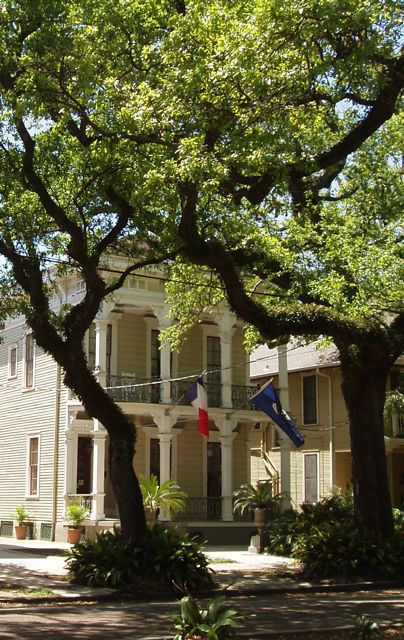
The French Quarter and Uptown were not ravaged by the floodwaters. A trip on the St. Charles Streetcar confirmed that The Garden District remains one of the most ambient neighborhoods in America. The azaleas in full bloom were the icing on the architectural cake.

Esplanade Avenue runs on the eastern side of the Quarter through Tremé and Mid-City. It retains its stately alley of live oaks and lavishly porticoed homes. The lovely family home where the painter, Edgar Degas, stayed when he visited his mother’s relatives in 1872-1873 still graces the Avenue.

City Park at the apex of Esplanade is once again green. The Art Museum in the park, however, appears naked, bereft of its ancient trees. New trees have been planted, but a few generations will pass before they become giants.

The inundated Lakeview neighborhood along Lake Pontchartrain is now awash in new and rehabbed homes. Sorting out the new construction from the refurbished is often difficult, a welcome and unexpected surprise.

Evidence of the flood is obvious in Gentilly and the Lower Ninth. Yet even in these hardest hit areas, new homes are popping up like mushrooms in the bayou. Of course, Herculean work remains. I saw a bumper sticker that perfectly sums up the city’s condition. It read: New Orleans – Proud to Crawl Back.

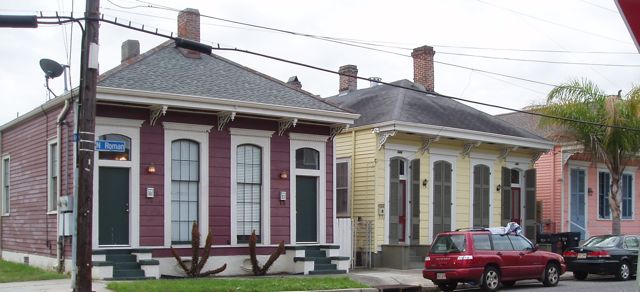
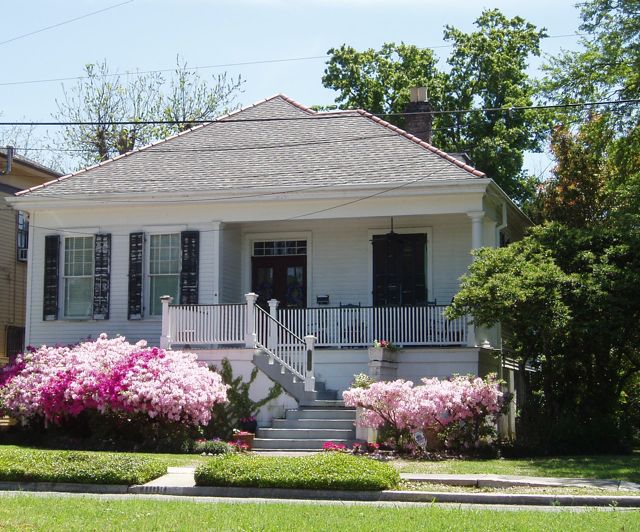
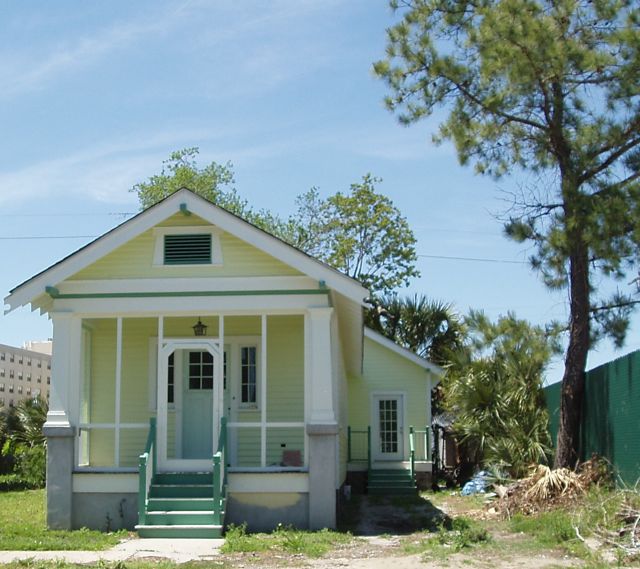
Below are photos taken at random all over town. I could have taken a thousand more.

Degas House
Degas House

0

Glamour

Perhaps women are forever frozen in the fashions that reigned in their childhoods. I know that I certainly am. You can bet your net worth that I will never show up in a classroom in a pair of pants.

I vividly remember sobbing my heart out and wailing at my mother,”I’m a girl, and you can’t make me wear pants!” My poor mother was only trying to get me to wear woolly slacks to kindergarten on a subzero, Wisconsin day.

I, however, saw The Loretta Young Show on TV at my grandma’s house every week. That glamorous actress made her grand entrance through the door swirling yards and yards of skirt around her. I was hooked.

By the age of seven I knew I wanted to be an artist and was aware of the styles in the 1950’s world around me. And what grand styles they were! Coco Chanel, Christian Dior and Jacques Fath were at their peaks. I sat at my little drawing table designing dresses. They were all variations of strapless ballgowns with tight fitting tops, tiny waists and huge, diaphanous  skirts.

To this day, I regard any outfit worn by Audrey Hepburn as perfection. And  the ultimate wardrobe in the entire world (this is not hyperbole) can be seen on Kim Novak’s body in the 1958 movie, Bell, Book and Candle.

So I’ve been spoiled for life. Casual or downright grungy clothes don’t do it for me. The sloppiest I get is a scoop neck, fitted  tee, khakis and a tooled western belt. That’s my floor scrubbing outfit.

Click here for links to Loretta Young and the Bell, Book and Candle trailer.

0

Cracked

Years ago we were strolling in San Antonio on an extremely warm, spring day. Sidewalk vendors with carts were hawking their wares. One cart caught my eye: it had towering stacks of vividly colored Easter eggs. How could these eggs survive, I thought, in the blazing Texas sun?

My curiosity overcame my manners. “Won’t these eggs spoil?” I asked. “Of course not,” came the instant reply. “They’re cascarones. They are filled with confetti.” That was my introduction to this delightful and mischievous Mexican custom.

The origins of cascarones are foggy, but Marco Polo is frequently credited with introducing the eggs to Italy. A more solid historical fact is that cascarones were a part of Italian courtship rituals of the 18th and 19th centuries. Young men would toss a perfume-filled egg at women they liked. The custom traveled from Italy to Austria, France, Spain and the New World where the eggs became a Mardi Gras tradition. The current epicenter of cascarone activity is Texas. Selling ready-to-go cascarones has become a cottage industry there.

If you want to create your own, make a penny size opening on the top of a raw egg. Pour out the yoke and white to use for cooking. Wash out the shells, let them air dry and decorate. The eggs in San Antonio were left white and decorated with fine pointed markers. Confetti is then poured into the eggs (it should shake like a maraca) and the top is sealed with a small piece of tissue paper and glue. Now for the best part. On Easter morning children and teenagers alike run around trying to smash the eggs on each other’s heads. The fun is best had outdoors.  Ask any group of children, regardless of their cultural backgrounds, if they would like to make cascarones. The answer is obvious.

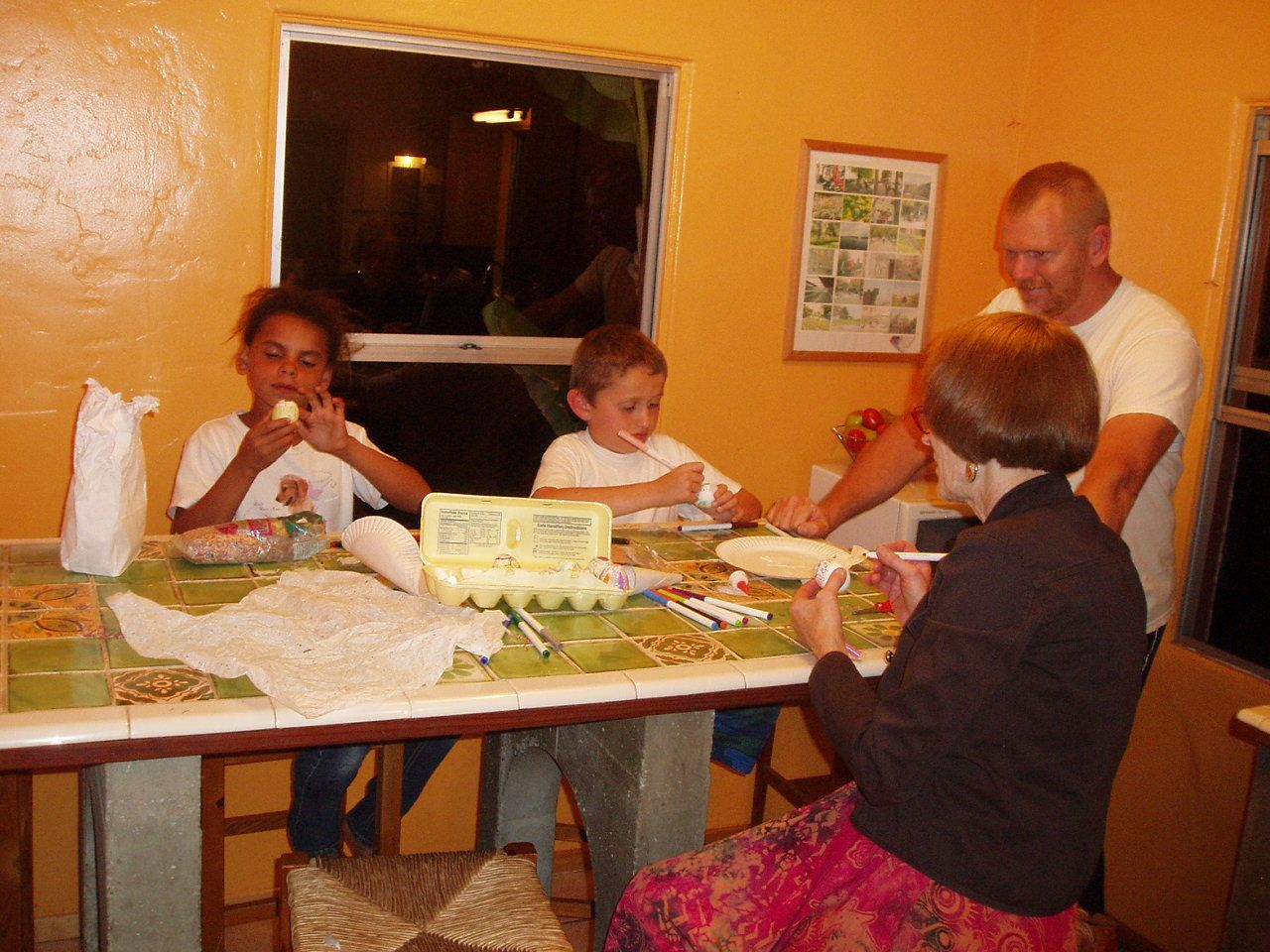
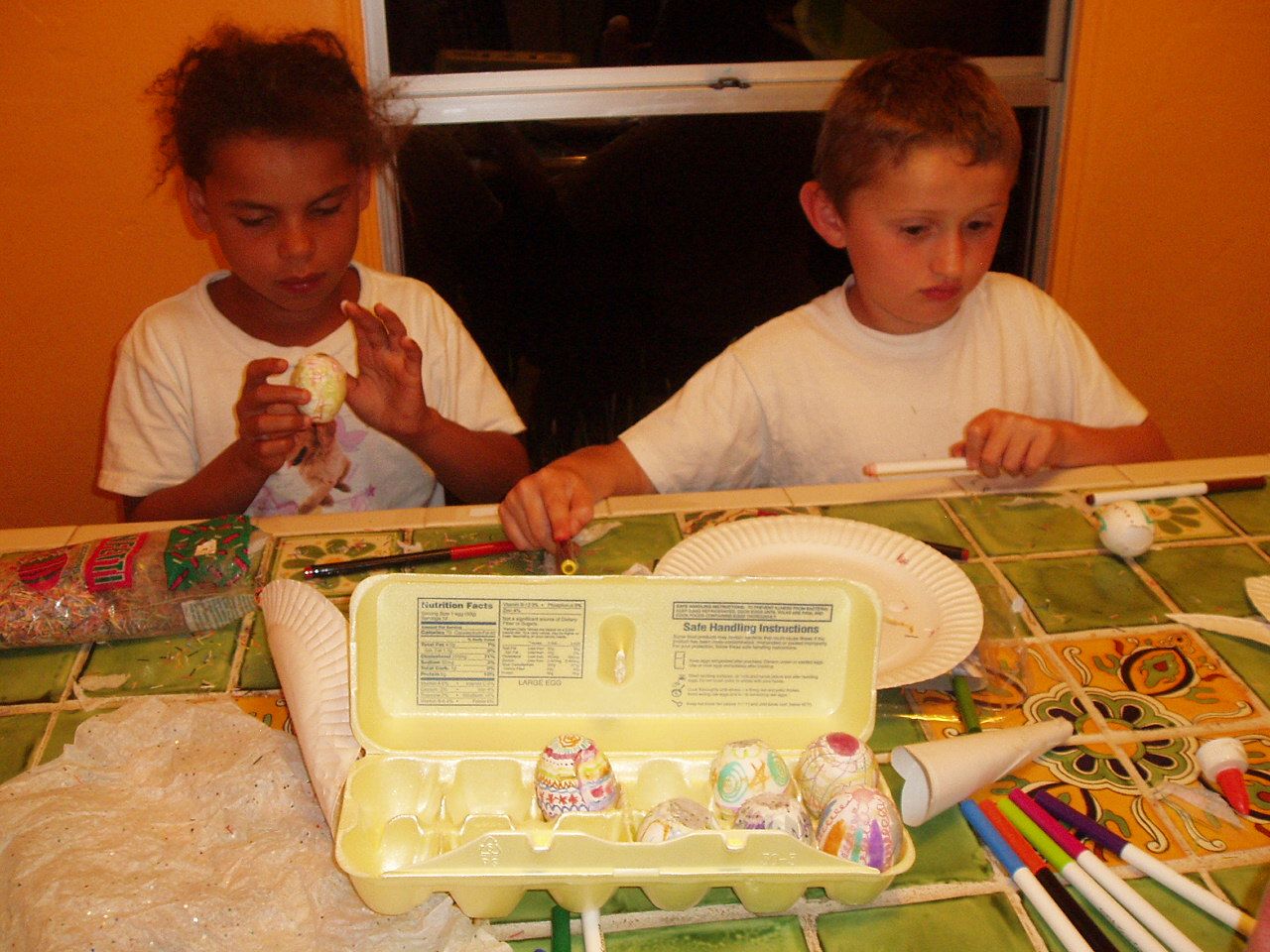
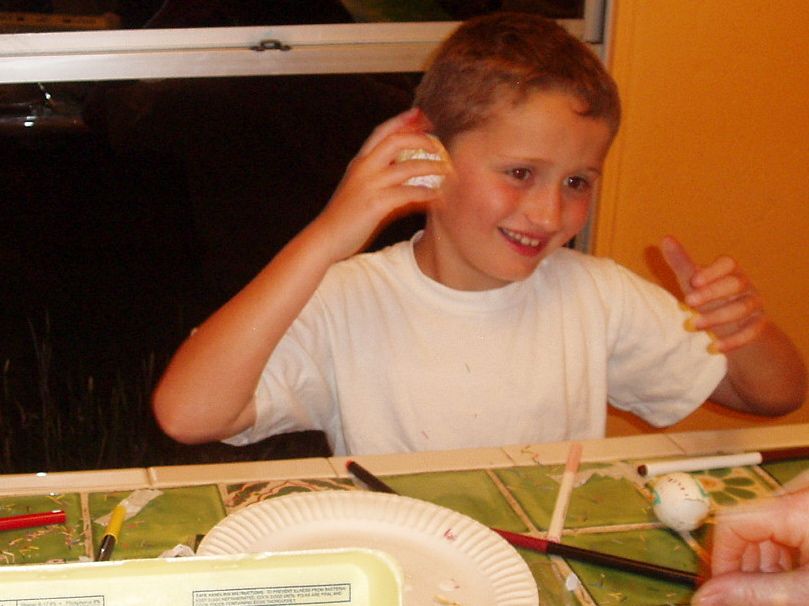
Here we are hard at work creating cascarones. Only one egg shattered in the making process. So far, the intact eggs are waiting for the big Easter morning bash. If you hurry, you’ll still have time to concoct a basketful. And you won’t even have to eat egg salad sandwiches for a week after.

0

Coyotes

The coyotes were yipping up a storm when I was in Albuquerque recently. All day long as I went about my day’s tasks in that big, busy city, I was serenaded by exuberant coyote choruses.

We’ve got coyotes living near us, too, but they are much quieter. The eastern coyote has learned it is best not to call attention to itself.

Coyotes, North American natives, are among my favorite creatures, and I know why. They’re survivors… scrappy, scruffy, smart and funny. One delightful memory I retain from years ago is watching two little coyote pups wrestling, rolling and chasing each other out in the New Mexico desert.

Coyotes’ survival is enhanced by their eclectic food tastes. They often travel 50 miles a night to get dinner. Everything from bugs to watermelons to garbage is imbibed. Their rule appears to be, “If you’re hungry, eat it!”

Not wanting to supply snacks to our local coyotes, we do not let our herd of cats roam outdoors. However, the Tooley felines do have access to their huge, totally enclosed, outdoor play area.

While lacking the charisma of wolves, coyotes still have a huge hold on our human imaginations. Coyote is the wonder worker, transformer or trickster in the mythologies of almost every Native American tribe west of the Mississippi as well as of the Aztec and Maya. Coyote has been credited with placing the stars in the sky, dividing day and night, giving fire to people, teaching people to hunt, controlling the weather, putting salmon in the rivers and many other feats.

Naming children with “nature” names continues to be a trend in America, perhaps an unintended homage to the Native American practice. I meet Ravens, Forests, Rivers and Trees in the classrooms I visit. But I’ve never taught a Coyote. Pity.

0