Spotless

My husband and I have always considered ourselves to be tidy people … no mold in the fridge, toothpaste spit on the bathroom mirror or piles of unopened mail on the kitchen counter. The windows get a fall and spring washing and the vacuum cleaners (we own several because of our fur shedding cat population) are all in daily use.

However, we are coming to realize that others on the planet would find our standards a bit low. Those people live in the Netherlands. Having visited that compact country a number of times,we marvel at the entire nation’s housekeeping.

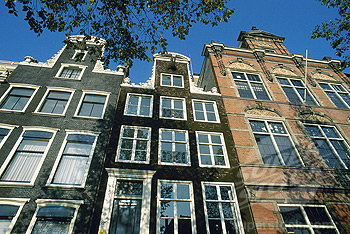
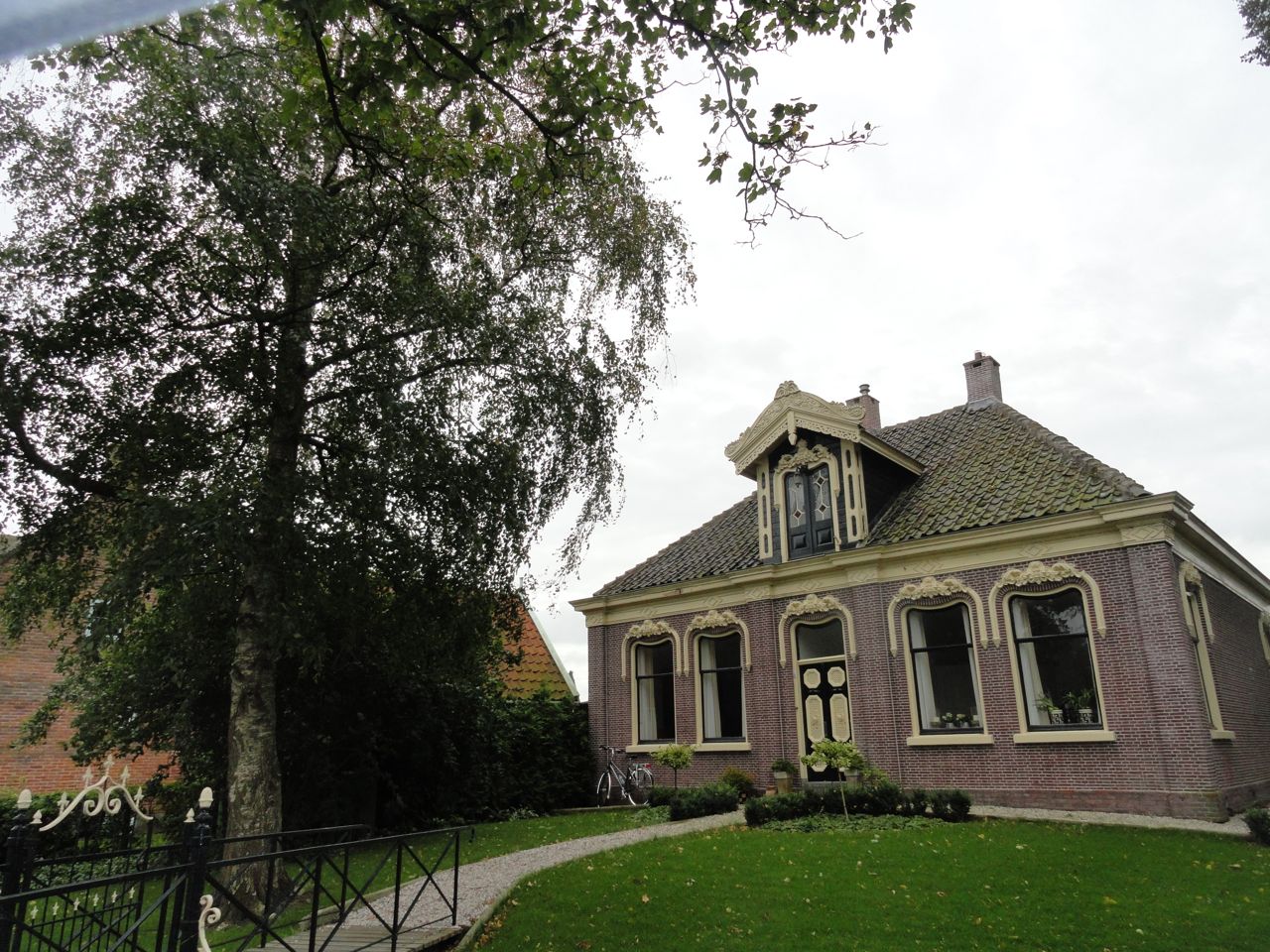
In hundreds of miles of travel, we have seen only shiny, slick paint on the houses, freshly scrubbed bricks, immaculately trimmed and pruned yards and flawlessly smooth roads. I’m guessing that the word “pothole” does not exist in their  language.

Windows are in a special category. Living in a gray, rainy climate, the Dutch crave natural light. Almost every home and apartment has multiple, huge plate glass windows. All these giant windows gleam sans streaks, spots or cobwebs.

I recently conversed with a charming, young Dutch man, who mentioned the program American Pickers which he watches on cable. He expressed fascination with the barns and yards full of hoarders’ trash that are fixtures of the series.

“Is this real,” he asked incredulously.

“I’ve got a few down the road from me,” I replied.

I think I’ve discovered one way the Dutch keep up those standards. Wandering in a Hema store (like a mini Target), I came across an entire aisle of scrub brushes. They came in all sizes from mini to giant, and in all shapes from flat to curved. Obviously, these armies of brushes are on active duty in the entire country.

0

Blooming

Finally, after sixteen years, something is working.

Readers of this blog know that my husband and I are hugely inept gardeners. Lack of talent, however, has not stopped us from trying to create a bird and butterfly friendly yard.

At particularly low moments in our gardening odyssey, master gardener friends offered encouraging words.

“Prairie grasses really are very difficult to start,” said one friend after our second attempt at seeding had fizzled. Knowing that the project was not as easy as the seed company implied helped: our third planting was the one that worked.

Another gardening pro friend helped us view gardening as a series of experiments.

“If it doesn’t work, try something else,” she advised.

So after losing fifty cone flower plants, despite the fact that every gardening book stated they were perfect for our soil conditions, we did not plant more.

Now we wait to see what returns after our brutal winter winds and temperatures, and we plant more of the varieties that survived.

We’ve also learned that gardening is a journey that has no destination. Surprises, failures and changes are what make it all worth the work. We are definitely not in control, and that’s OK with us.

Click here to watch a whirlwind tour of our Summer 2011 blooms

0

Attention

Consider this powerful three line poem by Wisconsin poet, Bruce Taylor:

Pay attention.
This is everything.
Pay attention.

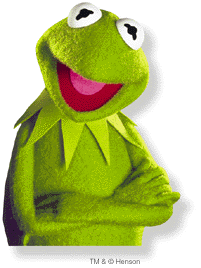
Years ago, when my amazing friend and storyteller, Judy, told me her theory on how the Muppets ruined children’s education, I was initially aghast. I loved Jim Hensen and every one of those witty, grouchy and loudmouthed Muppets and still do.

Upon reflection, I sadly must agree that much truth lies in my friend’s opinion. Sesame Street turned learning into sound bites and constant entertainment. No need to “pay attention” or sustain interest in anything. Factoids are hammered in at breakneck speed, and the onus is on the entertainer, not the student.

But true learning still requires time and hard work.  Making meaningful connections is the goal, not spewing back noise.

When I go back to school this fall, I don’t plan on being a Muppet. I do plan on saying in my best teacher voice, “Look hard at that word; you can’t learn to read if you are looking at the ceiling”. Or, “Look hard at the globe and you will see that the continent of Africa is shaped like an African elephant’s ear.” Or, “Who can tell us one thing they notice, like or dislike about this famous painting?”

What do good artists, writers and scientists all have in common? They observe the world around them.

Sorry, students, I’m not a faux Muppet. And if you tell me you are bored, I’ll fire right back that only boring people are bored.

Pay attention!

0

Neko

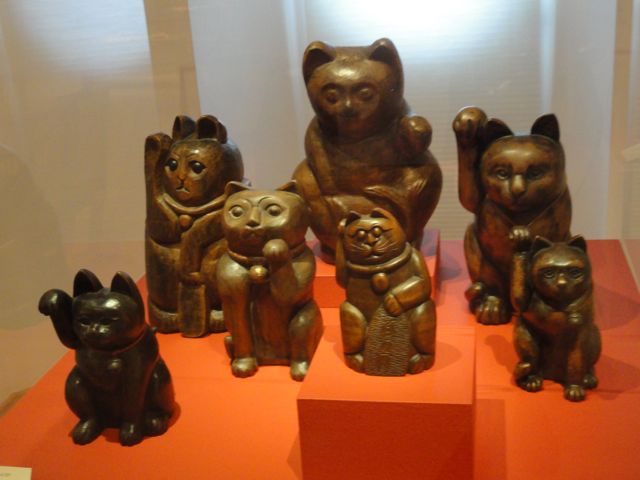
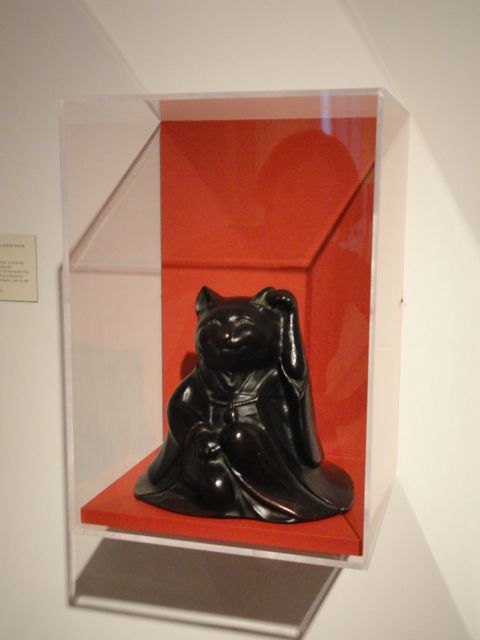
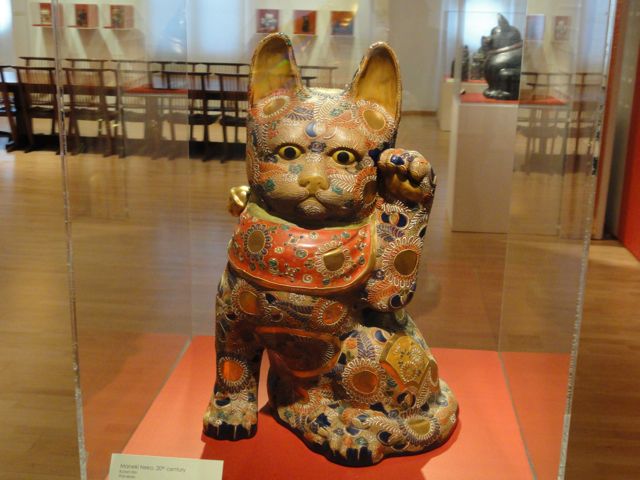
Neko (neck oh) is the Japanese word for cat. Maneki Neko means “beckoning cat” and refers to the beloved good luck cat statues that are displayed in stores and businesses all over Japan and wherever Japanese people migrate. The rotund, ceramic cats always have one paw raised to beckon in the good fortune.

Several differing stories explain the origin of the lucky cats. The following is the version given at Gotokuji Temple in Tokyo:

At the beginning of the 17th century, there was a rundown temple in Setagaya, the western part of Tokyo. The priest of the temple was very poor, but he always fed his pet cat, Tama, first. One day a wealthy samurai lord was passing near the temple when a rainstorm began. He took refuge under a large tree and noticed a cat beckoning him into the temple gate. As he entered the gate, the tree was struck by lightning. Tama had saved his life. To show his gratitude, the lord saved the temple from poverty. Tama was buried in Gotokuji’s cat cemetery, and Maneki Neko was invented to honor Tama.

Not wanting to stand in the way of good luck, we’ve always had several small versions of these charming cats around the house. But on a trip to Los Angeles, we came across a shop stocked with shelves and shelves of Nekos from thimble size to large wastebasket size. The huge ones were an incredible bargain, and, despite the fact that carrying home a giant, fragile cat in a carry on bag was ludicrous, we bought the jumbo sized model.

Miraculously, the cat arrived home in one piece and was enshrined in our entrance hall in front of a window. His steadfast raised paw waved in good fortune for about six months.

Then, one day, a fly was buzzing high up on the window above our cat statue. Our real cat, Pi, made a splendid leap for the fly, fell on Manieki Neko’s head and caused the cat to crash forward on its nose and shatter. My husband spent an entire afternoon meticulously gluing all the pieces back together.

Unfortunately, the reconstituted Neko only had two months remaining. This time it was a moth at the window that triggered Pi’s leap. Manieki Neko’s luck had finally run out.

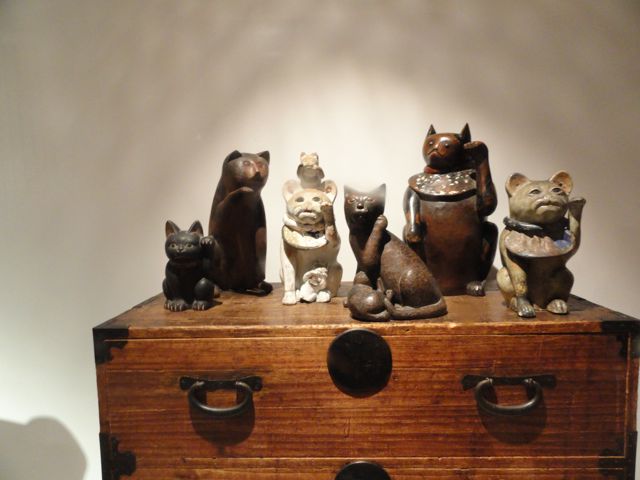
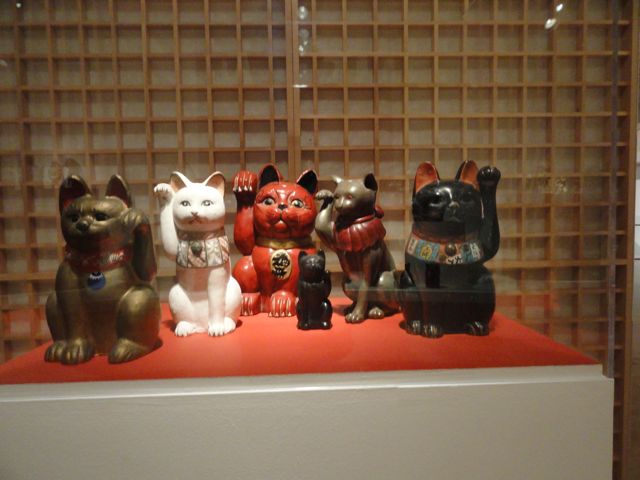
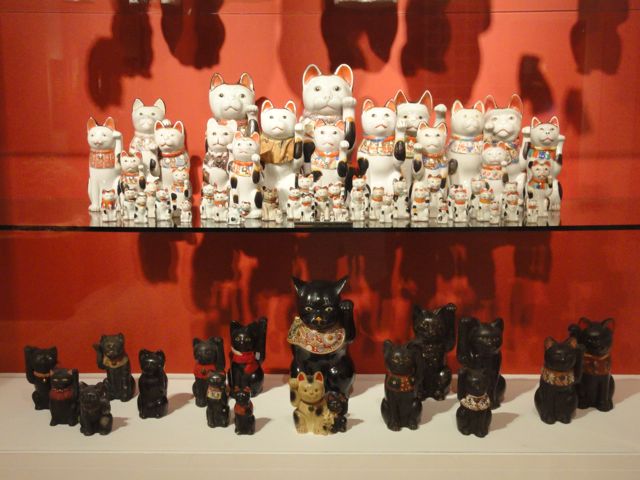
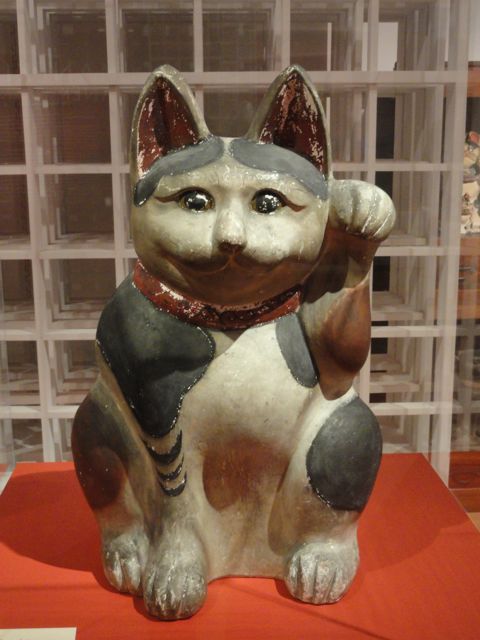
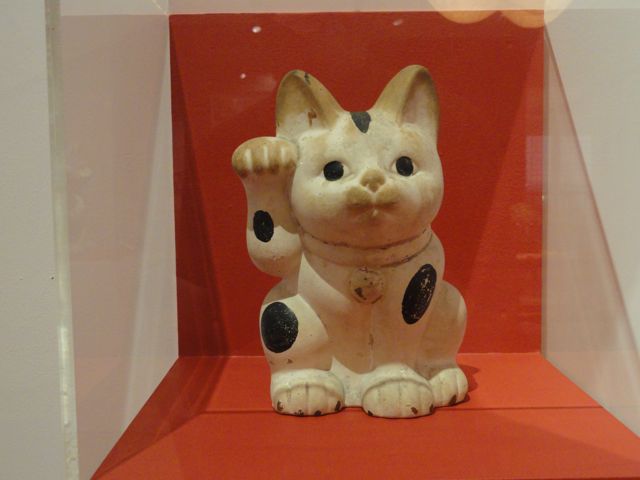
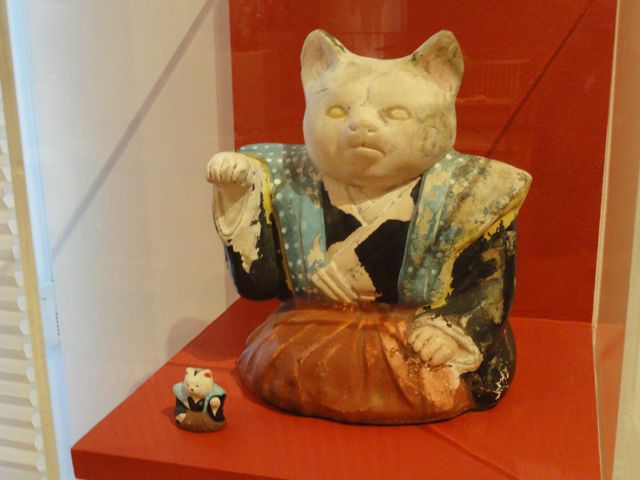
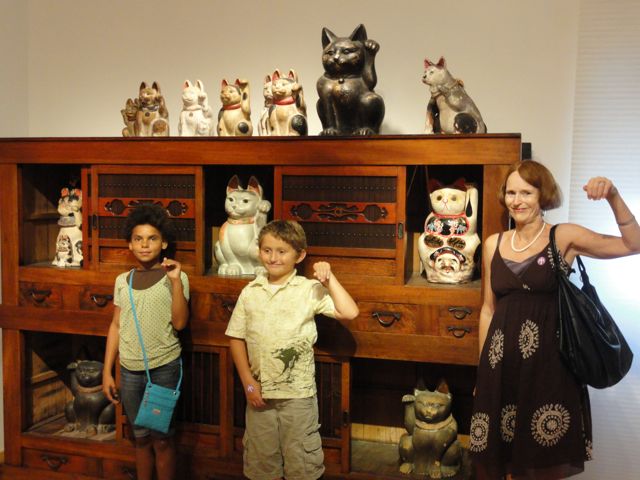
We recently did have the good fortune to visit an art exhibit at The Mingei Musuem in San Diego where a collection of 155 Maneki Nekos were on display. Highlights follow.

0

Jello

I have never understood Jello. How can anything made out of water, sugar, food coloring and boiled bones, skin and cartilage be called salad? Isn’t salad leafy greens, veggies or fruit?

Jello doesn’t make it as dessert, either. If given the choice of pecan pie, ice cream, cake or Jello, only a masochist would pick Jello. The above list is like the intelligence test that asks “Which item doesn’t belong in this group?”

I do however, have a fondness for Jello: I just don’t like it as food.Because of its beauty, Jello has enormous potential as an art media. Can’t you picture an art gallery full of molded, towering, brilliantly colored Jello assemblages? That would be the ultimate pop art: it could be enjoyed and then eaten by those who own the cookbook,”The Joys of Jello”.

Jello is also handy in science classes. I explain paleontology to elementary school students by having them imagine a Jello and fruit cocktail mold. I simply say, “Digging up dinosaur bones is like trying to get the fruit out of the Jello.”

My final use for Jello is crowd control. When working with rambunctious young children, try the following command: “Everybody freeze! Now, pretend you’re a giant Jello in a windstorm.” That gets those wiggles out every time.

0