Neon

I’ve had a life long fascination with neon signs. With their eye-popping colors and dazzling light, neon signs are a stellar art form.

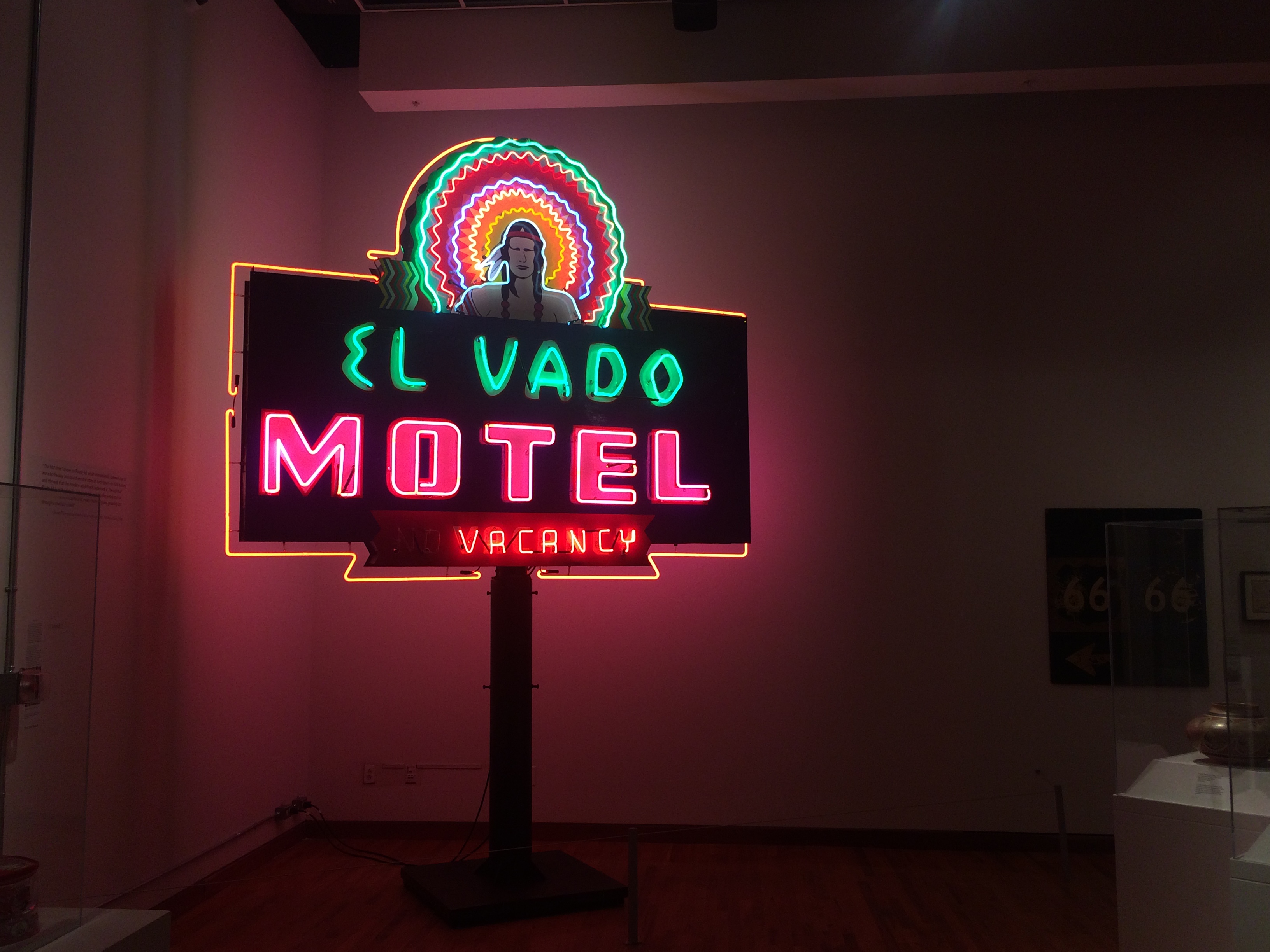
A recent museum show I attended featured restored neon signs from America’s Mother Road, Route 66, which was also a motherlode of neon signage. When Interstates doomed Route 66, the neon signs succumbed as well. Happily, a number of them have been rejuvenated and are once more advertising their businesses or delighting museum goers.

Neon was not discovered by accident as were many other elements. In 1898, two London scientists, William Ramsey and Morris Travers, had a hunch that another gas was between helium and argon on the periodic table. After many failed experiments, they hypothesized the mystery gas might be hidden in another substance. They froze argon, slowly evaporated it, collected the gas that came off it and zapped it with high voltage. Viola! Neon was discovered.

Only trace elements of neon exist in Earth’s crust and atmosphere. But the universe is full of it: neon is in the stars and is the fifth most abundant chemical element in the universe after hydrogen, helium, oxygen and carbon.

Neon is colorless, but neon signs were invented in 1902 when Georges Claude, a French engineer, applied electricity to neon gas in a sealed glass tube and watched it glow red. He introduced his first sign in 1910 at the Paris Motor Show. Neon advertising signs made their American debut at a Los Angeles Packard dealership in 1923.

Not all neon signs are neon. Neon only produces a red color when zapped. Argon gas gives off an intense blue color. These two base colors can be mixed into 80 different colors by coating glass tubes with fluorescent powders. For example, blue glowing argon gas in a yellow tube gives off a green light.

Ironically, neon, a true stellar gas, masks the stars in the night sky with its “light pollution”.

Eat
I designed this sign which has graced the top of our refrigerators for over 35 years.


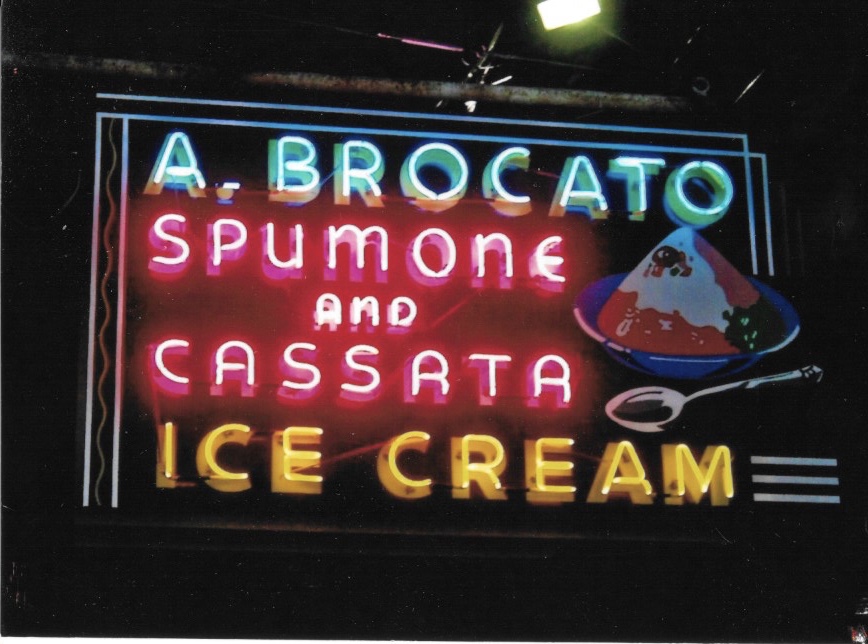
A. Brocato
One of our favorite places in New Orleans


Rt 66
A restored New Mexico Route 66 sign


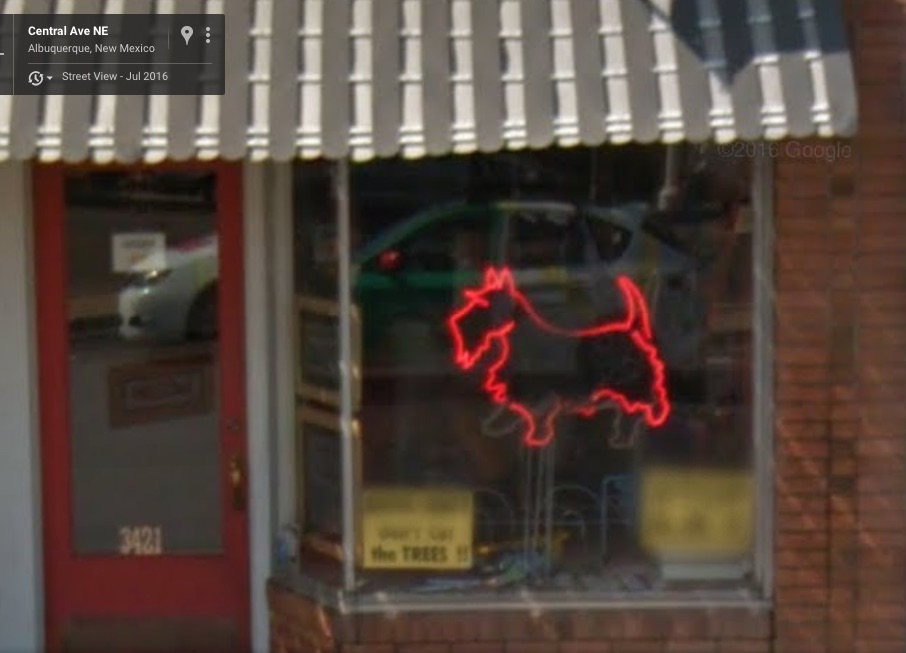
Scottie
My favorite Route 66 sign…..the dog’s legs light up alternately producing the illusion that he is running rapidly. It advertises Scot’s Dog Grooming.


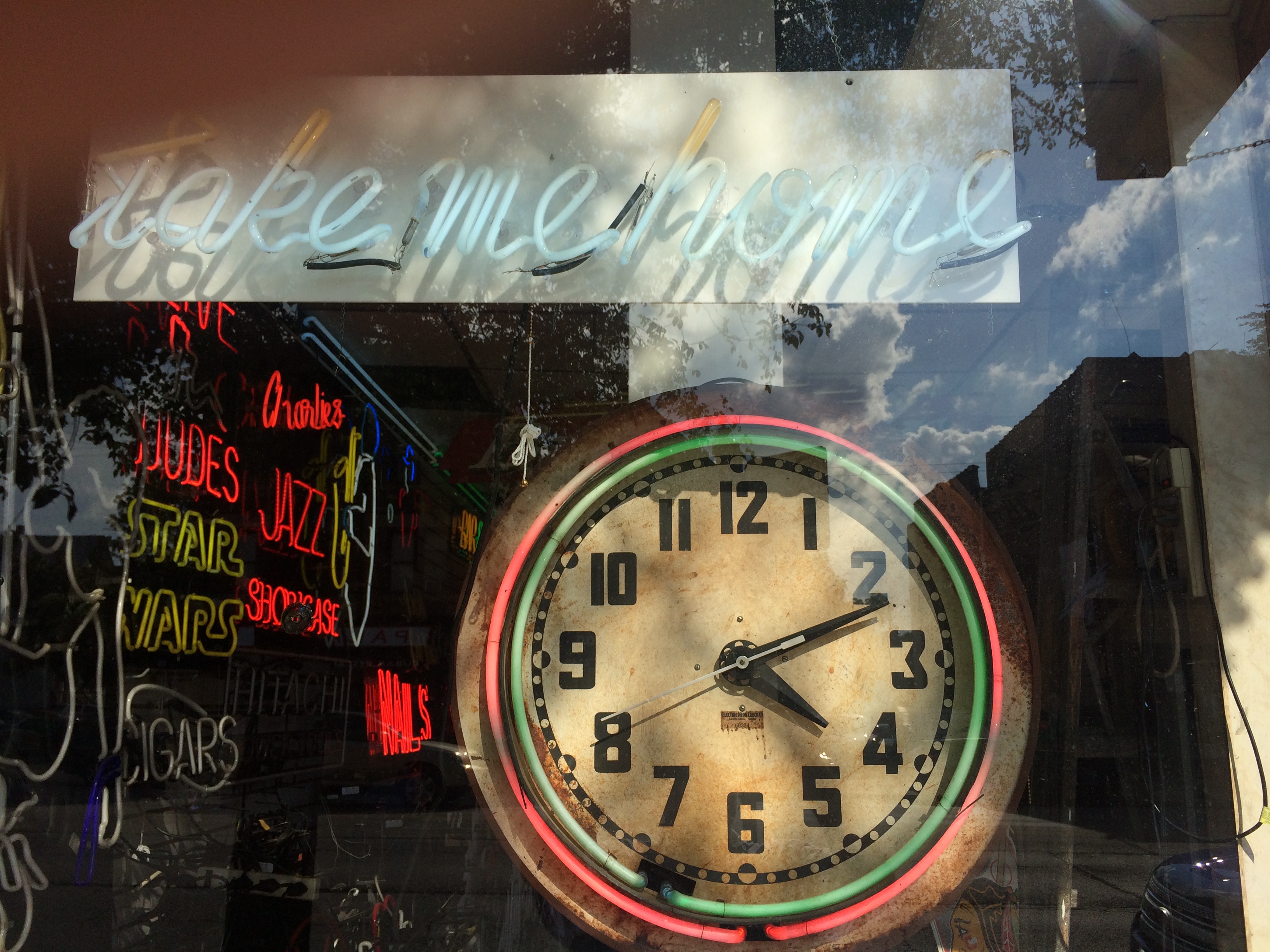
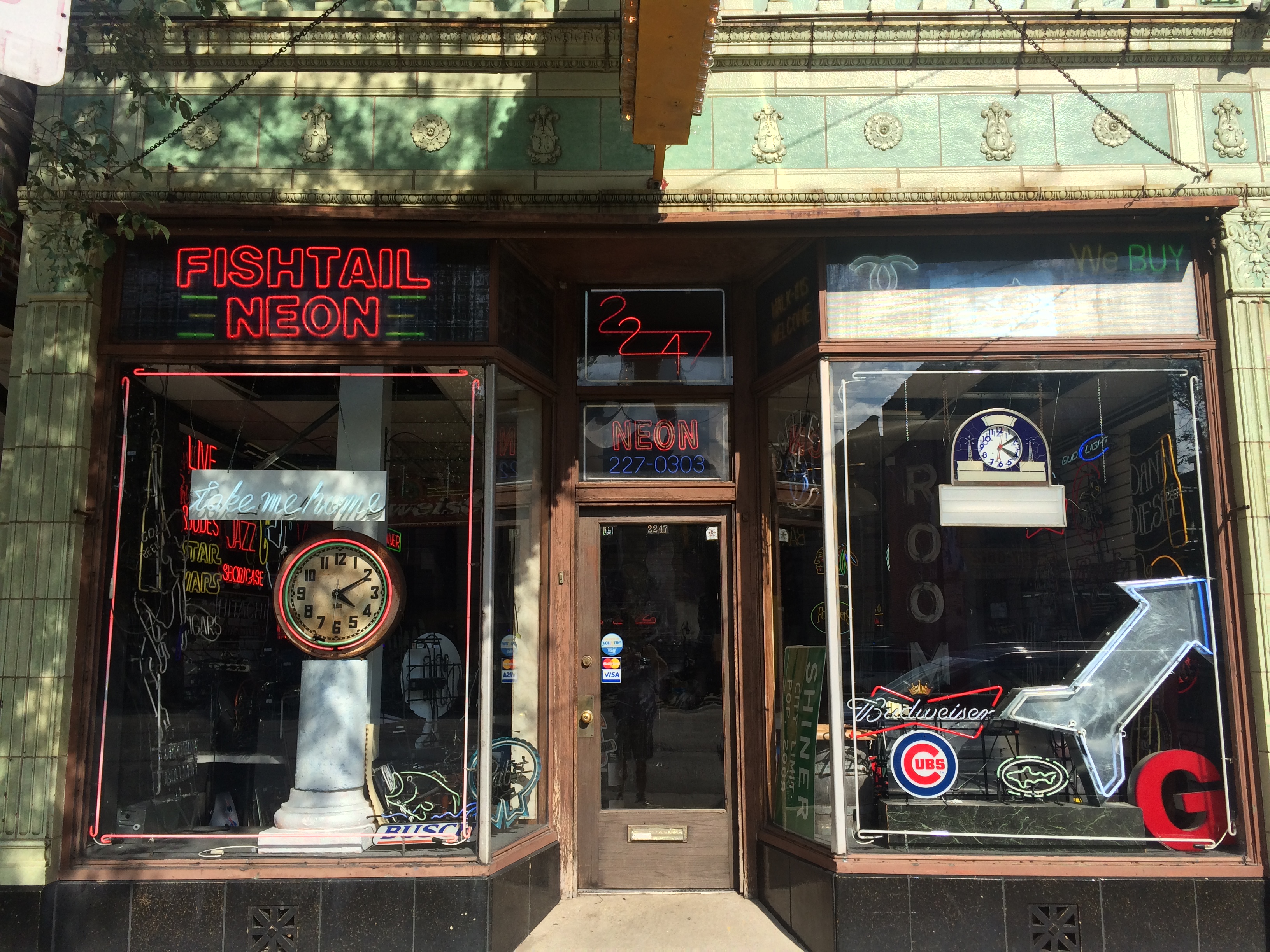
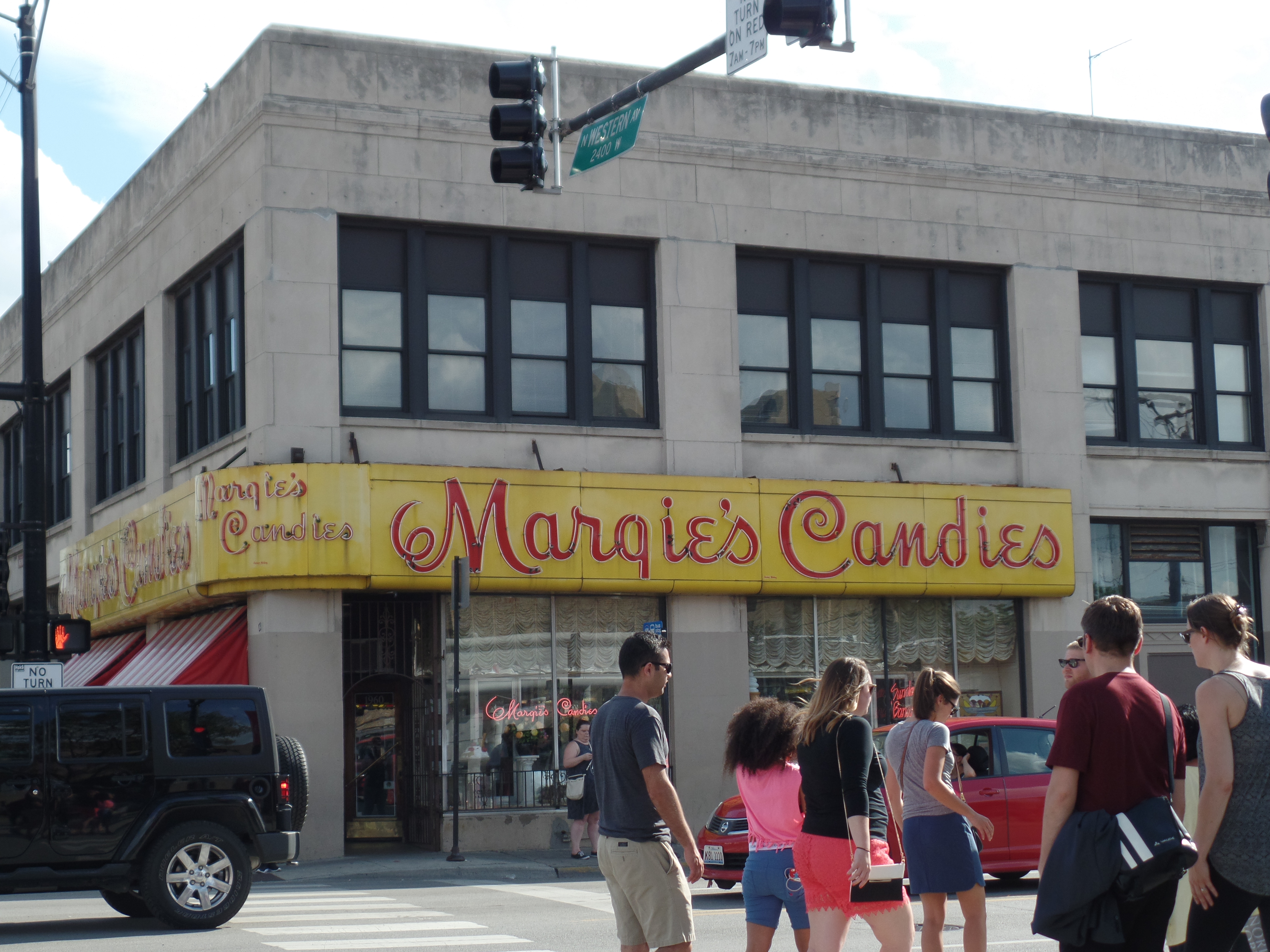
The following photos were taken in Chicago by Peter Little, my talented photographer cousin.
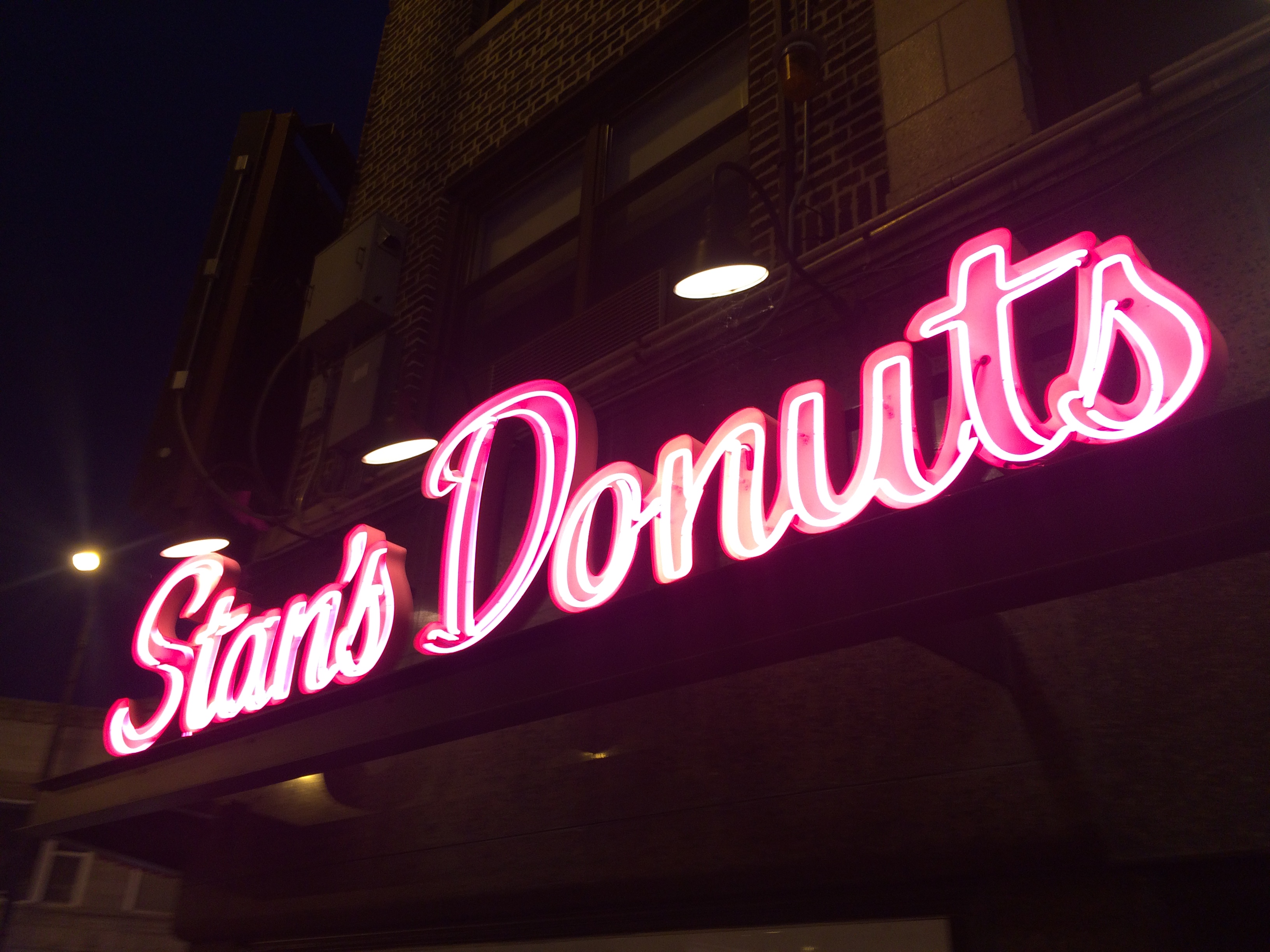
IMG_1967

IMG_1941

IMG_1934

Chicago


0

Exercising

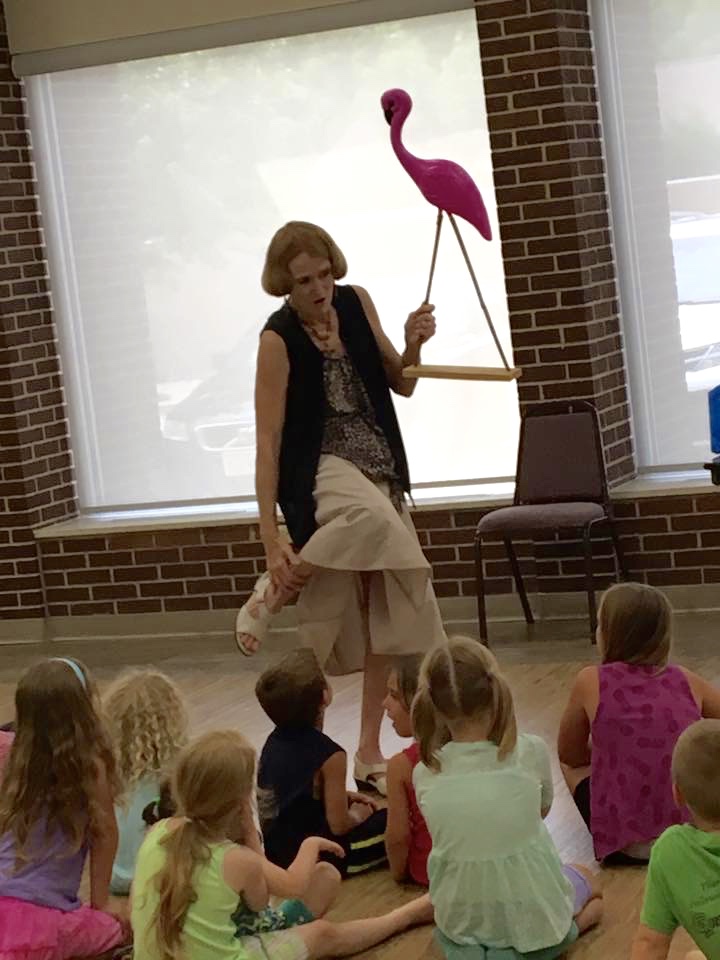
I spent a fair amount of time this summer standing on one leg like a flamingo. Ditto for flapping my pretend wings in hummingbird style.

The summer library reading theme for children this year was On Your Mark, Get Set, Read! I always create a program to coincide with the theme. My idea was to highlight seven animals, tell amazing feats these animals perform and then ask the children attending the programs to duplicate the animal actions. In other words, get the kids moving.

Every teacher worthy of the name knows that getting from 6 to 160 children moving simultaneously is challenging. Chaos could erupt like spontaneous combustion.

Now, at summer’s end, I am happy to report that the hundreds of children I met were all wonderful kids. They followed my one firm rule,”start moving when I say ‘go’ and stop IMMEDIATELY when I say ‘stop’. We burned up millions of calories together and had fun doing it.

If you want to insert some zaniness into your work out routine, or if you want to get a child exercising, here are a few things to try.

Hummingbirds flap their wings 70 times a second. Every child realized they couldn’t beat that. So we tucked our hands under our armpits and counted how many times we could flap our ‘wings’ in a minute. We recorded a range of from 70 to 160 times. Hummingbirds are humbling!

Flamingoes are famous for their balance, even being able to sleep while standing on one leg. What appears to be their knee is actually their ankle (the knee is high up on their leg hidden by body feathers) and the ankle bends the opposite way our knee bends, feet face forward. We checked out our balance by standing for a minute on one leg. Some of us teetered a bit, but almost everybody could do it.

No one could beat the animal who is the highest jumper in comparison to its height. That would be the spittlebug that can jump 100 times its height. Most kids grasped the fact that they wouldn’t be able to do that. But when I asked if anyone thought they could jump one time their height, I always got a few eager volunteers. They now realize that they are not yet Olympic quality jumpers!

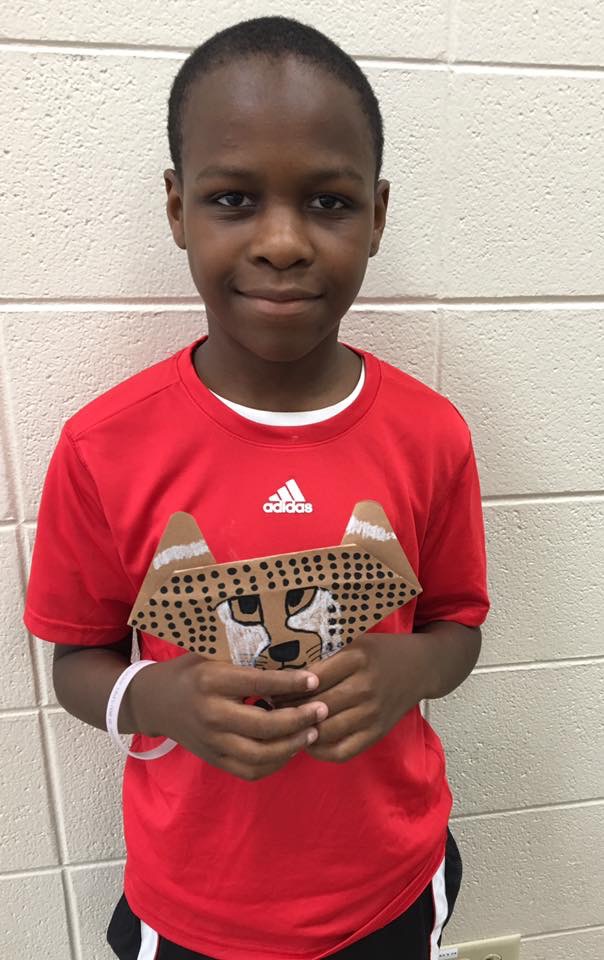
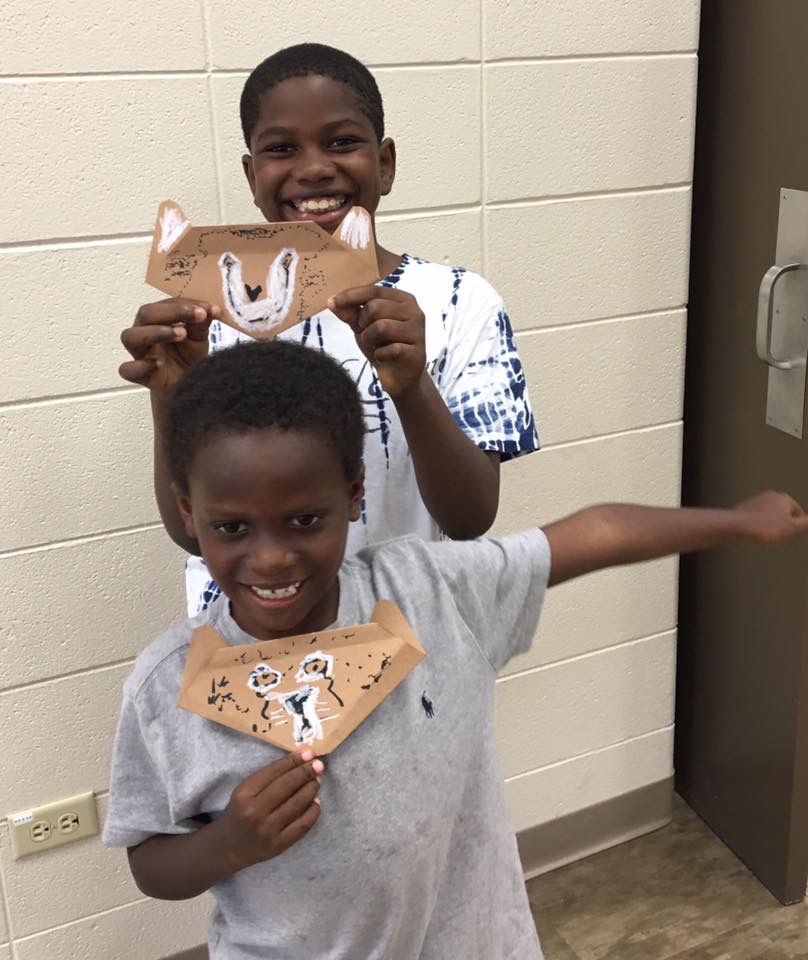
I could think of no way I could get an entire room of kids running as fast as cheetahs, so we exercised our creativity and made origami cheetahs. Then the kids ran home.

0

Malts

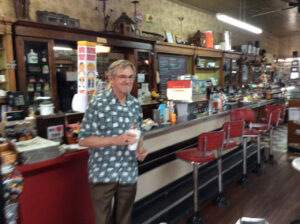
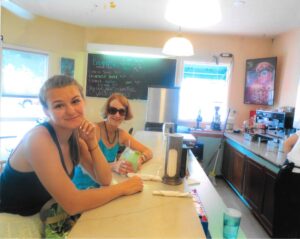
When I was a child, I lived within easy walking distance of two drug stores. Both had soda fountains with swivel stools, malted milk mixers, phosphate dispensers and pyramids of sundae glasses.

Getting  to sit down at the fountain for a malt or sundae was a huge event. I grew up in an age when treats did not happen every day. My parents could not have imagined an age when many children get daily doses of candy, cones or sodas.

As a teenager, I had some spending money, and my friends and I would frequently stop at the drug store on our walk home from high school. My order never varied: a Green River and a small bag of chips.

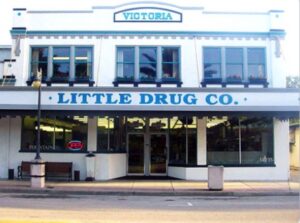
I am a staunch advocate of historic preservation, so it was a true delight to encounter three historic drugstores with soda fountains that have survived into this century. The first, Little Drug Company, 1922, is in New Smyrna Beach, Florida. We serendipitously discovered it when I missed a turn onto Highway One. Instead I was on a road to the historic downtown. It was lunchtime, so we decided to park and find a restaurant. The Little Drug Company came through with grilled cheese, malts and a ton of nostalgia.

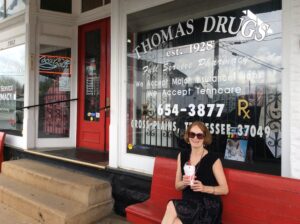
A month later, again at lunchtime, we spotted a sign on a Tennessee interstate noting a local attraction, “Historic 1928 Drugstore and Soda Fountain, 5 miles”. We exited, drove to Cross Plains  and repeated the classic lunch at Thomas Drugs.  I, however, substituted unsweetened iced tea for a malt, thus marking myself as a Yankee for eschewing the sweet tea.

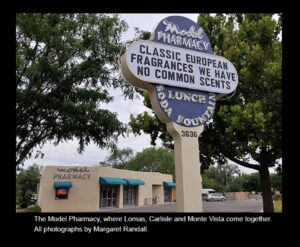
Our favorite old fashioned drug store is in Albuquerque, and we visit it every time we are in town. Model Pharmacy dates to 1947. It is housed in a tiny building but is filled with treasures. In addition to the pharmacy, lunch counter and several tables, Model specializes in European perfumes, soaps and hair accessories, unique greeting cards and boxed notecards. And I know of no other source of a Lime Rickey.

All three of these establishments are working pharmacies serving local clientele as well as history buffs. How delightful that they still sell spoonfuls of sugar to make the medicine go down.

0

Surprise

This story is a sequel to my blog of May 7, 2013 entitled Duckie. It is a tale of serendipity.

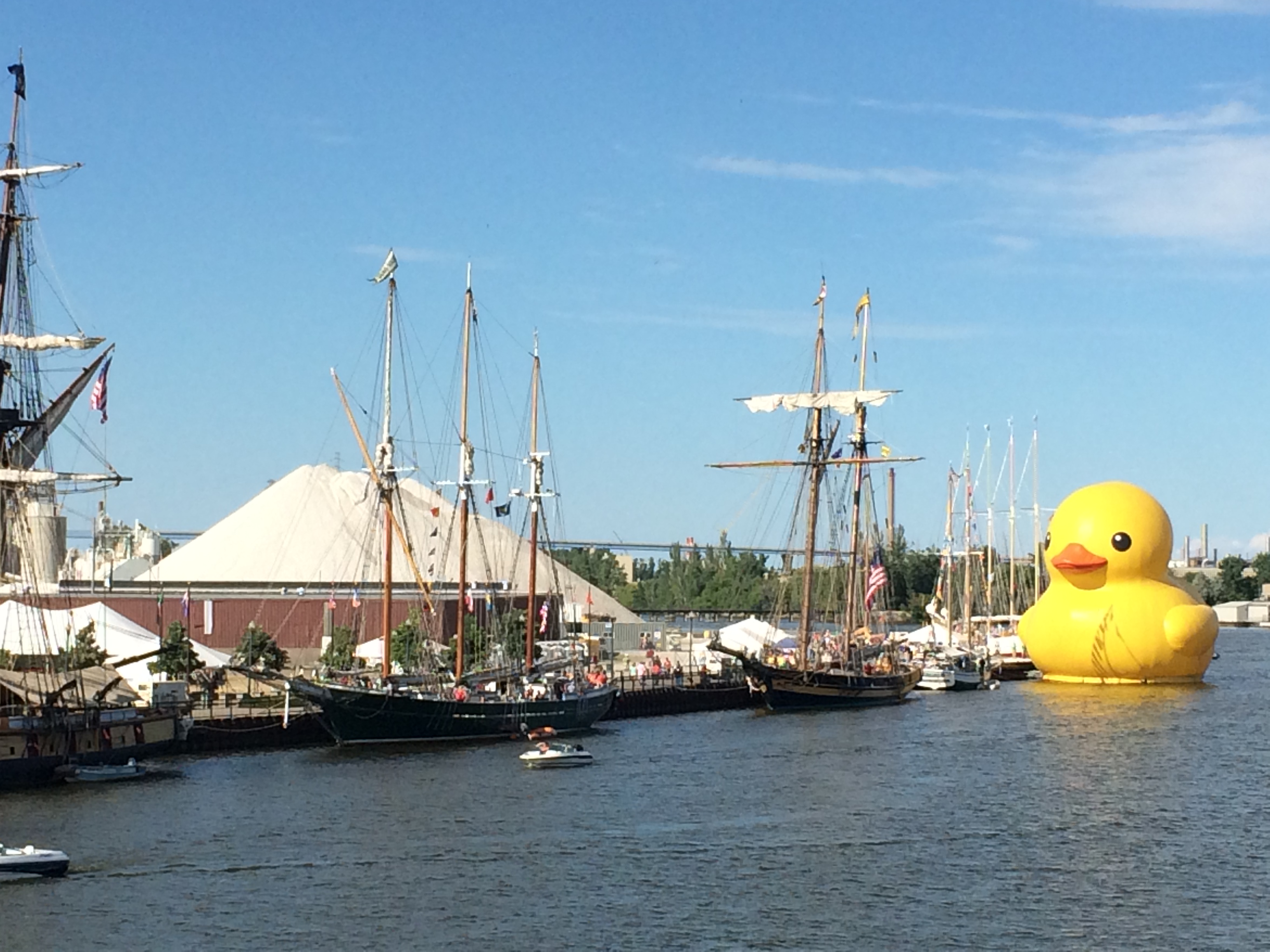
I recently discovered that a fleet of majestic, tall sailing ships was making its way up our shoreline with stops at several ports. Then I learned that the world’s largest rubber duckie would make an appearance with the ships.

My husband and I were in total agreement that this event was too good to miss. We drove the 40 miles to Green Bay and the Fox River to view the floating menagerie…….it did not disappoint.

A week later I was browsing in a Goodwill Store and spotted a little magenta rubber duck. I parted with 99 cents and gave duckie to my husband as a souvenir of the happy afternoon we had spent on the river visiting little duck’s gigantic brother.

The next morning we were about to take showers and I jokingly said, “I hope duckie will be happy at our house even though we don’t have a bathtub for him.” I picked duckie up and set him on the ledge in the shower…..and our duckie immediately answered my question.

Duckie started to flash on and off in brilliant, gorgeous l.e.d. colors of purple, blue, magenta, orange and yellow. We doubled up laughing.

We are not entirely sure what activates duckie’s light show, although we suspect it is water, not motion. At any rate, he will certainly make shower time lots of fun.

Click here to watch our duckie glow!

IMG_1881


0

Marigolds

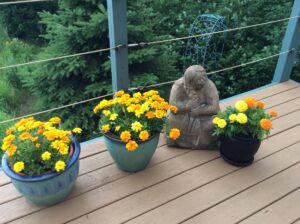
Tagetes patula is brightening up our porch. That is the scientific name for marigolds which are named for Tages, an Etruscan deity who is said to have sprung from the earth as it was being plowed. Our English word marigold comes from Mary’s gold, probably a reference to the Virgin Mary. Peasants would leave flower heads at her statue instead of coins.

Marigolds are natives of the New World from Argentina north to New Mexico. Cempoalxochitl is the Aztec word for this “herb of the sun”. The first recorded use of marigolds is found in an Aztec herbal from 1552. The book describes marigolds as a treatment for hiccups, being struck by lightning or “for one who wishes to cross a river or water safely.”

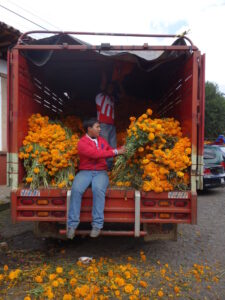
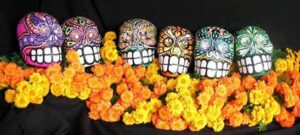
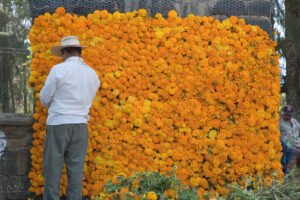
Today, Mexicans make lavish use of marigolds on Dia de los Muertos, their Day of the Dead festival on November 1. Millions of the orange and yellow flowers are used to adorn home altars, gravesites and entire cemeteries.

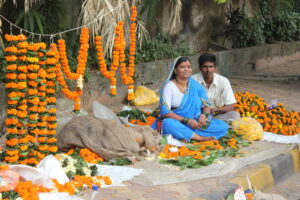
Portugese explorers introduced marigolds to India in the early 16th century. Now they are widely grown there and an integral part of wedding ceremonies and other holidays. For the Hindu Festival of Dussehra, homes, buildings and even vehicles are ablaze with marigold decorations.

Marigolds are also brought as offerings to Hindu gods. A lovely, antique wood carving of the Hindu god, Ganesh sits on a shelf of my bookcase. One day, my niece, who is from India, was visiting and noticed a tiny piece of dried marigold tucked behind Lord Ganesh’s hand.

Wherever they go, marigolds make themselves at home. They are not prima donnas like the geraniums that I tried to nurse through so many summers. Marigolds only ask for sun and a few drinks. In return, they will pump out continuous flowers until pumpkin time.

The other morning, we were just about to start breakfast on the porch when my husband said, “It smells like we must have had a skunk visitor around the yard last night.”

I thought about that for a second and then opened my hand and said, “I think this is your skunk.” I had just deadheaded the marigolds and had a fragrant fistful.


0