Nuts

One of our best Christmas presents was a fifty pound bag of peanuts. Two people and a herd of cats obviously cannot eat an almost unliftable bag of nuts. The squirrels in the Tooley Café, however, are in an elevated state of bliss.

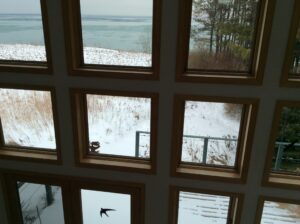
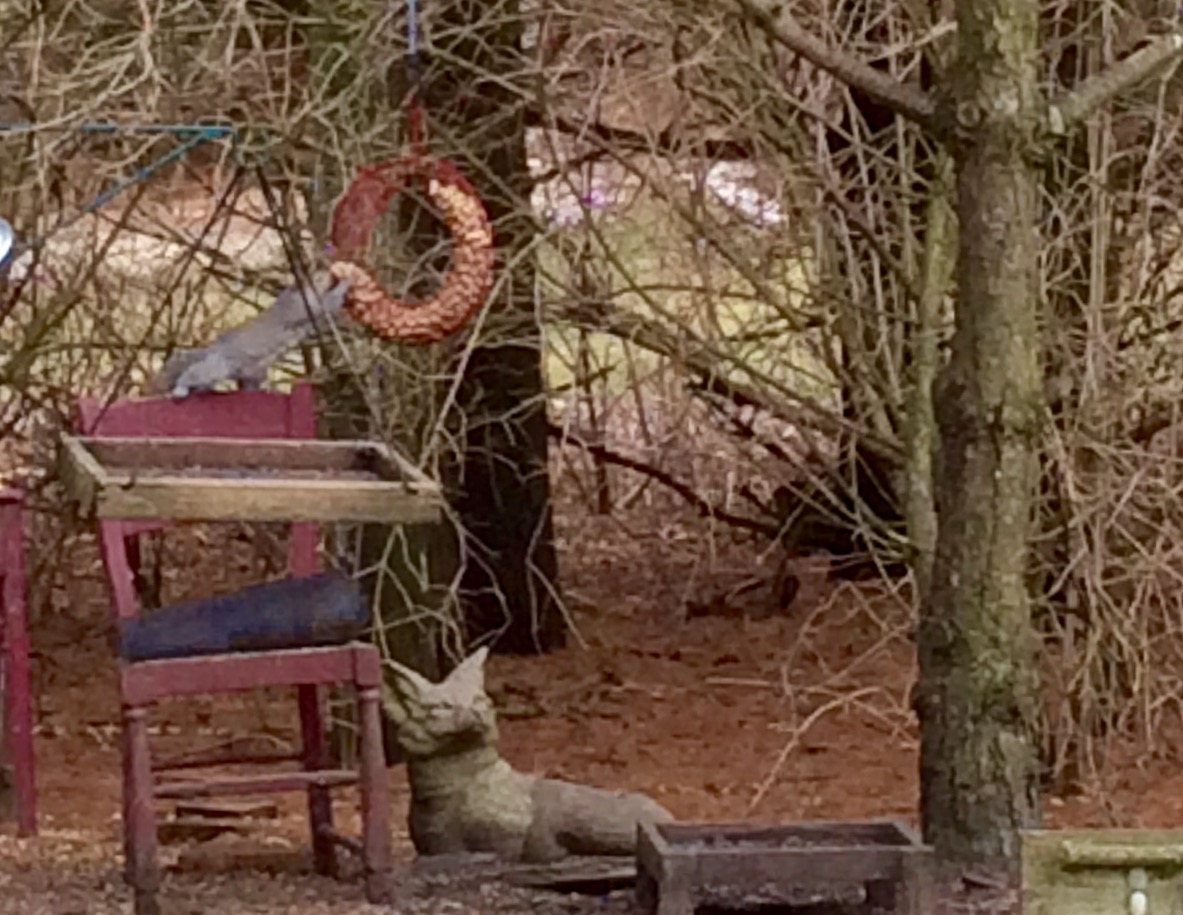
The peanuts came with a red, metal, doughnut-shaped dispenser. Minutes after we hung the contraption from a branch in our Café the squirrels arrived, both the big grays and the little reds.

They use two methods to get at the treasure within; the top down approach via branches and the bottom up approach. The Tooley Café chair (which washed up on the beach one day) is used for the later.

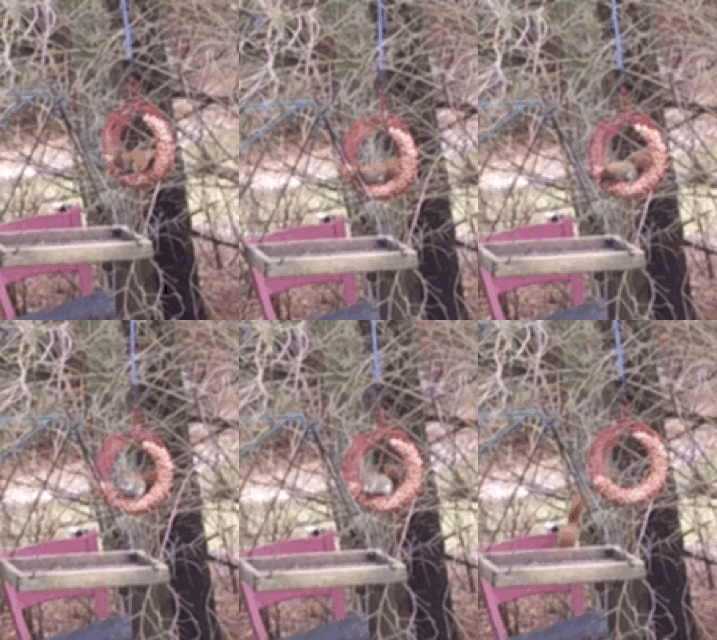
The squirrels take turns pulling out the nuts, racing away with the nuts in their mouths and shortly returning for more. We deduce there is a lot of caching going on here. Either that or our squirrels just like to eat in privacy, and we’ll soon have the fattest squirrels in the neighborhood.

The squirrels do have some competition. Our resident family of five blue jays loves the peanuts. They wait patiently on a branch a few feet above the feeder for a squirrel to leave. Then they jump down to extract a nut before a squirrel returns. They have to work hard to free a nut from the metal cage; beaks apparently aren’t as skilled at this task as squirrel paws. After scoring the peanuts, the jays fly up onto a higher branch and bang the nuts on the branch until they open.

Thus far, despite the flurry of activity, harmony reigns around the feeder, with one exception. One jay finds it easier to grab the peanut out of his friend’s beak than to do the work of extricating it from the cage.

There has been a new development the last several mornings. The squirrel feeder is missing when we wake up. My husband has to go searching for it in the woods. This has all the earmarks, or paw marks, of raccoons. Apparently, there have been some big peanut parties in the woods at night lately. The squirrel feeder now has a curfew… it goes into the garage when night falls.
0

Wintry

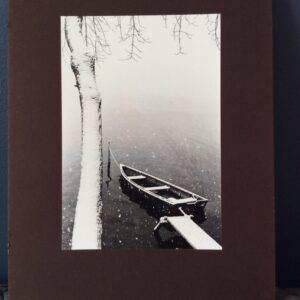
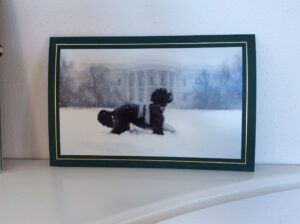
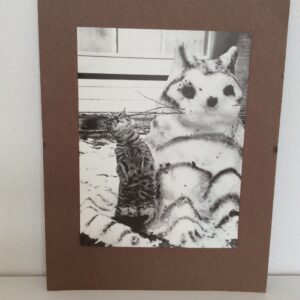
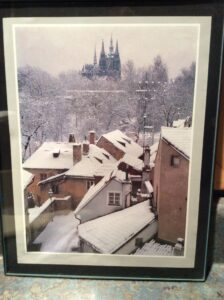
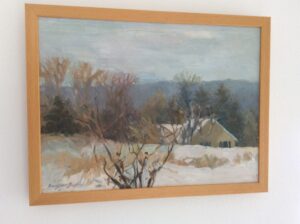
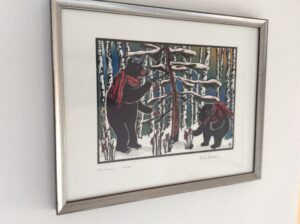
About three week ago, I got winter out of the closet. Ever since studying Japanese art in college, I have followed the Japanese concept of living with artworks in tune with the seasons. So when the first heavy snowfall covered the ground, the time had come to bring out the winter pictures.

Over the years I have gathered a collection of art and ephemera from multiple sources. I have bought wonderful art in galleries, but also from thrift stores. Many of our artworks have been gifts from artists, others are pictures I’ve cut out of magazines and discarded library books. I am also a devotee of affiche…..I’ve been known to remove posters from walls, but only after the event advertised on them has past.

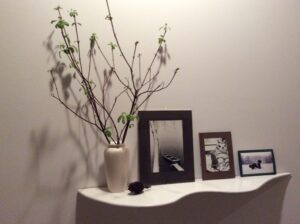
Our art is displayed throughout the house. We do not have a tokonoma, a Japanese alcove for displaying seasonal art, but our white wavy shelf serves that purpose. Here is our winter gallery, provenance included.


0

Zamboni

I’ve noticed an uptick in news from Canada lately, perhaps because Americans are suddenly more aware that a nice country exists above us. Personally, I like the fact that if I left my house after breakfast, I could drive to Canada for dinner. It’s a comforting thought that good neighbors are nearby.

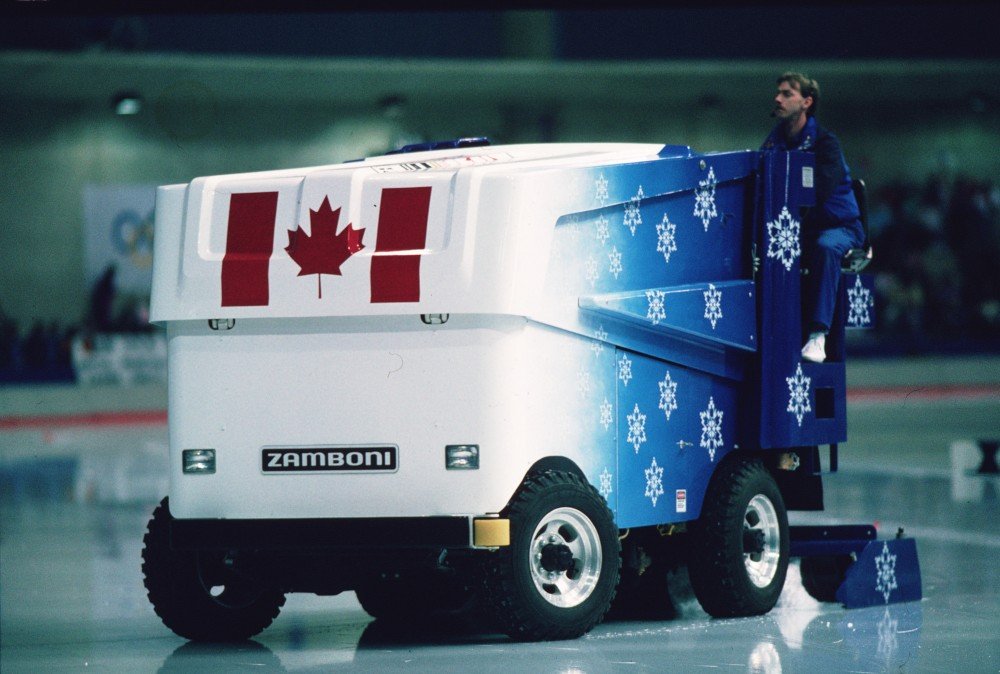
A hot, or perhaps I should say cold, news item from Canada recently reported about a man and his Zamboni. Jesse Myshak of Alberta purchased a Zamboni to care for his backyard rink. The ice surfacing machine needed some repairs so he worked on it at his shop over a mile from his residence. When the work was completed, he decided to drive it home which elicited some good natured ribbing from the guys at his shop. They suggested he drive it to Tim Hortons, that most iconic of Canadian institutions. And that is exactly what he did, down the city streets at a slow crawl to the drive in window where he got a hot chocolate. The lady in front of him even paid for his drink. His short jaunt produced much laughter and an outpouring of Canadian pride from his townspeople.

The previous year, three other Canadian guys made Zamboni news. They wanted to have glassy, manicured ice for their neighborhood rink but could not afford the six figure price of a genuine Zamboni. So they got together in a garage one afternoon, started tinkering around and built their own.

One of the team explains, “It’s built mostly out of PVC piping, and there’s a big tank that goes on the back of a side-by-side, and some valves and other stuff from the local hardware store.” A spout sprays warm water on the ice and a large beach towel attached to a mechanical arm buffs the ice. Their contraption is a resounding success.

Americans aren’t the only ones with ingenuity.

www.industrytap.com/how-zamboni-became-the-most-famous-name-on-ice/8844
0

Walking

Taking a walk is a great pleasure. It is also therapeutic. Getting outside, stimulating all the senses and using muscles galore is restorative.

I come from a family of walkers. My parents weren’t into sports, but they did believe in being fit. I logged many miles with them as a child, which perhaps explains why I cringe when seeing three, four and five year olds being wheeled around in their super-sized strollers. My own children trailed behind me like ducklings when they were little. One day a total stranger told me to “slow down”. I must note that both children did grow up to be healthy, strong walkers. Our daughter even completed the New York Marathon this year.

My beloved Aunt Vi was the best walker in our family. She never married and never drove a car, but she was born to move. For all her retirement years (and she lived to be 89) my aunt walked many miles a day…year round. The only thing that kept her from her daily hike was severe icy sidewalks. “I don’t want to fall and break a leg,” she would say. “I can’t imagine not being able to walk.” She got her wish. Aunt Vi had a long walk on the last day of her life.

Winter walking is a bit of a challenge for me as I am not a fan of below freezing temperatures. Luckily, last year I found an incredibly expensive, new winter coat at St. Vinnies for $4.00. It is not a fashion statement. In fact, I resemble a hooded, purple version of the Michelin man when I wear it. But being able to take a winter walk in comfort supersedes chic.

Here is a delightful verse I found in a 1987 book of New Year’s poems for young people.

First January Walk
I’ve been out walking
among the winds of dawn.
I’ve kicked frozen puddles
and cracked them into crystal bits.
I’ve stepped on snow
and left my footprints
to melt in the afternoon sun.
I’ve run after deer
and felt no fear
of losing myself
in the open woods.
Pine trees have given me
their evergreen secrets,
and one or two blue jays
have sung to me.
I am free
with the New Year’s air.
Emanuel Di Pasquale

IMG_3644

0

Champagne

It’s the perfect time to think about champagne. It’s an even better time to drink some. The new year ahead does not portend to be an easy one for those who value logic and decency.

Champagne is said to be the invention of Dom Perignon, a Benedictine monk whose abbey was in Hauteville, France. He was the cellar master there for 47 years and “laid down the basic principles still used in champagne making today.”

Legend has it that in 1693 he tasted his creation and exclaimed, “Come quickly, I am drinking the stars.”

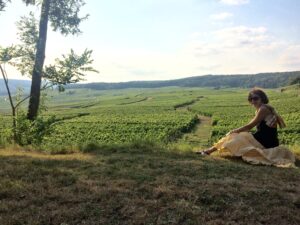
The champagne region in northeastern France existed long before Dom Perignon and the bubbly, celebratory wine. The Romans figured out that the cool climate, sloping hills and chalky subsoil in the area were ideal for growing grapes. From antiquity to the 16th century, red and rose wines were produced.

In those times, wine makers worked diligently to get any effervescence out of their wines, referring to fizzy wine as le vin du diable, the devil’s wine. Bubbles caused their thin glass bottles to frequently explode “like badly wired grenades”. Cellar workers wore padded clothes and iron face masks. In the 1700’s the invention of toughened glass and corks enabled the vintners to ship their sparkling wines.

Simultaneously, the royalty in Europe decided that champagne was their drink. Louis XV’s mistress, Madame du Pompadour, proclaimed, “champagne is the only wine that leaves a woman beautiful after drinking it”. No twentieth century madman could have branded it better.

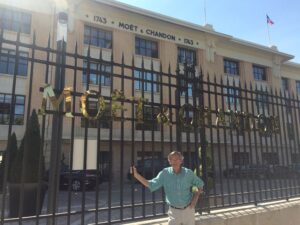
Today, the small town of Epernay south of Reims is the Capital of Champagne. Elegant villas that house the world’s most famous champagne producers line the town’s most famous street, the Avenue du Champagne. Under the Avenue are miles of caves where millions of bottles are quietly fermenting. May they rest in peace until they are uncorked.

Cheers!

0