Crayola

Americans will fight over anything these days, so it should come as no surprise that a crayon is under attack.

The crayon that has unleashed a torrent of protest is a delightful shade of blue and has replaced the now retired color “Dandelion” in the 24 pack of Crayolas. Dandelion did get to go on a retirement tour before leaving the box forever.

The newest addition to the Crayola family is named “Bluetiful”. The name resulted from an online naming contest and got 40% of the vote beating out four contenders.

As soon as Bluetiful made its debut, Twitter lighted up with criticism. One of my favorites was, “The dumbing down of the U.S. continues as Crayola replaces ‘Dandelion’ with ‘Bluetiful’. 90,000 submissions and they picked one that’s not a color, object or word.”

I concur but will stay calm. This a minor dumbing down of our young people in comparison to what the advertising media and textbooks published in Texas are doing to our kids every day.

So in the spirit of not dumbing you, the reader, down, here are some interesting facts about Crayola crayons.

The new brilliant blue Crayola color was an accidental discovery by Oregon State University chemists. The scientists were heating up chemicals in an attempt to find new materials for use in electronics. Serendipitously, one of the chemical mixes came out of the furnace a striking blue. The pigment was named Yin Mn from the elements it is made of: yytrium, indium, manganese and oxygen.

The Crayola Company was best positioned to bring Yin Mn to market. They have been making crayons since 1903.

The Company was originally founded in 1885 by two cousins, Edwin Binney and C. Harold Smith. They originally produced pigments for industrial use, their most popular items being iron oxide pigments for red barn paint and carbon black chemicals to make tires black.

In 1900 they began manufacturing slate school pencils and then went on to invent the first dustless white chalk. The development of their famous product line of wax crayons followed, and it was a collaboration of Edwin Binney and his wife Alice Binney, a former schoolteacher.

The Crayola name was also invented by Alice Binney. It comes from ‘craie’, French for chalk and ‘ola’ for oleaginous or oily. It should be noted that the suffix ‘ola’ was popular at that time giving America in quick succession granola, pianola, Victrola, Shinola and Mazola.

Over 100 years later, Crayolas are still thriving, and that is beautiful.
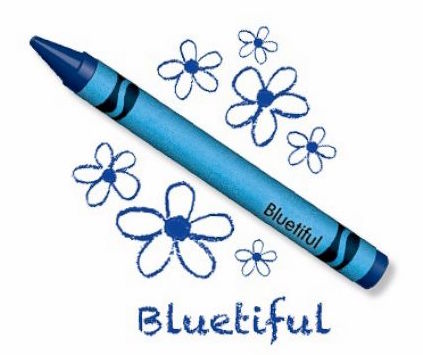
Photo: ABC News
0

Autumnal

According to the calendar, summer is still here. Fall doesn’t officially begin until September 22 at 3:02 (CDT). Mother Nature, however, is setting the stage for autumn with each passing day, adding hints of the colorful drama ahead. I only have to go as far as my own yard for a preview.

Warm-hued colors are popping up in patches here and there.


The late blooming flowers are mostly yellow such as these of the cup plant.


We’re hoping a monarch emerges from its elegant chrysalis on the side of our house.
Time is running out for the long journey to Mexico.


Our woods are full of jewel weeds and the bees who fly all the way into the flowers for a late summer drink.


The milkweed pods look like fat little boats, but soon they will split open and sail their fluffy seeds into the wind.


Our blue-green bluestem grass has turned to gold.


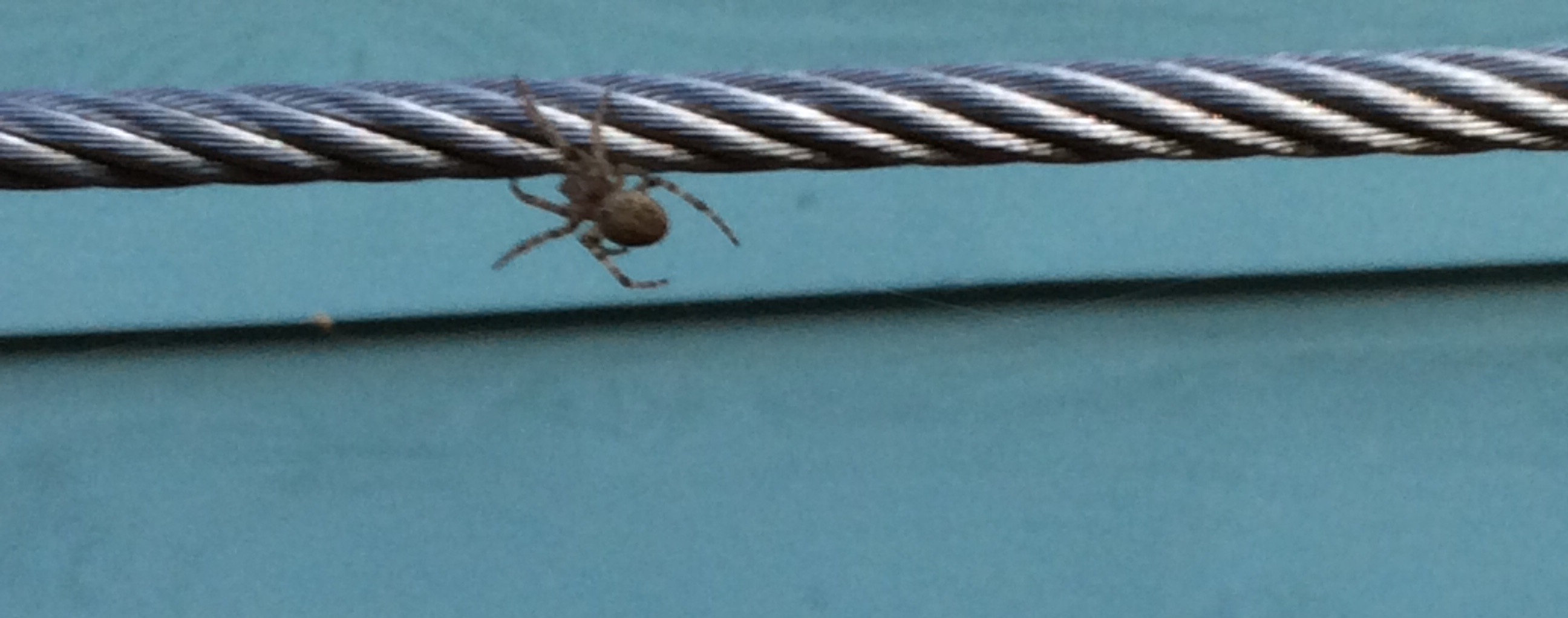
But the surest sign of fall’s approach in our yard is the abundance of spiders. Like Charlotte, they know their days are numbered and are busily laying eggs and carefully packaging them in their special silk. Everywhere I look one can be found, which is fine with me. They are busy with their business, and I with mine.


0

Whale

On June 17, 2008, I posted a blog on how to wash a chicken. It’s time for a corollary to that blog. It’s about thinking bigger. So here’s how to clean a whale.

A news item in the NY Times entitled, “Thar She Glows”, tells all…how The American Museum of Natural History in New York City gives its life size blue whale model an annual “bath”.

Cleaning a 94 foot long, 21,000 pound mammal is no easy task. Plus, she is suspended from the ceiling in a dive pose. The cleaning takes two days and is done from a cherry picker. One worker with strong arms and shoulders wields a vacuum cleaner with long attachments ending in a soft brush. As the dust is sucked away, the whale’s delicate blue-gray color reappears.

Real blue whales need no cleaning. They use all the world’s oceans as their bathtubs.

Blue whales are thought to be the largest creatures of all time, even surpassing the size and weight of giant dinosaurs. Here are a few more whale size facts:

  • Blue whales can reach 100 feet long and weigh 180 tons. The female is bigger than the male. (Go girl!)
  • The whale’s tongue can weigh as much as an elephant.
  • These colossal mammals eat tiny food, krill, a shrimp-like zooplankton. Up to 4 tons of krill can be consumed in a day.
  • Blue whales are among the loudest animals on the planet, making groans and moans.
  • After a 12 month wait, mother blue whale gives birth to her 3 ton baby.
  • Baby blue whale dines exclusively on mother’s milk for a year and gains 200 pounds a day. (Yes, I tripled checked this!)
  • When blue whales breathe out, the spray from the blowholes can shoot up to 30 feet in the air.
  • The life span of blue whales is 80 to 90 years.
  • 95% or more of the entire blue whale population was killed during the whaling era. They are now a protected species.

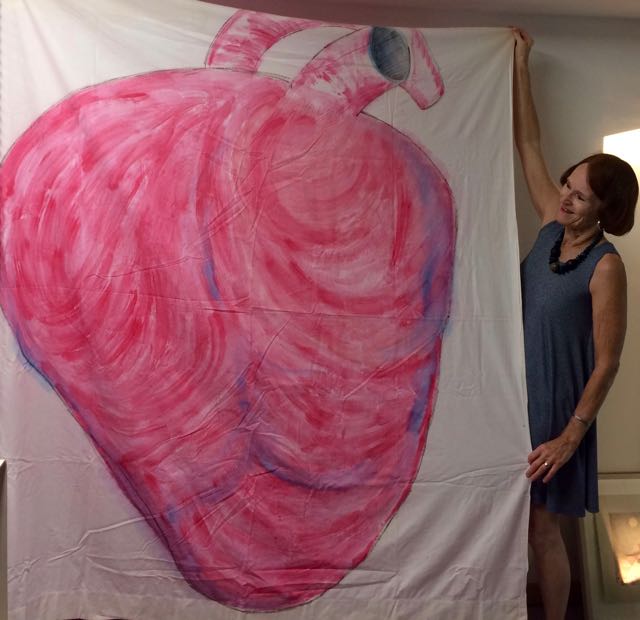
Here is a picture of the actual size of the blue whale’s heart which I painted to use in my science classes for children.

0

Table

As a new school year starts, here is a true story about a little boy named Christopher who sat under the art room table. For readers who know me personally, note that this Christopher is not my son of that name.

For twenty years, I was the art teacher at a Montessori and Creative Arts school. We had morning and afternoon programs starting for children 2 1/2 years old and continuing through age 7 or kindergarten.

The school had a large room with Montessori equipment, a music and creative play room, a practical life room (where kids prepared their snacks and cleaned up after themselves) and an art room. The children were free to choose the areas they worked in. Most did a round robin of all the areas during their three hour school day.

Remembering the joy I found in color as a child, I painted my art room walls with vibrant colors and filled them with exciting art objects. Our art activities were equally colorful and intriguing…painting, sculpture, wood building, clay, print making and more.

Most of the children came bounding into the art room eager to try out the art materials. But, Christopher, age 2 1/2, would shyly poke his head around our open door and then retreat to the safety of a little rug and solitary work with the Montessori equipment such as the red rods, pink tower or sandpaper letters.

Then, after several weeks, Christopher ventured all the way into my art room, crawled under our big work table and sat down on the floor. He would stay there for 15 or 20 minutes and then silently leave.

At parent conferences my report on Christopher’s artistic activities was extremely concise…..”Christopher is taking in the art room from under the table.” His parents were loving and patient people and adopted a “let it be” attitude.

By the last parent conference in May, my report was identical to the first. Christopher remained an observer, not a participant, for the entire year. And no one panicked that he would never get into Harvard.

When school resumed in fall, Christopher was back. He immediately strolled into the art room, sat down on a chair and began drawing and painting delightful pictures and trying every project offered.

I recently ran into an acquaintance from those long ago days and inquired if she knew how Christopher was doing. “He’s thriving”, was her reply.

I’m not surprised. That little boy was given the time and space he needed to figure things out in his own way. A scenario like this would be hard to find in today’s world. All the little ones are kept too busy getting ready for their testing.

0

Crepuscular

My mother was a librarian who loved books and language. She never spoke down to me when I was young, thus giving me the gift of many words. I distinctly remember her explaining to me what she meant when tossing out the statement,”I love the crepuscular hour.”

“Crepuscular” is a beautiful word to say, and I share my mother’s pleasure in its meaning as well. So I was delighted to come across the following passage in Martin Walker’s book Fatal Pursuit. The author lives in rural France and his series features Bruno, the police chief of a small French village. Martin admits many of his characters bear a remarkable resemblance to his fellow villagers.

The scene begins as a group of friends is sitting down outside to share wine and a summer dinner:

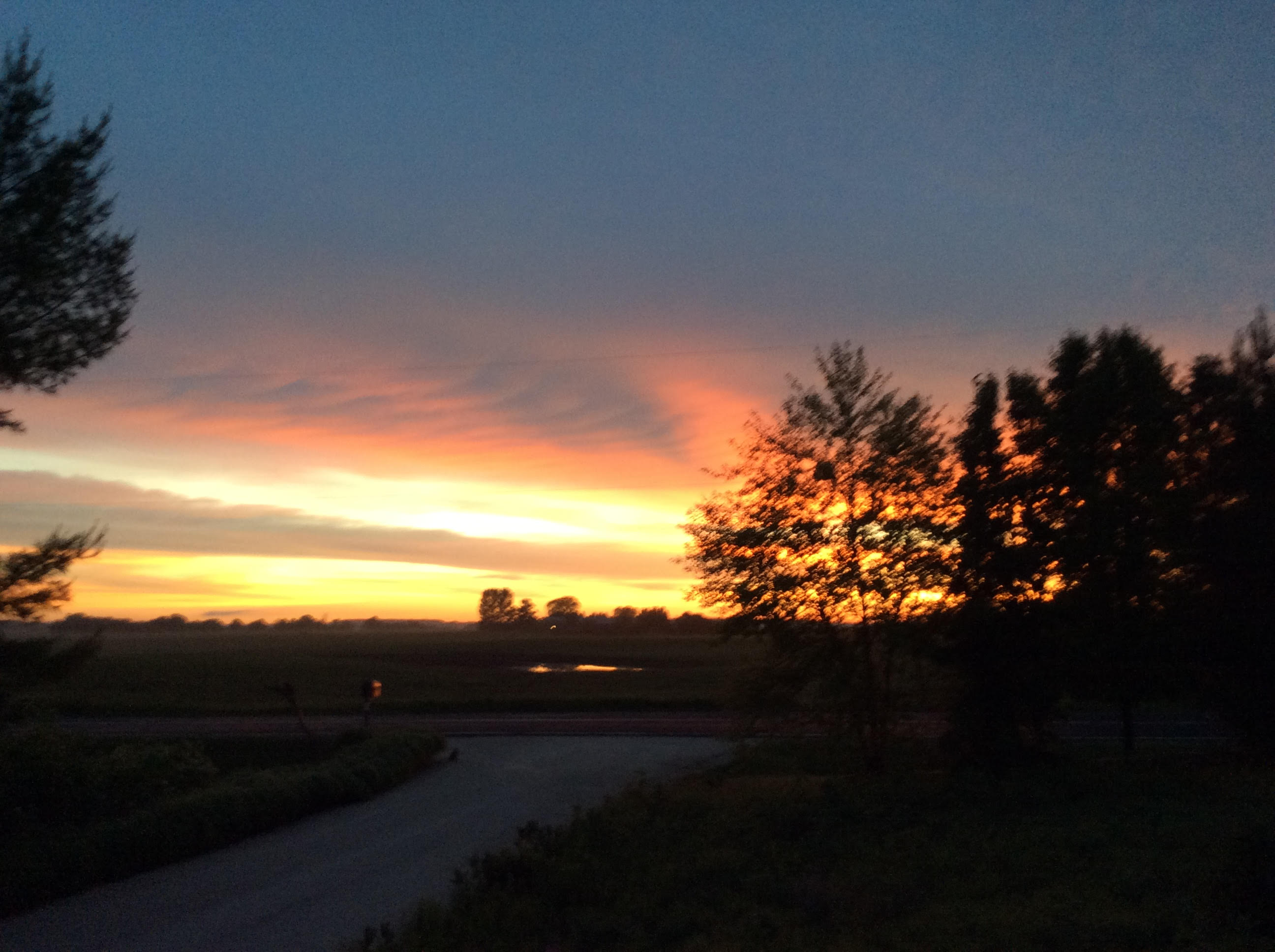
The sun was setting, streaks of rosy pink and red alternating with scattered lines of cloud, and the old stone of the mairie (town hall) had turned into a rich gold. It was that brief moment of twilight before someone turned on the lamps over the diners, and Bruno murmured to himself one of his favorite words.

“Crepuscule”, he said as he looked at the red sheen of the setting sun on the bend of the river, not aware that he had spoken aloud until the baron repeated it back to him.

“Crepuscule” one of the loveliest words in our language, for one of the loveliest times of the day just as it gives way to night,” the baron said softly, gazing at the shifting planes of red and crimson light on the river. “Sitting here, with wine and food and surrounded by friends as generations must have done before us in this very place, makes all the world’s troubles seem very far away. Sometimes I imagine prehistoric people sitting here on the riverbank, sharing their roast mammoth or whatever it was, and watching the sun go down just like us.”

He raised his glass. “I drink to them, whoever they were.”

Summer is on the wane, and now the nights are numbered when we will be able to eat dinner outside and luxuriate in the crepuscular moments. We intend to savor every one.

0