Overstuffed

For most of my adult life, I’ve had a love/hate relationship with the holidays. I love the making, baking and taking part…..making Christmas cards, baking cookies from the 1941 and 1955 Electric Company cookbooks and taking time to visit all the people I love.

The not so desirable part can be exemplified by several events this past week. My husband and I were no more than six feet into a Home Depot (where we were picking up a kitchen sink) when my spouse said, “I might not survive a month of this blaring Christmas music”. I agreed, and found myself longing for a large dose of Gregorian chant.

A few more feet into the store, we found ourselves surrounded by massive, lighted, outdoor holiday displays. A group of giant cartoon pigs were caroling beside a crib scene and a huge inflatable airplane piloted by Snoopy was flying overhead. To the best of my knowledge, no Evangelicals are protesting these pop versions of Bethlehem. Apparently, they are too busy protesting the annual Starbucks’ holiday cup.

Making our way to the plumbing aisle, we ran into a humongous cardboard box filled with the largest teddy bears I have ever seen. These behemoths were at least five feet tall and five feet around. No child could give them a hug as a child’s arms couldn’t get around the bear’s girth. No child could sleep with these teddies as one bear would entirely fill a child’s bed. And no child could sit on the bear’s lap; the bears had no laps, their stomachs were bursting with stuffing.

I figure these poor, never-to-be-loved bears are the perfect symbol of the modern American Christmas…..completely overstuffed with stuff (mostly Chinese).


0

Lemons

Whenever our family gets together, we tell lots of stories. The stories mainly center on two topics, cars and food. Or, put another way, we all love to travel and to eat.

Last week the subject was one of our daughter’s college cars, her Vega…..which ran on money. This prompted us to google “Vega”. Hilarity ensued when we discovered that it made almost every “10 worst cars of all times” lists.

Popular Mechanics wrote this obituary for it:

A Car to Hate
By the end of the 1970s, the once-ubiquitous Vega was already disappearing from America’s roads. With such a crummy reputation for reliability, the Vega’s resale values soon dropped down near zero. Legend has it some salvage yard even put up “No Vegas” signs to announce that they weren’t even bothering pulling usable parts off the cars before crushing them.

Since we were now all in the worst cars spirit, we began checking out the other classic lemons. The usual suspects were all there, Yugo, Pacer, Edsel, Pinto. However, the ultimate lemons, we all concurred, were the 1965 to 1969 V8 Chevies. Gearhead’s description of their problems is too good not to share verbatim.

1965 – 1969 Chevrolet V-8
Chevrolet cars and light trucks with V-8 engines from model years 1965 – 1969 were prone to the motor mounts snapping. When that occurred engine torque caused the engine to rise up in the engine bay, pulling open the accelerator linkage. This then caused even more upward movement of the engine, and more opening of the accelerator, back and forth until the engine’s rise is interrupted by the hood. Even more frighteningly, the engine’s upward movement pulled out the power brake booster vacuum hose, eliminating all power assist to the brakes putting it at the top of the list of worst cars sold in America.

Happy driving, and may your engine not ascend to heaven.

Photo-wikipedia.org
0

Alice

The one thing on every American’s mind this week is food. Our thoughts will range from how to shop for it, prepare it, serve it, eat it and recover from the abundance of it.

So it seems fitting to talk about “the woman who changed the way America eats”. This honor goes to Alice Waters whose Berkeley, California restaurant, Chez Panisse, is the temple of the fresh, local and slow food movement.

In her new book, Coming to My Senses -The Making of a Counterculture Cook, Alice Waters traces her path from childhood to the night Chez Panisse opens.

Growing up in a Northern New Jersey suburb in the 50’s, Alice ate what all of us of her age were eating then, things like fish sticks, iceberg lettuce, bottled dressing and Campbell’s Soup. But her mother, and mine as well, knew how to cook and made many meals from fresh whole foods before the market of that name was invented.

Alice attended high school in Indiana and she partied hard. The partying continued when she and a friend went to the University of California in Santa Barbara where she was kicked out of her sorority for low morals. She then switched to U.C. Berkeley.

The free speech movement was in full swing, and she found herself in the right place at the right time. Berkeley was filled with painters, filmmakers, printmakers, musicians and those who we now call “foodies”. Attending Berkeley plus a break year spent wandering in Paris and France sealed her fate as a food sensualist.

However, her first job out of college was as a preschool Montessori teacher in Berkeley. Children were not her calling and she was fired, not for biting a mean child (which she did) but for wearing see-through blouses.

She subsequently started gathering up all her creative college friends and fielding the preposterous notion of starting a restaurant that would feature fresh, local foods simply prepared and served in a casual but ambient setting.

Chez Panisse was born in 1971. No one involved had ever attended a culinary school or taken restaurant management courses. The restaurant had about a minus zero chance of surviving. But Chez Panisse is now celebrating its 46th year and everyone knows what “farm to table” means.

Here is an excerpt from Alice Waters’ new book:

“This is my favorite recipe: ‘Go get some perfectly ripe figs in August, put them on a plate  and eat them’. No, my favorite recipe is: ‘Cut some mint from the garden, boil water and pour it over the mint. Wait. And then drink. That’s my favorite recipe.’ ”

Alice Waters www.chezpanisse.com
0

Dinosaurs

I hope my species is as successful as the dinosaurs. If you are shocked by this statement, be assured I say it with total sincerity. Dinosaurs and other prehistoric reptiles are the subjects of much misinformation. Culturally, we view them as big, stupid, dismal failures.

Look up the second or third definition of “dinosaur” in any dictionary. The Oxford dictionary, for example, is as follows…”A person or thing that is outdated or has become obsolete because of failure to adapt to changing circumstances”. I saw the word used that way several times in print media last week.

The scientific facts about these amazing creatures are the opposite of the popular perception. Let’s start with longevity.

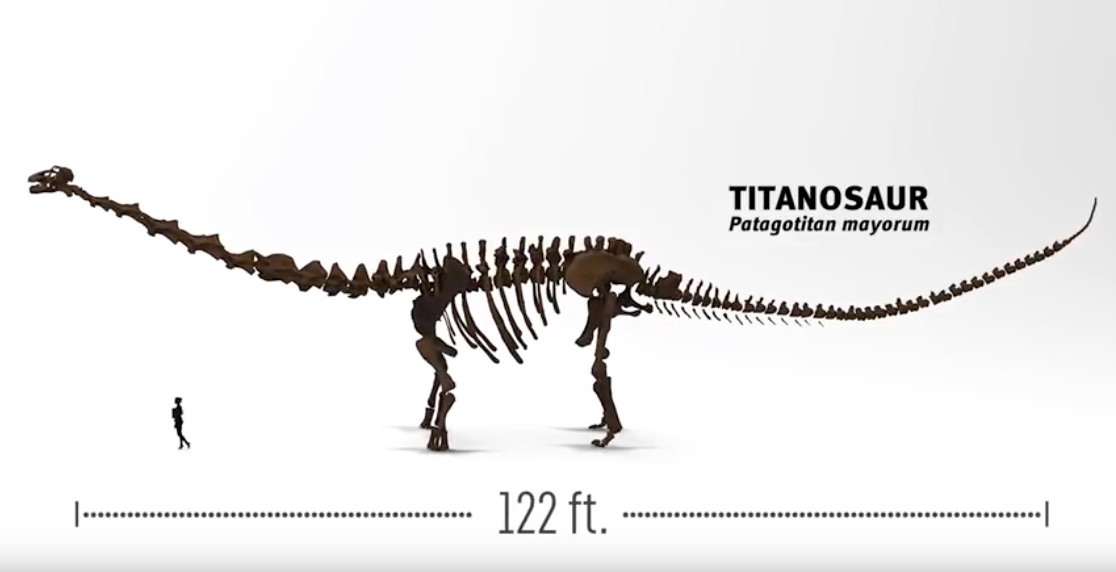
Dinosaurs dominated the earth for over 165 million years spanning all three periods of the Mesozoic Era; the Triassic, Jurassic and Cretaceous. Our human species has a track record of only two million years. In other words, we are a mere blip at the end of the evolutionary time line, hardly reason to brag about our success as a species.

The next misunderstood concept is extinction. I don’t expect to wake up to find an apatosaurus lumbering through my front yard. But dinosaur descendants frequently are my alarm clocks. Hundreds of them are in the trees, sky and lake each day. We call them birds.

Almost all paleontologists agree that modern avians are descended from a group of two legged dinosaurs called theropods. Fossil evidence continues to be found to support the dinosaur-bird connection. Start thinking of feathers as specialized scales. Click here for the current science on this topic.

Here are three more dinosaur facts to add to your Dino IQ.

Scientists first began studying dinosaurs in the 1820’s when bones of a large land reptile were found in England. The word “dinosaur” was created by Sir Richard Owen, a British paleontologist, in 1842. It is from the Greek and means “terrible lizard”, but most dinosaurs weren’t terrible and none were lizards.

All dinosaurs were land animals. Gliding prehistoric reptiles are called Pterosaurs. Plesiosaurs and Ichthyosaurs ruled the seas.

Dinosaurs came in all sizes from chicken size to massive. The majority were herbivores or plant eaters.

So all evidence points to dinosaurs being a highly successful animal group. At the rate our species is trashing the planet, I wouldn’t place any bets on us beating their longevity record.

Titanosaur- The Field Museum Chicago
0

Beurre

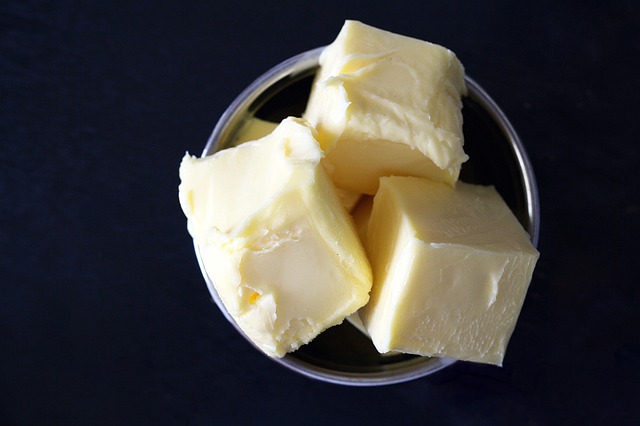
French cuisine and butter are synonymous. So it is understandable why a butter (beurre) shortage in France has sent shock waves through the populace. One commentator wryly noted, “It’s a huge problem because croissants are basically just a vehicle for butter and French people are basically just vehicles for croissants.”

The current situation, where supermarket shelves frequently are bereft of butter, has resulted from a confluence of events. For the past year, low milk production due to bad weather has meant low yields for fodder crops, the cows’ dinners. At the same time, the global demand for butter has increased significantly, in part due to the diet police absolving butter of some of its sins and proclaiming sugar the new number one food enemy. As a result, global prices for butter have almost tripled since 2016.

Added to the supply and demand issue is a uniquely French bureaucratic complication. The price for butter between producers and suppliers is set by law each February. The price set last February is lower than the current market price. So the supermarkets are demanding that the producers honor the lower price. They aren’t, and are free to send their butter to other countries’ tables, which is exactly what they are doing.

The butter shortages are felt most acutely in Brittany, the butter eating epicenter of France. This is the home of crepes, butter salted caramels and butter cakes. But the populace there has managed to infuse a bit of humor into the butter debacle. Some artists  have made a satirical film about dealers in a mobile home churning out butter for sale on the black market.

One of the results of my reading about the French butter crisis was learning that the French lead the world in yearly butter consumption at 18 pounds per capita. A quick calculation of my yearly butter intake has convinced me that I am eligible for honorary French citizenship. And my Christmas baking hasn’t even started.

0