Lucy

Elephants do not usually morph into Airbnbs. But this recently occurred in New Jersey, a place of much wonderful weirdness.

I have been a fan of Lucy, the Margate, New Jersey elephant for many decades. Having spent 28 years as a Historic Preservation Commissioner, I believe in saving the best of our past…and that includes buildings shaped like elephants.

Lucy is a centenarian. She was the brainchild of real estate speculator, James V. Lafferty, who built her as an advertising gimmick to sell his lots along the Jersey Shore just south of Atlantic City.

Construction of this 65 foot high, 60 foot long pachyderm was begun in 1881 and cost over $25,000. Lucy was constructed from almost one million pieces of wood, 200 kegs of nails, 4 tons of bolts and iron bars and 12,000 feet of tin for her “skin”.

Down through the years, Lucy has served as a restaurant, tavern, business office and rentable summer cottage. And then, for many years, she stood alone by the ocean falling victim to the ravages of winds and weather. By the 1960s, she was marked for demolition.

Luckily, outraged citizens of Margate formed a “Save Lucy Committee”, raised money for her restoration and promised to move the girl to a new lot on Atlantic Avenue. On July 20, 1970, the 90 ton refurbished Lucy made her move on a trailer pulled by a truck. Every year since, the town has a birthday party for her on the Saturday closest to July 20th.

Lucy still graces the beach, receiving over 132,000 visitors a year. They enter through a door in her left hind foot and ascend a narrow spiral staircase to her belly. In addition, Lucy is now listed as an Airbnb. She was to have welcomed her first overnight guests since 1902 this past St. Patrick’s Day. Unfortunately, the Coronavirus caused those plans to be canceled. But any girl who has survived 138 years will weather this storm as well.

Save up 138 dollars, if you would like to sleep inside an elephant.

0

Kitchens

Like most little girls and many big ones, I love the color pink. A quick check of my closet will confirm this, many of my clothes have rosy hues from pale pink to deep magenta. My fondness for pink, however, does not extend to interior decorating.

All design, fashion and decorating trends go around on a giant carousel through time. I have recently become aware that a stalwart of mid-century kitchen design, the pink kitchen, is making a return appearance.

This phenomenon became apparent when I spotted five new hot (pun intended) pink kitchens in various design magazines in the past month. Pink is in. Personally, I cannot see myself cooking in a kitchen that resembles a baby’s nursery or the inside of a giant conch shell. But I do take delight in looking at these photos I’ve gathered of the original  1950’s kitchens and the 2020 retro take on them. I hope you enjoy them as well. Click here to view.

And here’s a bonus. The 1950s was the era of pink. Try to make it to the last line in this song!

0

Moss

Spring refuses to be quarantined. Living in a northern climate, I know snow and ice can happen in April. Yet, signs of spring, a.k.a., hope, are still to be found.

A short walk from our home is a 164 acre park that is mostly forested. Although no trees are yet evidencing any signs of tiny green leaves, our woods is lush with brilliant emerald green hues. Moss carpets the forest floor and slipcovers the rocks and fallen logs. It looks exactly like an enchanted forest in a beautiful fairytale.

This magical sight led me to conjure up my long ago college botany classes and the word bryophytes, the moss family. Some reading on that topic seemed to be in order. Here are ten highlights from my search.

    • Mosses are primitive plants which first appeared on earth about 450 million years ago. Their structure remains basically unchanged.
    • There are at least 12,000 species of moss, and they cover the globe with the exception of saltwater environments.
    • Mosses have no flowers, seeds or roots. Reproduction is via spores on hairlike stalks.
    • Moss rhizoids, which resemble root hairs, anchor the plants to many surfaces both hard and soft.
    • Mosses do not have cells that move water like the vascular plants that now dominate the world’s fauna. Instead, they soak in water from the air like sponges.
    • Many moss plants have leaves that are only one cell thick.
    • A patch of moss is made up of multiple tiny plants that hold each other up and hold in water.
    • Dried moss can be rehydrated and returned to life.
    • Beware of moss imposters. The beautiful “Spanish moss” that hangs from trees down South is actually an air plant (epiphyte) of the pineapple family.
    • Moss is a “rock star” in Japan. Cultivating and touring moss gardens are beloved activities. And a recent phenomenon is the “moss girls”. Young ladies sport jewelry made from tiny, water-filled glass balls with living moss plants growing inside. They also tour moss gardens and watch moss grow. Here’s a link to this craze.
0

Crackers

One of the lovely things about being married is that we don’t have to read each other’s computer sites. I, for example, do not read The Daring Fireball, and my spouse does not start each morning with Dezeen Daily. We do however, share selective items from our favorite sites with each other. The following is thanks to a terrific tidbit my husband passed on to me.

Writer Sage Boggs is a curious guy. Spotting a box of Triscuit crackers at a party, he wondered out loud, “What does the name ‘Triscuit’ mean?”

He had already surmised that the “cuit” part was for “biscuit”. The perplexing part was the “tri”. Most of the party-goers agreed the “tri” was for three. Since Triscuits are definitely not triangle-shaped, most guessed it meant three ingredients or three layers.

After a failed Google search for the answer, Mr. Boggs went to the source and emailed the makers of Triscuits, Nabisco. Here is their reply:

“No business records survived which specifically explain the origin or inspiration for the name Triscuit. But we do know the name was chosen as a fun derivation of the word “biscuit”. The “Tri” does not mean three.”

Sage Boggs found this reply most unsatisfactory and doubled down on his online sleuthing…..and he hit the jackpot. The answer was found in early Triscuit advertisements. Triscuits were touted as “the only product of its kind on the market baked by electricity.” Lightning bolts were pictured radiating out from the crackers.

Sage Boggs had his aha moment. Triscuit means elecTRIcity crackers.

Ironically, the Nabisco Company confirms that Bogg’s research is accurate. Now, if only they would put the lightning bolts back on the package.

0

Tasty

A note before I begin: Fourteen years ago, I began writing this blog to have a small measure of time that was not focused on the grim news of the Iraq War. I hoped my words would give readers a minute away from those realities as well. Now, unimaginable seismic changes are affecting all of our lives. But my original goal will remain the same: to write a few words on an eclectic array of informative, thought-provoking or humorous topics that are not focused on the larger problems of our world. May we all find the balance needed to survive these perilous times.

“This is so delicious”, I’ve often said to my husband as we are enjoying a meal together. We both value the pleasure of the senses, and taste provides daily joy.

Understanding why things taste good (or awful) is a complex matter. The four tastes of sweet, sour, bitter and salty have been known since ancient times. But our taste buds themselves were not discovered until the nineteenth century. The tongue was mapped by scientists in the early twentieth century: the tip of the tongue for sweet, the sides for sour, the back for bitter and overall for salty.

Another advance in the science of taste occurred in the twentieth century when a Japanese chemist, Kikunae Ikeda, began searching for a new taste which he called “Imami”, the Japanese word for delicious. “There is a taste,” he said, “that is common to asparagus, tomatoes, cheese and meat that is not one of the four well-known tastes.”

After years of patient work and ridicule from western scientists, Ikeda discovered the previously unknown taste which is of “L-glutamate, the dominant amino acid in the composition of life.” It took ninety years from Ikeda’s discovery of Imami for scientists to locate the two taste receptors on the tongue that sense L-glutamate and L-amino acids.

The famous chef and cookbook author, Escoffier, gave another advance in the understanding of taste when he declared,”a dish is flat and insipid unless it is served boiling hot.” Hot food has volatile molecules which evaporate into the air releasing tempting odors. Cold food relies entirely on the taste buds. Scientists estimate that about 90% of what we think of as taste is actually smell. A cold sandwich sitting on a kitchen counter will not help sell a house; bread baking in the oven will.

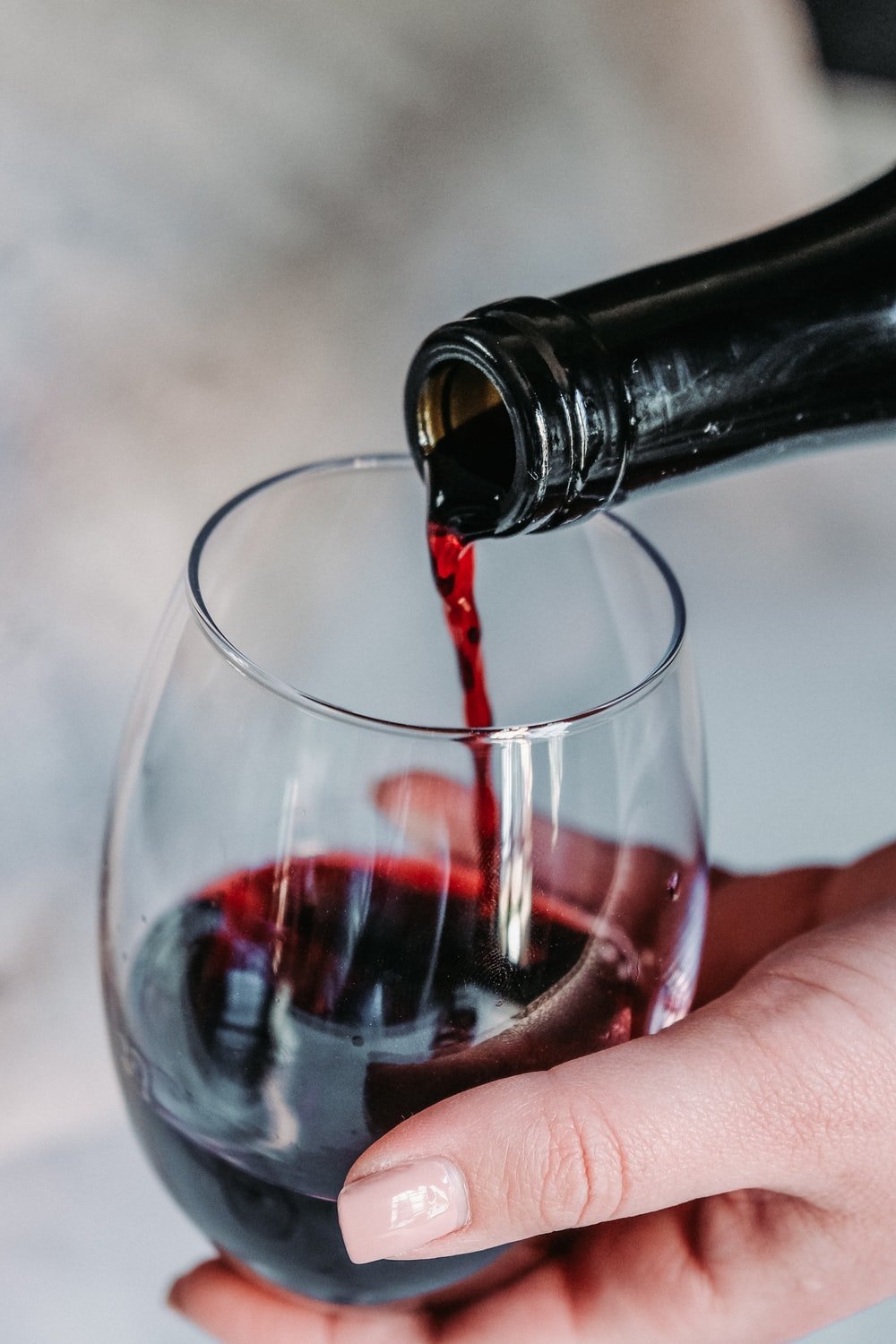
And, finally, a huge factor in our sensation of taste is subjectivity. A diabolical experiment (for the participants) by a professor at the University of Bordeaux illustrates this point. He invited fifty-one wine experts to give their impressions of two glasses of wine, one red wine and one white wine. Every single participant evaluated the red wine in words commonly used to describe a hearty red wine. Not one figured out that the “red” wine was the same as the white wine with the addition of a tasteless red food coloring.

Taste is a trickster. It is also my first criteria when cooking…….does it TASTE GOOD? I’ll worry about the antioxidants later.


0