Natives

Our fields are full of world travelers. A person attempting to eat plants native to his or her own continent would be facing a severely depleted dinner plate. Seeds like to take journeys.

I’ve long been fascinated with origins, and that includes the ancient origins of food. Many of the most common foods have taken incredible journeys before ending up in American fields and gardens.

See if you can guess the origins of these six plants: peanuts, potatoes, tomatoes, rice, blueberries and carrots. Don’t feel bad if you don’t score 100%, most answers are not obvious.

Peanuts, a legume of the pea family, originated in Peru or Brazil. Explorers introduced peanuts to Spain and Portugal and from there more Spanish explorers and traders took peanuts to Asia and Africa. In the 1700s, peanuts returned to the Western Hemisphere when African slaves brought them to North America and the Caribbean.

Potatoes are native to the Andes Mountains in Peru and Bolivia where they have been cultivated for thousands of years. The Incas discovered how to preserve their spuds by piling them outside on freezing mountain nights and then stomping on them with their feet to dehydrate and mash them. These “freeze dried” potatoes are called Chuño which is eaten in Peru to this day.

Tomatoes also originated in the Andes Mountains in what is now Peru, Bolivia, Ecuador and Chile. The Incas cultivated them as early as 700 AD. Tomatoes came to Europe in the 16th century but were used only as an ornamental plant as the tomatoes were thought to be poisonous. It was not until the aristocrats stopped eating off their pewter plates that tomatoes were exonerated. The high acid content in the tomatoes leached the lead out of the pewter and, voila, lead poisoning.

Blueberries are one of the few fruit species that are North American natives. Therefore, the saying “As American as apple pie” should be retired. Apple trees originated in Central Asia. “As American as blueberry pie” is true blue.

Carrots originated in the hot, dry lands of Iran and Afghanistan around 3,000 BC. In ancient times they were yellow, white or purple. Our familiar orange carrots were bred in the Netherlands in the 17th century and this may have been in tribute to William of Orange who led the struggle for Dutch independence.

Rice, which feeds more people than any food in the world, is from Asia. Current research indicates that it was first domesticated in the Yangtze River Valley in China. It is interesting to note that American wild rice is a native of North America. However, it is an annual aquatic grass, not a grain, and in a separate genus from true rice.

Happy eating!

Ramona Bustos walking barefoot on potatoes to create chuño, a freeze-dried Andean staple, near La Paz, Bolivia, in 2013.Credit… NYT/Juan Karita/Associated Press
0

Stove

We had a little explosion here a few weeks ago. I was standing beside my stove making dinner when there was a huge pop followed by smoke. The repairman was called, but we had to wait a week for his arrival. His diagnosis was not good: “This stove might kill you if you try to use it.”

So I found myself completely stressed out not only by the election but also by a range that wanted to electrocute me. Things got worse when the repairman explained he could replace the burned-out parts in the oven to the tune of $450, but that might not fix the problem. He could plug it back in after the repairs only to have it short out and explode again, taking our $450 with it. Note that this is the advantage of having a repair person who does not work for a store that sells appliances. He was not trying to sell us a new stove; he was simply telling us the truth.

In less than 24 hours we managed to check out product reviews online and visit all the appliance stores within a 30 mile radius of our house. Here is what we learned:

Stoves are in short supply at the moment. Some are back ordered  for as much as five months.

Almost all flat-topped stove elements are manufactured by one supplier and are thus identical no matter how much the range costs.

Stoves have a short life span. I learned this when complaining to a salesperson that my stove was a mere ten years old at the time of its demise. “You actually got lucky,” he said, “they are designed to last seven years.”

And, finally, here is something I learned when I bought my previous electric range ten years ago. None of them come with electric cords. If you want to plug your stove in, the store will sell you a power cord for $30 extra.

Our new stove is arriving this week. I am feeling lucky that we are able to afford this unexpected purchase and I’m not waiting five months to get it. But I’m not feeling so lucky that I will be out buying another new range again in seven years.

My mother had a stove that lasted her entire married life…almost sixty years. These are rip-off times that we live in.

0

Presidential

Since today’s momentous election is on everyone’s minds, I thought it might be a good time for some interesting, funny and weird facts on past Presidents. The historical data is copious, and I have done careful fact-checking while compiling this list. For example, contrary to a wildly popular legend, William Taft did not get stuck in the White House bathtub.

  • America has had 45 Presidential elections. Thus far, it’s an all-male club.
  • Only two future Presidents were signers of the Constitution, George Washington and James Madison.
  • James Madison was the shortest President at 5 feet 4 inches. Abraham Lincoln and Lyndon B. Johnson tie for the tallest at 6 feet 4 inches.
  • Three Presidents died on the 4th of July. John Adams and Thomas Jefferson both died on July 4th, 1826. James Monroe died on July 4th, 1831.
  • Martin Van Buren, the 8th President, was the first President born a citizen of the United States of America. He is also the only President to speak English as a second language. His first language was Dutch.
  • The 9th President, William Henry Harrison, died 32 days after he came into office. His grandson, Benjamin Harrison, was the 23rd President and served one term.
  • America’s 10th President, John Tyler, had 15 children, 8 by his first wife and 7 by his second spouse.
  • Franklin Pierce, the 14th President, was arrested for running over a woman with his horse. He was not convicted because of insufficient evidence. President Pierce was known to have a drinking problem.
  • Abraham Lincoln enjoyed frequent wrestling matches as a young man and he almost always won. His love of the sport is recognized at the Wrestling Hall of Fame and Museum in Stillwater, Oklahoma.
  • President Grover Cleveland is the only President to serve two non-consecutive terms in the White House making him the 22nd and the 24th President. He is also the only President to have been married in the White House. In addition, his 21-year-old bride, Frances Folsom Cleveland, was the youngest First Lady in history.
  • Woodrow Wilson, the 28th President, was the only President with a Ph.D.
  • Warren G. Harding, President number 29, gambled away a set of White House China at one of his twice-weekly poker games. His group was nicknamed “The Poker Cabinet”.
  • The 31st President, Herbert Hoover, spoke fluent Mandarin Chinese and often did so with his wife while living in the White House. Before becoming President, he was a mining engineer in China.
  • Theodore Roosevelt and Franklin D. Roosevelt, Presidents 26 and 32,  were 5th cousins. Plus, Franklin D. Roosevelt and his wife Eleanor were 5th cousins once removed.
  • The “S.” Initial In Harry S. Truman is an initial but is not a middle name. His parents used the middle initial as a tribute to both his grandfathers, Anderson Shipp Truman and Solomon Young.
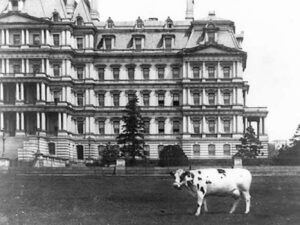
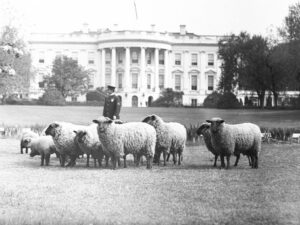
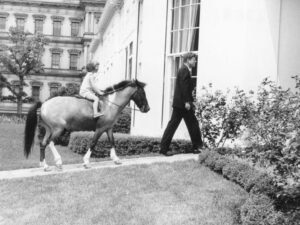
  • The majority of Presidents had pets at the White House, with dogs being the most numerous. But there were others!


0

Treats

Here’s an alert for all the chocolate lovers who are reading this. A new Mecca for chocolate has recently opened, and a flight to Zurich, Switzerland might be in order.

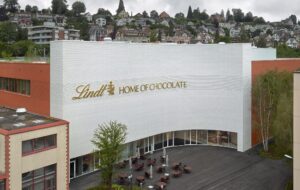
The makers of Lindt candy have created the Lindt Home of Chocolate. The museum is located beside Lake Zurich and is adjacent to the venerable, old factories that have produced treats since 1845.

I became aware of this happy development via an architectural site. The new museum is a stunning and sophisticated design by the Swiss architectural studio, Christ and Gantenbein. The bulk of the building is red brick to echo the historic factory. However, the curved entrance is white glazed brick and creates a welcoming public space.

The interior is both playful and elegant. In the architects’ words, “The chocolate is implicitly celebrated with round shapes, a soft touch, and maybe even a general sweetness.”

The focal point of the atrium is the world’s largest chocolate fountain. It’s nine meters tall and topped with a giant whisk.

The museum features many delectable experiences. There’s an interactive tour about “how cocoa conquered Europe” and the Swiss “chocolate pioneers”. Classes are offered in a Chocoloteria on making a wide array of sweets; truffles, pralines, florentines, chocolate lollipops and chocolate bars. Naturally, Lindt sells its wares in a store that it describes as “the biggest chocolate shop in the world.” And, finally, there is a chocolate cafe where both chocolate desserts and cocoas are served along with some less guilt-free savory bistro selections.

Most of us won’t be going to Switzerland in the near future, but we do have lots of candy occasions coming up. Grown-ups don’t need to go trick or treating, we can buy our own treats…..like a sack of assorted Lindt truffles. Happy Halloween!


0

Anticipation

Imagine that you could live on a planet that revolved around the sun in ten days. Voila! Every ten days you would have a birthday with cake, presents, wine and birthday cards. The day of your birth would no longer be special if celebrated with such frequency.

As crazy as this sounds, our American way of celebrating holidays greatly resembles this pattern. The import is stolen from our special days as they are celebrated again and again for months in advance.

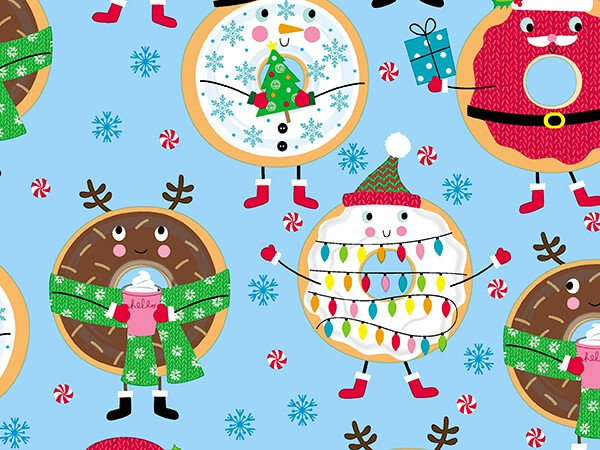
I faced this phenomenon head-on last Halloween. We have a tradition of eating little powdered sugar donuts on Trick or Treat night. Donuts were on my shopping list when I went to the grocery store a few days before Halloween. I located the donuts on the shelf only to discover that every brand had packaging covered with Santas and reindeer. Halloween hadn’t yet happened and I was staring at Christmas.

The stores would not be stocking Christmas cookies, donuts, candies and other holiday treats if customers weren’t buying them. When the holiday goodies are flowing and being consumed for months in advance, what can be special about the actual day of the holiday?

Christianity as well as other world religions preach the values of reflection, abstinence and anticipation. That’s what Lent and Advent are all about. Believers are not supposed to prepare themselves for the upcoming feast day by feasting for months in advance.

I had Advent calendars as a child and loved opening the little paper doors to see which picture would be revealed. After I was married, my husband told me that he had never had one when he was little. I since have bought him one every year. Last holiday season presented my biggest challenge. Every store where I searched for one only carried the calendars with a piece of candy behind every door. Since that seems like a total oxymoron to me, I had to get a mail-order calendar from Europe where candy-free Advent calendars still exist.

Consumption has triumphed over anticipation in America, and that is not helping our national happiness index one bit.

0