Arthropods

I never encountered the word “arthropod” until I was in my late twenties and visiting the Natural History Museum in Toronto with my husband and small children. The exhibition banner proclaimed “MEET THE ARTHROPODS” in huge letters. I had no idea who they were. The Canadians enlightened me.

To this day, I do not understand why we do not teach this enormous phylum of animals as a unit in our elementary schools. That would be so logical. Therefore, when I created my “Creepy, Crawly Creatures” program for children, I included all of the major groups of arthropods or “jointed foot” animals.

Since summer is ramping down and arthropod activity is ramping up, I thought a few words about these creatures would be timely. The numbers and biomass of the arthropods far exceed that of any other animal group on earth. We are surrounded by them wherever we go on land or water.

For starters, here’s what it takes to be an arthropod:

  • Many pairs of jointed legs
  • A hard outer shell called an exoskeleton
  • A segmented, bilaterally symmetrical body

And here are the major groups:

  • Crustaceans

We eat lots of these arthropods, such as crabs, lobsters, crayfish, shrimp and prawns. Have you ever thought of a lobster as just a giant cousin to an insect? The largest animal on earth, the blue whale, consumes tons of a tiny crustacean, krill, every day.

  • Centipedes and Millipedes

These guys get the prize for having the most legs. Centipedes, who have venom to catch their “meat”, have up to 177 pairs of legs. Millipedes are dedicated vegetarians who mostly live underground munching on rotten leaves. They have up to 200 pairs of legs.

  • Arachnids

Spiders and their cousins including ticks, mites, scorpions and daddy long legs make up this group. Spiders with their eight legs, two body parts, fangs and venom are best known for the irrational fear they induce in many of the human species. The scientific facts are:
Spiders never chase or target people. We are not lunch. Every bite is an accident. This happens when we step on, sit on, roll over or accidentally grab one.

Of approximately 43,000 spider species worldwide, only 1/10 of 1% are a serious threat to humans

Spiders are in desperate need of public defenders.

  • Insects

Instantly recognizable with their six legs and three body parts, insects are survivors. They can live anywhere, eat almost anything and make massive numbers of eggs. Is it any wonder that if we make the planet uninhabitable for us, they will still thrive?

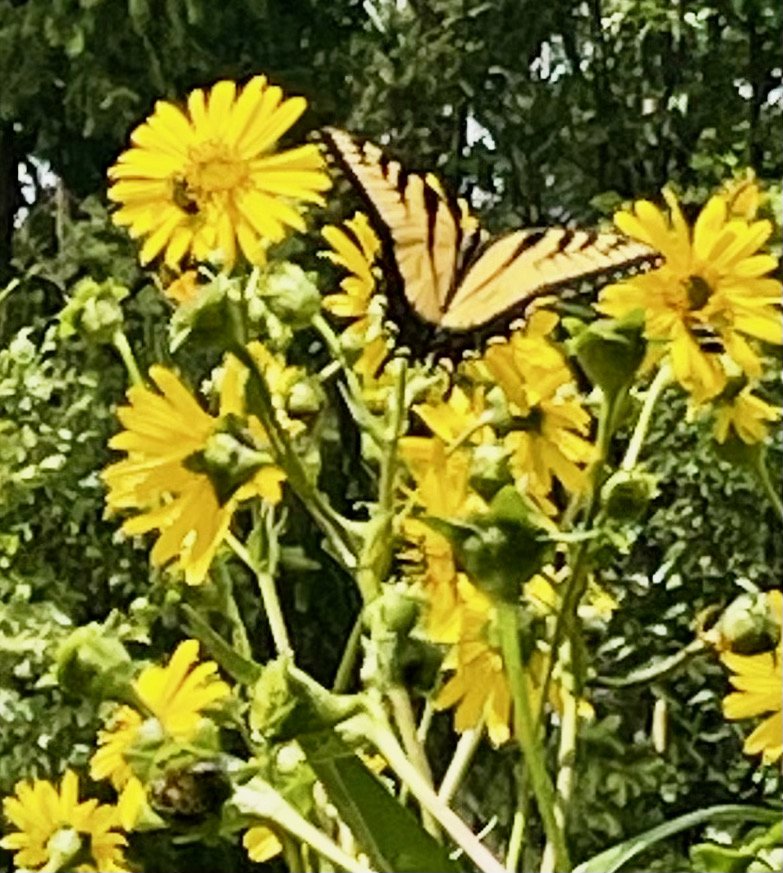
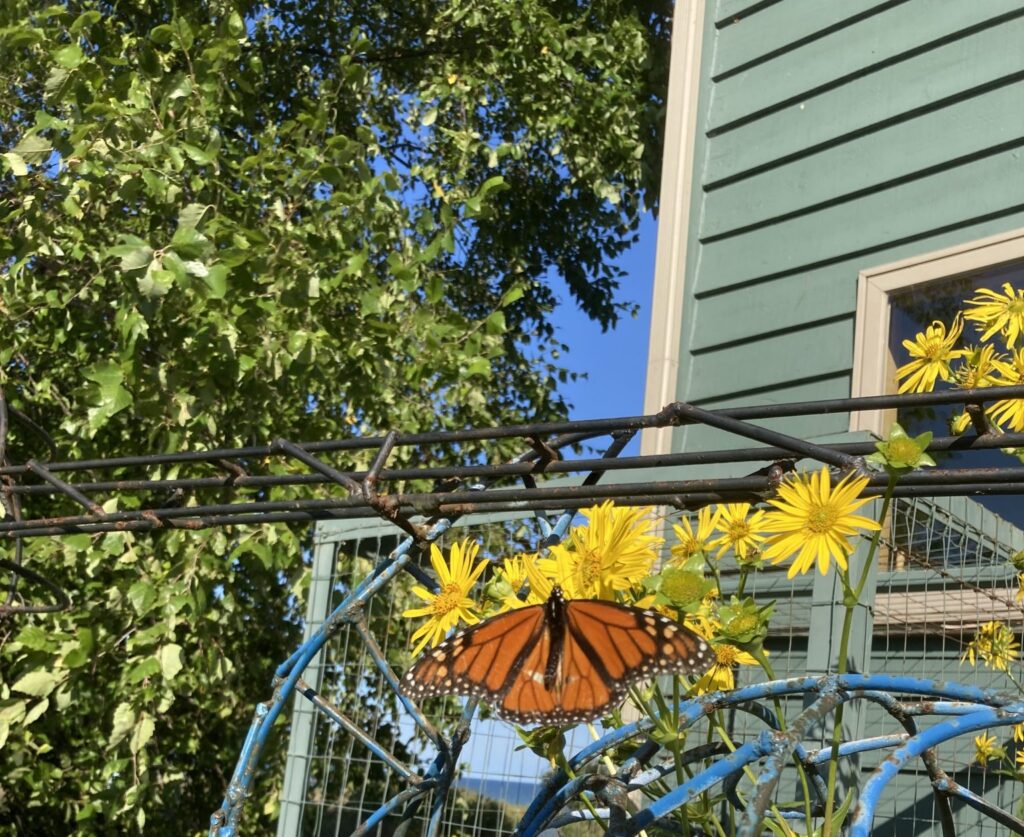
One last thought…if you say, “bugs bug me”, consider the following beauties.
2

Transformations

The John Michael Kohler Art Center’s Art Preserve has recently opened in Sheboygan. It was built to store massive artist-built environments that could not remain on their original sites. The museum defines these environments as, “spaces and places that have been significantly transformed by an artist to embody and express aspects of their history, place and culture, their ideas and imagination.”

Both the stunning new building and the collections housed within are incredible. We consider ourselves lucky to have this unique and free resource so close by.

However, I feel compelled to mention another pleasurable aspect of living in the Manitowoc-Sheboygan area. Ironically, all the artist created environments are not contained within the walls of the internationally famous Art Preserve.

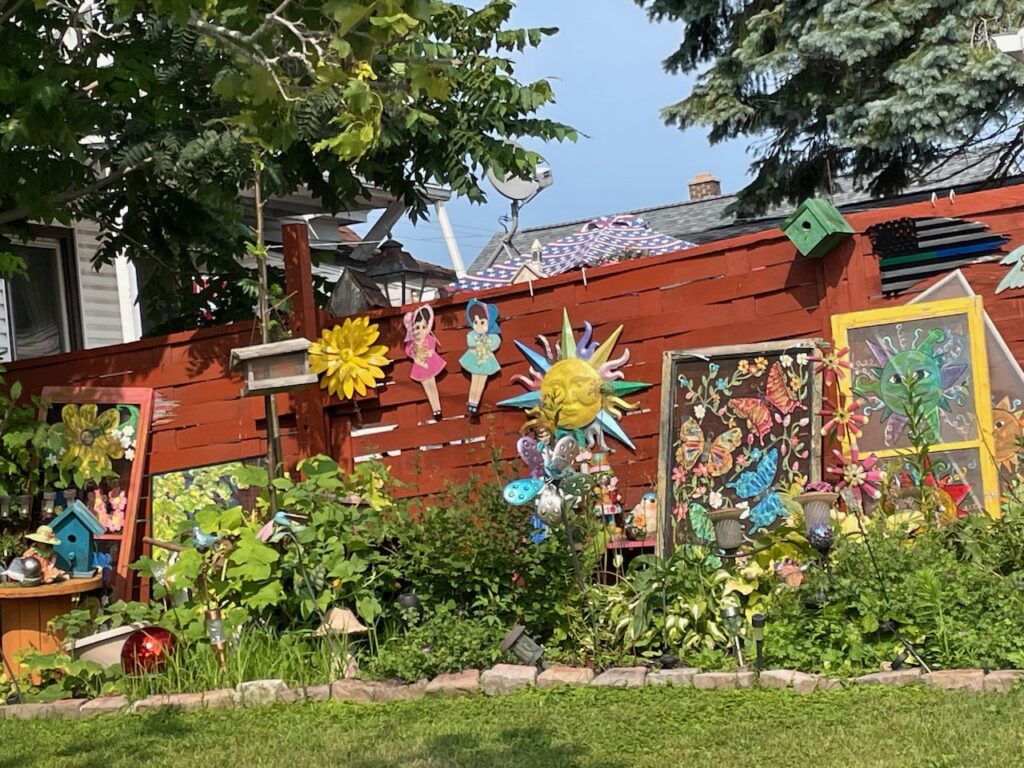
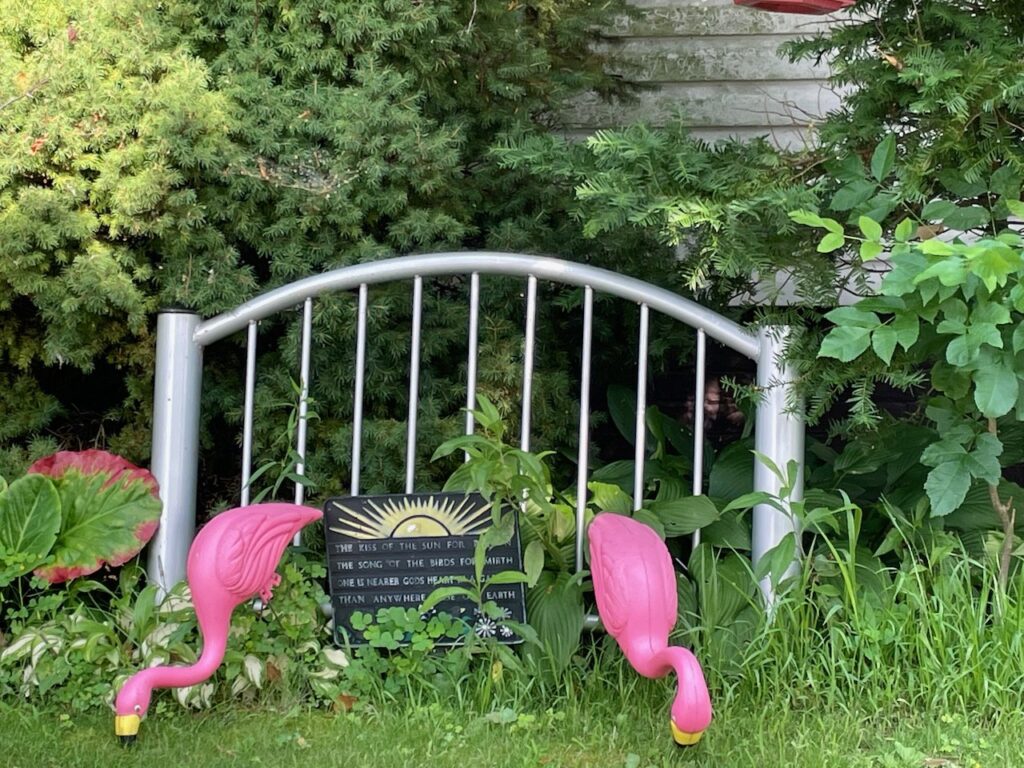
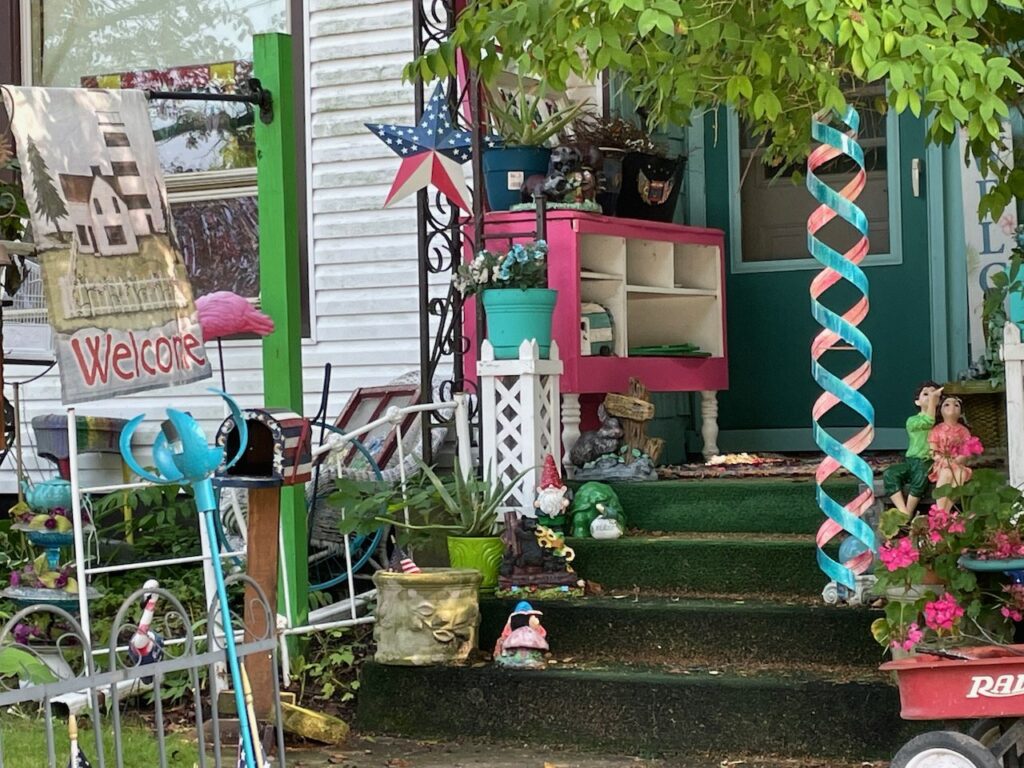
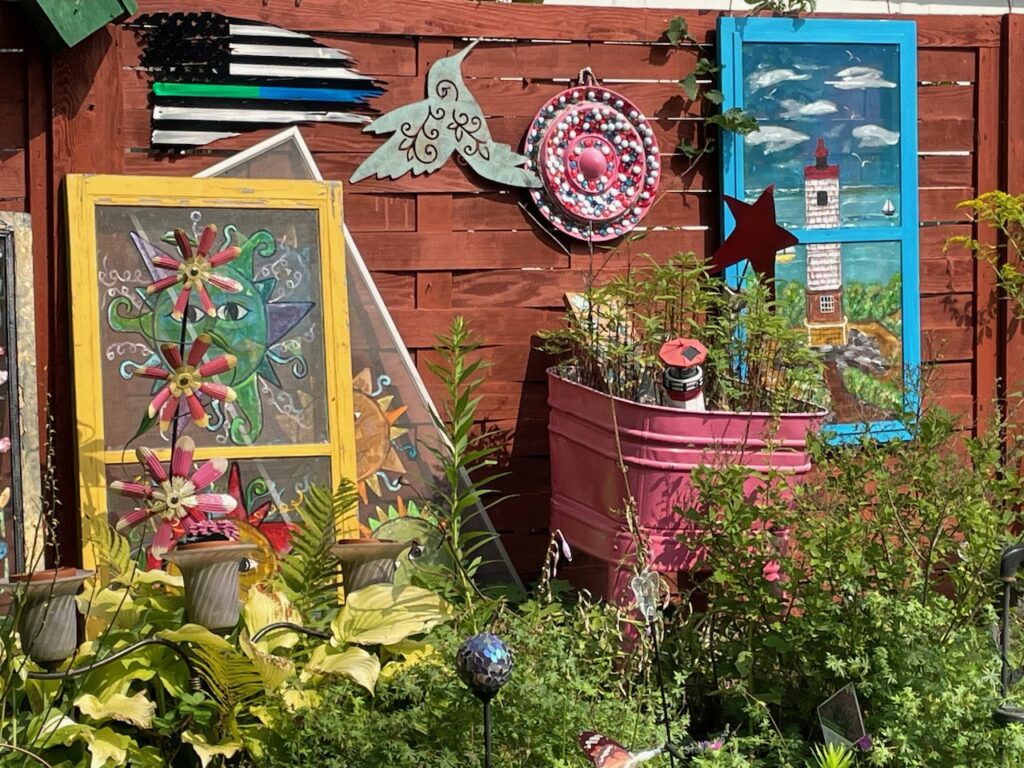
While taking a new route to our grocery store last week, we came across a humble home in Manitowoc worthy of being called an “artist-built environment”. We slowed down to get a better look and the owner was in her backyard. I hopped out of the car, told her how much I liked her creation and asked permission to take photos. She was totally gracious.

Her wildly imaginative assemblage is not the only home transformation in our area. I know of several other home sites where the owners’ imaginations have run wild.

These wonderful roadside attractions are never in the wealthiest parts of town. I seriously doubt if these places will ever be acquired by the Art Preserve or end up in glossy coffee table books. In fact, these homes would be zoned out of the neighborhoods of many donors to the Art Preserve. But, in my opinion, they qualify as delight-producing works of imagination.

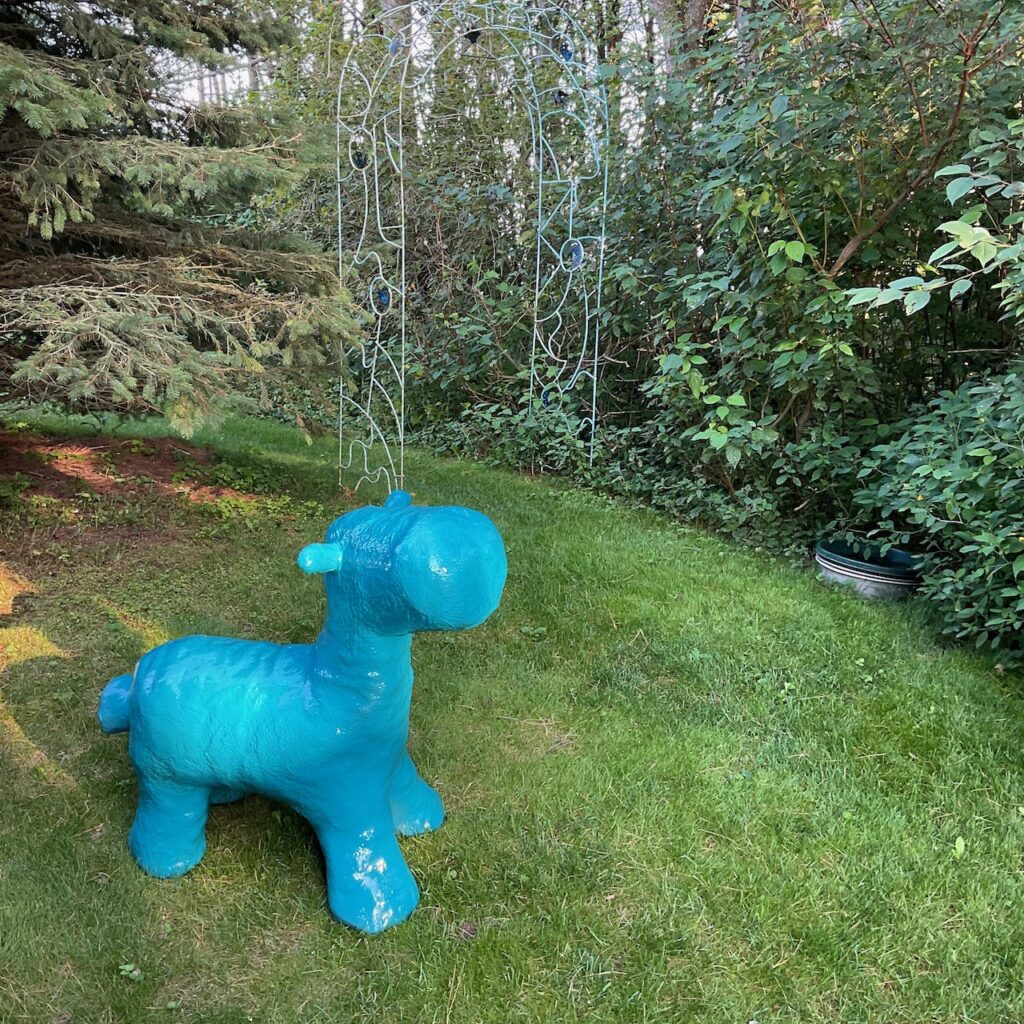
All our homes are expressions of ourselves. My husband and I have an array of large sculptures in our yard, among them, a large bluebird holding up barbells, a running dinosaur, a speeding rabbit and a turquoise blue beastie. Before we built our house here, we checked to see if our sculpture collection could be legal residents. Happily, they were not zoned out.

Art Preserve

Manitowoc Home

Manitowoc Home

Manitowoc Home

Manitowoc Home

Manitowoc Home

Manitowoc Home

Manitowoc Home

Our Beastie
0

Chet

Chet is a big black dog with one white ear. His partner is Bernie Little, a wounded war veteran and ardent environmentalist. Together they run the Little Detection Agency somewhere “in the valley” in Arizona.

Chet and Bernie are the characters in a series of mystery books written by Spencer Quinn, which is the pen name of Peter Abrahams, an Edgar award-winning writer. I, however, strongly suspect Abrahams is really a dog cleverly masquerading as a human.

Of these books, Stephen King says, “Without a doubt, the most original mystery series currently available.” I totally concur.

I’ve just finished my eleventh book, “Tender is the Bite”, and it is a witty delight like all the books in the series. Every word in every book is written from the dog’s point of view. How Mr. Abrahams got so totally into the mind of a dog is the real mystery here.

I have never had a dog, but I love dogs and have known many. I have no doubt whatsoever that these books unlock the workings of a dog’s mind. (And that is why I have never had a dog. They need “their person” around all the time, and I can’t be there 24/7 for a dog. Road trips happen.)

Here are a few excerpts directly from Chet’s brain. If you are a lover of dogs, I’m fairly sure you will smile as you read them. And you might want to give the Chet and Bernie books a try.

“We took the ramp onto the freeway, headed to the orange tip of the sun, just over the edge of…of whatever the edge is, where you can’t see any farther. The edge itself is very hard to get to – in all our time on the road we’d never quite reached it. There’s lots to look forward to in life.”

“I think we’re being followed,” Bernie said. “We were creeping along at walking speed on the East Canyon Freeway at rush hour, stuck in an endless river of traffic. Of course we were being followed, followed by too many cars to count! Not only too many for me to count- I don’t go past two- but also for Bernie. And Bernie’s always the smartest man in the room, one of the reasons the Little Detective Agency is so successful, leaving out the finances part.”

“There was a bowl of kibble with- oh how nice- some crumbled biscuit treat mixed in waiting for me in the kitchen. Can you go from feeling no hunger to being out of your mind with it in no time flat? Oh, but yes! Try it sometime!.”


 3

Dimorphic

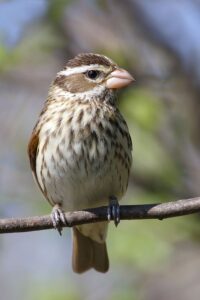
An extreme example of dimorphism occurred in one of our bird feeders yesterday. Mr. and Mrs. Grosbeak both landed simultaneously to have lunch. Anyone not versed in bird species would never guess that these two were mates. Dad is a striking black and white with a flaming scarlet dickie. Mom looks like a brown sparrow with a weight problem.

The dictionary defines dimorphism as “the differences in appearance between males and females of the same species, such as color, shape, size and structure. The word is from the Greek “di” (two) and “morpho” (form or shape).

Many species of birds are dimorphic, and it’s the gentlemen who are the eye-catching ones. This is not to give bird-watchers a thrill: it’s all about luring a mate. Cardinals and orioles are obvious examples. The goldfinches are as well until the mating season ends. Then the boys molt their brilliant yellow feathers for drab winter apparel.

Although we humans are not an example of extreme dimorphism, other mammals do fall into that category. Lions may be the first to come to mind, but elephant seals probably should get the trophy. The guys are a whopping five times bigger than the girls, and they have bulbous noses to help them make loud roars when courting.

Dimorphism in insects is common as well, with the females often being substantially larger than the males. It’s theorized that the ladies need the body mass to hold all the eggs they produce.

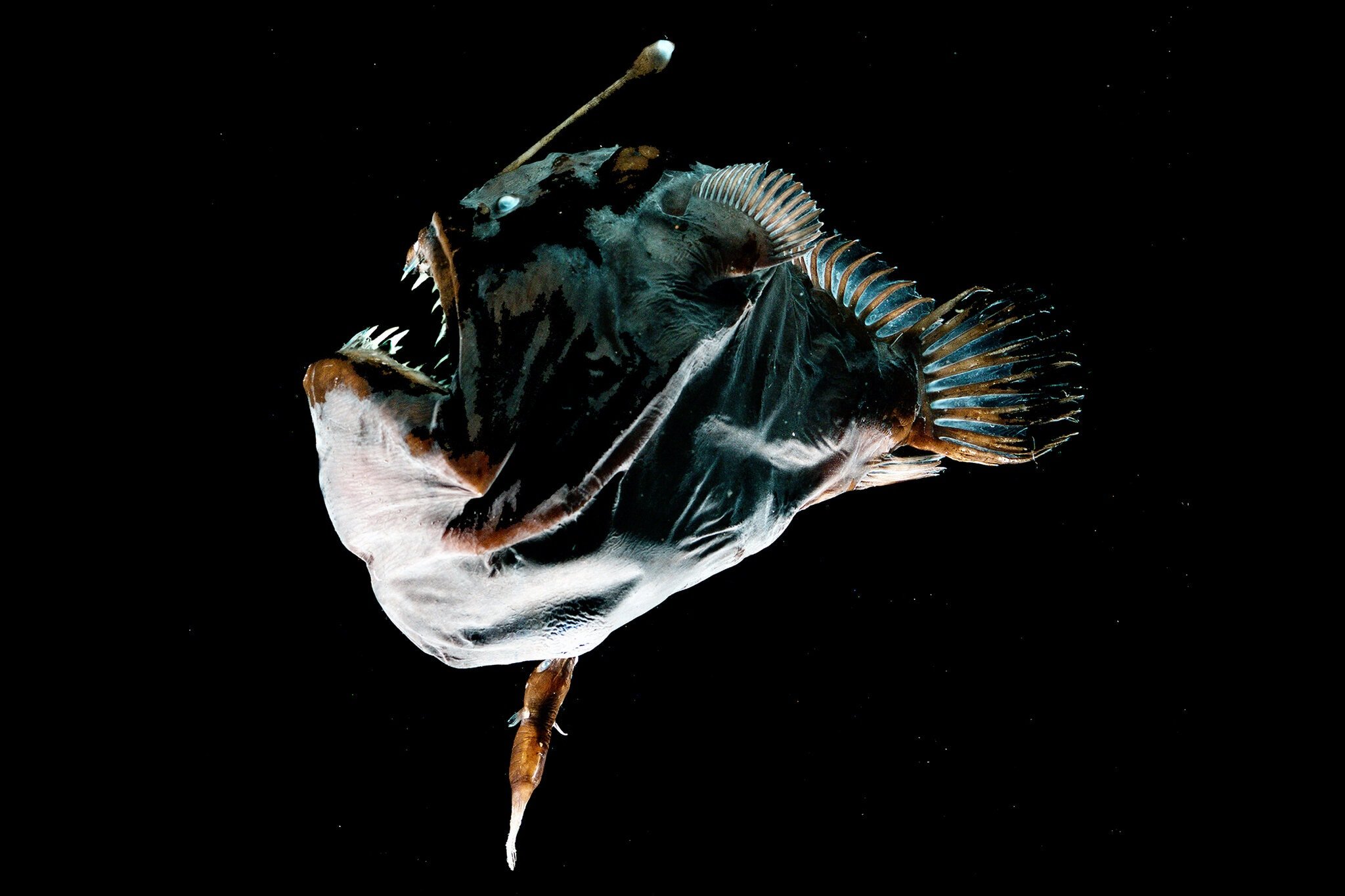
However, a fish probably displays the most bizarre of all the dimorphic variants. The midnight zone anglerfish is 60 times the length and half a million times the weight of her male. She has small eyes and a long lure ending in a light that projects out of her head. The teensy male has big eyes and a well-developed sense of smell. These features help him find his true love in the basement of the ocean. He then attaches his body to hers, tapes into her circulatory system and stays there for the rest of his life. This process is known as sexual dimorphic parasitism. For all my female friends out there, it is best not to think about this too much.

photo- New York Times
2

Tricky

I never imagined I would be writing a post about Tricky Dick. However, I just learned a fascinating piece of information about our 37th President, Richard M. Nixon, that begs to be shared.

But first, some background information. Nixon, a California native, began his long political career when he won seats in the House of Representatives and then the Senate. He went on to appear on a National Presidential ticket five times. Nixon and Franklin D. Roosevelt are the only ones who ever accomplished this and, coincidentally, they both won four of their five races. Nixon was Eisenhower’s VP for two terms, lost the Presidency to John Kennedy in 1960 and won the Presidency in 1968 and 1972.

His most famous speech was the “Checkers” speech. This was a brilliant appeal that “I am not a crook” for accepting large political donations and gifts. These were not illegal at the time, but he was campaigning as a corruption fighter. He emphatically stated that if he were kept on Eisenhower’s ticket as V.P., he would keep one gift, Checkers, his black and white Cocker Spaniel.

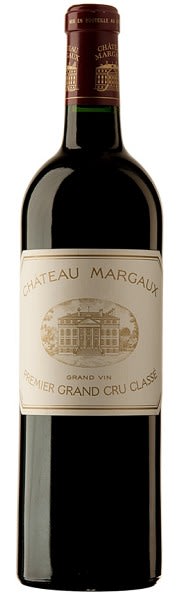
Here is what I recently learned about Richard Nixon, and it is extremely telling about his character. Oenophiles, wine connoisseurs, use the phrase, “pulling a Nixon”. This term comes as the result of a habit of our 37th President, a lover of extremely expensive wines. He was infamous for drinking first-growth Bordeaux, (Chateau Margaux being his favorite) while simultaneously serving his guests cheap wines. He instructed the White House waiters to hold the napkin over the label of the cheap wines as they filled the glasses.

Least you think that this story is an urban myth that I, a card-carrying Democrat, have dredged up, it is not. I have done due diligence with fact checking and Nixon’s stingy habit is well documented.

“Tricky Dick” earned his nickname in many ways. Thanks go to my nephew, who knows a good wine when he meets it, for telling me about “pulling a Nixon”.

0