Mindfulness

One of the most popular words at this American moment is “mindfulness”. In classrooms, yoga sessions and self-help books, the benefits of calm, thoughtful, focused thinking are being promoted. (Note: I am an advocate of rational thinking).

At the same American moment, it appears as though a large number of our citizens have lost their minds. To them, lies are truth, science is fantasy and hatred is a patriotic value. In other words, a mindless movement is afoot. The Wall Street Journal recently referred to our times as “The Golden Age of Brainlessness”.

These wide contradictions are mind-boggling. The mindfulness people are thinking each moment on how to be kind to everyone and everything. They feel guilt if the steps they take, the food they eat and the words they say are not purposeful. The mindless ones are working hard to negate everything but themselves. It’s yin and yang; polarization on steroids.

This craziness should not come as a total surprise. Americans are known for taking everything to extremes…extreme sports, extreme size houses, extreme consumption and now, extreme thinking.

The million dollar question is how do we get this madness to stop and bring the country together again. Our brains have gotten us in a lot of trouble. Perhaps it is time to turn off our busy minds for a while each day and turn on our eyes. Nature heals. Watching the sunset every day, walking in parks and woods, observing backyard wildlife, noting the turn of the seasons might be the therapy we need. Doing nothing is greatly underrated.
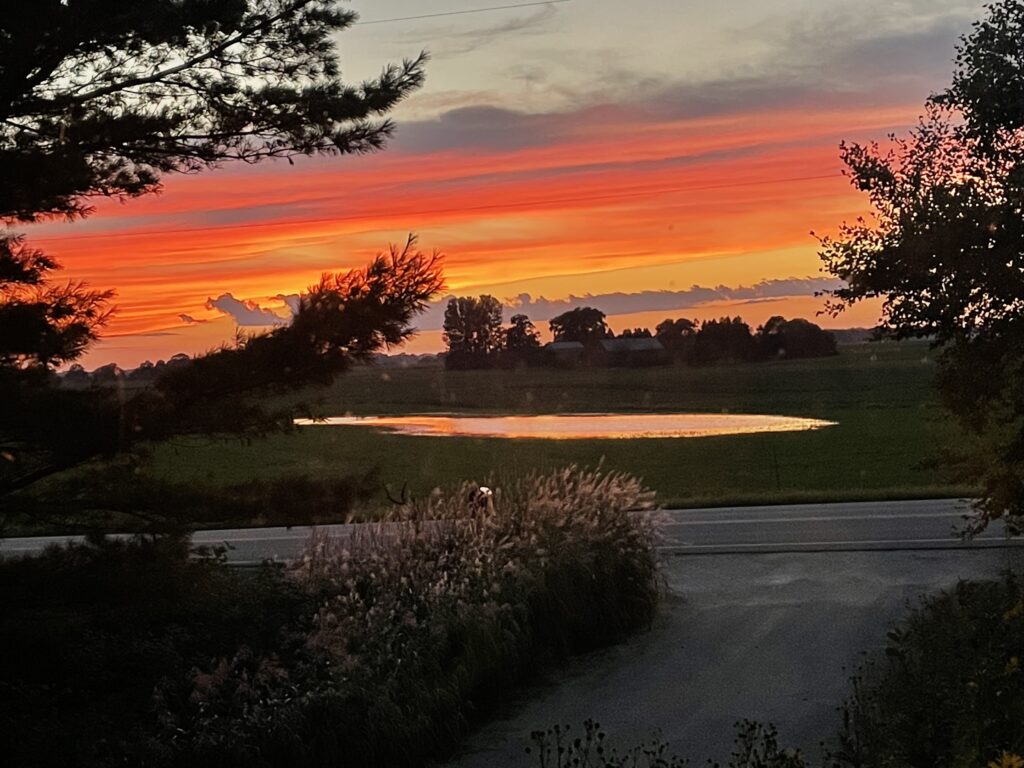

It was a good month for sunsets.
3

Cheerleader

Once again, as summer fades into fall, I have to get into cheerleader mode. I’m not cheering on any sports teams. I’m rooting for an entire season. My husband is emphatically not a fan of fall.

Summer is my favorite season as well, but I can’t be a hater of its successor. The other half of our household has no difficulty taking that stance. To him, every one of those brilliantly colored leaves is a warning signal that six months of winter lies ahead.

I’ll be tackling my “cheers for fall” campaign on several fronts. The first will be road trips. I’ll suggest heading south. This has two-fold benefits: I will get to see the fall foliage as we leave here, and he will get to return to the lingering days of summer as we go down the map.

Next, I will cook up large servings of fall foods. Squash soup, ratatouille, pumpkin bread and apple cake are guaranteed to deliver happiness and a fondness for the season that brings harvests.

I will also suggest that we search for the most beautiful fall tree of all. This is, of course, totally impossible. For each blazing sugar maple we find, there’s always a more spectacular one just down the road or over the next hill. But this is a wonderful distraction from thinking about the winter ahead.

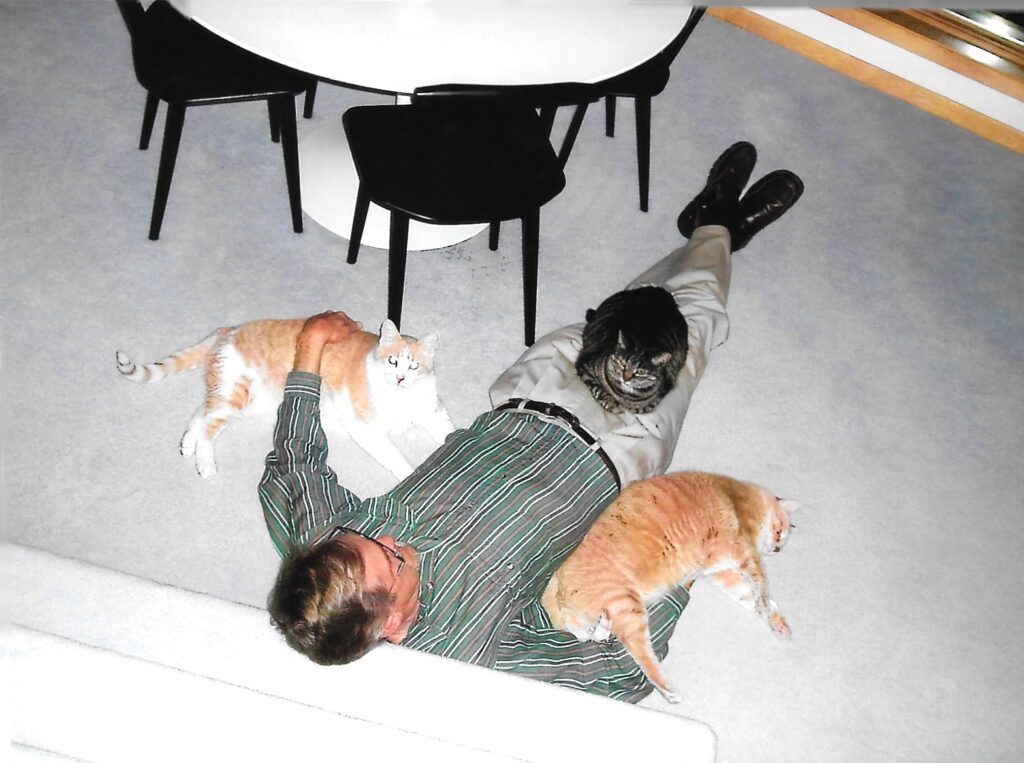
And, finally, I intend to turn on the furnace or fireplace at the first hint of those chilly nights. Plus, I will be having a conversation with our cat herd about the necessity of more cuddling up with my guy. It’s always a good move to keep a fall curmudgeon as warm as possible.

Heater Cats
3

Rainbow

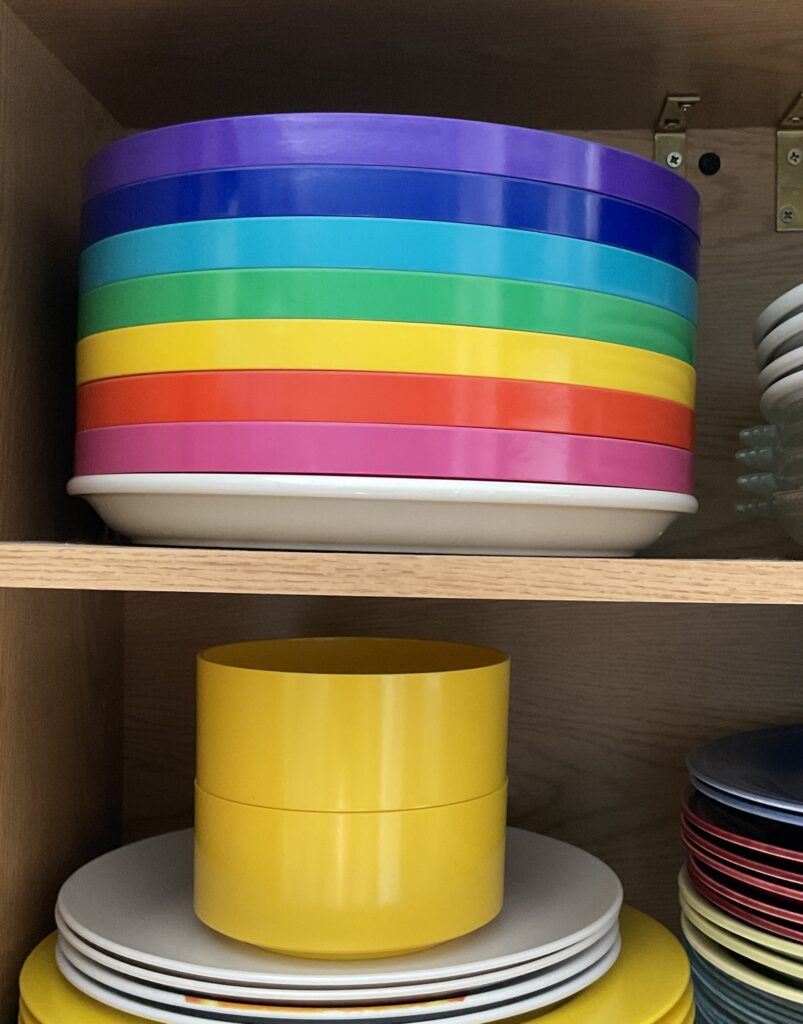
The man who put a rainbow in my kitchen cupboard died last month. His name was Alan Heller, a manufacturer of high quality, iconic plastic housewares and furniture.

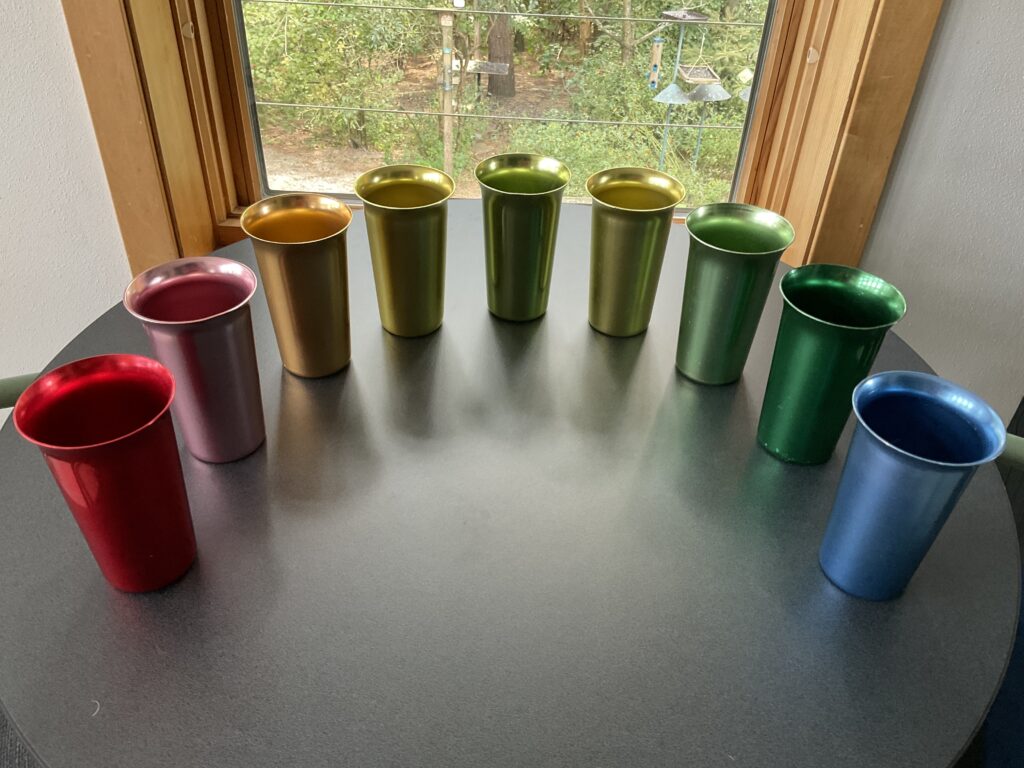
Mr.Heller was born in New York in 1940. Rainbows ran in his family. His father manufactured aluminum housewares, most notably rainbow-colored, stacking tumblers, a staple of midcentury design. ( We have these in our cupboard as well.)

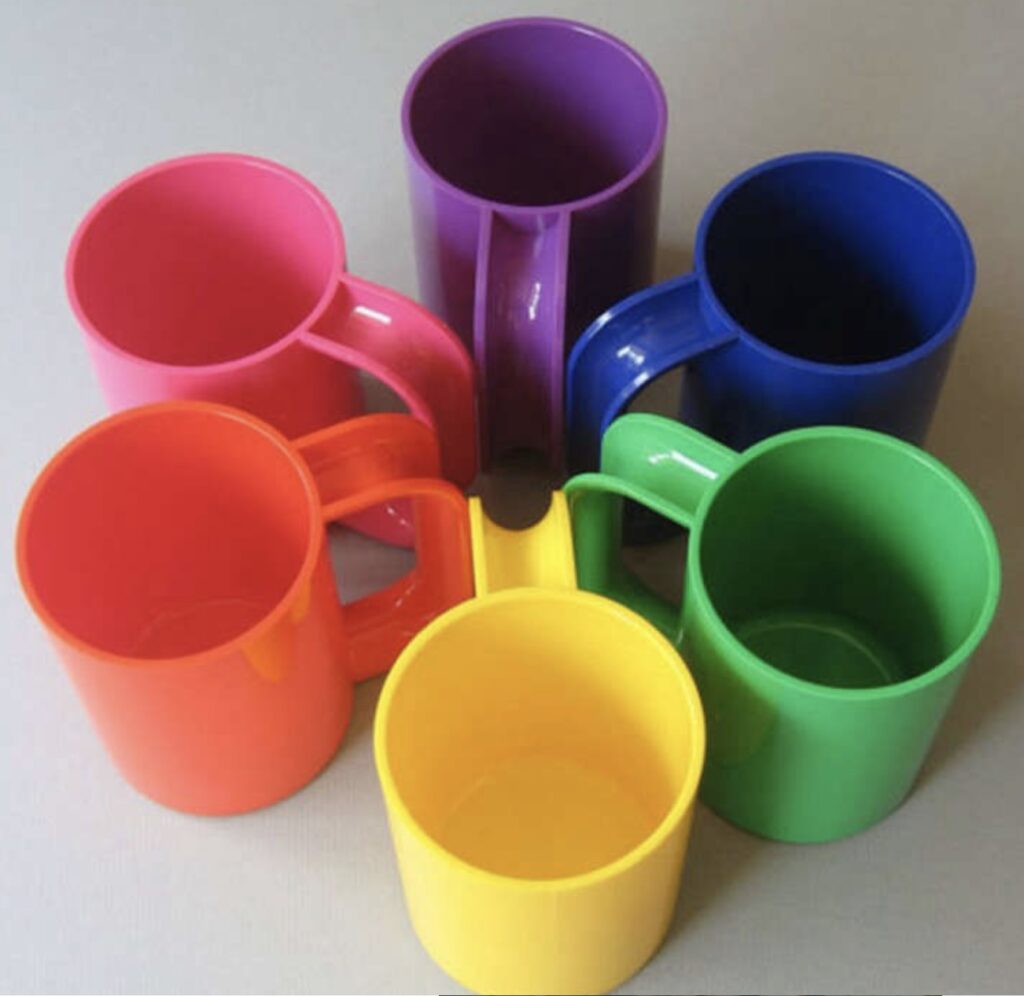
The dinnerware that made Alan Heller famous was not his design. The cleverly stacking dishes were created by Massimo Vignelli, an award winning Italian designer. After seeing the Vignelli dinnerware at the Museum of Contemporary Craft in New York, Mr. Heller convinced the design team of Massimo and Lella Vignelli to let him manufacture a slightly altered version for the American market. Because Americans do not start the day with a few sips of espresso, a large mug with a “waterfall handle” joined the stacking plates and bowls. Plus, the Vignellis did not think in technicolor. The brilliant hues were entirely Heller’s innovation.

The dishes were an instant success; high design married to quality manufacturing…and they were affordable. Our plates are fifty years old, well used and looking brand new.

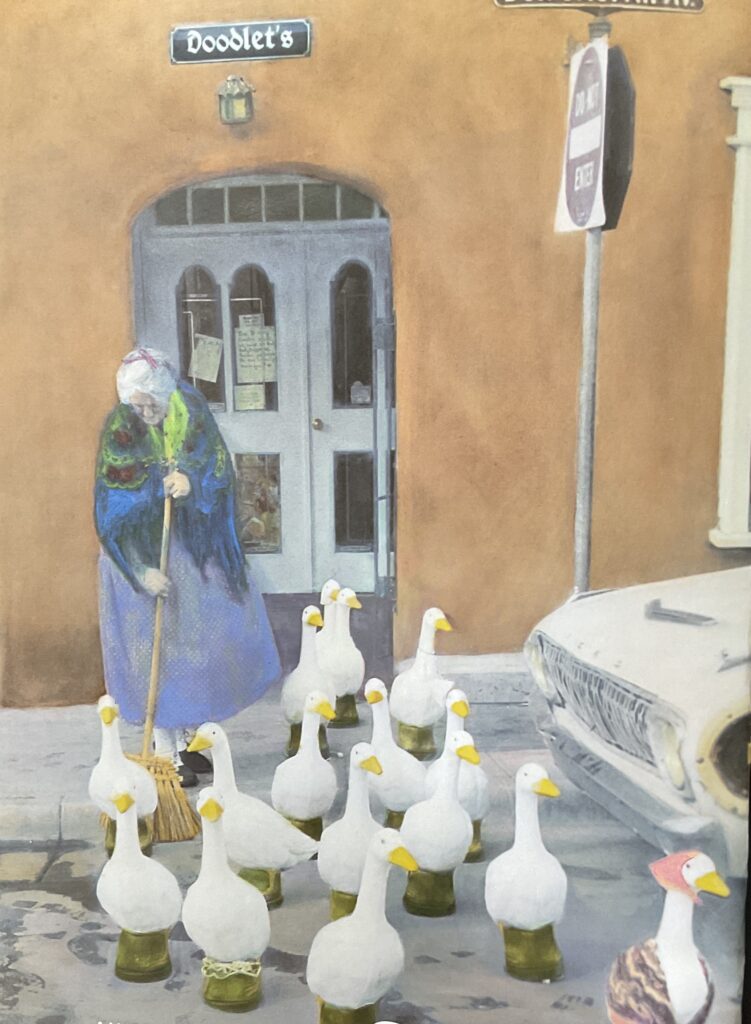
And then there is the goose. Anyone who lived through the 70s and 80s probably remembers Gladys. She was a life-sized plastic goose that lighted up, a creation of Alan Heller who was known for his sense of humor. Our little girl had a Gladys lamp which stayed with her for many years.

Gladys Lamps Advertisement in a Santa Fe Opera Program

In today’s world, the word “plastic” is most often associated with the words “cheap”, “disposable” and “unenvironmental”. But fifty years ago, Alan Heller proved that plastic, properly manufactured, could have both style and durability. His plastic products do not end up in landfills. They are passed down in families or are sold as midcentury treasures in antique stores.

Massimo Vignelli, stated, “If you do it right, it will last forever”. His lifelong friend, Alan Heller, proved him right.

3

Changes

“You’re old-fashioned and I’m going to have to bring you up to date,” my husband gently said to me about four months ago.

Fortunately, he was referring to The Suitcase Lady Blog and not the Suitcase Lady herself. He knew I was going to be shocked. I am, for the most part, always happy with what I have and where I am at the moment. “If it’s not broken, don’t fix it”, resonates with me. So my instant reply to him was, “I like the way it looks and don’t want to change it. What’s wrong with it?”

“Can you think of anything about computers that lasts 15 years?”, he began by asking me. And then my technical guru gave me a long and patient explanation of how the Machiavellian forces in cyberspace, clouds and elsewhere that make everything function were not pleased with my blog’s archaic underpinnings. Rest assured, he told me, you can keep all the graphics and features you like.

He’s been toiling to rebuild my site in what appears to be computer hell and frustration for the last four months. Programming is diabolical. One omitted or misplaced period can destroy everything. However, he says the work has been fun, albeit challenging. You are looking at the results now, and I hope you will find it retains the best of the old and some new improvements.

Over the years, many readers have remarked on the difficulty of leaving comments on the blog. We think that problem has been resolved. And then there was a time when the archives decided to end in the middle of the alphabet, not “Z”. The archives should stay complete now from A to Z, Abandoned to Zucchini. (Handy, if you’re in need of a book). Sharing in a variety of ways should also be easy to accomplish. If you encounter any difficulties, please let us know. To my immense good fortune, my computer troubleshooter says he enjoys these challenges.

Many thanks go to my husband for this necessary update to both the blog and me. I needed to be dragged into the modern world. But I always will write every blog with pen on paper before I key it in. Some things just shouldn’t change.

A literary rest stop on Interstate 80 near Iowa City, home of the famed Iowa Writers’ Workshop.

4

Poodles

I recently learned an interesting fact about Henry, a dog friend of mine. Henry is a big (or standard) French Poodle. What I found out from his owner is that Henry is not Henri. Poodles did not originate in France.

The name poodle comes from the German word “pudel” or “pudelin” which means to “splash in water”. These dogs are German and were bred to be water retrievers and bring ducks and other waterfowl back to their owners.

The poodle is, however, the national dog of France. But there they are called “Caniche” which means “duck dog”.

Neither is the poodle dog’s distinct hairstyle a French fashion statement. It is rather a matter of form follows function. Less hair makes the poodle a better swimmer, but also more vulnerable to cold water. So the dogs were clipped for swimming, while puffs and pompous were left to protect the joints and vital organs.

And speaking of hair, poodles do have hair, not fur. Fur grows to a certain length and then sheds (all over the place). Hair just keeps growing. People with allergies and extremely tidy folks just love these dogs.

If a poodle wants to enter the show ring, it must have one of three cuts: the Continental Clip, the Modified Continental Clip or the English Saddle. Puppies, however, get the Puppy Clip, which is an even trim over the whole body, no puffs or pompoms.

Two of the most outstanding features of these dogs are their intelligence and their energy. In other words, poodle owners can expect to be outwitted and outlasted.

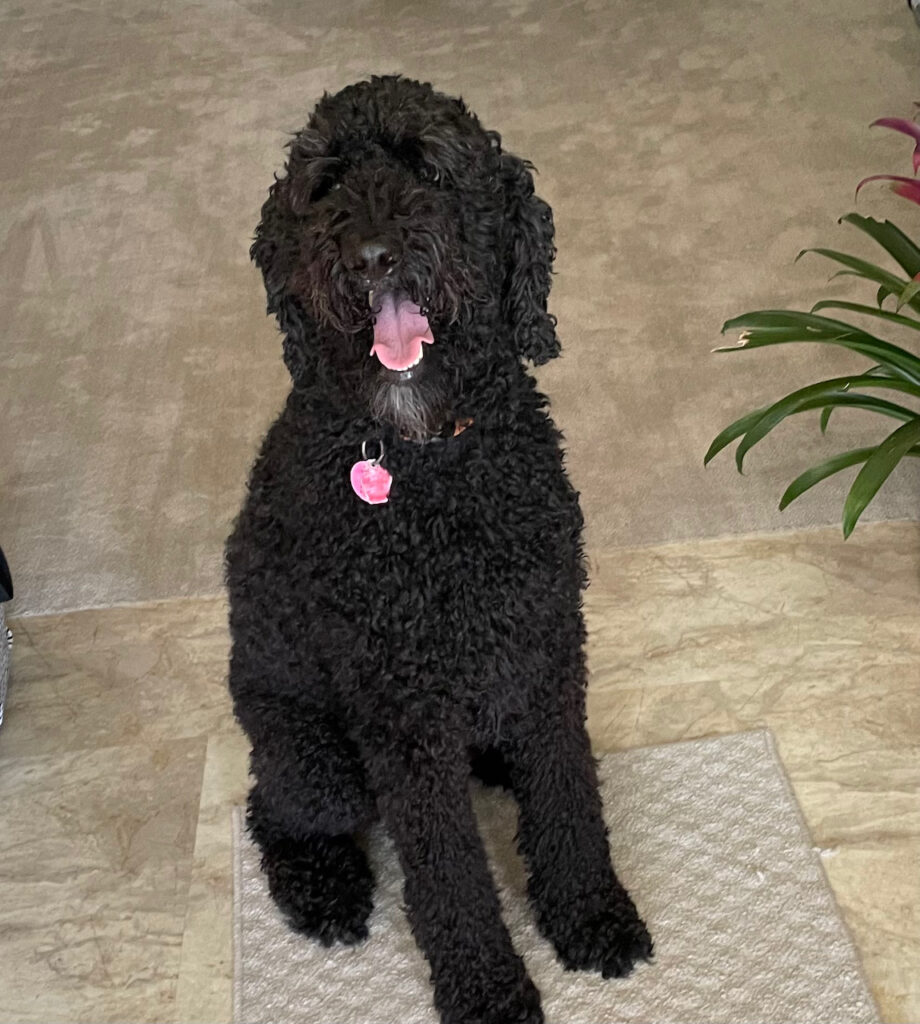
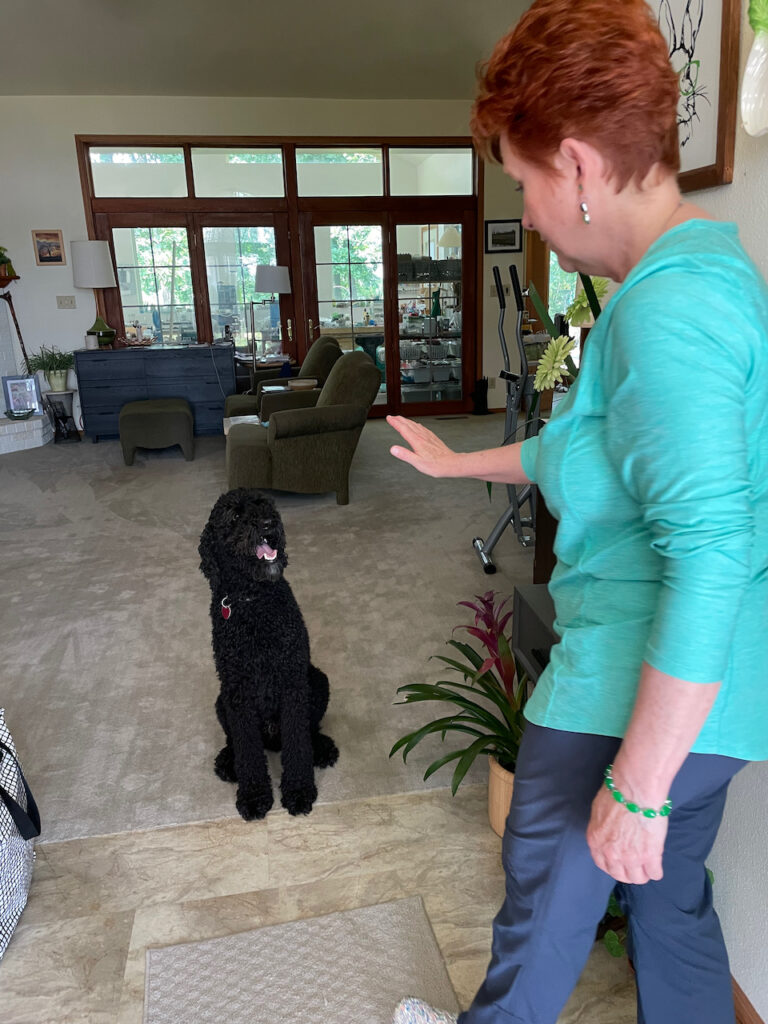
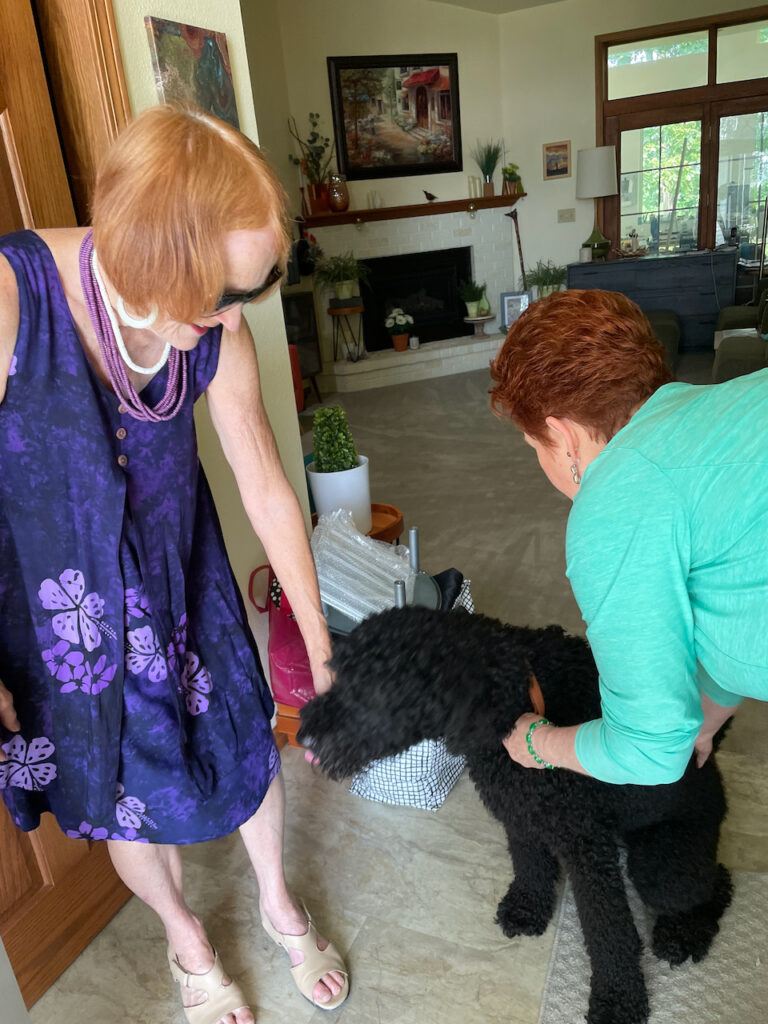
Here is our friend Henry in action. He is a 52 pound dog who has the heart of a puppy.

0