Thrift

I started buying my clothes in thrift stores when I was an art student in college. With the exception of us students and bohemian types ( I was both – my Grandfather was from Bohemia) thrift stores were not frequented by the middle class. To use a phrase from that era, they were for “the down and out”. Hand-me-downs were a stigma then, not recycled treasures.

Thrift shopping might not have been popular, but I instantly knew it was for me. Simultaneously loving fashion and design and being nearly broke, I loved shopping someplace where everything was possible. Plus, thrift shopping is nothing more than a giant treasure hunt, and my design classes were training my visual awareness. Why not put that knowledge to practical use?

Another reason to be a thrift store shopper presented itself when I was a young married woman. Whenever I visited my parent’s house and wore a different outfit, my mother would immediately ask, “Is that new?” I doubt that she meant to induce guilt, but that was the effect. My parents both lived through the Great Depression and considered buying lots of clothes or anything else as frivolous…money’s main purpose was to be saved. I didn’t have to feel like a hedonist when wearing “new” clothes from St. Vinnies.

Many decades have gone by, I still love fashion, I’m no longer broke and I have come to understand that most women my age from early on were conditioned to feel guilty for loads of stuff we do or don’t do.

Covid put an end to thrift shopping for a year and a half, and I did miss treasure hunting for bargains. However, two realizations hit me. First, I have enough clothes to last me forever, and second, I could up my game when the thrift stores reopened. Since I need nothing but the fun of the search, I could shop almost exclusively off the $1.00 or $1.50 sale racks. And I will not feel guilty for an occasional splurge of a dollar or two more.

I am well aware that thrift shopping is not for everyone. My husband, for example, always opts for taking a 20 minute catnap in the car as I am happily scanning the racks in a Goodwill or Vinnies. He does, however, appreciate the $1.00 designer shirts I find for him.

And, finally, I must note that many young women in my granddaughter’s generation have embraced thrift shopping. I see them in the aisles of every store I visit. And they are laughing, happy and having fun with their friends. No guilt or stigma in sight…some things do change for the better.

3

Dirty

This post is going to be dirty. Memorial Day is coming up and many of us will be digging in the dirt, planting all the seeds and pots we’ve optimistically hauled home from garden centers. So it’s the perfect time to pose the question: What is the difference between soil and dirt?

I did some digging and unearthed these definitions:

Soil is alive, dirt is dead.

Dirt is different from soil. It is a dry and dull sibling of soil which can’t host life in any form without external help. It is rocky, silty and barren of any nutrients that healthy plants need to grow. If you add water to a handful of boring old dirt, it will not compact well, if at all.

You get the idea. Soil is busy stuff. It’s made up of “organized ecosystems of microscopic organisms and insects that exchange nutrients and minerals through food webs and decomposition.” Dirt, on the other hand, just lies around.

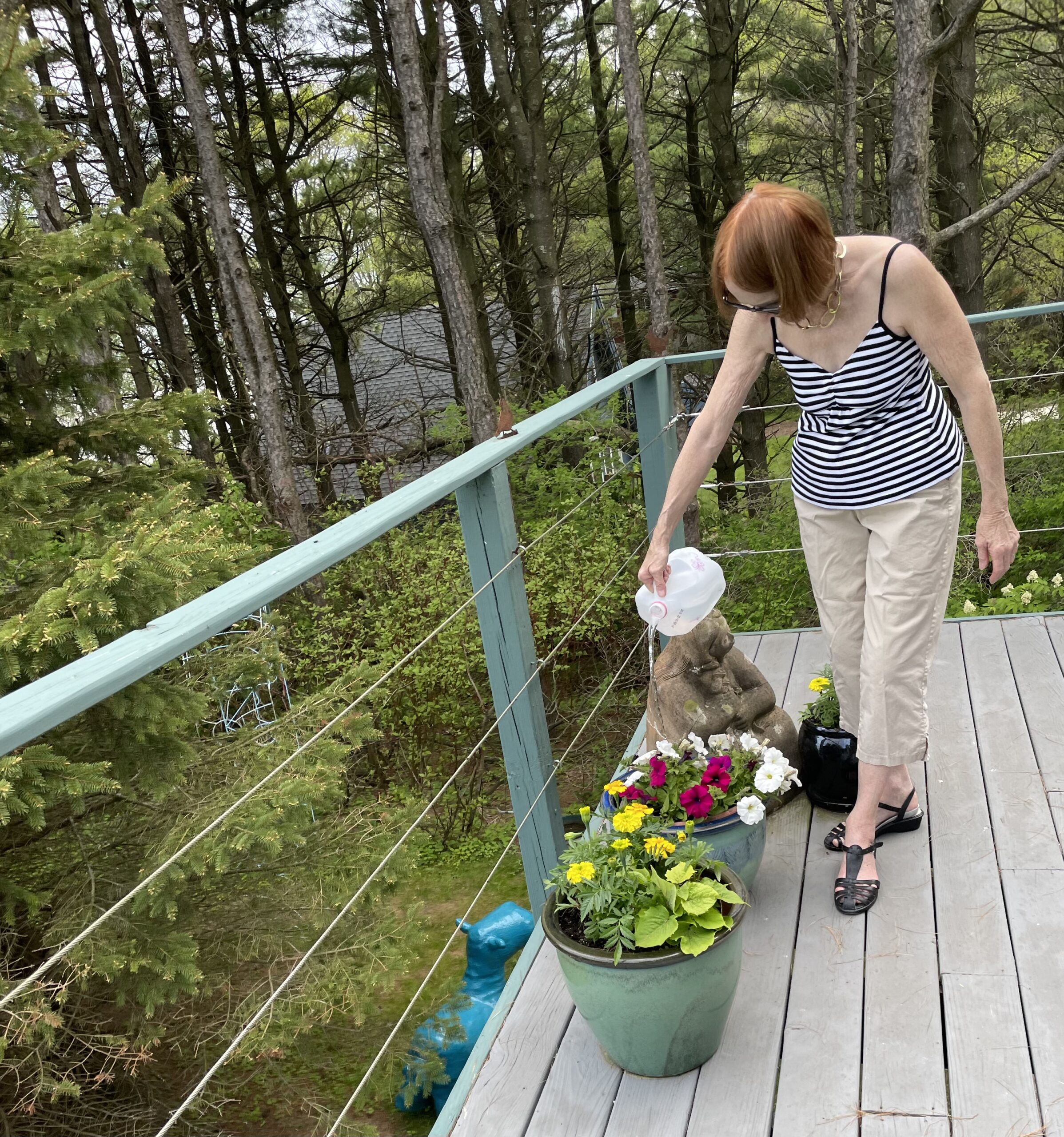
We have never had our soil (or whatever is covering the top of our acre and a third ) tested. My husband and I decided that nature took care of our land long before we arrived, and we would only add native species to the mix. For the most part this strategy has been a success. However, it might also account for the fact that we can’t grow even a tomato or potato in the tiny garden behind our deck.

I do want to give dirt equal time here, so I’ll end with this terrific dirt story passed on by a friend. Years ago, when most homes were heated with coal furnaces, walls got dirty from soot. Kutol Products in Cincinnati made a fortune by developing a putty-like wallpaper cleaner to get rid of the dirt. However, by the 1950s, coal furnaces were being replaced and the company was on the verge of bankruptcy. A sister-in-law of one of the company executives was a nursery school teacher. She tested the non-toxic wallpaper cleaner as a modeling “clay” for children and suggested a name for it.

And that’s the dirt on Play-Doh.


4

Presto!

Leave it to a woman to invent a car that changes colors. That would be Stella Clarke who developed the BMW iFlow.

Loving both cars and colors, I was excited to see the news headline about the color changing car. Reading on, I discovered it can only do black, white and gray, a disappointment, as I was envisioning an entire palette of colors. Others shared my sentiment. A leading car design website headline suggested, “Someone Tell BMW It Made An IX That Changes Shades, Not Colors.”

Despite BMW’s misleading use of the word “colors”, the iFlow is a sensational concept car. Here’s how it came to be.

Its developer, Stella Clark, hails from Australia. As a child, she quickly abandoned dolls in favor of taking apart and reassembling all sorts of mechanical and electronic devices. This eventually led to a research Doctorate degree on “Telecontrol of Robots With Haptic (touch) Devices.” Upon graduation, BMW in Germany snapped her up.

And then one day during the Covid lockdown, Clark decided to pull apart her Kindle. She wondered if its e-ink could be applied to automobiles. E-ink consists of tiny microcapsules, about the width of a human hair, that can be stimulated to change pigment with an electrical signal. The next step consisted of cutting tiny triangular e-ink panels and making a flexible body wrap for a car, a painstaking procedure.

Her brainchild, the BMW iFlow, stole the latest car show in Las Vegas. It flashed, pulsed, rippled and faded between black and white and shades of gray. BMW touts its environmental credentials: white for sun reflection on hot days, black to absorb the sun rays in winter.

Stella Clark states the car’s true selling point to future consumers. “The color change gives the driver the freedom to express different facets of their personality or even their enjoyment of change outwardly.”

We will all have to wait a while to flaunt our personalities to the world. The iFlow refuses to do its act in extreme conditions of heat and cold. More work ahead before it hits the showrooms.

3

Excess

The other day, my husband and I were following a car that had an excellent bumper sticker of a mere three words: Excess in Moderation. It was such a stellar example of an oxymoron that we both burst out laughing.

The fact that this was spotted in Madison just added to the fun. Our Capital city is known for its liberal bent and tolerance. They know a joke on your bumper sticker is better than blatant hate or nastiness.

After our spontaneous laughter, my thoughts drifted to the meaning of those humorous words. It didn’t take long to realize I agreed with them. Reason, logic and moderation are the touchstones of my life. Extreme anything is not for me. In my opinion, the only thing that should be extreme is love.

Shunning that occasional binge of excess is not a recipe for a happy life. For example, I once was at a dinner party with a group of women. A fabulous cake was served for dessert. One diner, a fanatical dieter said, “You all eat the cake and I will enjoy the smell.” None of us would have been too sorry if that woman had fallen face first in the cake.

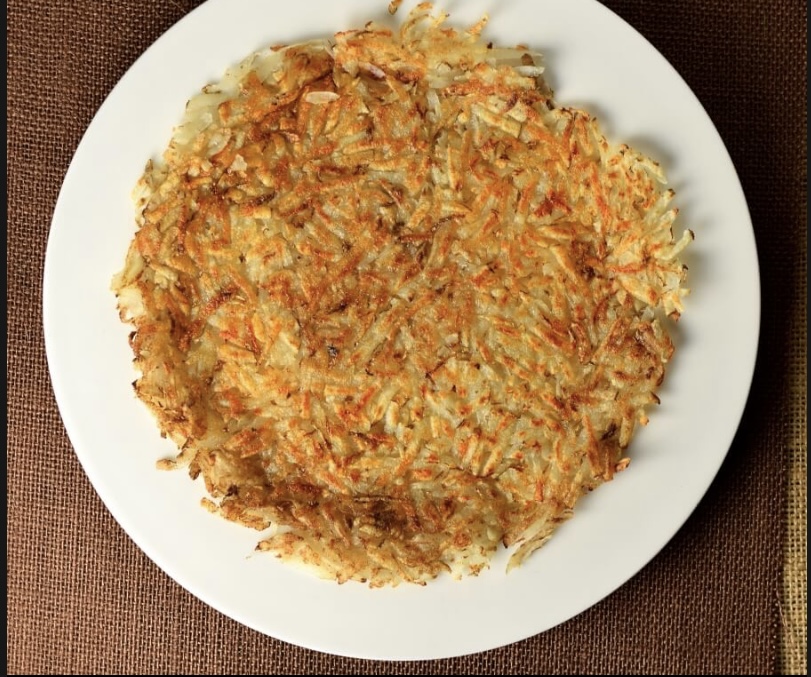
An hour after spotting “Excess in Moderation”, we went out for breakfast and ordered eggs and hash browns. The potatoes were loaded with grease, salt and starch and filled a plate. The calorie count was listed on the menu at 750. Total excess, but I only ate half and brought the rest home for the raccoons. Moderation.

5

Beer

Last week we drove into town to get a close-up view of the Algoma Intrepid, a 650 foot long, self-discharging bulk carrier from Toronto. We see these massive “lakers” pass in front of our shoreline home frequently, but they are usually seven miles out, a big dash on the horizon. The Intrepid was moored at the mouth of the Manitowoc River in the heart of town, right across the street from the library.

Here’s a picture of this massive boat. It is also a picture of the start of beer being made.

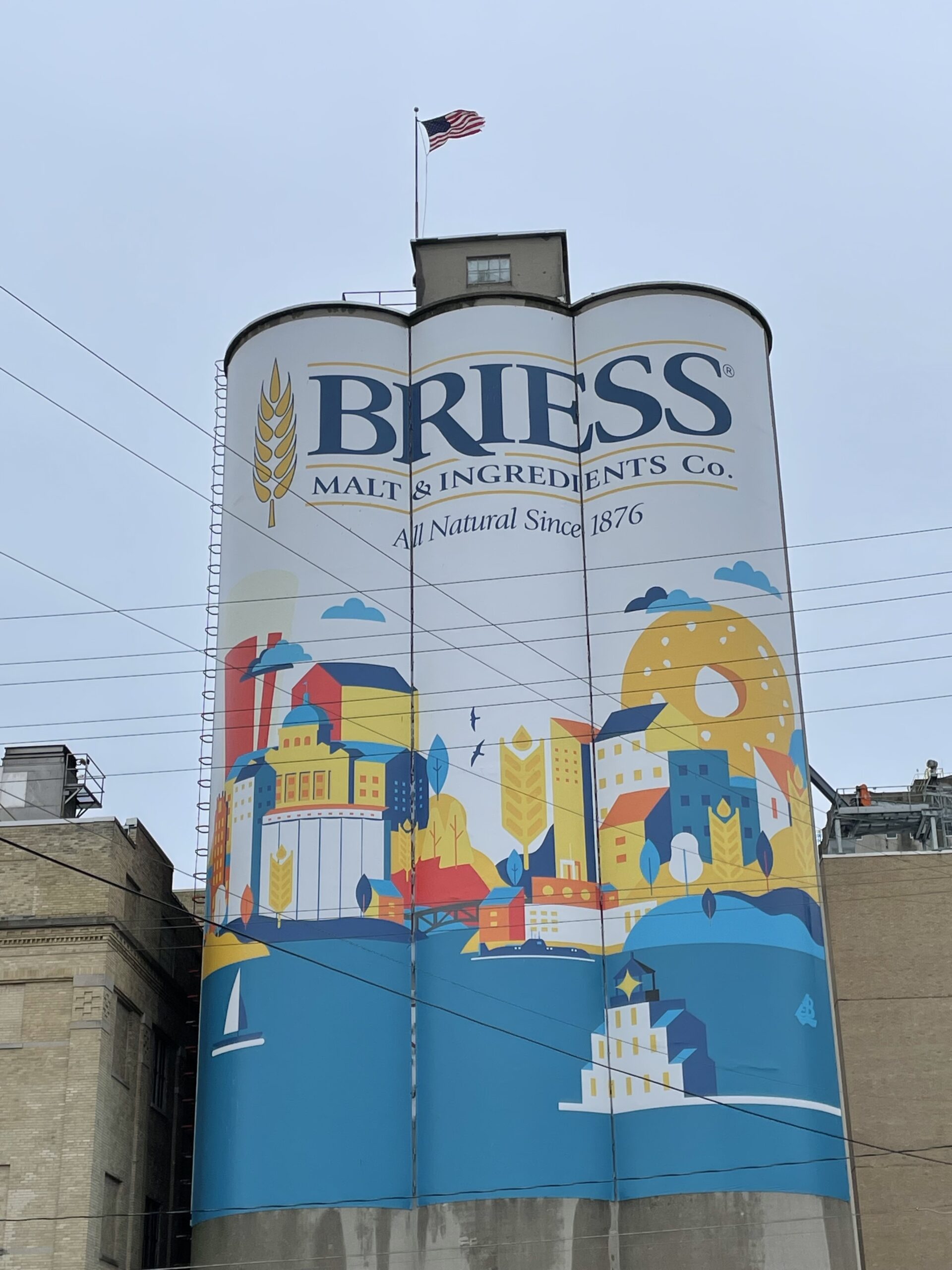
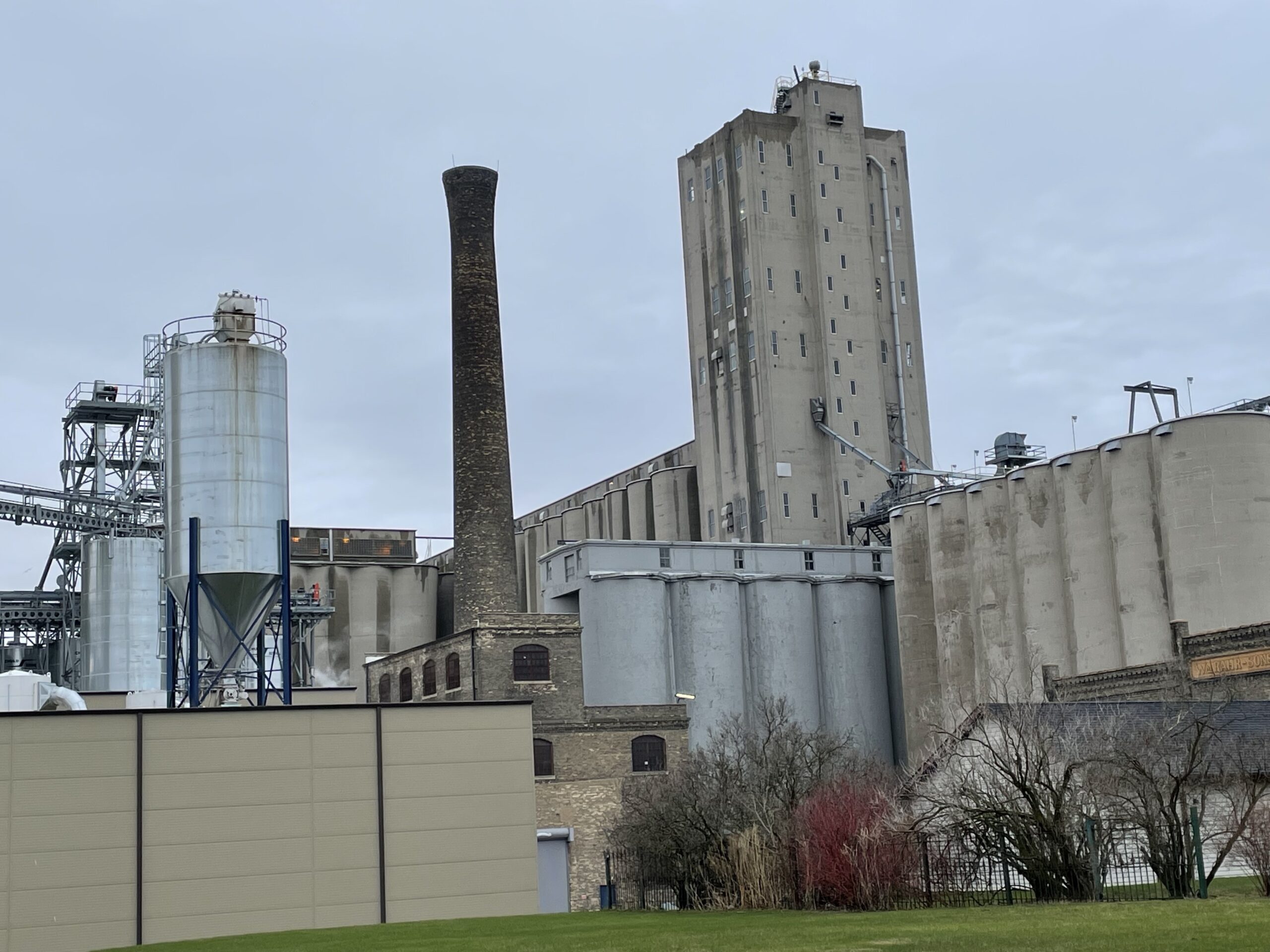
We were naturally curious about the Intrepid’s cargo. Turns out it was filled with barley. A humming conveyor belt was automatically unloading the barley into a tall, concrete building beside the river. After watching this interesting operation, I wanted to know more. I knew a company named Briess Malting had bought all the empty grain elevators and facilities beside Lake Michigan, an extremely happy event for our economically depressed town. But what happened next to those tons of barley?

The first thing I discovered was that Briess also had acquired and reactivated the 50 year old concrete building beside the river which is a marine grain tower. Previously, all their grain arrived via rail or trucks. More lakers will be coming to town.

Next, the grain is moved three city blocks through underground tunnels to the 12 story grain elevator for the cleaning and grading process. Sticks, stones, dust and other impurities are removed as the grain travels via gravity through the floors of the elevator.

From the elevator, the barley goes to the Malt House where giant steeping tanks (2 stories tall) filled with bubbling warm water start the germination process. Here the steeped kernels undergo modification- enzymes open up the seeds’ starch reserves.

The next step is the drying kilns. Different temperatures and drying times determine the characteristics of each specialty malt, for example, pilsen, pale ale, etc.

Since beer is the third most popular drink in the world (after water and tea), I thought a mention of its ingredients would be in order.

“The basic ingredients of beer are water, a starch source, such as malted barley, able to be fermented, and a flavoring such as hops, to offset the sweetness of the malt.”

Manitowoc has the malt covered. And that’s a sweet thing for our city and port.

6