Twenty-five

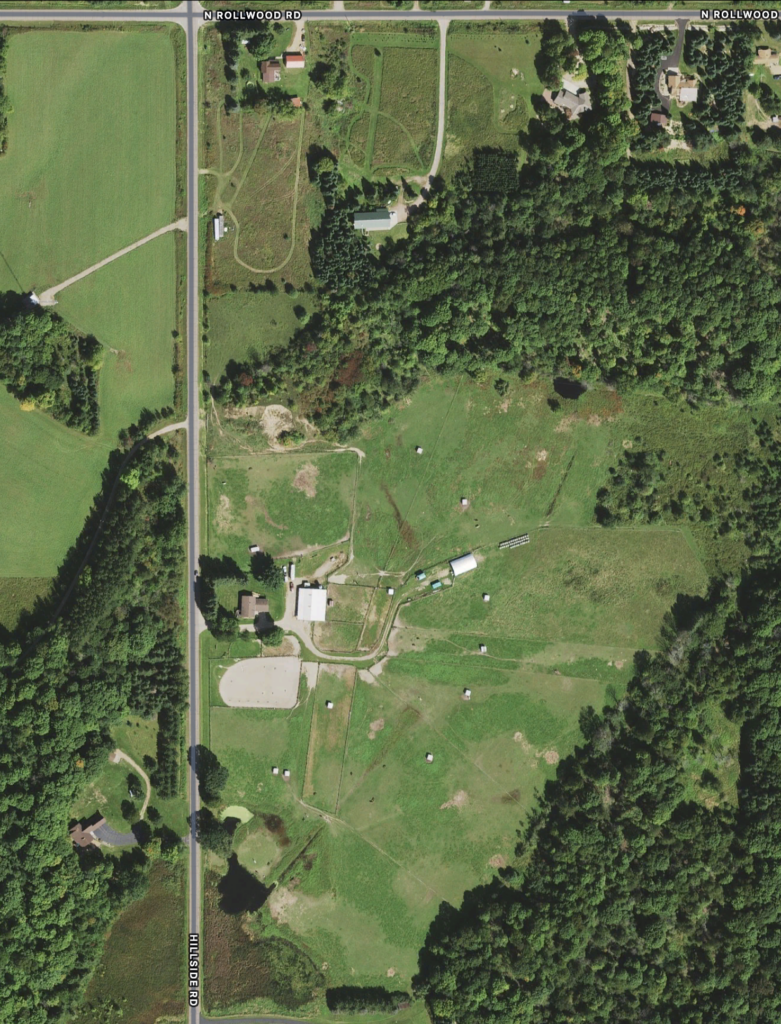
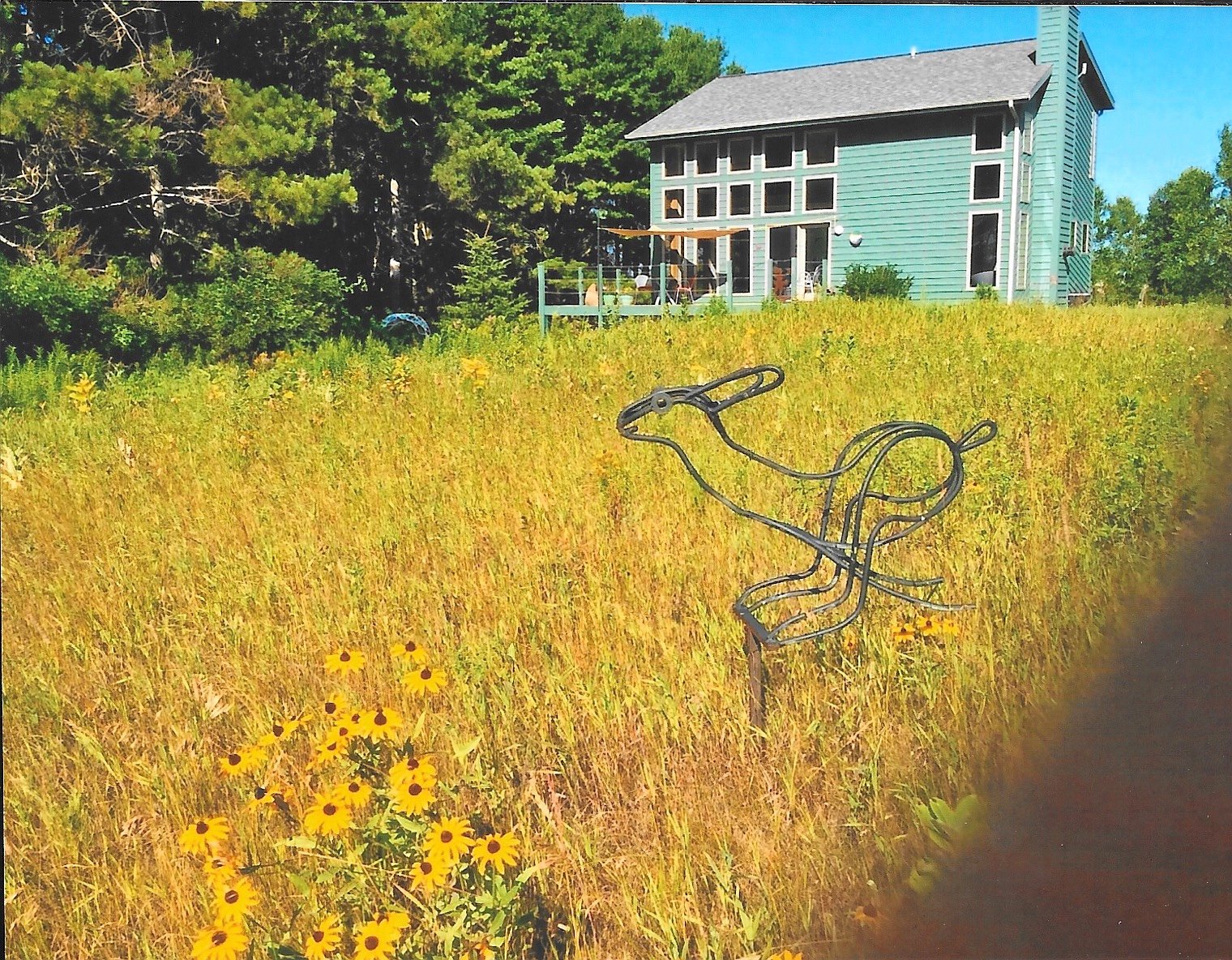
This weekend, Memorial Day, marks the start of our 25th year of living in our current house on the shore of Lake Michigan. That move was a right and happy one.

One of the factors that led to us living in the country was elephants. Elephants are not, of course, indigenous to Cleveland, Wisconsin. But they were, nevertheless, important motivators.

The journey started many years ago when I decided to have an “Elephant Week” at the preschool and kindergarten where I was teaching. I began by inviting several artist friends to make a piece of art with an elephant as the subject matter. I further suggested the work should be made with materials on hand in their studios and not take much of their valuable time to conjure up. They generously created elephants that I could show to my students as examples of the variety of styles and materials artists bring to a topic.
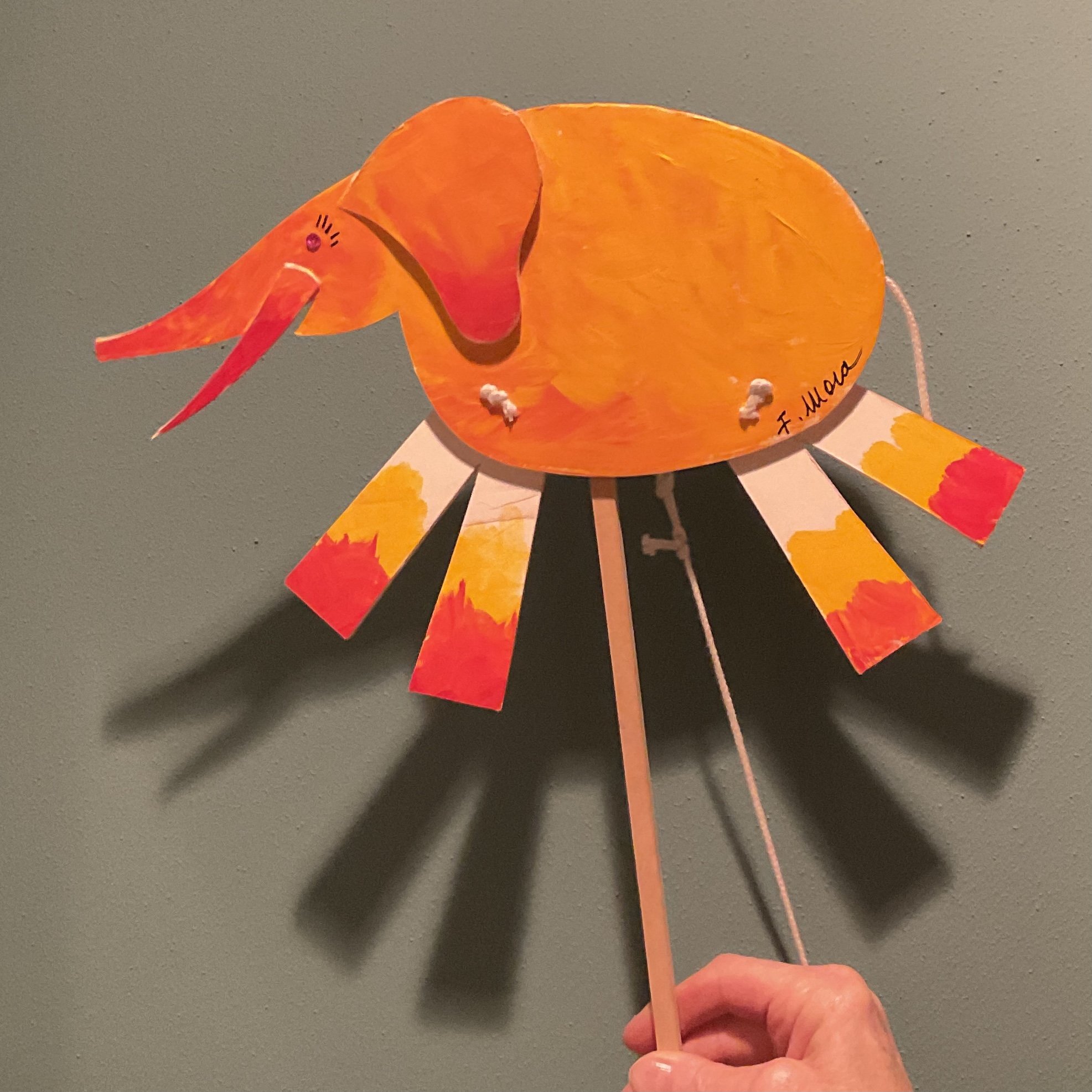
Francisco Mora’s Happy Elephant

Next, I rounded up a big stack of elephant books to read throughout the week. Horton, Dumbo, Babar and Elmer would all make appearances. I also brought my collection of folk art elephants and toys made by artists around the world.

At this point in my preparations, I suddenly realized that something was terribly missing. I needed to tell the kids some true science facts about the real animals that had inspired all the wonderful artwork and storybooks I had gathered.

I researched and wrote “5 Things We Should Know About Elephants”. I wasn’t trained as a science teacher, but that is the moment I got hooked on natural science. I immediately wanted to learn more facts on all sorts of animals, especially those that lived in my own backyard. From there, it was a short jump to wanting to create more habitat that would welcome animals into our yard. And, finally, my husband and I realized that the best way to do that was to move to the country. And we did.
0

Cupboards

Many people enjoy keeping journals to mark the events of their days, months or years. Since time passes quickly, memory is fickle, even a trickster at times, a journal is a lovely way to preserve one’s history.

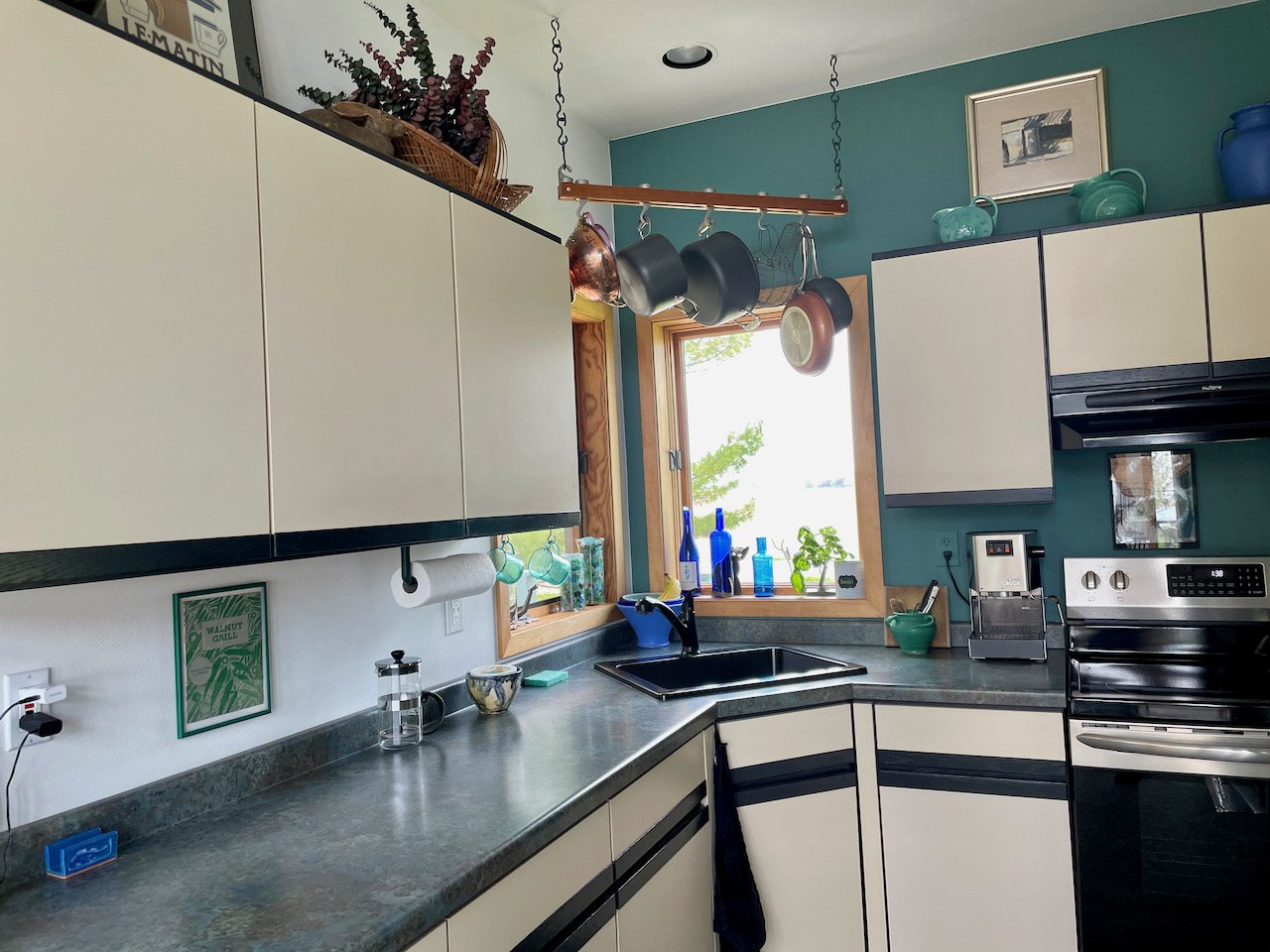
I, however, do not keep a journal. I keep my life in my upper kitchen cupboards. I’ve been doing this for many years now. It’s a joyful system and one which keeps memories from getting muddled.

I’ve always regarded the inside of my eye-level kitchen cupboard doors as being ideal bulletin boards. But the advent of cameras on phones and iPads opened up an entirely new dimension for me. With no cost for film and only a slight cost for printing (9 cents or less), photos can mark the progress of my days and seasons. Plus, my cupboards are most accommodating. I have four doors, meaning each can hold three months’ worth of pictures. January, February and March are next to the stove: the rest of the year marches down the remaining three doors on the adjacent wall.
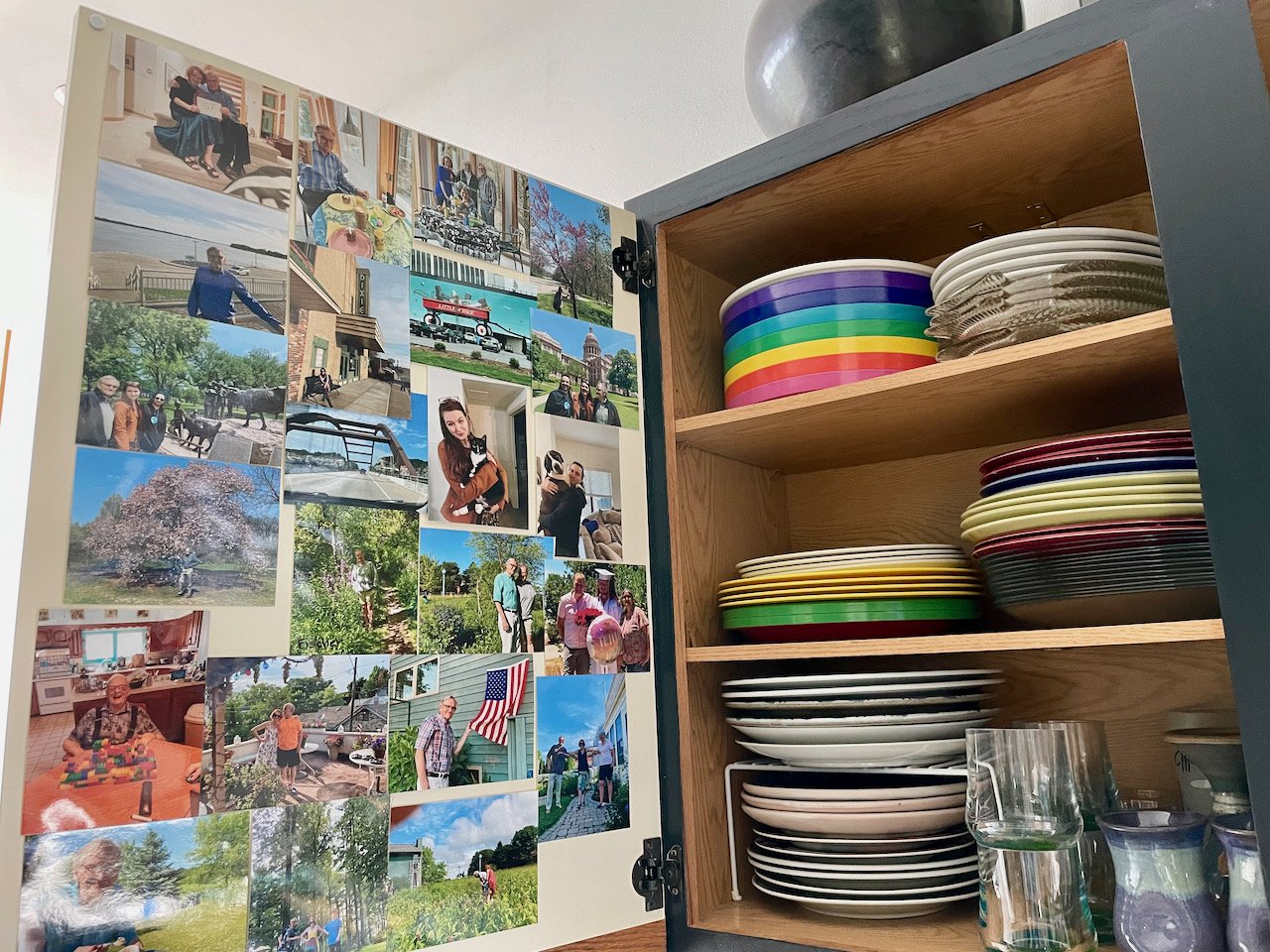
Every time I open a door for dishes or food items, happy memories greet me. The pictures stay up for a year and then are filed away in a dated envelope.

This system has a special benefit. It’s a reminder that life should be lived fully every day and season. We create our individual timelines. And we also create our own happiness.

0

Sundown

In my way of thinking, movies and music should not begin until the sun goes down. I admit this is an entirely personal quirk and I’m not advocating it for others. I’m just a visually oriented person who doesn’t want to miss anything the sun-filled day delivers. Plus, daytime is filled with enough sounds to keep me entertained.

My impulse to immerse myself in the daytime hours was with me as a child. Most of my schoolmates were sent to our local movie palace, the Paradise Theater, to see a double feature every Sunday afternoon. (As an adult, I understand why these hard-working, blue-collar parents wanted their multiple kids gone for four hours plus.) I was always grateful that my parents didn’t send me to a dark, cavernous cave that shut out all the beauty of the day. I much preferred being outdoors playing.

I do love movies, the magic of falling into imaginary worlds, but the daytime world still has more appeal for me. Perhaps I might feel differently about all this if I were a nocturnal creature like a cat or owl.

Many of my family and friends would be bereft without music as a constant presence in their lives. But for me, the music gets turned on when the world gets dark and introspective, and my music of choice is almost always jazz. Somehow, I just don’t feel jazz belongs in the world of sunshine; its magic works best under the cover of darkness.

From 1975 to 2002, Milwaukee had a fabulous jazz radio show called “The Dark Side”. Ron Cuzner was the host and the show always began with “In My Solitude”. Night doesn’t get better than this.

Click here for the music (Ignore the ad)

Photo- MT
0

Mating

A peacock came in the mail last Thursday. He’s a beautiful boy, and I will be putting him to work. My peacock is a puppet whose job will be demonstrating to children one of the uses of animals’ tails.

All across America, this summer’s library reading program theme is Tails & Tales. Even though much programming will be video, the important business of keeping kids engaged with reading, libraries and ideas goes on. I’ve been busy researching and writing a program, and I’ve learned much more than I possibly could or should share with kids…especially on the topic of peacock tails.

The obvious use of the male peacock’s over-the-top, iridescent tail feathers is to impress a girl. These guys have impressed us as well. We all commonly think of the word “peacock” as referring to a species of bird. Turns out it is not. A peacock is a male peafowl. The female peafowl is called a peahen, and the babies are peachicks. The peafowl are members of the pheasant family of birds.

Showtime for the peacock is spring when they and the peahens gather in groups. The guys’ tails are the stars of the show. These spectacular appendages can have up to 150 feathers as long as 6 feet and end in an “eye”. Collectively, the tail feathers are known as a train.

The males strut about, raise and fan out their tail feathers and start to shake their entire tail. They rattle their tails 25 times per second which produces more iridescence plus mechanical sound. Biologists have proven that this display has “a hypnotic effect that lures the females.”

The peahens are, however, fussy about who they select. They walk about checking for the guys with the flashiest feathers. An impressive display of feathers indicates physical fitness and healthy offspring. Girls are not shy about chasing other peahens away from their selected mates

When mating occurs, the peacock jumps up on the lady’s back and accomplishes his mission in a matter of seconds. Then he is off to mate with more women and create a harem. The peahens do all the rest of the work of building a nest, incubating the eggs and raising the young. Beauty enables creatures of many species to get away with a lot.

0

Asparagus

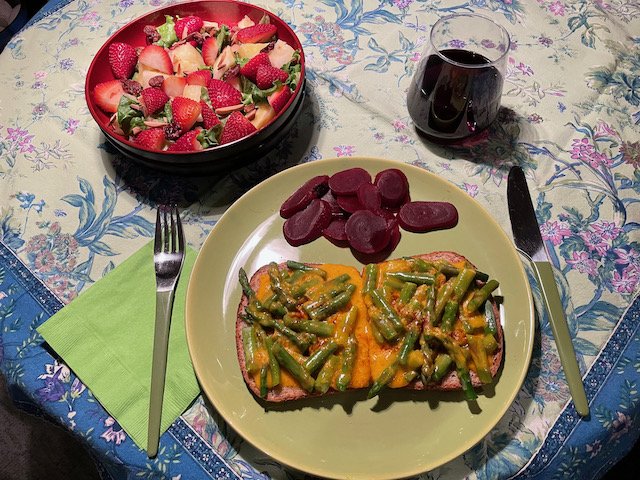
“This is delicious,” my husband said the other night at dinner. I had made hot asparagus and cheese open-face sandwiches to celebrate the first asparagus of the season. The appearance of asparagus and the first Florida strawberries in our grocery store is a sure sign that another winter has been survived.

These items may not have been grown in our own backyard, but they are from our own country. We all know that fresh produce can be bought year round in our supermarkets. It’s always spring or summer somewhere on our globe, and tons of veggies and fruits are constantly flying around. But, somehow, blueberries from Peru or raspberries from Chile aren’t the same as produce from our home place on the planet.

We’ll be indulging in asparagus every week now in April and May. The asparagus feasts will resume in summer when the local crops come in. We would like to grow our own, but our vegetable growing skills preclude that option.

Fortunately for us, our gardening friends and neighbors share their bounty. Farmer Dennis always gives us asparagus from his big backyard vegetable plot. And last year there was a bonus. Somewhere on his many acres of land, he discovered a patch of wild asparagus. He did what is an extremely “in” thing now, he became a forager.

I may not be a gardener, but I am a cook. When he arrived with his gift of found asparagus, I did not recoil. Visually, these spears were a motley crew; some were big and fat, others super skinny or bent and curved. But all were tender and delicious with a minimum of cooking time. I’m hoping the wild asparagus patch shows up again this year.

If you are an asparagus lover, too, here are my simple directions for making the open-face sandwich. It is so quick and easy to make, I hesitate to call it a recipe.

Put two slices of good whole wheat bread per person on a cookie sheet. I use Brownberry Ovens original recipe whole wheat and no pre-toasting is required. If your bread is softer, toast it slightly in the oven.

Snap off the ends of the asparagus, cut into bite-size pieces and cook or steam for a few minutes until just tender. You need enough asparagus to cover each piece of bread and heap it up a bit.

Butter the bread, drain the asparagus and immediately pile it onto the bread slices. Top each with a slice of cheese…use your favorite. We like sharp cheddar, Swiss,  Gouda, or Provolone. We also sprinkle a dash of Cajun seasoning on top. If you don’t want the zip, use paprika.

Bake in a 400 degree oven for a few minutes or broil until the cheese melts.

That’s it. Get out a knife and fork and enjoy. It’s springtime on a plate.

0