Cute

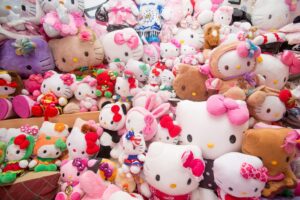
Nobody does “cute” like the Japanese. Gushing over cute people, animals and consumer items is not a passing fad, it’s an ongoing cultural phenomena. Various theories have been proposed for the evolution of Kawaii, the name for all things childish and saccharine in Japan, a country the size of Montana with 127,000,000 people.

Science writer Natalie Angier states that “Cute cues are those that indicate extreme youth, vulnerability, harmlessness and need.” These qualities are all included in the Japanese dictionary definitions for the word Kawaii: 1) itawashii (pitiable), 2) aisubeki (lovable) and 3) chiiskute utsukushii (small and beautiful). So in addition to being sweet, the Japanese concept of cute also embraces a sense of pathos: sadness and beauty, the ying and the yang.

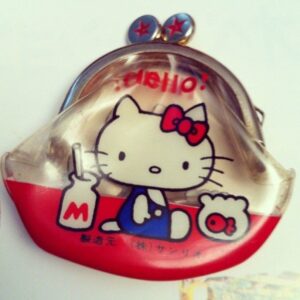
An explosion of Kawaii as a mainstay of consumer culture began in Japan in the 1970’s and the tsunami is still rolling. It began with teenage girls inventing a faddish calligraphy style of rounded characters. The young ladies practiced their writing on stationery and diaries decorated with sweet, little animal pictures.  The Sanrio Company was the producer of many of these stationery items. Then, in 1975, Sanrio launched their “Hello Kitty” products. Kitty’s net worth in 2018 is now $42 billion.

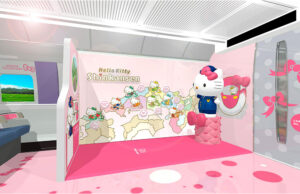
My idea for this blog came from the most recent “Hello Kitty” development. It is truly Kawaii on steroids, it’s the Hello Kitty train. I will not even attempt to find words to describe the train which is currently running on Japan Rail tracks. Here are the pictures….and note that one of the stations it stops at is Puroland, Hello Kitty’s very own theme park.


0

Headless

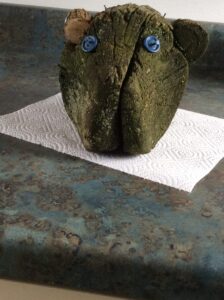
The other morning I sat down to eat breakfast, looked out the window at the Tooley Cafe  and was shocked. Our bear had lost his head.

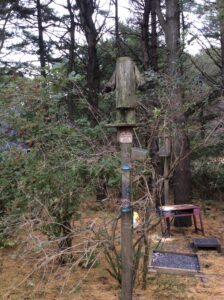
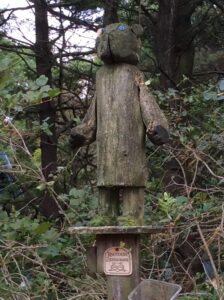
Our cheerful wood sculpture bear has stood atop a tall pole in the Tooley Cafe for twenty years. He watches over the hundreds of animals, feathered and furred, who dine in our Cafe every day. Birds often perch on his head. And there he was, decapitated.

I alerted my husband, and we went out together to search for the missing head. It was quickly located having rolled beneath some underbrush not too far from the pole. At first we speculated that raccoons might have played a part in the decapitation, but we quickly dismissed that idea as unlikely. Unfortunately, raccoons get scapegoated for all sorts of mischief that happens in our yards around here.

Bear’s head was soggy from the rain we’ve been having lately, so we brought it into the house to dry. We didn’t want him to get brain rot.

Checking his head more closely, we discovered that he was also missing an ear. His eyes were looking fine, however, as we had given him eye transplants a few years ago. That time we blamed the squirrels as bear’s eyes did resemble acorns.

It’s ironic that we ended up with a headless bear at the same time of year that Sleepy Hollow and headless horsemen come to mind. We decided to do immediate surgery to replace his ear and reconnect his head. Keeping the restoration in the mammal family, we used Gorilla Glue for the adhesive. There will be no need to replace his head with a pumpkin. Bear is back on his perch, fully intact and once again faithfully guarding our yard.

0

Explosion

We had a little explosion the other night before dinner. Nothing major, in fact, a good excuse for laughter.

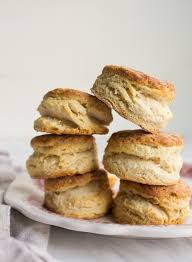
I was opening a tube of refrigerator biscuits and was (somewhat) following the opening directions. As I was searching for the silver pull tab, the biscuits decided to pop open without my help. There was a big bang and I was holding an intact tube with a missing top. Ripping the tube open, I counted out seven biscuits. The label clearly stated that the package held ten.

When my husband walked into the kitchen a few minutes later, I was crawling around my kitchen floor looking for the missing pieces of dough. Neither of us could spot them and, since we were both hungry and in no imminent danger of stepping on a raw biscuit, we sat down to eat our bowls of soup with the seven biscuits we had in hand. We tend to be grateful for what we have.

Later that evening I found the lid to the tube 20 feet away in the dining room. It wasn’t until the next morning when I was washing the breakfast dishes that I noticed a white blob stuck to the side of the window frame. Further investigation unearthed two more biscuits wedged between some blue bottles on my window sill and the kitchen window. Mystery solved: Scotty had not beamed up the biscuits.

The flying biscuits brought to mind another funny explosion in our kitchen. Young guests at our house always get to pick their morning cereal from those cute little boxes in a variety pack. (We figure this is a treat, because moms rarely buy these pricey packages.) As our little person was standing in the middle of the kitchen attempting to open a small serving pouch, it exploded. An amazing amount of cereal came raining down on the kitchen floor. Within seconds all our cats had converged on the scene and were gobbling up the bounty.

I will not go into detail about my least favorite explosion. It involves a brand new rental car, the tidiest country in the world, the Netherlands, a juice box containing bright red juice and my attempt to put a straw in said box. Enough said.


0

Veggies

When it comes to veggies, I like mine small. Petite peas, slender asparagus, baby green beans and tiny pickling cucumbers (eaten unpickled). In my opinion, bigger is not better in the vegetable world.

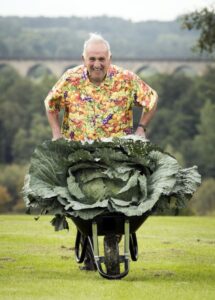
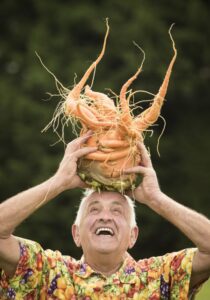
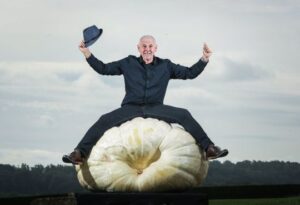
So it was with a grin on his face, that my husband showed me some pictures taken at Britain’s Harrogate Autumn Flower Show. (That name is somewhat of a misnomer as acres of vegetables are displayed alongside the spectacular blooms.) Noted for being fervent gardeners, the British are also lovers of weird traditions. The giant vegetable competition at the Harrogate show certainly falls into that category.

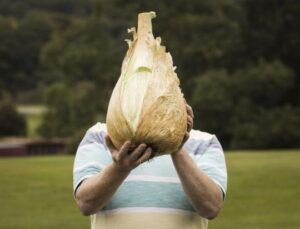
Vegetables of monstrous proportions are judged on their length and weight. Categories include pumpkin, marrow (zucchini), parsnip, leek, cabbage, potato, beetroot, carrot, rhubarb, runner bean and cucumber. In addition, there is a separate and wildly popular National Heavy Onion Championship. Since it’s inception in 1983, the event has resulted in twelve new world records.

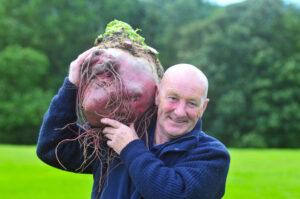
This year’s big winner in the giant vegetable competition was Ian Neale, a 75 year old pensioner from South Wales. He grew the heaviest carrot, beetroot and cabbage, a trifecta of giants.

Asked about his secret of success, he stated, “There really is no secret. It’s just about having the right seed and the right growing conditions and you have to put in plenty of time. You do need a bit of money-for compost and fertilizer- but that’s it.”

In researching this giant vegetable story, I noticed that one thing stood out….no women were among the contestants.I guess it’s just guys who are fixated on “the biggest”.

Here are the results of their labor.


0

Hamburgers

Small towns in America love to promote themselves with claims to fame. Within a small radius of our home we have:

  • The Birthplace of the Ice Cream Sundae
  • The Home of the Hamburger
  • The Cheese Capital of the World

If this sounds all too amazing to be true, you are probably right. Each of these titles have been claimed by towns outside our state, and I believe the Netherlands might have a thing to say about Plymouth, Wisconsin, being the World’s Cheese Capitol. But many small towns in America are struggling, and these boasts bring some welcome fun and needed dollars into their communities.

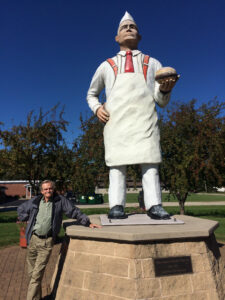
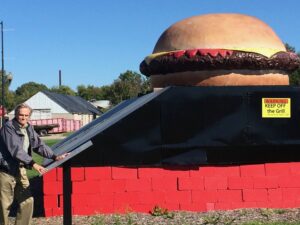
Here’s a first hand report on our state’s supposed birthplace of the hamburger. First, let’s clear up the distinction between a hamburger and a hamburger. In America, a hamburger is defined as a meat patty on a bun. However, the original hamburger was an expensive chopped beef steak with onions, salt and pepper mixed in. It was named for the city that invented it, Hamburg, Germany, and was a gourmet food.

The floods of German immigrants who came to America in the mid to late 1800’s knew all about those classy Hamburg steaks. German American restaurants served them; food carts outside factories where many German immigrants worked did as well.

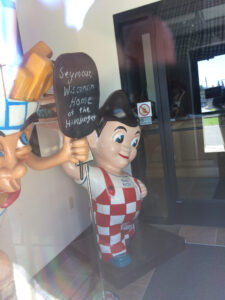
At least five American cities claim the all important addition of bread, thus making the Hamburg steak a hand-held food. But Seymour, Wisconsin, can document its claim back to 1885 when Charlie Nygreen (born 1870) went by oxcart from Hortonville to Seymour to sell meatballs at the Seymour Fair. The meatballs were a flop, but ingenious young Charlie just flattened them out, stuck them between bread and called them hamburgers. With many Germans in the area, the new hamburger sandwich was a huge success. Charlie returned to the fair every year until his death in 1951, a record in itself.

Ironically, my husband and I are not meat eaters, but we are lovers of history and roadside attractions. Here’s what we found in Seymour, 18 miles west of Green Bay.


0