Bang!

I will never tire of teaching. The joy of sharing the world’s wonders with children and hearing their thoughts and questions never diminishes.

A few weeks ago, I had one of those perfect teaching moments. I was explaining basic solar system facts to 25 third graders, all great kids. One boy in particular was giving extremely knowledgeable answers to my “tough, hard, brain-breaking” questions. When it was time for the kids to ask me questions, his hand shot up and he asked, “Did the Big Bang” make a noise? You said sound does not travel without air.”

“That’s a terrific question,” I replied, “and I will have to do some research and get back to you with the answer.”

So if you ever wanted to know if the Big Bang actually went “Bang”, here are the results of my search.

A professor at Washington State University, James Crawford, devoted years on reconstructing the sound of the Big Bang. He has concluded that the sound was a robot-like hum that could not be heard by the human ear. This is because the newborn universe was plasma, not gas, and the pressure waves it produced were Ion Acoustic Waves which are inaudible to the human ear.

However, 379,000 or so years later, the universe had cooled down enough for “electrons and protons/neutrons to bind together to form atoms. Then, potentially, sound waves that could be heard by the human ear could start to propagate through clouds of gas. Unfortunately, there were no humans around then to hear that sound.

While doing this research, I came up with a delightful bit of information. James Crawford’s groundbreaking research began when an eleven-year-old at one of his science presentations asked him, “Did the Big Bang make a noise?”

0

Alert!

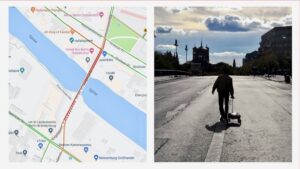
A monumental traffic jam was reported in Berlin recently causing warnings to be sent out on Google Maps. Drivers were given other routes to avoid the massive 99 car tie-up.

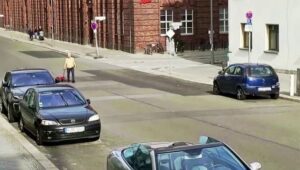
At the exact time the jam was noted, the actual street under notice was almost void of traffic. How could this be possible?

Credit one extremely creative artist and prankster named Simon Weckert. He states, “What I am interested in generally is the connection between technology and society and the impact of how it shapes us…I have a feeling right now that technology is not adapting to us, it’s the other way around.”

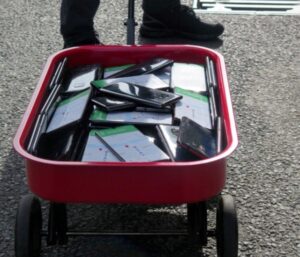
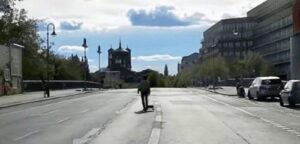
So Mr.Weckert set out to put humans back in charge. He created a Google hack by putting 99 cell phones, all with location apps on, in a little red wagon. Then he slowly walked down a street that had very sparse traffic, a street that was not coincidentally the one where Google’s Berlin offices are located.

His plan worked brilliantly. After a short while, the bright red warning line appeared on Google maps and his faux traffic nightmare was noted as reality.

Google responded with humor. “We’ve launched the ability to distinguish between cars and motorcycles…though we haven’t quite cracked traveling by wagon…We appreciate seeing creative uses for Google maps like this as it helps us make maps work better over time.”

I have two thoughts on this art happening. First, there is hope that a human still can occasionally outwit a computer. And second, the Google employees in Berlin should occasionally look out their windows.

0

Found

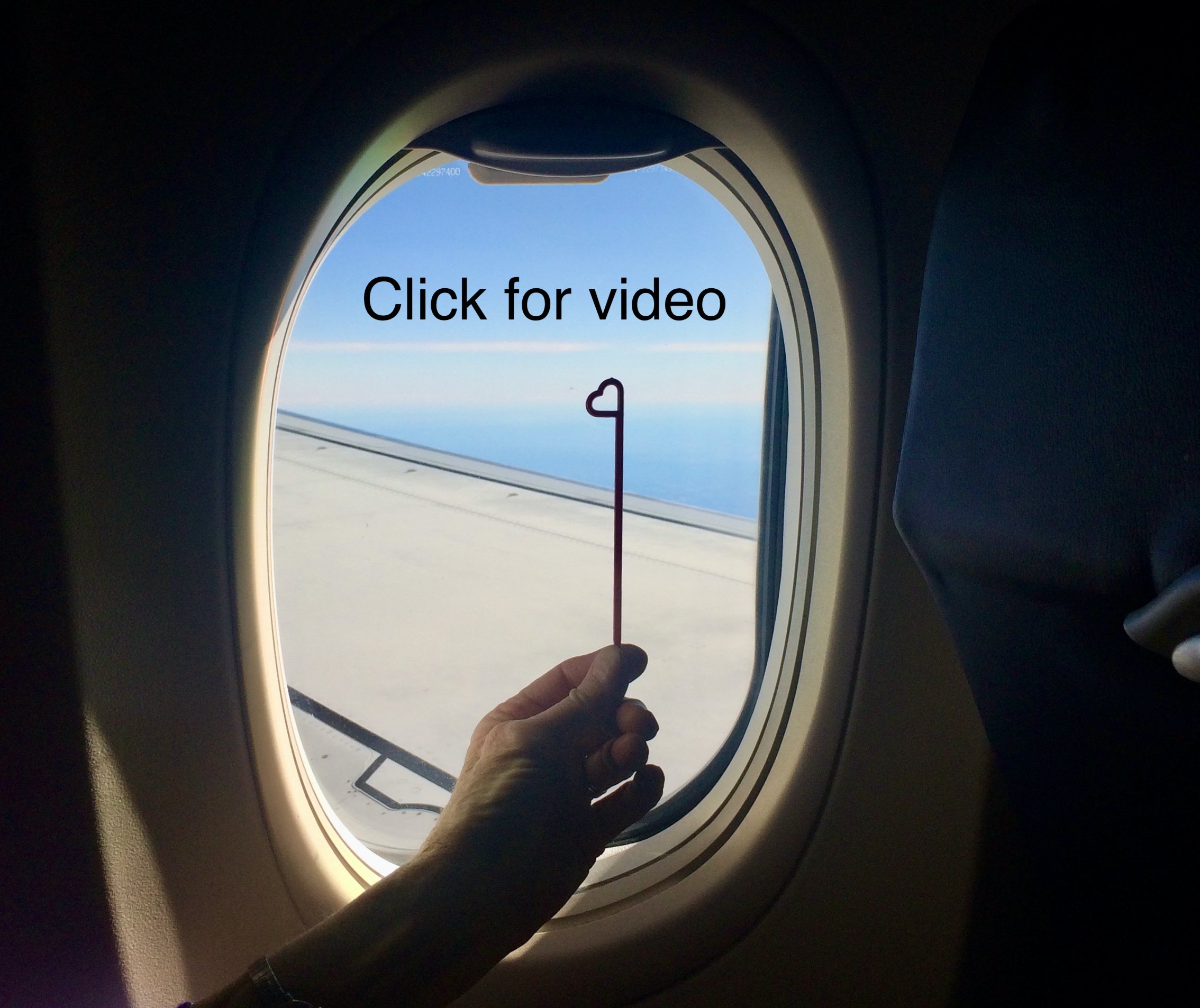
As my husband and I wander the world together, we try to keep our eyes open for signs of love. We look for “found hearts” which are scattered randomly about the planet by our fellow travelers, Mother Nature and pure chance. It is always a surprise and a delight when they appear. Many hearts are out there, waiting to be discovered.

For Valentine’s Day, we have made a short video of our found hearts. Those of you who are on our four times a year snail mail list will get a distinct feeling of deja vu as you view the video. And if you are a lover of snail mail and not on our list, just send your street address to mtooley@artinasuitcase.com


0

Frieda

If I say “Frida”, the last name “Kahlo” might pop into your mind. However, this blog is about another Frieda. She is not as well known as Frida Kahlo, but she was a trailblazing woman,  and almost every one of us has directly benefited from the fruits of her work. Literally.

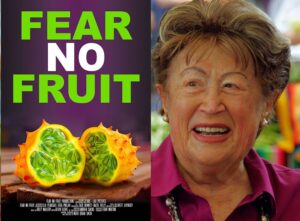
Freida Rapoport Caplan, a.k.a. The Kiwi Queen, died on January 18 at the age of 96. The daughter of Russian immigrants who settled in California, she graduated from UCLA and worked as a bookkeeper in her relatives’ produce business. Wanting more flexible hours when she became a mother, Frieda took a job as a vendor at the downtown Los Angeles wholesale produce market. Her work day started at 2:00 AM and she arrived dressed in a skirt and heels. She immediately realized that breaking into the all-male, “testosterone-doused” competition would be challenging.

Freida Caplan shrewdly made a niche for herself by selling items no other vendor carried, and, in some cases, never even knew existed. She brought an Australian fruit known as the Chinese gooseberry into the American market and renamed it Kiwifruit. This was “the first commercial fruit…introduced into the United States since the banana in the 1880’s.”

With brilliant marketing, hard work and patience, she made that fuzzy brown fruit a superstar. And she didn’t stop there. In 1967, she became the first woman in America to own and operate her own produce house. Her specialty fruits and vegetables all sported eye-catching purple labels. As she tells it, brilliant purple was the only color her sign maker had on hand at the moment. That hue became her signature color for both her labels and her wardrobe.

The list of produce Frieda Kaplan has brought to American tables over the decades is huge. Examples include spaghetti squash, jicama, jackfruit, starfruit, donut peaches, alfalfa sprouts, daikon radishes, purple potatoes, sugar snap peas, blood oranges, Meyer lemons, shiitake  mushrooms and scores more. Her three criteria were taste, food value and shelf life and all her offerings were accompanied by information and recipes.

She confesses that there were some notable flops as well. In her words, “Believe me, I’ve had a couple bombs. There were the fruit-flavored fortune cookies that only dogs in Dallas wanted. And the colored walnuts.”

In 1990, Frieda turned her business over to her daughters. But she still came into the office, dressed in her purple outfits, until she was well into her nineties. Frieda’s story is an immigrant family’s story and a reminder of how much America has to gain by keeping our doors open to immigrants…..even the ones who start out poor.

0

Faux

Last week my cousin and I went to visit a relative at a care center. The receptionist looked at us as we signed in and said, “My aren’t you ladies looking fashionable today! Are you wearing Dennis Basso’s?”  Large, blank expressions simultaneously crossed over both our faces.

“Who’s he,” I piped up. She immediately brought us up to fashion speed. “He,” she said, “is the fabulous designer of faux fur coats, and I thought your coats were by him.”

In fact, my coat was 30 years old and a thrift store five dollar special. My cousin’s faux Basso probably has a better pedigree, but she is a bargain hunter as well. Since the wind chill was hovering around minus a thousand that day, we had both independently chosen to bundle up teddy bear style.

Our wonderfully upbeat receptionist went on to tell us about Dennis Basso’s fame in the fashion world. And, she noted that he’s from New Jersey.

“Yes,” I replied, “by chance, I have a number of close friends from New Jersey, and all are unique and wonderful.”

Now it was her turn to laugh. “I’m from New Jersey,” she informed us, “and who would have thought that kid in my high school class, Dennis Basso,  would get so famous.”

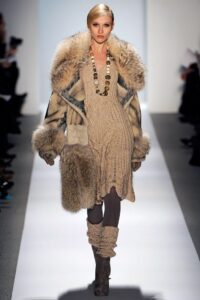
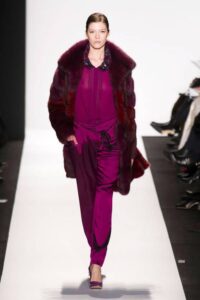
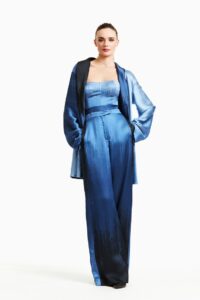
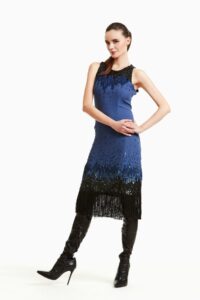
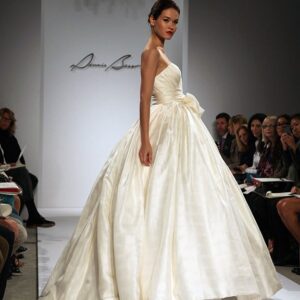
Naturally, I googled Mr. Basso when I got home. That Jersey boy is indeed famous, and he designs much more than just fake furs. The first thing that popped up on my screen was a Vogue article about his new Spring 2020 collection. The next site reported on his wedding at the Pierre Hotel in New York which featured a three-foot-tall wedding cake. His lavish wedding was apropos, as he is also known for creating gorgeous wedding gowns.

I guess my cousin and I have our work cut out for us. We must begin searching for a real “Basso” as we check out the thrift store racks.


0