Caterpillar

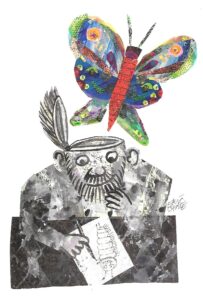
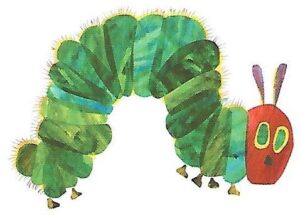
Caterpillars don’t usually have birthday parties….but there is one exception. THE VERY HUNGRY CATERPILLAR, a creation of the beloved children’s book author, Eric Carle, is marking its fiftieth birthday this year. Children and young-at-heart adults around the world have been having parties in celebration of the book’s fifty years in print.

If Mr.Carle’s original idea for the book had materialized, parties probably would not be happening. A WEEK WITH WILLI THE WORM does not have the charisma of a caterpillar with a voracious appetite. Fortunately for all of us, Ann Beneduce, Carle’s editor, gently suggested he turn his green worm into a caterpillar. Wise advice, as THE VERY HUNGRY CATERPILLAR has sold over 50 million copies and been translated into 62 languages. In addition, Eric Carle went on to create over 70 other picture books for young people.

Now 90 years old and living in Key West, Florida, Eric Carle’s early life was shaped by an incredible twist of fate. He was born in Syracuse, New York, to German immigrant parents. He writes, “I remember kindergarten there. I remember a large sun-filled room with large sheets of paper, fat brushes and colorful paint. I went to school a happy little boy.”

But then his mother got homesick, and the family moved back to Stuttgart when Eric was six years old. It was 1935 and they returned to experience all the horrors of the rise of Nazism and World War II. He was beaten by his teachers in a dark, cheerless school, his family went hungry and his father spent years in a Russian prisoner-of-war camp. Eric had only one compelling wish from 1st grade on: to get back to America.

After graduating from art school in Germany, he earned enough money to come home to America in 1953. He quickly found a job at the  New York Times. Ironically, he was drafted into the U.S. Army five months later. Because of his German language skills, Eric Carle was sent right back to Germany. His entire enlistment was spent there. Returning home a second time, he worked as an art director in ad agencies for many years.

When Eric Carle was 40 years old, his friend Bill Martin Jr., asked him to illustrate his book, BROWN BEAR, BROWN BEAR, WHAT DO YOU SEE? As Eric Carle explains, “The happy days of my kindergarten came to mind as I created those large and colorful animals for that book.” From then on his artistic and literary career has had one focus…creating children’s books.

On the occasion of his caterpillar’s 50th birthday, Mr. Carle was asked why he thought his story is so popular. He replied, “I believe most children can identify with the helpless, small insignificant caterpillar and they rejoice when it turns into a beautiful butterfly. It is an affirmation to all children. It says: ‘I, too, can unfold my wings and fly into the world.’ I think it’s this message of hope.”
0

Centered

From grade school on, I have always loved geography. The physical features of the land as well as the political lines our species draw on that land are equally intriguing to me. I have a great desire to know where everything is and what it looks like.

As part of this quest, I found myself wandering through a cornfield a few weekends ago, looking for the center of the western world.

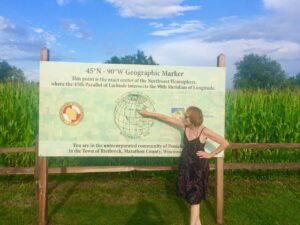
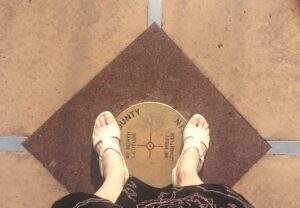
Twenty-one miles west of Wausau, Wisconsin, and a few miles from the small town of Poniatowski is Meridian Road and a tiny park with the 45×90 Geographical Marker. This marks the exact spot that is halfway between the Equator and the North Pole and halfway between the Greenwich Meridian and the International Date Line, the place where the 45th Parallel of Latitude intersects with the 90th Meridian of Longitude.

There are actually four 45 degree-90 degree points in the Northern Hemisphere. However, I’m not likely to visit the other three; one is in the Pacific Ocean, one is in a mountainous region of China near Mongolia and one is in the Indian Ocean.

In the Southern Hemisphere, 97% of the 45th Parallel passes through open ocean. Here’s a photo from New Zealand, one of the rare spots where it’s not underwater.

So my best bet was the cornfield in my own state. The day was warm, the sun was setting, the corn was high and I got myself centered…always a good place to be.

0

Ada

My husband is crazy about another woman. She has bright pink hair and is a total nerd. He loves to consult her about all things techie.

Fortunately for me, Ladyada and he only get together in computerland where she has zillions of other fans. This is not a sexual thing. My guy just likes building electronic inventions and Ladyada gives him exactly what he needs: cool little circuit boards.

Since my husband is always hanging out with this lady, I decided to find out more about her and googled “Lady Ada”. I immediately got loads of information, but it was definitely not about a pink-haired woman who is alive and well at this moment.

The original Lady Ada was Lady Ada Lovelace (1815-1852), the only legitimate child of the poet Lord Bryon. She was a brilliant mathematician and generally credited with being the world’s first programmer, working with Charles Babbage on his mechanical computer.

Further searching quickly brought me to Limor Fried who calls herself Ladyada in homage to the original. She is an MIT trained electrical engineer and the owner of the electronics company Adafruit industries. Her stated goal was to “create the best place online for learning about electronics and making the best designed products for makers of all ages and skill levels”.

The other morning my husband was checking into Ada-land and I happened to glance at his computer screen. To my great surprise, Ms. Ada had a number of items I could truly enjoy. Bear in mind that there is not a techie bone or brain circuit in my body.

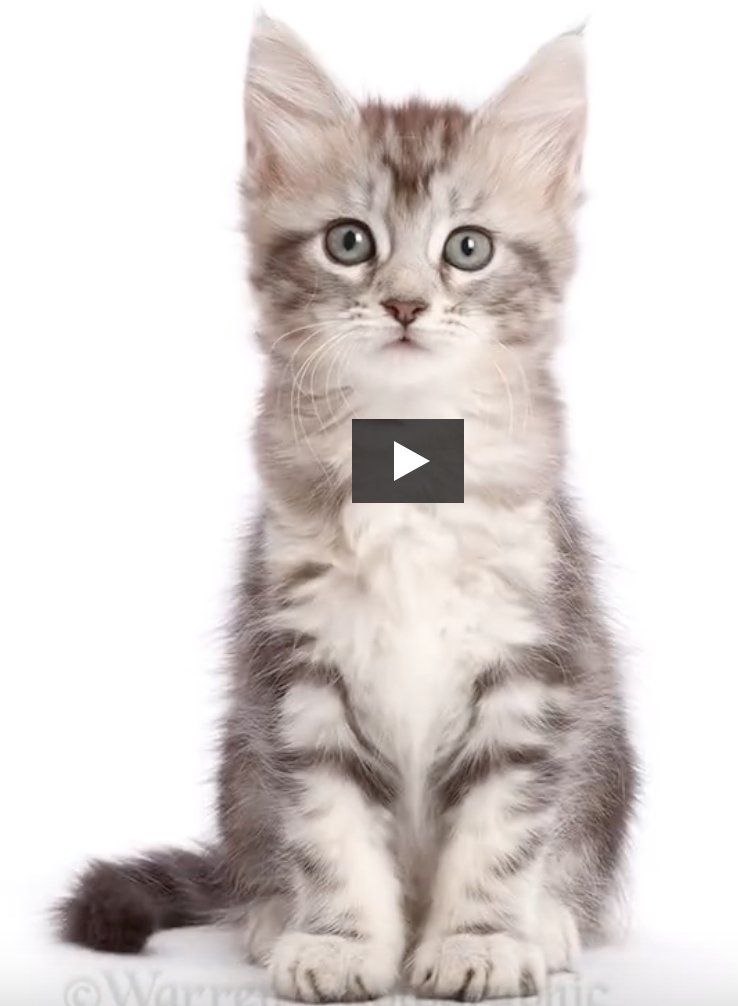
Here is one of her Saturday Morning Cartoons……in additional to being brilliant, she is also a cat lady.

Kitten to Cat to Kitten Video
Ladyada, By TechCrunch
0

Lakes


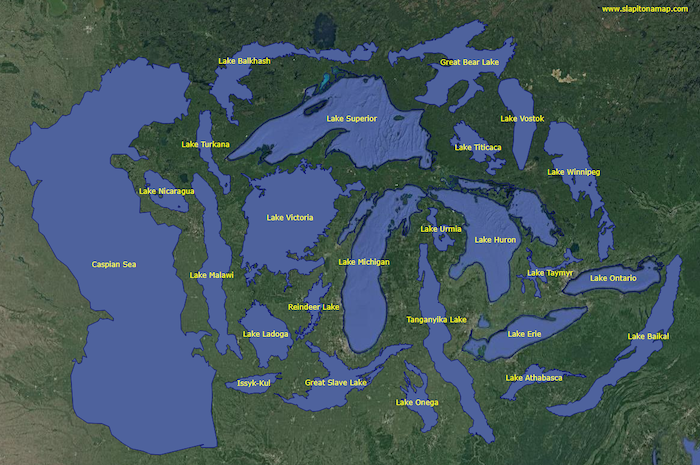
Image from www.slapitonamap.com

Lakes are fluid in more than the literal sense. They change size and even disappear. Any list comparing the size of the world’s largest lakes will change…even in the short span of a few decades.

This is how I have come to live on the shores of the world’s fifth-largest freshwater lake as measured by surface area. When we purchased our lake lot 40 years ago, Lake Michigan was only in sixth place. To be blunt but factual, the Soviet Union destroyed the vast Aral Sea, thus moving Lake Michigan up the list.

Before the 1950’s the Aral Sea was the world’s fourth-largest lake. By 1997, it had shrunk to 10% of its original size and split into four lakes. By 2014, the eastern basin had completely dried up.

The destruction began when Soviet engineers began diverting the two mountain rivers, the Amu Darya and the Syr Darya, that fed the lake with snowmelt. The goal was to grow cotton in the desert. The cotton bloomed, but the Aral Sea fishing economy collapsed. Coastal towns found themselves high, dry, covered in blowing salty dust and suffering from hotter summers and colder winters.

The uptake here appears to be, “Never underestimated the ability of people to destroy the environment.”

Our Lake Michigan level is at record highs this year. Our beach has disappeared and half of our stairs have been claimed by the waves, but we are not complaining. We’ve got water.

0

Pup

A friend recently sent us a minute-long video she recorded. It depicts an amazing moment and begs to be shared. But first, here is a bit of background information to make it even more enjoyable…if that is possible.

Bats are marvelous creatures. The only true flying mammals (squirrels glide) they fly with their “hand wings”. The bones in their wings are elongated finger bones with small thumbs used for climbing. Thin, fragile skin membrane fills the space between the fingers. Anatomically, bat flight and bird flight are totally different mechanisms.

To understand how a bat flies, just mimic the arm motions of the butterfly breast swimming stroke. Bats row through the air. Strong muscles in their backs and chests enable them to create an up-stroke and powerful down-stroke.

A bat mom gives birth hanging upside down from her perch and catches her blind and furless pup in her wings. She has only one baby, but it’s a big one, about one-third of her weight. Mom cradles her pup in her tail pouch.

Like all mammal mothers, mom nurses her baby and it grows fast. Pups start learning to fly after 3 weeks. By 6 weeks they can catch insects by themselves and no longer need mom’s milk. By three months they are independent.

One huge danger lurks for mothers and pups. The bats in a majority of species cannot take flight from the ground. They must drop down 2 or 3 feet before they can fly. So a pup who falls to the ground from its roosting site is in serious trouble…mom can’t come to its rescue.

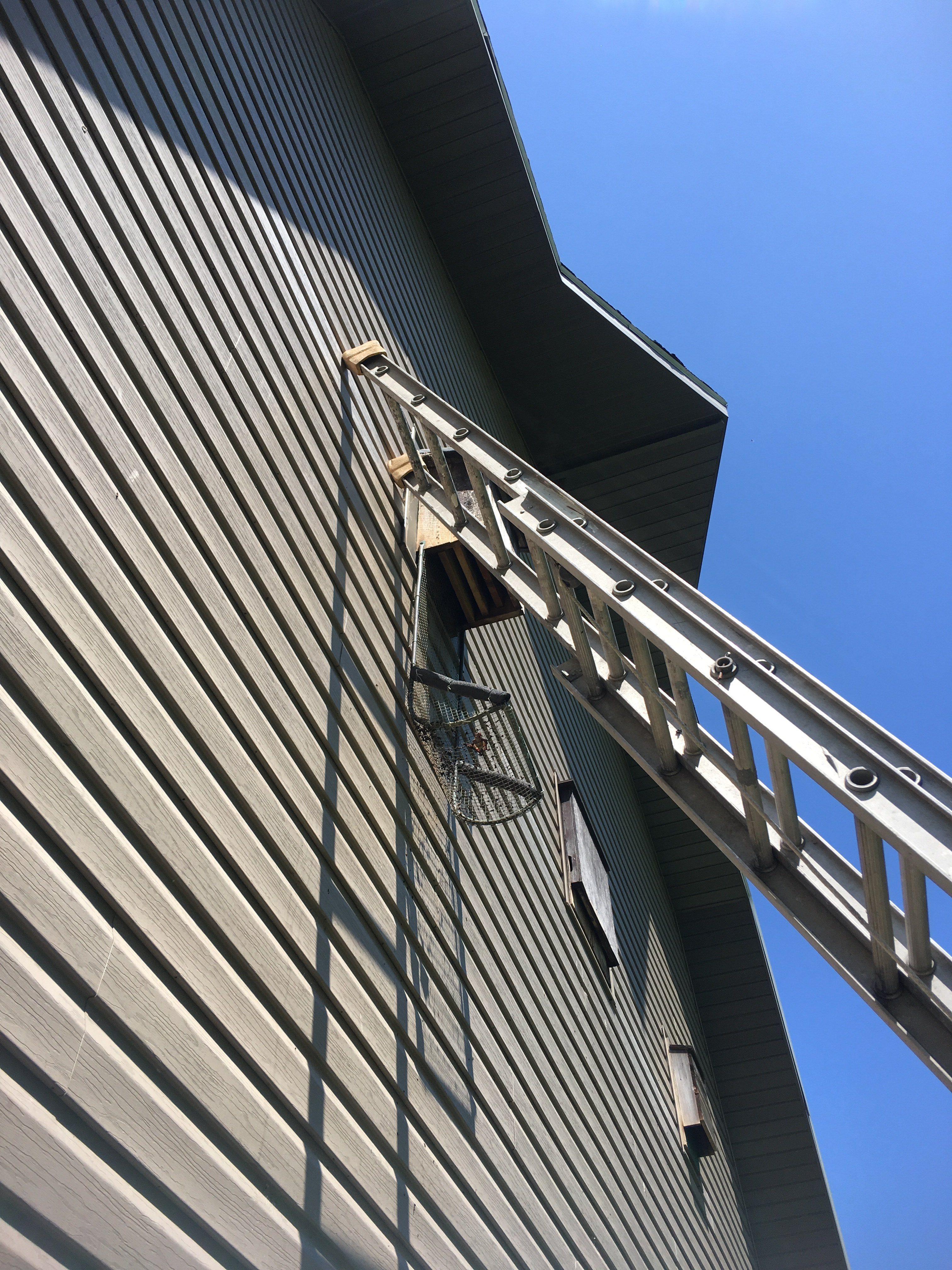
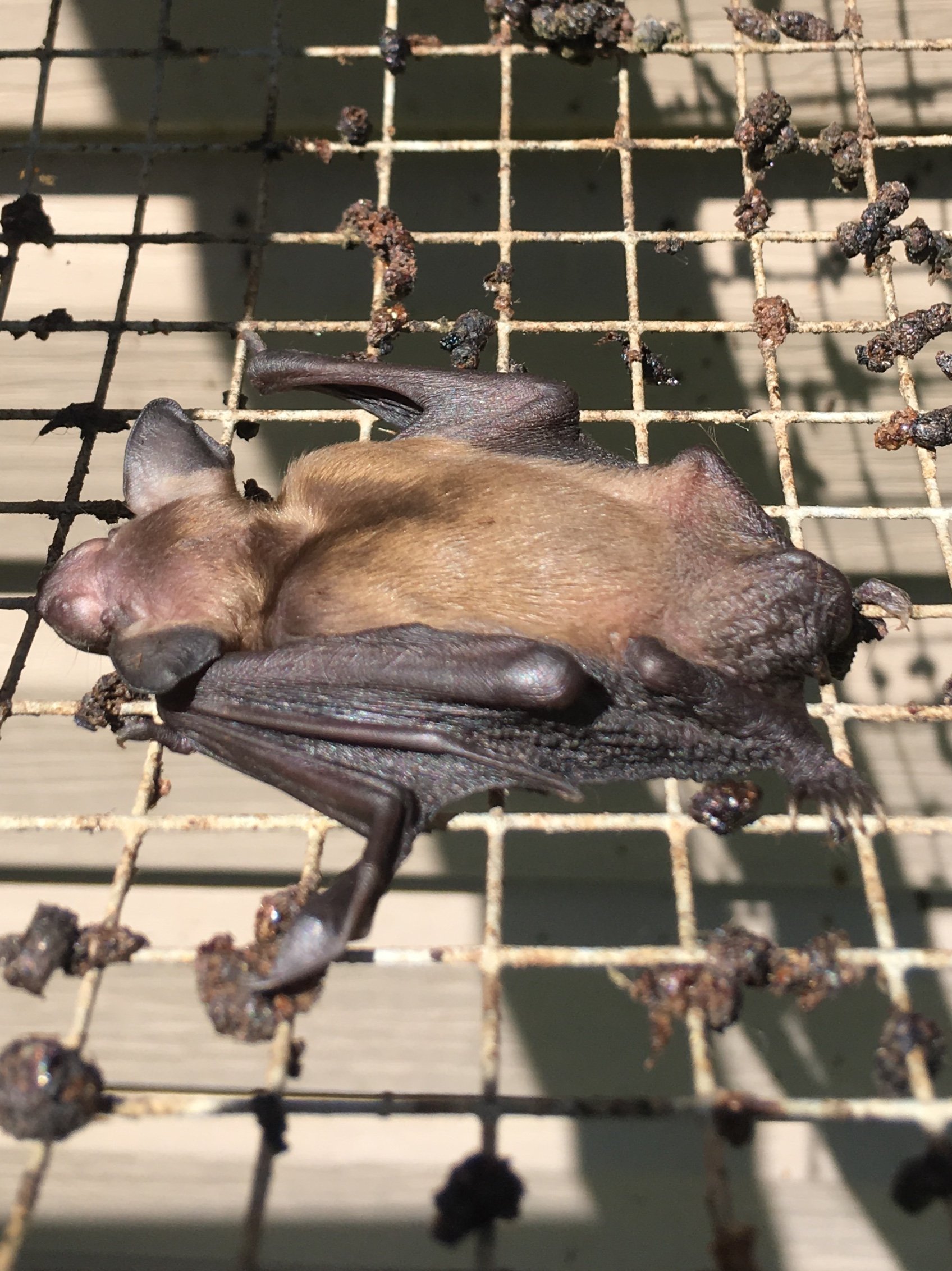
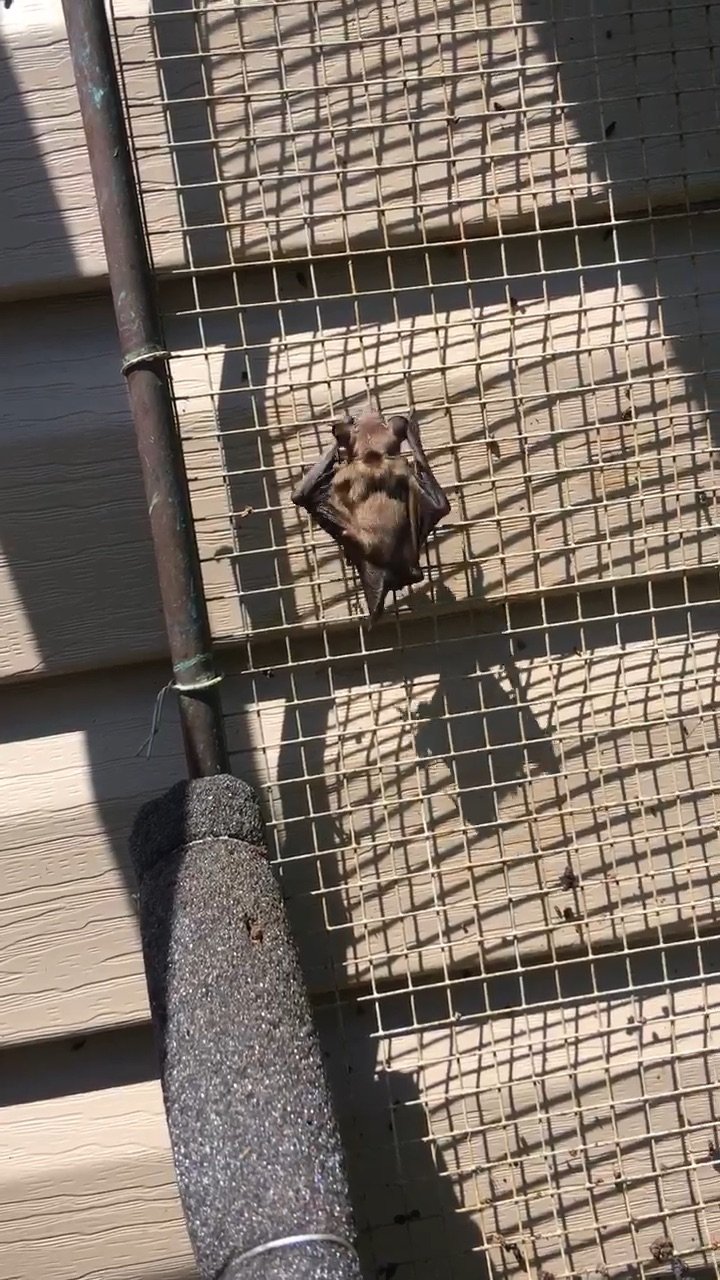
See how this pup solves its problem….thanks to its thumbs and a well-designed bat nesting site.


A bat pup has fallen out of its bat house on the side of our friend’s home. Our friend climbs the ladder to the pup catcher and describes what happens next.

Lots of squeaking from box above. One more look before I take her out of there… Before I can do that, watch what happens as the pup suddenly gathers herself up and…” (click here or on picture below)


0