Phenology

The other day I saw an advertisement for a 2022 calendar with a picture of sandhill cranes and the title of Phenology. Being clueless about that word’s meaning, I immediately looked it up. Here is the definition:

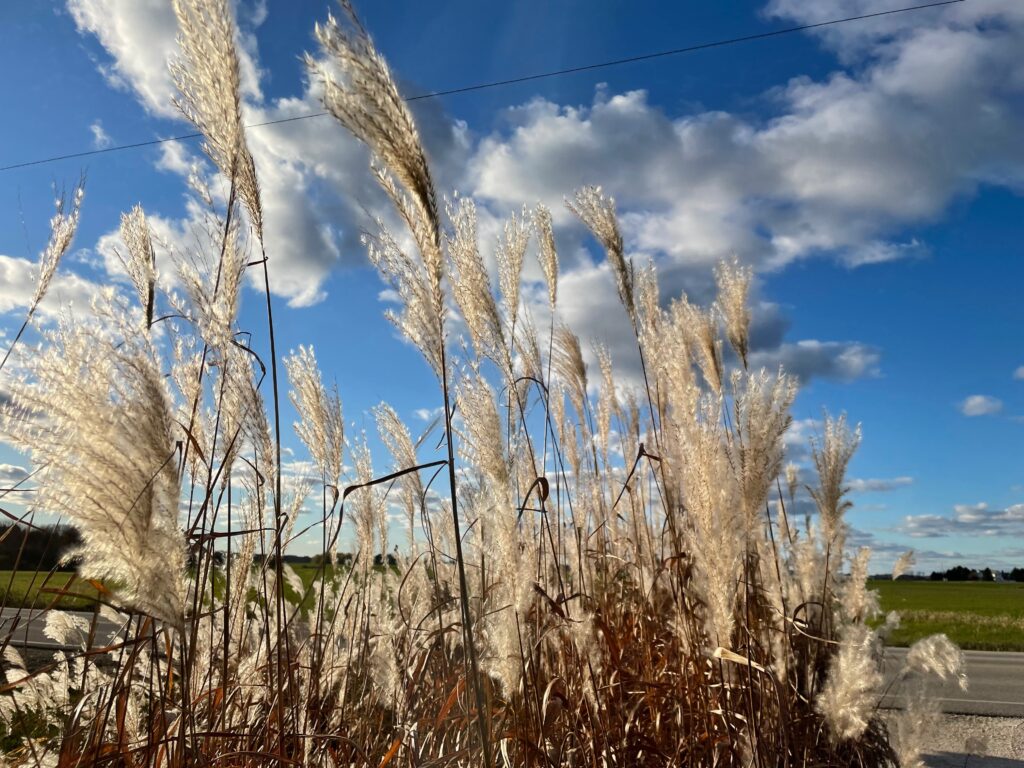
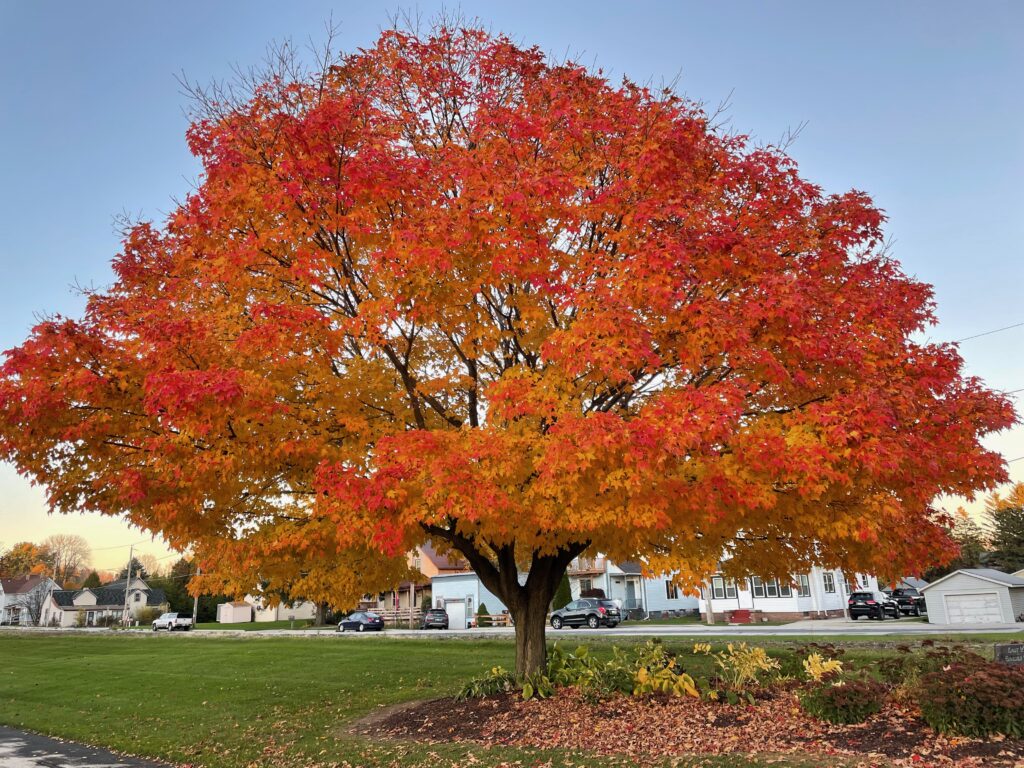
Phenology is principally concerned with the dates of occurrence of natural events in their annual cycle. Phenology is nature’s calendar- when cherry trees bloom, when a robin builds its nest and when leaves turn color in the fall.

I had to smile when reading this definition. Although I was completely unaware of the word, I’ve been completely involved with phenology for the past fourteen years. Every morning I write one or two sentences about something I have observed in the natural world from the previous day. The idea for this journal came to me after reading about someone in the 1800s keeping daily nature notes for decades. The practice is a gentle reminder to live with nature instead of being oblivious to the great show swirling around us every day.

This morning’s entry was brief but major: “First frost in the meadow last night, but the marigolds are still with us.” Other recent observations note that the chipmunks are still up and active, fewer cardinals are in the yard and a beautiful buck has been dining in the Tooley Cafe.

After discovering the word phenology, I became curious about its origins. The word “phenology” is from the Greek “phainomai” which means “to appear, to bring into view.” The word was coined in 1849 by a Belgian botanist, Charles Morren. He gave the name to what people have been doing since ancient times, being acutely aware of seasonal occurrences. It was necessary for survival. If they planted their crops too early or late, they starved. If they ignored the annual rise of spring waters, they lost their homes or lives.

The same is true today. Global climate change is playing havoc with nature’s clocks. Animals have to adapt quickly to the new patterns to stay alive. This applies to us as well. Since all of us are in the animal group (although many kids often insist this is not true when I mention it in my natural science programs) we will have to make many changes as well.

In nature, as in our personal lives, timing is everything. Here is how nature’s time clock is ticking in our neighborhood now.
2

Pumpkins

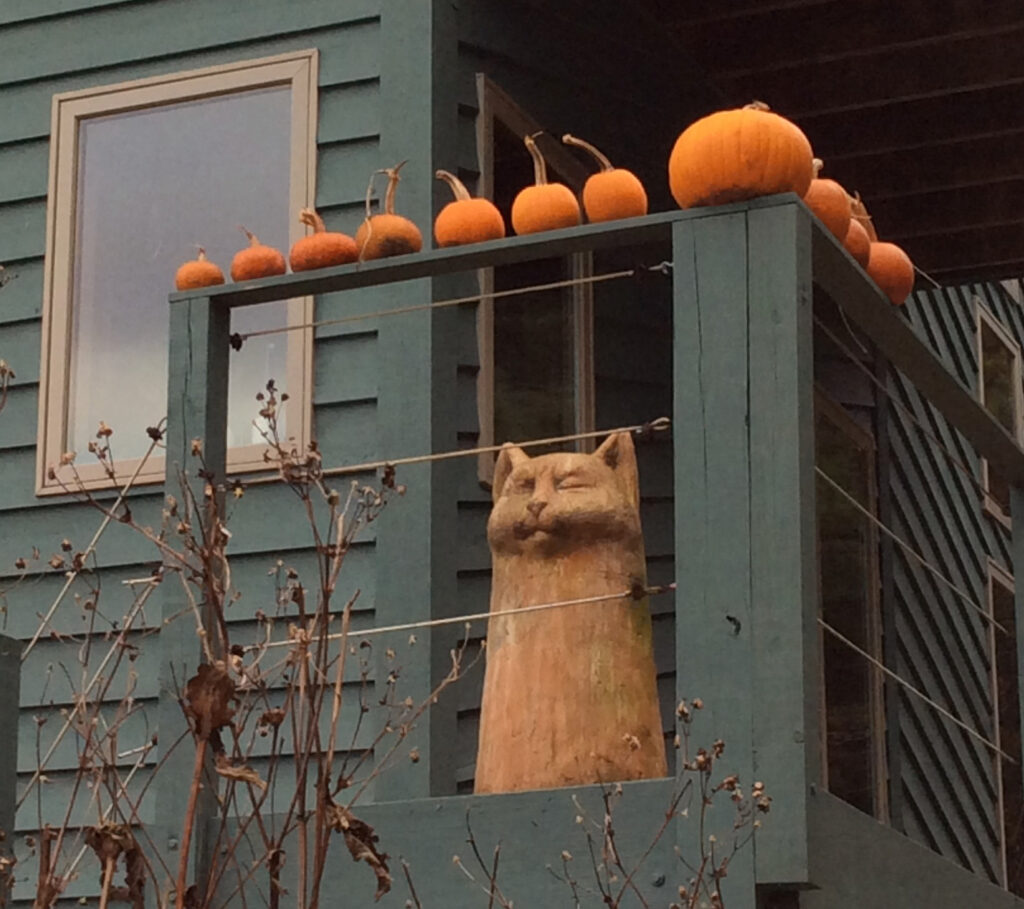
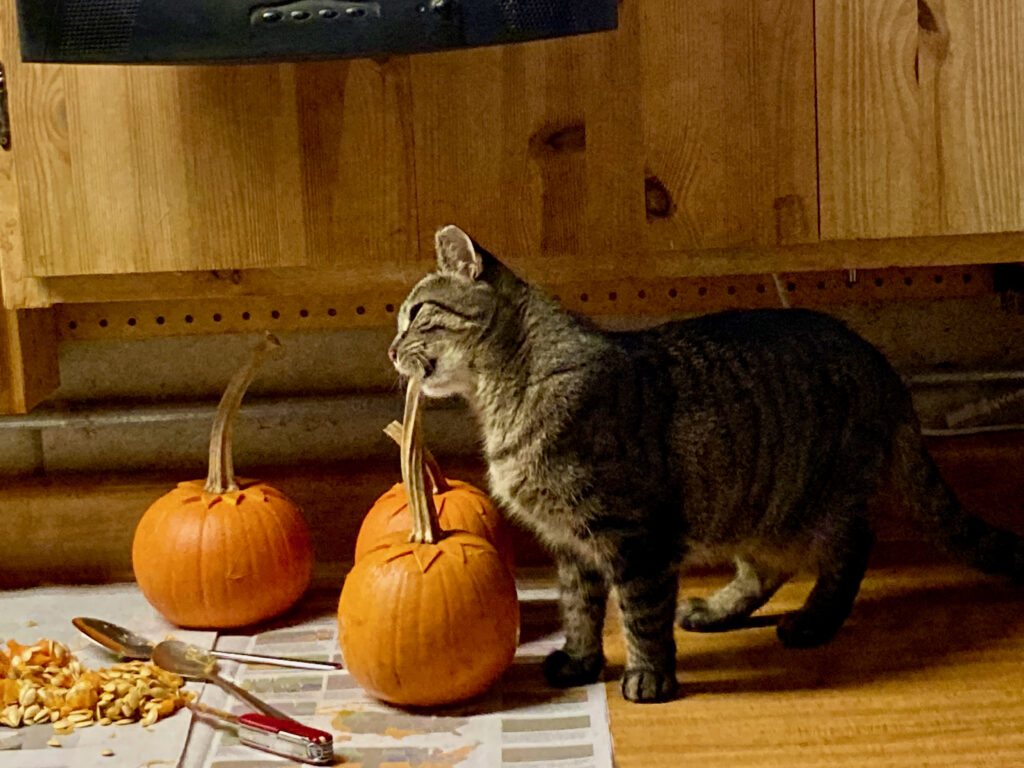
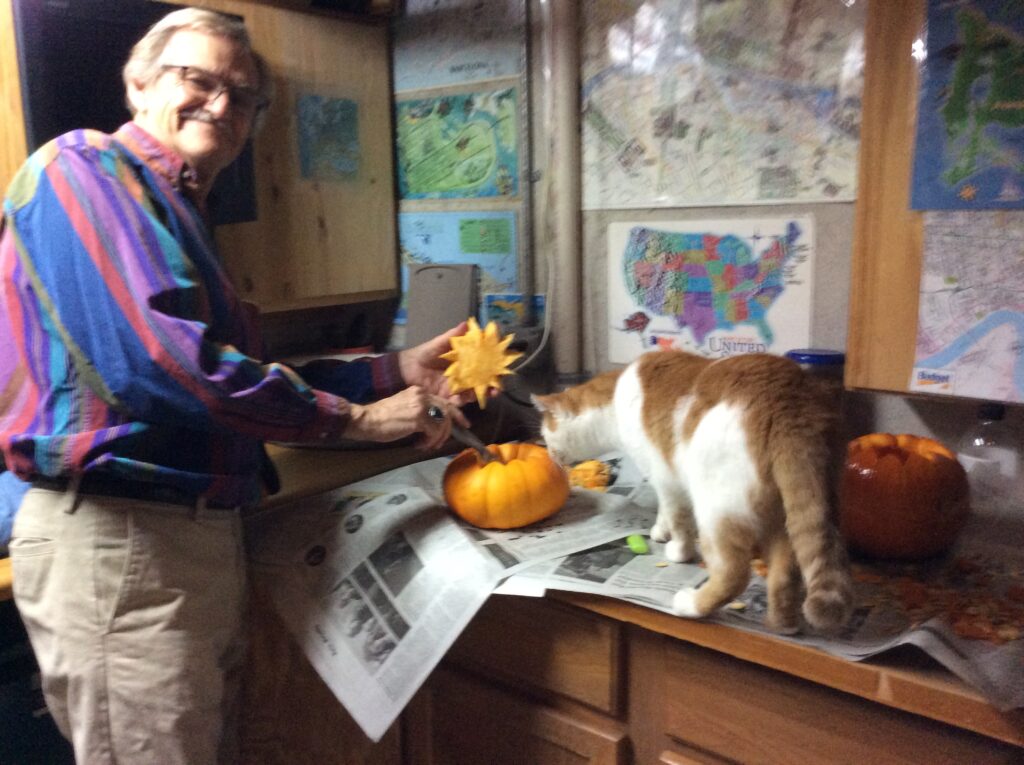
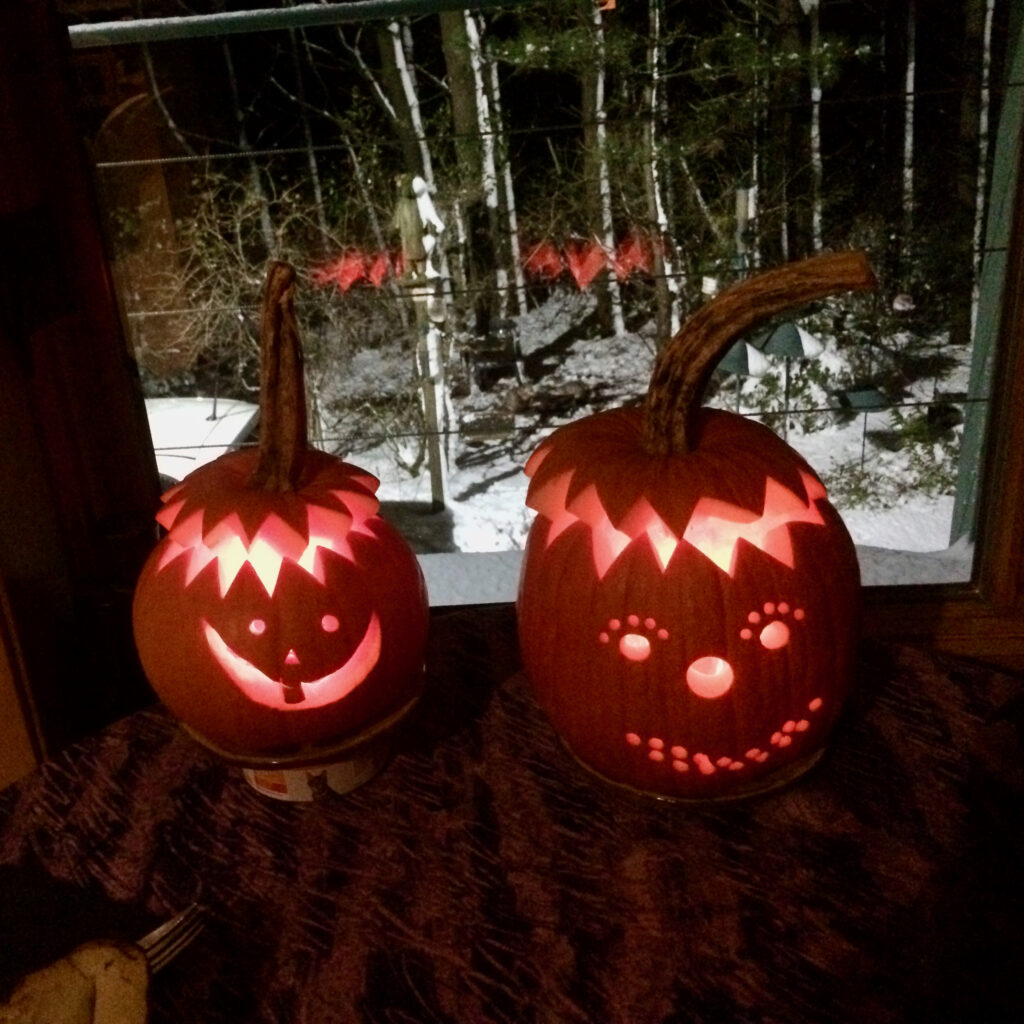
It’s impossible to go anywhere these days and not run into pumpkins. Everywhere in America, but especially in the Midwest, fall wouldn’t be fall without this tidal wave of jolly orange globes. The time is right for a dose of pumpkin history and trivia.

  • Natives to North America, pumpkins are a pre-Hispanic crop that dates back over 7,500 years. Central America (which is geographically a part of North America) and southern Mexico are believed to be their birthplace. Archeologists have discovered ancient seeds in the Oaxaca highlands of Mexico. Pumpkins are cultivated on every continent now, except Antarctica.
  • Native Americans were growing pumpkins even before they cultivated corn and beans.
  • The word “pumpkin” comes from the Greek word for large melon or pepon. The French turned this into pompon, the English into pumpion which then morphed into pumpkin.
  • In 1584, Jacques Cartier was exploring the St. Lawrence region and reported finding “gros melons”. The French explorers subsequently introduced the pumpkins to France and from there they went across the Channel to England. The Europeans quickly figured out that pumpkins made great pies. Recipes for pumpkin pie have been found in 17th century English cookbooks.
  • The earliest pumpkin recipe in America probably wasn’t for pies. The Pilgrims and early settlers hollowed out pumpkins, filled the shells with milk, honey and spices and baked them.
  • In today’s world, China, Russia and India account for 53% of global pumpkin consumption. We Americans carve them more than we eat them. To be precise, only 1/5 of the pumpkins grown in our country are processed into canned pumpkin. Morton, Illinois claims to be the “Pumpkin Capital of the World”. Libby’s processing plant is located there.
  • Botanically, pumpkins are simultaneously a fruit, a squash and a member of the Curcurbita family of plants. Other family members include cucumbers, honeydew melons, cantaloupe, watermelons and zucchini.

Enjoy your pumpkins whether they are decorations, Jack-o-lanterns, pie, bread, soup, roasted seeds or the edible flowers. We are all happier because of them.

1

Gopher

It’s football season again, a sport I know nothing about. The game has been described as a healthier alternative to war, and that does make sense to me. Why else would guys violently bang their heads and bodies together over a piece of pigskin?

One thing about football does intrigue me. Why does our neighboring state of Minnesota have a football team with the absurd name of the Golden Gophers? The mascot of the University team is Goldy Gopher. Not many people would rate gophers as macho, charismatic animals. So I did some digging (pun intended) and dug up the origin of this funny moniker.

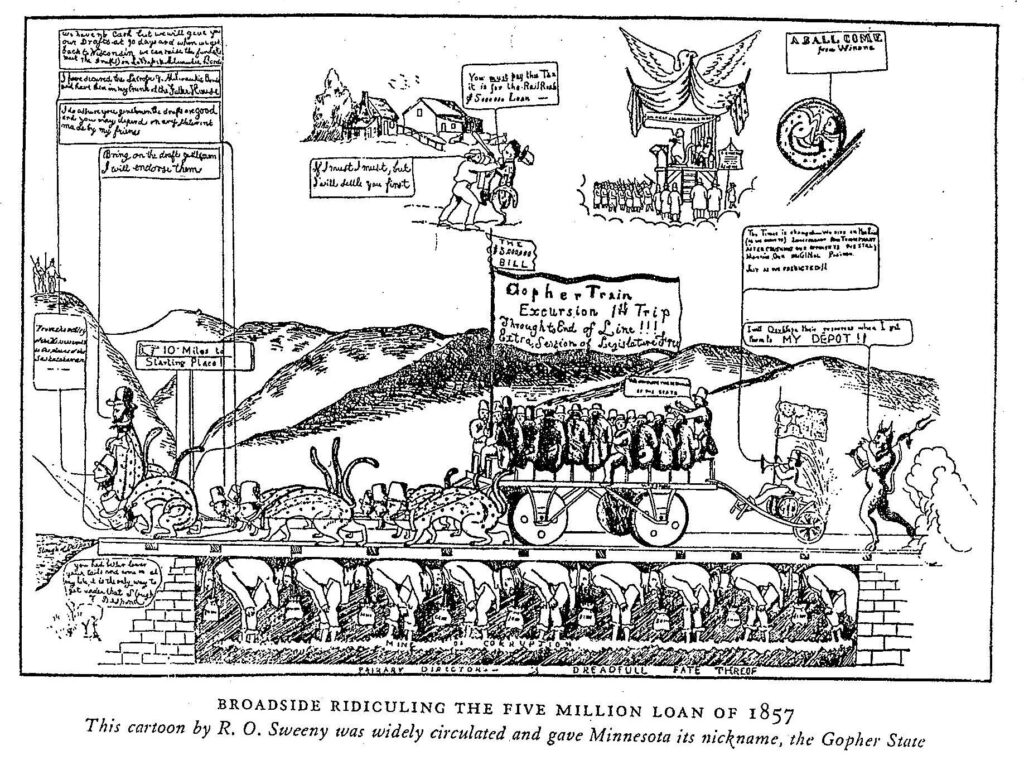
The nickname for the entire state of Minnesota is “The Gopher State”. According to the Minnesota Historical Society, this came about because of a railroad and a political cartoon. In 1857, the United States government granted land to Minnesota for the purpose of building a railroad. The state had to supply the money for the train itself. Proponents of the train lobbied the state legislature to amend the state constitution to allow the state to issue $5,000,000 in bonds to construct the railroad. Opponents of the train produced a political cartoon of a train car filled with bond holders being pulled by gophers who had the heads of legislators. Each gopher had a heavy $10,000 bag of money around its neck, an obvious reference to digging for cash. The train was built, and shortly after the phrase “Gopher State” was coined and made the official state nickname.

Photo: Minnesota Historical Society

The University of Minnesota got the Golden Gopher name because of a radio announcer. In the 1930s, the football team announced new uniforms featuring gold colored jerseys and pants. At the first game in their new attire, announcer Halsey Hall referred to the team as the “Golden Gophers.” The name stuck. There is not now, nor has there ever been a real animal named a golden gopher.

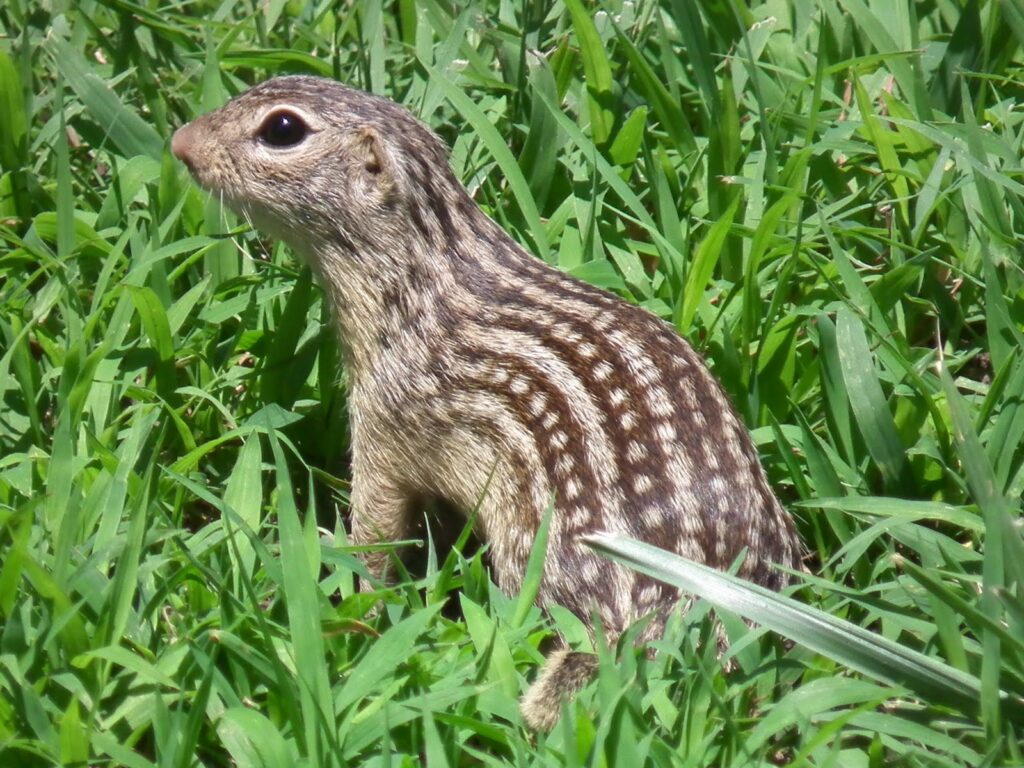
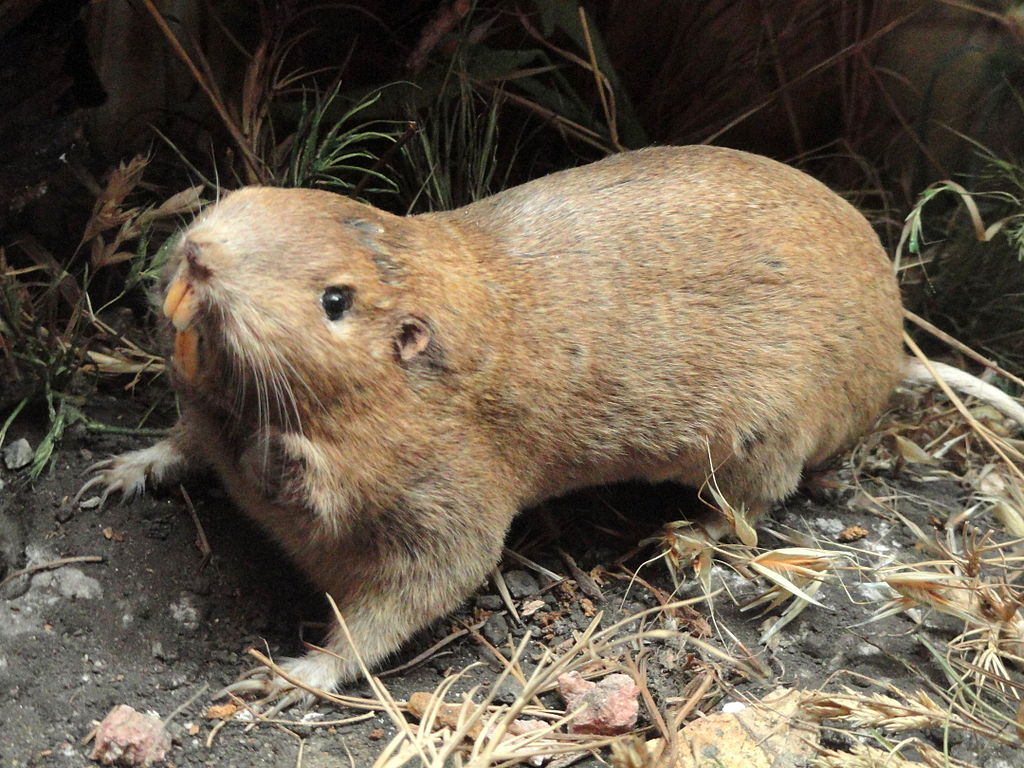
And this narrative gets even sillier. The Goldy Gopher mascot is not really a gopher. The artwork was based on a thirteen striped ground squirrel, a separate animal from a gopher. Its stripes are the giveaway. Real gophers don’t have stripes. For the record, Minnesota does have real pocket gophers as well as thirteen striped ground squirrels.

Thirteen striped ground squirrel. (Photo: http://warrenfromkansas.blogspot.com)
A real pocket gopher. Not a stripe in sight.

I must also note that gopher mascots have invaded the famous Minnesota State Fair. Their names are Fairborne and Fairchild.


1

Eat

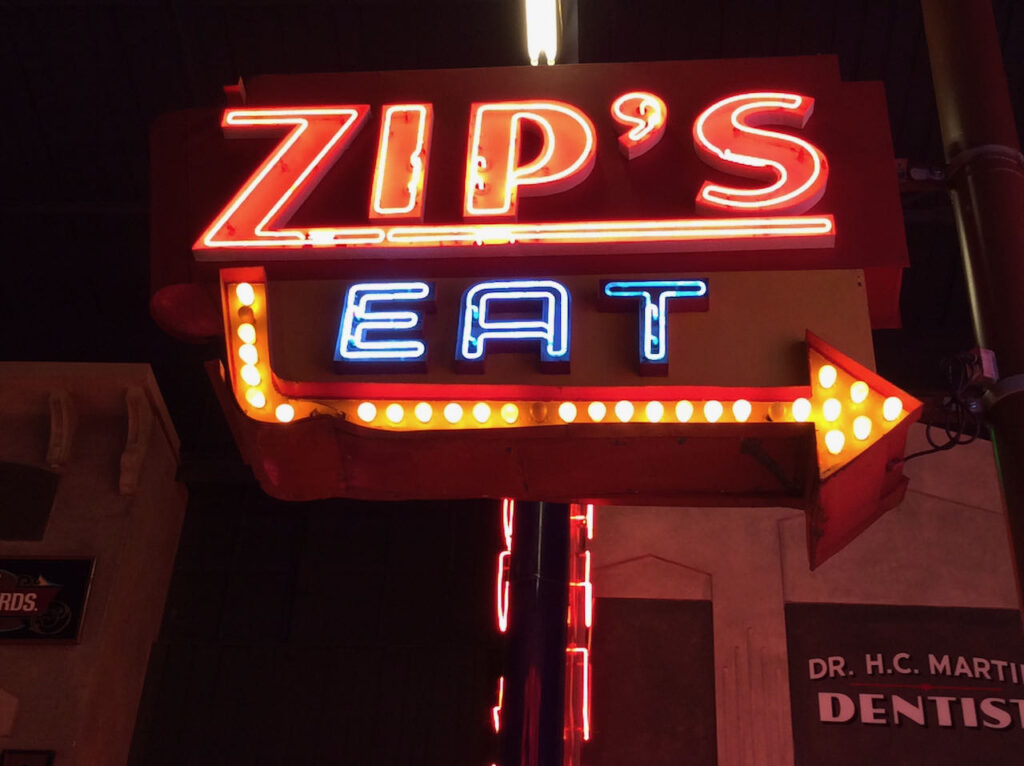
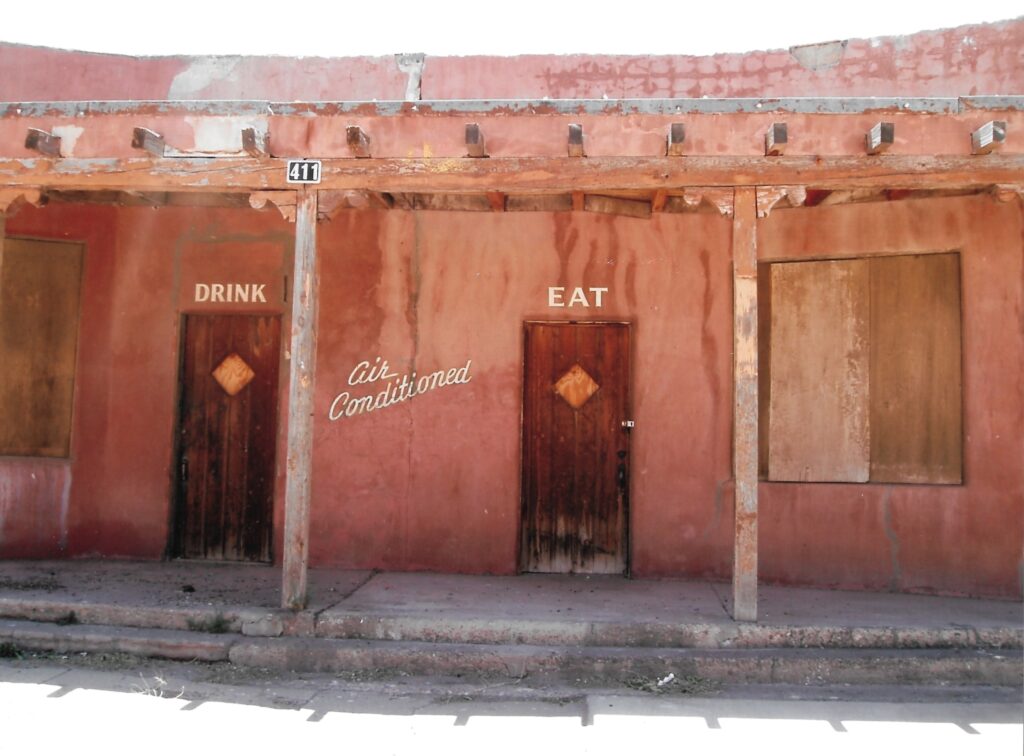
Things were far less complicated and convoluted in the last century. Diners, restaurants and bars in the 1940s and Depression-era would hang out signs that said “Eat” or “Drink”…perfectly edited messages. What could be more explicit?

Many restaurants now appear to be vying with each other to come up with cute and ridiculous non-food-related names. For example, we have The Blind Horse, The Horse and Plow, The Black Pig, The Silver Fern, The Fat Seagull and The Chubby Seagull all in our vicinity.  Anyone who has ever observed real seagulls eating would not consider frequenting a seagull themed eatery.  

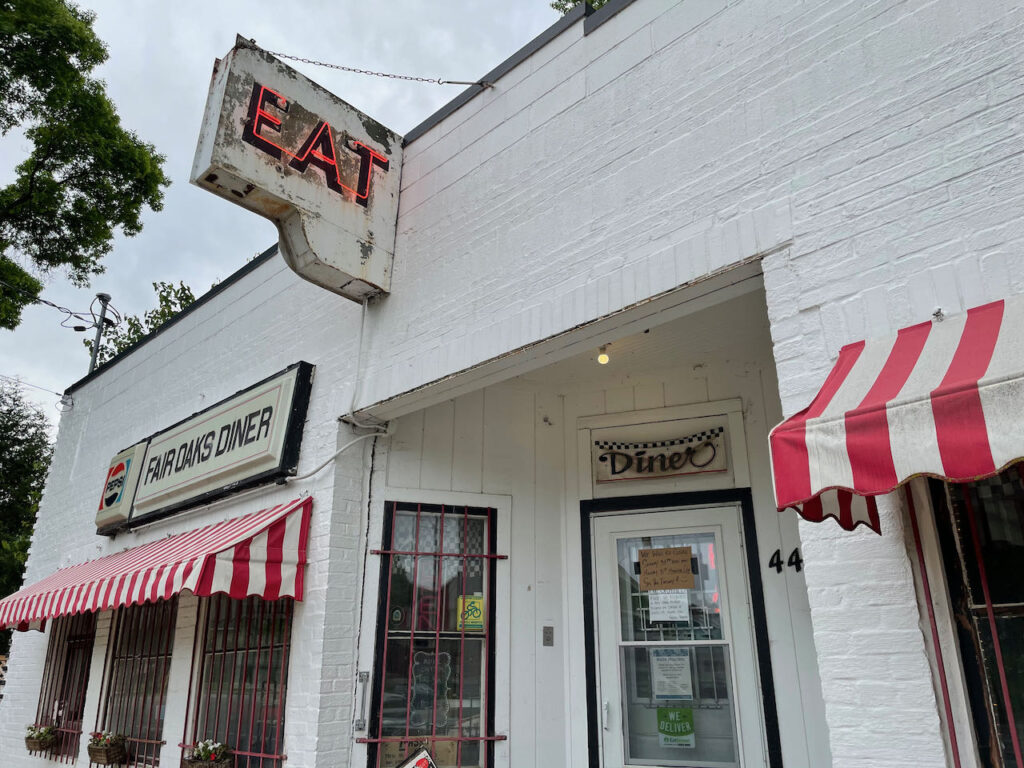
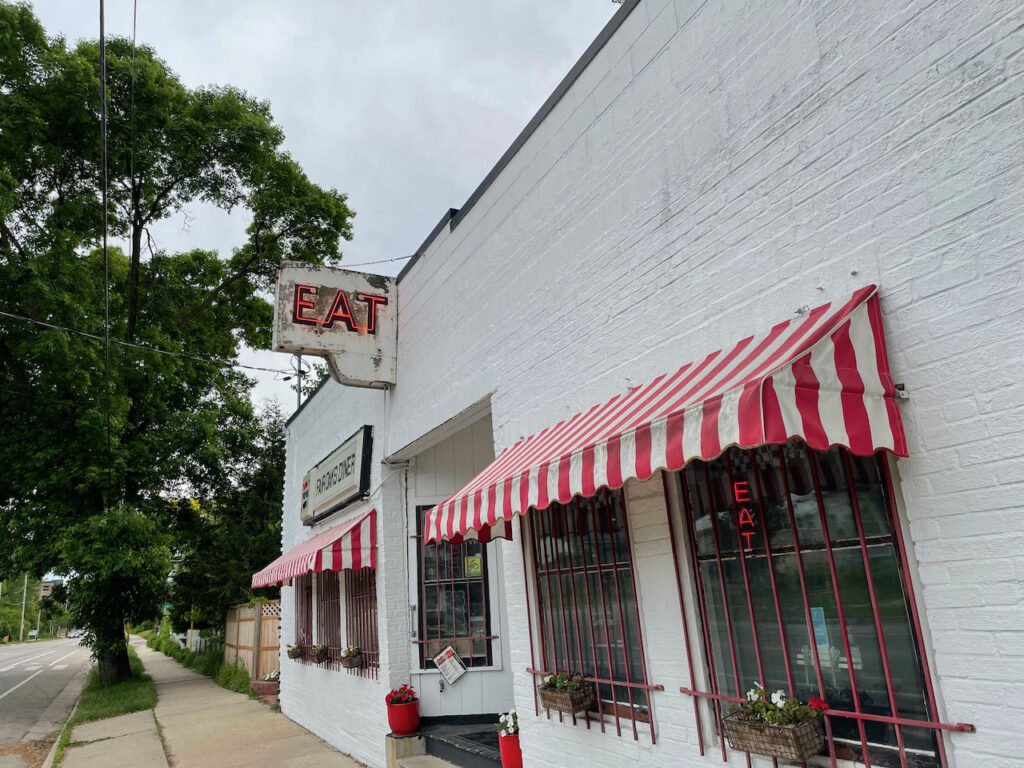
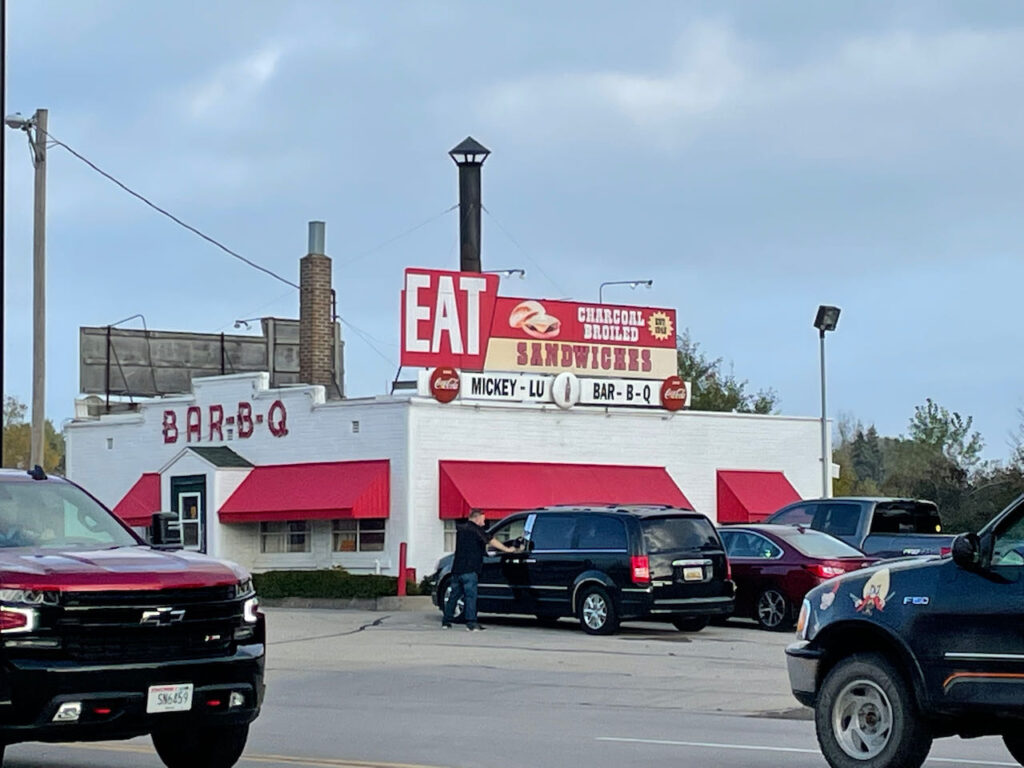
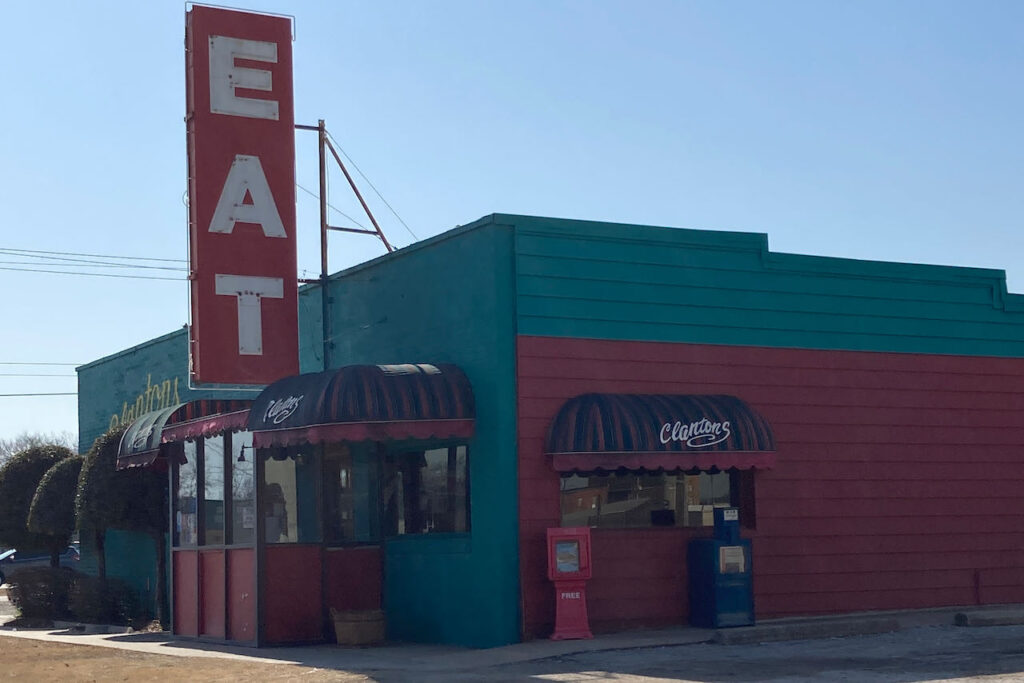
My husband and I love taking road trips and spotting aging restaurants with their oversized Eat signs. Here are a few that we have come across in our travels and recorded. I’m positive that hundreds more of these unsubtle yet concise enticements to indulge exist across America. They are out there just waiting to be photographed. I’m on a mission to take pictures of the ones we’re lucky enough to encounter.

If you would also enjoy a scavenger hunt for these antique signs and diners, please add your photos to this blog. You might even be brave enough to go inside and EAT.

Fair Oaks Diner – Madison, WI
Note the second EAT sign in the window.
Marinette, WI… Checkout all those cars, this is a popular place.
Vinita, Oklahoma, on Route 66. Unmissable!
A restored sign in the Cincinnati American Sign Museum.
Photo taken in Carrizozo, New Mexico. Definitely needs restoring.
5

Chipmunk

Every morning, without fail, my husband takes two brimming buckets of sunflower seeds and one of corn out to the Tooley Cafe, our on-site animal restaurant. The bird feeders get filled, the deer table replenished and a small, low table for the ground feeders is heaped to overflowing. All diners at our Cafe have food security.

In return, we are provided with endless entertainment as we watch the action from our kitchen table. Lately, the chipmunks have been racing like crazy, chasing each other like a bunch of pent up kindergartners let loose on a playground. They run each other off the seed table somehow knowing that soon they will be underground in their burrows for long, winter naps. It’s time to stuff themselves.

Since we have been watching and enjoying the chipmunks for many years, we assumed we had garnered a great deal of knowledge about chipmunk behavior. That delusion ended last week. I walked in the door and my husband said to me, “I can’t wait to show you this video I took when I looked out the kitchen window over the sink.” The view is of our 9 to 11 foot high cup plants which have gone to seed.

Apparently, the treats in the Cafe needed to be supplemented. Who knew that chipmunks could live the high life? We thought that was only for their cousins, the squirrels.

2