Spenser

Only Robert B. Parker could write a line like this….”she smelled like a French Sunset.”

Last January I was on a flight to Florida with the best of all possible treats in my carry-on, a brand new Spenser novel by Robert B. Parker. But I decided to be good and read a backlog of New York Times before I succumbed to the pure pleasure of Parker’s prose. I subscribe to deferred gratification.

Seconds later, the tidal wave hit. “Robert B. Parker, Best-Selling Mystery Writer, Dies at 77”, the Times’ obituary read.

“This couldn’t have happened,” my mind insisted, “Spenser is immortal.” I truly believed that the ever macho, ever gallant, ever gourmet, beer-drinking Spenser always would be my airline companion. No matter which direction the plane was headed, I would be in Spenser’s Boston. Now the voice of Spenser, Susan, Hawk and Pearl was gone, and I felt bereft.

Sadness inspires action, and a few weeks later, I came up with a plan. I would read or reread all of Parker’s 39 Spenser books starting with The Godwulf Manuscript which was published in 1973. Thanks to my local library and Amazon, I have access to every volume.

I’m up to A Catskill Eagle (1985), and  I’m having a splendid time. I am also open to any suggestions about whom I should take to the airport when my Spenser marathon is completed.

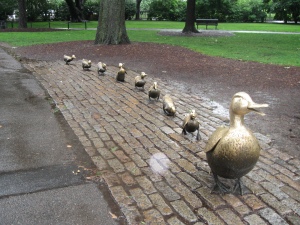
Boston has a charming, petite monument to another group of its fictional heroes. Look carefully in Boston Public Garden and you will find Mrs. Mallard and her eight ducklings from Robert McCloskey’s beloved 1941 children’s book, Make Way For Ducklings, cast in bronze.

I think a statue of Spenser in the park would be in order. Pearl, the wonder dog, would look good in bronze as well.

0

Landlords

Last Friday we once again became landlords. Our tenants arrived early in the morning, checked out their little rooms and flitted off for lunch. We are delighted to have them back.

Our renters are Purple Martins, the largest swallows in North America. Despite their name, martins are blue-black (male) or blue-gray top and dirty gray belly (female).

Hundreds of years ago martins in the eastern United States were attracted to hollowed out gourds that the Native  Americans put out for them. Now all eastern martins are dependent on supplied housing for nest sites. In the mountainous areas of the West, martins use traditional nesting spots such as tree cavities or old woodpecker holes.

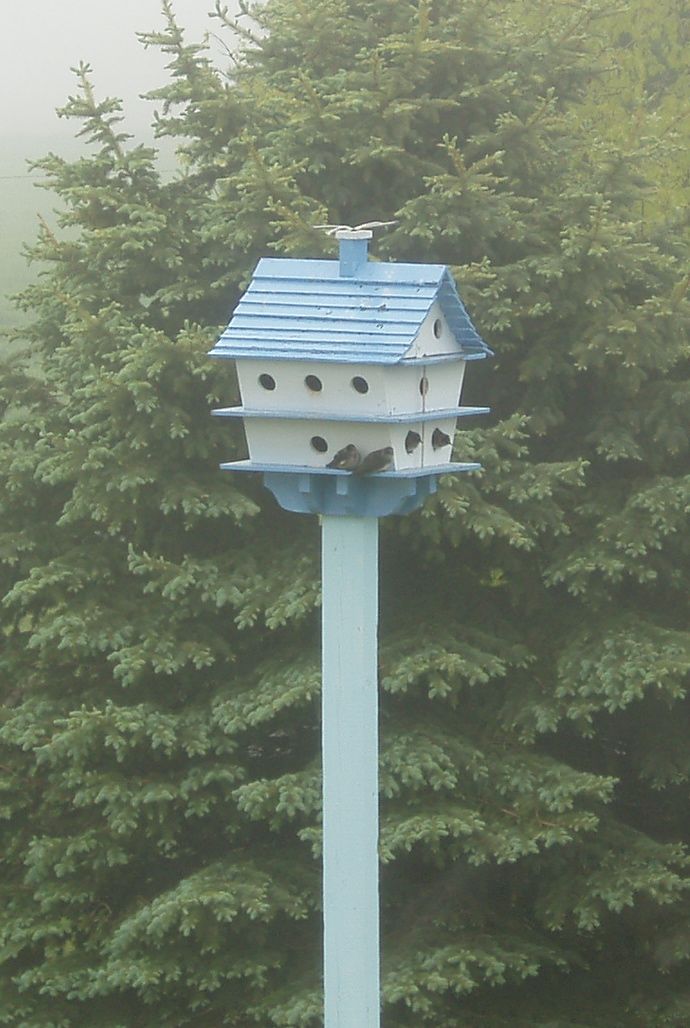
Our handsome blue and white martin house was a gift from our catsitter extraordinaire. She offered to give us the house and put it up in spring and take it down in fall. We couldn’t resist a deal this good.

The three story mansion we inherited was made by our friend’s father out of recycled county highway signs. It graced her home on our road until she moved many miles away from Lake Michigan. The martin apartment moved with her, but the martins didn’t follow. They obviously preferred their lakeshore lifestyle.

So we became caretakers of the apartment house. Several years passed, but last year the martins took up residence in our yard. We truly understand why people love these birds… they are enchanting to have around. From dawn to dusk they are gracefully swooping all around scooping up insects. Dragonflies are a particular favorite. But it’s their cheerful songs and chirps that are so exceptional. It would be hard not to be happy when your yard is filled with martins.

By mid-August, with sex and child-rearing accomplished, our martins will depart en masse for a leisurely winter in South America. Some go as far as Brazil. I wouldn’t mind spending a winter in Ipanema myself.

0

Lactococcus

How was I to know?

Lactococcus lactis is part of my “culture and heritage”. Does that make me uncultured for not knowing about this culture’s importance, or, to be honest, not knowing about it at all? L.lactis is the microbe which changes milk into many varieties of cheese.

The Assembly in my fair state, Wisconsin, has passed a bill designating Lactococcus lactis as our official state microbe. Since our State Senate has yet to vote, Lactococcus is lobbying hard. How many other bacterium have their own home pages? (The Lactococcus lactis Home Page)

At the risk of sounding like a disloyal cheesehead, I am a bit upset about the designation. The fact that my state has been made a laughing stock by the media doesn’t faze me. Living in a place where people don large wedges of foam cheese on their heads, I don’t fret much about the state’s image.

No, I am upset because the candidate that I am backing for state designation is languishing in some committee over in Madison. How can our state go ” Forward” (our state motto) when we have not made cheese our  OFFICIAL STATE SNACK?

I am proud to know the guiding light behind the “cheese as state snack movement”. She does not own a large cheese plant. The woman who got the cheese ball rolling is one of the best teachers of fourth grade Wisconsin history I’ve ever meet. She’s recently retired, but,  for many years, every kid who set foot in her classroom in September emerged as a young history buff in June. She immersed them, and they are all Badgers for life. Furthermore, her students know why we are called Badgers. (The early lead miners who flocked to Southwestern Wisconsin initially lived in holes in the ground just like badgers).

Numerous field trips were part of her curriculum. I was lucky enough to accompany many of her classes on “The Frank Lloyd Wright, Cheese Factory and U of W Ice Cream Plant Tour.” That is how I, at the age of 55, finally learned how cheese is made.

Before she retired, this teacher and her class got the idea to nominate cheese as the official state snack. Letters were written, representatives were contacted and hearings attended.

I seriously doubt that the microbe is happy about all the fuss being made about it. I do know these kids would be thrilled if their bill passes. They are eighth graders now and are still attending hearings with their retired teacher.

Unfortunately, I know how the kids can get some action. They need to have a massive bake sale and donate all the money to the campaign funds of numerous state legislators. Now that would be a realistic civics lesson.

0

Control

Home Control struck again last night. We had just gotten settled upstairs in bed when all the downstairs lights turned themselves on. I groaned and started to get up. “Stay put”, my husband said. “They will turn themselves off at 1:00AM.” I put the covers over my head.

I try to be a patient woman. However, my patience has to be put on overdrive when it comes to Home Control.

My husband has an abiding interest in both computers and electronics. They come together in his beloved hobby called Home Control. He spends many happy hours writing programs to make our entire house a computer wonderland. Home Control friends all over America aid and abet him via computer. I find this a much better guy hobby than shooting defenseless deer or watching 12 straight hours of football games.

When Home Control is behaving, pleasant results occur. For example, I will start to walk down the basement stairs and the lights will automatically turn on. Or the sprinklers magically water the yard by turning themselves on and off at timed intervals.

The problems ensue when the Home Control programs are in the development stages or when the power is interrupted. Then Home Control takes on a life of its own… rather like artificial intelligence with a low IQ.

I will be up to my elbows in soap suds washing the dinner dishes at 10:00 at night when, viola, the entire house is plunged into darkness. I dry off my hands, grope for a light switch, and turn on the lights. This scene is repeated four times in a row. Then I yell to my spouse, “What’s going on here?”

“Home Control thinks we should be in bed at 10:00PM,” he calmly replies.

For a period of four months our dining room light only turned on from a remote switch stored in an empty dog dish downstairs in the garage. Home Control was having some difficulties distinguishing the automatic sprinkler switch in the garage from the dining room switch. Guests were perplexed when I had to go down to the garage so they could see their dinners.

I’ve received several comments from neighbors who have observed us wasting water by sprinkling full blast during rainstorms. I assure them this is out of my control. I have absolutely no idea how to rein in Home Control… pun intended.

Finding computers challenging and electronics a complete mystery, I’m in the same position as Dave in the final frames of the movie 2001. The onboard computer, Hal, calmly says, “I’m sorry, Dave. I’m afraid I can’t do that.”

0

NOLA

My husband and I do not chase fire trucks to watch buildings burn. If we can’t be useful, we stay out of the way. That’s why it took us over five years to revisit a city we both love, New Orleans.

A few months ago, we simultaneously arrived at the same conclusion: the time was right to return. Our decision was not made without trepidation. We knew we could end up with a bad case of the post-Katrina blues.

But after three days of walking and driving to every corner of NOLA, we are definitely not feeling lachrymose. More than ever, I feel the National Trust for Historic Preservation should simply put the entire town on the Register of Historic Places. Every neighborhood in New Orleans is steeped in architectural and cultural riches. I was appalled after the flood when some Americans wanted New Orleans to just “go away”. That kind of frontier mentality has no respect for personal or national history.

The French Quarter and Uptown were not ravaged by the floodwaters. A trip on the St. Charles Streetcar confirmed that The Garden District remains one of the most ambient neighborhoods in America. The azaleas in full bloom were the icing on the architectural cake.

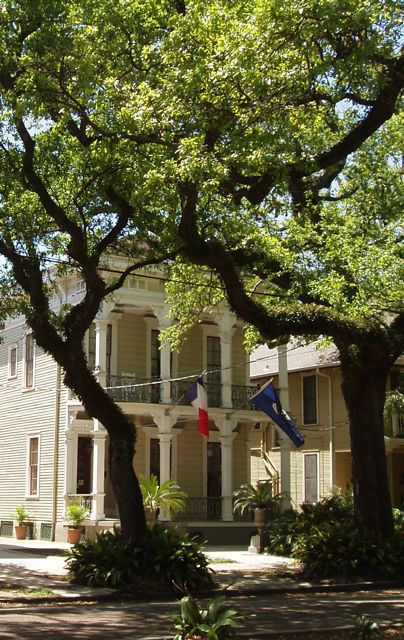
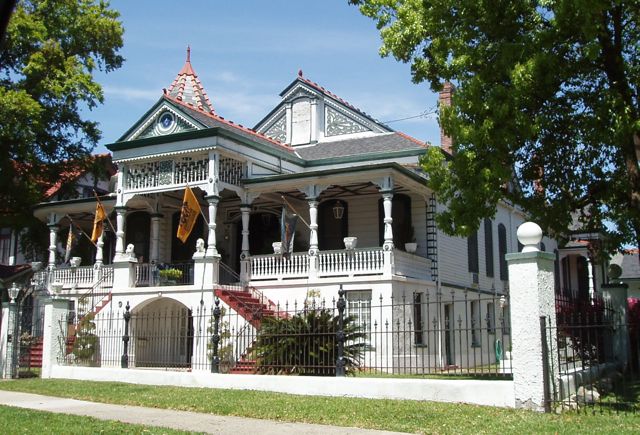
Esplanade Avenue runs on the eastern side of the Quarter through Tremé and Mid-City. It retains its stately alley of live oaks and lavishly porticoed homes. The lovely family home where the painter, Edgar Degas, stayed when he visited his mother’s relatives in 1872-1873 still graces the Avenue.

City Park at the apex of Esplanade is once again green. The Art Museum in the park, however, appears naked, bereft of its ancient trees. New trees have been planted, but a few generations will pass before they become giants.

The inundated Lakeview neighborhood along Lake Pontchartrain is now awash in new and rehabbed homes. Sorting out the new construction from the refurbished is often difficult, a welcome and unexpected surprise.

Evidence of the flood is obvious in Gentilly and the Lower Ninth. Yet even in these hardest hit areas, new homes are popping up like mushrooms in the bayou. Of course, Herculean work remains. I saw a bumper sticker that perfectly sums up the city’s condition. It read: New Orleans – Proud to Crawl Back.

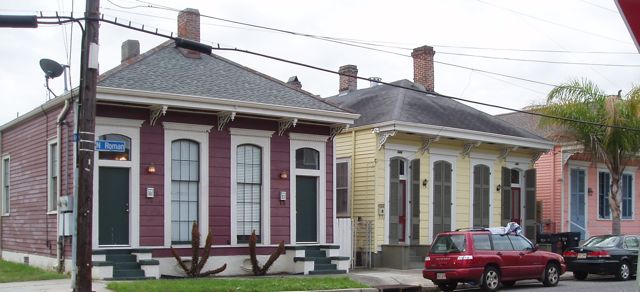
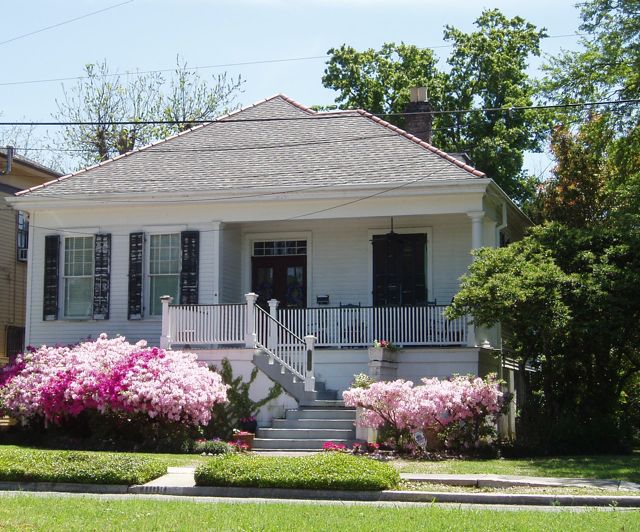
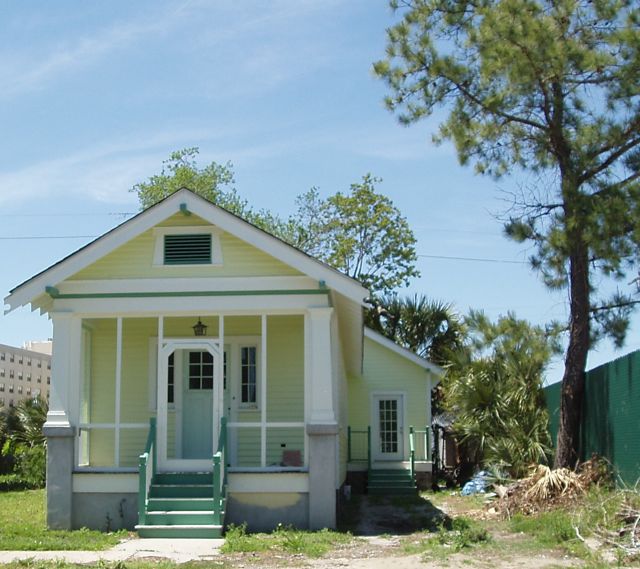
Below are photos taken at random all over town. I could have taken a thousand more.

Degas House
Degas House

0