Morris

My mother was an Anglophile. A child of the Seifert and Bronenkant families, her lineage was one hundred per cent German. Nevertheless, everyone she met was convinced she had just stepped off a boat from the British Isles.

She adored everything English; the Queen, British literature, tea, Gilbert and Sullivan, Wedgewood and Royal Doulton. The British humor magazine Punch graced our coffee table along with a green tin of Pontefract Cakes, an odd black candy stamped with little castles.

When I was seventeen, my mum persuaded my father to abandon his beloved Ford Motor Company and buy a British car, a Morris Minor convertible.
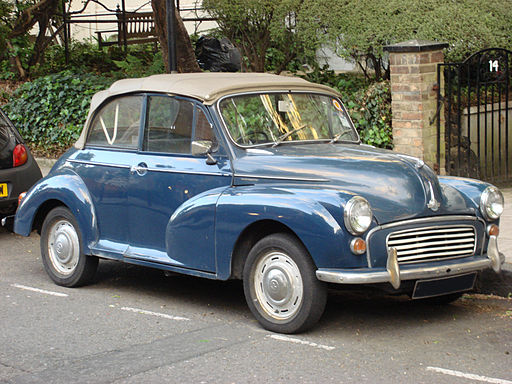
My father was a wonderful man, but he was completely unmechanical. He was also my mother’s chauffeur as she had given up driving. Unfortunately, the only way anyone could keep a Morris running was to keep a mechanic in the trunk.

After a year of complete frustration, my father bought a Ford and gave me the Morris Minor. I was sincerely grateful to get a car. But keeping that car moving was a nightmare. Its distributor cap was on the bottom of the engine. If I drove through a puddle of any size, the car died and had to be towed. Being stranded became a way of life, especially in Spring.

I was saved by love. My true love’s father was an ace auto mechanic and a good man. The Morris spent hours in his back yard being dried out and tuned up.

For our wedding present, my father-in-law generously gave us an almost new car. He had rebuilt a vehicle that had been totaled two weeks after being purchased.

Blessedly for all, it was a Ford.

0
Amour

This is a love story. And like all love stories, it is happy and it is sad.

I helped my Aunt in Albuquerque for six years following my Uncle’s death. While my Uncle (my mother’s brother)  showered his wife with material things, he was a bit deficit in other ways.

My Aunt related how he once left her on a park bench in London saying, “I’ll be right back.” She sat for four hours waiting for his return.

Two years before my Aunt died, I moved her to the best assisted living in town. For meals, she was seated at a table for four, and one of the diners was a gentleman named Gene. I use the term “gentleman” in the fullest sense of the word.

Gene was witty, kind and fun loving, and every woman there who was in her right mind (and some that weren’t) were after him. The ladies all wanted to sit at his table, share their desserts and invite him to their rooms. He politely and charmingly declined all invitations.

My Aunt, on the other hand, frequently told me that “one man was more than enough, and she was through with men.” But Gene would be his gentlemanly self and pull out her chair, inquire about her health and laugh at her stories.

Slowly, I saw love grow between them. When my Aunt would not appear for a meal, Gene would phone her room to see if she was all right.

When I would come to visit, the first thing my Aunt would ask me to do was see Gene. “He is looking peaked,” she would say. “Make sure he’s not ill.”

And then, on one of my visits, she uttered these words,”You know, Mary, there really are good men in the world.”

My Aunt died three years ago, but I continued to visit Gene. Last month I was in Albuquerque and stopped to see him. I asked the receptionist how he was doing.

“Oh, he died four months ago,” she said.

The world is a lesser place for the loss of this caring man.

0

Worry

My mother-in-law was a world class worrier. Her worst case scenario was: “What if a nuclear bomb is dropped which destroys the zoos and the venomous snakes all escape.”

On a scale of 1 to 10, I would rate the bomb a 10 and the snakes a 2. She obviously did not agree.

Another worry involved the collapse of the earth.

“We are just digging too much out of the earth,” she would warn. Perhaps living in Arizona, a big mining state, gave her some inside information on this topic. Anyone attending the huge Tucson Gem and Mineral Show might be inclined to agree with her that the guts of the earth are all being scooped out .

And then there was the terror of the left hand turn. According to her, left hand turns ranked right up with the snakes on the menace meter. She did, however, have a remedy for this threat: she never made left hand turns.

Tables in restaurants also presented a major threat.

“There is NO PLACEMAT,” she would rail. “You don’t want to think about the last time that rag the busboy is using was washed.”

I might actually rate this one a 7 myself. I offered to buy her a ream of place mats from a restaurant supply store.

A fish dinner presented a serious crisis. A fish bone might lodge in someone’s throat, and only bread could dislodge it. Since I came from a family that ate fish with gay abandon, I was dumbfounded when my husband didn’t eat the first fish dinner I served.

“But why isn’t there bread on the table?” he inquired as if I were contemplating homicide.

The above accounts are all true, but one critical fact has to be added. In a real crisis, my mother-in-law was one of the strongest and bravest women I’ve ever known. She could make any steel magnolia look like a shrinking violet.

0

Olives

A young relative of mine loves olives. His eyes dance with anticipation when he spots olives in his vicinity. As a child, I had the opposite reaction: I would do anything to avoid encountering an olive. My unkind thoughts about olives have not abated with adulthood.

Despising olives is a personal blessing. Olives are maximum salt in minimum packages. Since I have an overly abundant supply of blood pressure, I do not need tiny salt bombs in my diet.

I don’t spend excessive time contemplating olives. However, I do have one recurring memory from long ago which is firmly lodged in my brain. During my sophomore year in college, a good friend became engaged. I received an invitation to her wedding shower and eagerly accepted.

The first food offered at the party was olives, bowls and bowls of them. Knowing that many people are fond of olives, I thought nothing of this. Lunch was served. It consisted of finger sandwiches with olive spread and a yellow jello mold in which green olives and carrot shreds were suspended. The remains of the appetizer olives rounded out the offerings. I am happy to report that the cake did not feature olives.

I look back on this bizarre menu and smile. Whatever was our hostess thinking? Was she an olive addict? Or did she simply subscribe to the theory that “if a little of something is good, more is better”?

I do know that olives are not an aphrodisiac. Unfortunately, the marriage which followed the shower did not work out.

As I was finishing these thoughts on olives, I came across this delightful  passage from Alexander McCall Smith’s latest book, The Charming Quirks of Others. Note that Charlie is a toddler.

“He still talked about olives, of course; olive had been his first word, and his appetite for olives was as strong as ever. Olives nice, he had said to Isabel the previous day, and she, too, thought they were nice. They had looked at one another, Charlie staring at his mother with the intense gaze of childhood. She had waited for him to say something more, but he had not. They had said everything there was to say about olives, it seemed, and so she had bent forward and kissed him lightly on the forehead.”

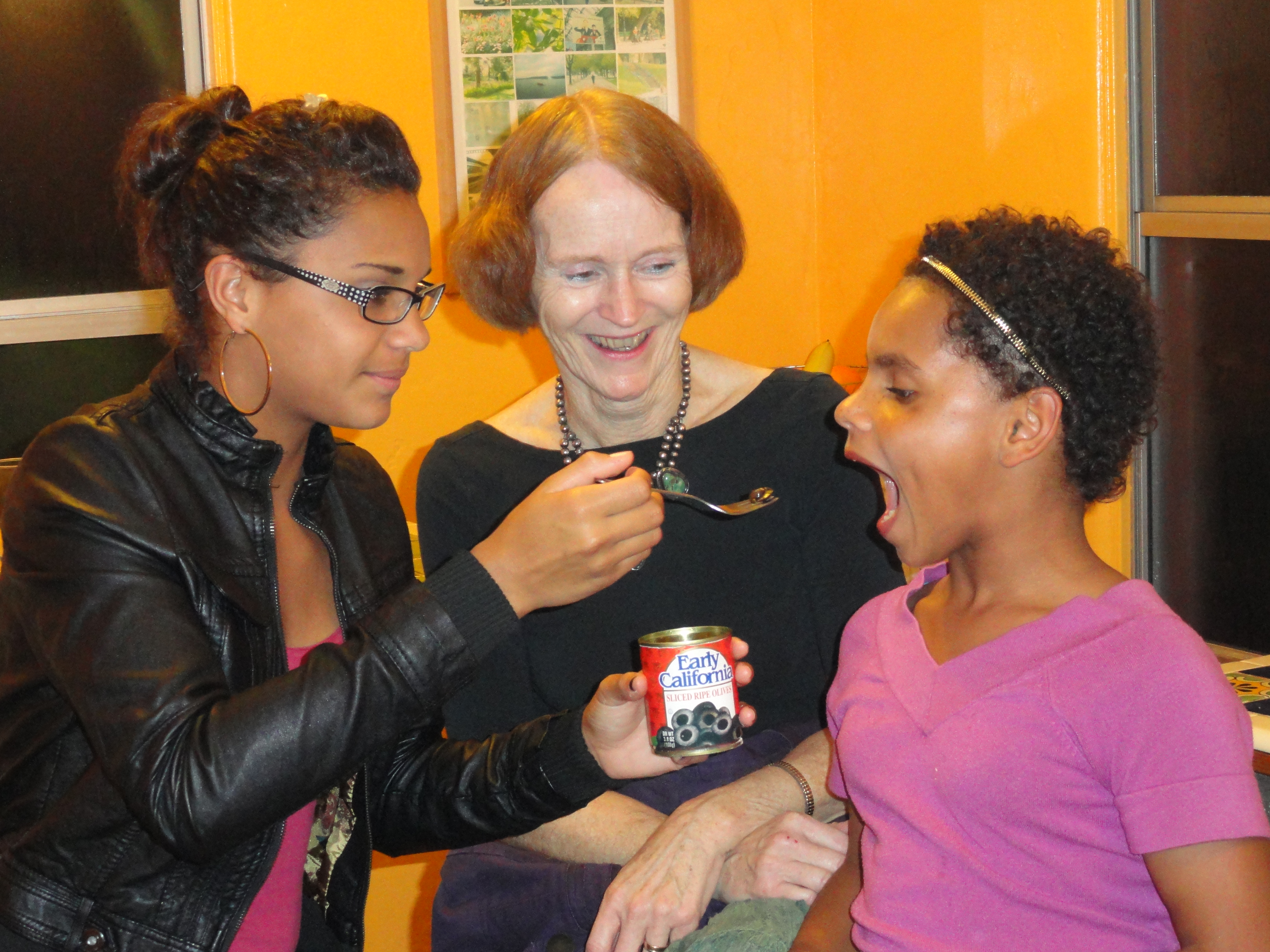
The females in our younger generation are also fans of olives. Two of them recently rummaged around the kitchen and gleefully came up with this snack.

0

Chairs

Consider these words which are inscribed on a wall in the Trapholt Museum in Denmark:

“Since the chair has always had a special status among designers, this type of furniture often comes in all sorts of inventive versions in comparison to other furniture types… in other words, chairs can be made with other thoughts in mind than just sitting.”

My husband and I have always been fascinated with chairs and chair design. We would happily give away the couch: our chairs have all the charisma.

The first chairs we purchased were seven dollars apiece, wooden, Danish designed chairs for the dining room. Forty-seven years later, those chairs remain as visually pleasing and functional as ever.

Our modest chair collection has grown slowly through the years. We added chairs designed by Thonet, Josef Hoffmann, Harry Bertoia, Charles Eames, Verner Panton, Phillippe  Starck and Karim Rashid. Fortunately, my spouse and I agree that a well-designed chair is a sculpture as well as a place to be seated.

The Mecca of chair design is the Danish peninsula where two outstanding museums pay homage to the chair as an art form.

In 1995 the town of Tonder imaginatively converted its old water tower to a museum of chairs designed by the renowned furniture designer and native son, H.J. Wegner. This may be the world’s tallest museum with the smallest rooms and the most interactive exhibits… visitors can sit on the chairs.

The Trapholt Musuem is situated on a fjord in Kolding, Denmark, and features a large wing devoted solely to chairs.

If you are a lover of art, design, ambience or wit, we think you might enjoy the following video.

Chair Movie

0