Evil

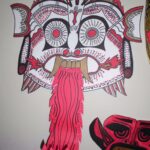
I took Rangda to school with me the other day. A seventh grade teacher had asked if I could do a program on Southeast Asia. Since most schools consider geography a quaint anachronism, I was eager to contribute and suggested I could do a program on Indonesian art. That is how my spectacular mask of Rangda, the Balinese witch who represents all evil, took a field trip to school.

I began with basic facts about Indonesia, the fourth most populous country in the world and the largest Muslim nation. Consisting of 17,508 islands, Indonesia is the largest archipelago in the world stretching 3,200 miles along the equator. The land is generally covered with tropical rain forests and has tremendous biological diversity. Four hundred volcanoes including one hundred and fifty active ones dot the islands. Indonesia also hosts the only native population of Komodo Dragons in the world.

Art followed the facts, and I displayed intricate water buffalo skin shadow puppets, carved flying guardian figures and numerous masks from Bali. Rangda and her counterpart Barong were the finale. The Barong, a creature that looks like a cross between a lion and a dragon, is a good spirit. His face is seen everywhere over doors and gateways to ward off evil. Rangda is pure evil bringing death and disease and casting spells.

Masked, costumed dancers representing Barong and Rangda act out the struggle between good and evil. The Barong is never killed, but Rangda is never destroyed only temporarily vanquished.

The class was totally attentive and eager to find out what their art project would be. “Draw a mask of either Barong or Rangda”, I told them.

Before I left for school that morning, my husband predicted what the outcome of the art project would be……but I didn’t believe him. When I asked who would be drawing Rangda, 36 out of 40 hands shot up. My guy certainly called that one right. So much for goodness.

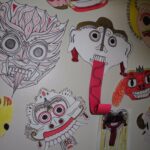
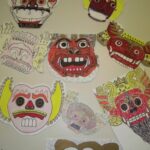
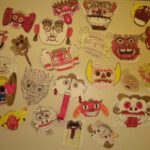
I am extremely pleased with the effort the students put into their artwork. Here are some of their creations.

0

Banks

My father worked hard all his life, saved a part of every paycheck and pulled himself out of the poverty he had known as a child. After retiring, one of his favorite activities was going to the bank. He would deposit checks, get cash, visit his safety deposit box and have pennies counted. He knew all the tellers and brought them Hershey bars (with almonds) as a thank you for their courteous services.

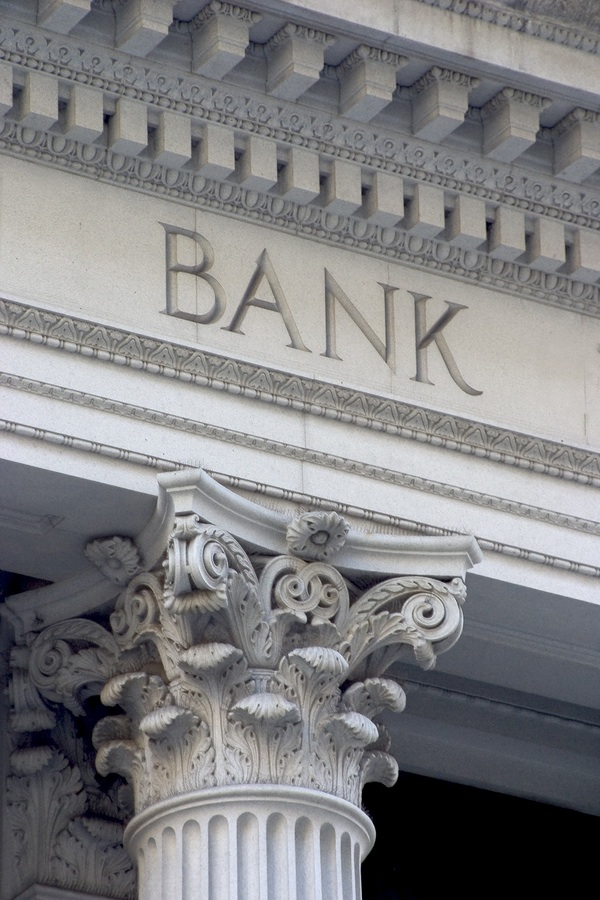
If my father were alive now, he would be appalled. Big banks have become the bastions of crooks and scam artists, and most of the scams are legal. Not one of these jokers deserves a Hershey bar, almonds or no almonds.

If you think I’m exaggerating, consider the fact that many banks change their names about every six months. One of our banks changed names so many times that we could hardly keep track of our own money.

The ingenious ways that banks have devised to divest customers of their savings and homes is breath taking. And if you actually have money left in your accounts, accessing those accounts takes advanced computer skills and constant new passwords. I believe the theory here is “If the customers can’t find their accounts, they might forget they have them.”

I admit to nostalgia. In my father’s time:

  • Banks paid interest on customers’ savings.
  • Banks often had names that were 100 years old.
  • Banks updated the balance of accounts in a passbook at the time of every transaction.
  • Banks had tellers who were friendly and helpful even without Hershey bars.
  • Banks gave toasters, popcorn makers and other incentives for opening new accounts.
  • Banks sponsored day trips for older customers.

I have no desire to take a field trip with my bank nor do I need multiple toasters. I would, however, like to be treated with fairness, respect and decency by my financial institutions. I’ve got a much better chance of winning the lottery.

bank

0

Counting

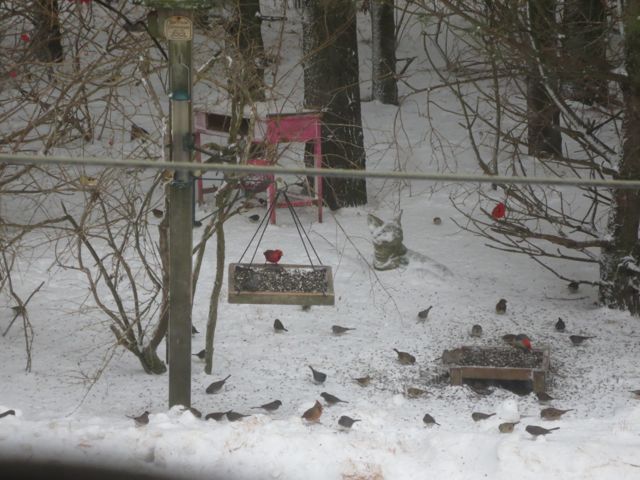
Counting birds is akin to numbering popcorn kernels as they explode in the kettle. How can it possibly be done accurately?

But last month there was a knock on the door and our local bird expert asked if we could count the birds coming into The Tooley Cafe for the  afternoon. Apparently our well stocked cafe is known as a “hot spot” for birds. We confessed to total inexperience in bird numbering, but readily agreed to give it a try.

We asked for advice on how to avoid counting the same bird numerous times, and the reply was  “Just do your best, it’s difficult”. Unfortunately, birds can’t be tagged with paint like the sheep in Ireland.

The temperature was zero outside, but we were warm inside sitting or hovering near the kitchen table where there is a direct view of all our feeders. Because of the freezing temperature, the birds  were in need of plenty of calories and the cafe was an ongoing flurry of activity. Our best efforts for six hours yielded the following results:

  • 3 Downy Woodpeckers
  • 1 Red Bellied Woodpecker
  • 4 Chickadees
  • 8 Cardinals
  • 4 Blue Jays
  • 9 Goldfinch
  • 10 Mourning Doves
  • 8 Juncos
  • 19 Sparrows

Last week a brutal Arctic cold front moved in. Temperatures plunged to minus 16 below and constant winds roared for three days. I worried constantly about our birds. My husband kept the feeders filled to the top, put piles of seeds on the ground and added 5 extra suet cakes as well as a big pan of water with a heater in it. I turned my kitchen chair to face away from the window: it was too hard watching the few birds who were braving the gale winds.

The happiest moment of the week was when the temperature got back to thirty degrees and scores of birds converged in our Cafe. I know the birds’ survival can be explained with scientific facts. However, how a tiny one ounce bird can endure Arctic weather conditions seems to be simply a miracle.

BirdCount

0

Nature

We knew it was time to move when the leaves weren’t allowed to fall.

For thirty years we lived in a small house on a large lot in an exceedingly well-trimmed city neighborhood. Immediately after moving in, we began planting trees. Our yard was already graced with a mature willow and clump birches; we added mountain ash, maple, black walnut, poplar and apple trees.

Our neighborhood was the perfect place for both children and trees to grow. A park and a creek were a block away. Schools, grocery stores, a drugstore and even our dentist were all within walking distance.

Wishing to be good neighbors, we followed the community norms. Once a week, we faithfully mowed the lawn and edged the sidewalks. After every storm, our yard cleanup began after the last raindrop fell. We raked up sixty bushels of leaves each autumn and shoveled tons of snow within hours of each blizzard.

As the years flowed by, we realized the yard had become a splendid habitat for urban wildlife. Birds flocked to our feeders and nested in the lush trees. One year the squirrels co-opted our son’s treehouse for their nest platform. Ducks waddled over from the creek, and a possum took up residence under our deck. We welcomed our visitors.

Unfortunately, many of our neighbors viewed the wildlife as spoilers of the immaculate, man made order of their yards. Plans were usually made for the speedy removal of any trespassing creatures.

Then, one day, our immediate neighbors complained that leaves from our messy trees were blowing into their yard. Simultaneously, most of our local shops were relocating to the suburbs as megastores, and our beloved creek was completely lined with concrete, causing it to resemble an open sewer.

One of the few constants in life is change: how we respond to the changes determines our happiness. We decided to move to the country and build a modest house with multitudes of windows from which to view the woods, wildlife and water. Now the grasses grow tall and unmowed, the leaves fall and are unraked and two of our three outer doors remain unshoveled. All animals are welcome in the Tooley Cafe.

The television got left behind in that move eighteen years ago. All the entertainment we need is outside our windows. Nature provides an infinite number of channels… no cable needed.

image

0

Dump

Going to the dump was a ritual of rural life in times past. When my husband was a little boy growing up in northern Wisconsin, the trash and garbage was dumped during the day and the bears were viewed at night. But his family, like many others, left the farm. My guy was a city person for the next forty -five years.

However, we now live in the country, and going to the dump is again part of our routine. “Dump” is not the correct word, but the one we use from habit. Recycle Center is the correct name, and it is a place our entire town can take pride in. Neat, organized, well-run and odor free, we can have confidence that the items we so conscientiously sort are actually being recycled.

The same could not be said for our big city trash collection. Numerous times I watched as our carefully washed bottles and de-labeled cans were all dumped willy-nilly into the big, open mouth of the garbage truck. “No way,” my brain screamed, “could those poor souls who sorted this mess at the recycle plant’s conveyer belts get this to work.”

On Saturday morning my tiny Hyundai Accent becomes the garbagemobile. The buckets of aluminum cans, tin cans and bottles fill the trunk. Bundles of newspapers and flattened cardboard boxes get the back seat. Household garbage gets jammed in any empty space available.

From nine to three, a steady flow of cars pour into the Recycle Center and are watched over by the friendly couple who manage the site. A combination of vigilant over site and peer pressure assures that no dumping occurs. We citizens of Centerville file our recyclables. Not a can or scrap of paper litters the ground.

It took me a while to catch on to another aspect of the site of which my husband had not cued me in. Unwanted items that are usable are lined up along one outside wall of the recycle shed and are free to the takers. This can be problematic. Recently someone set out scores of books and I ended up bringing more things home than I left off.

rc

0