School

Starting with kindergarten, I’ve gone back to school almost every September of my life. I took a few years off to be home with our two young children. But when the youngest marched off to preschool, I went with him. He stayed three years, I stayed nineteen as the art teacher.

The pattern of the traditional September to May school calendar suits me perfectly. I like fresh new beginnings and definitive endings. And I need to be in tune with the seasons, something the elementary classrooms do well.

The children will be greeted with school bulletin boards sporting apples and autumn hued leaves. These will be followed by pumpkins, spiders and owls who will morph into turkeys come November. A flurry of snowflakes and snowmen round out the year. America’s stores, on the other hand, are decorated for Christmas in September. I decidedly prefer to live in the current season.

The start of a new school year is all about expectations. As I wander through store aisles filled with towering stacks of pristine notebooks, crayons, markers and paint boxes, my brain is conjuring up new art projects that will make those materials live up to their promise. Recycling curriculum has never been part of my agenda. Children are artists who look at the world with fresh eyes. I want to help them make their imaginations soar.

School is serious business. When I break open a fresh new pack of drawing paper and pass it out, I remind my students that a tree gave its life for those sheets. Full effort and concentration needs to go into every art project. We should strive to create masterpieces but not be crushed at our failures. “If you mess up, you fix up”, is an important lesson, too.

My wish for this fresh, new school year is that all our children can reach their fullest potentials and that all of our teachers find joy in their profession.

Here’s a quote for today, the first day of the school year:

Education is simply the soul of a society as it passes from one generation to another.
apple

0

Sunflowers

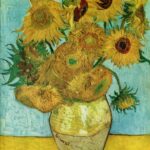
All the marketing people in the world couldn’t do a better job of branding the sunflower than Van Gogh. With brush in hand, he made these humble flowers (and himself) iconic.

Sunflowers are fascinating and often misunderstood plants. The “flower”is tricky. The part that is commonly called the flower is made up of two distinct kinds of florets. Look closely at the sunflower disc to see the tiny disc florets which will form the seeds. The outer ray florets look like yellow petals. Together the two types of florets make up a false flower or inflorescence. This design helps pollinators see the flower and pollinate all the minute central florets. Bees are the main pollinators.

Sunflowers are North American natives that were used by the Indians for food, oil and dye. The wild sunflowers were multi-stemmed with numerous flower heads. Domestication produced the tall, unbranched stalk with a single large head.

Enormous fields of sunflowers are grown for their commercial value. Some varieties produce black seeds which are used for oil and bird food. Birders know that these costly seeds are the ones that attract the greatest number of birds and other wildlife as well. The black seeds have soft outer hulls making the nutritious inner kernels accessible to even tiny beaks. The harder hulled striped seeds are turned into snack foods and a peanut butter substitute called sunbutter. In Germany, the seeds are mixed with rye flour to make a bread with the wonderful name Sonnenblumenkernbrot.

It’s a beloved myth that the flower heads track the sun. The mature flower usually points in a fixed easterly direction. The young buds, however, do display some sun tracking or heliotropism.

Each week we buy fifty pounds of oiled sunflower seeds for our guests at the Tooley Cafe. One spring my husband raked up a wheelbarrow of debris from under the feeders and dumped it over our seventy foot bluff. By August we had an army of sunflower volunteers marching down the cliff and out onto the beach. We have never been able to repeat that serendipitous sunflower happening, but we keep trying.


0

Guilt

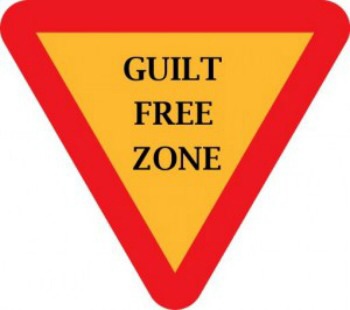
I will not feel guilty for suggesting that guilt is a women’s problem. I’m not implying that men don’t have problems; guilt is just not a big priority for them.

Women are taught to feel guilt at an early age. We were brought up to be good (choose one: Catholic, Jewish, Muslim, Hindu, Protestant) girls. And we will remain girls if we don’t shed our crippling guilt trips.

Guilt should be reserved for the big stuff, like committing a homicide or stealing from the poor. It should not be felt when we fail to balance the checkbook, use Jiffy Pie Crust mix, omit washing and recycling the peanut butter jar or eat a Snickers Bar.

Lisa Scottoline in her new book, Have a Nice Guilt Trip, suggests that guilt is a great motivator for getting things done. I would counter that guilt is a great way to turn ourselves into outer directed people, and that outer directed people rarely appear to be bubbling over with happiness. I clean my house because beauty and order give me joy, not because some “they” says that cleanliness is next to godliness.

A direct spawn of the guilt trap is our excessive use of the words, “I’m sorry”. Count the number of times we say or hear that phrase in one day. Saying, “I’m sorry I overcooked the peas,” is a ridiculous statement. Save the sorrow for situations involving living beings in pain. I believe the correct word for the peas is “oops”.

After all these years, I’m still making a concerted effort to reverse the guilt training drilled into me by a flock of Notre Dame nuns in the 1950s. And I’m eager to say to any of my female friends, “don’t feel guilty”…….unless, of course, you just robbed a bank.
image

0

Blueberries

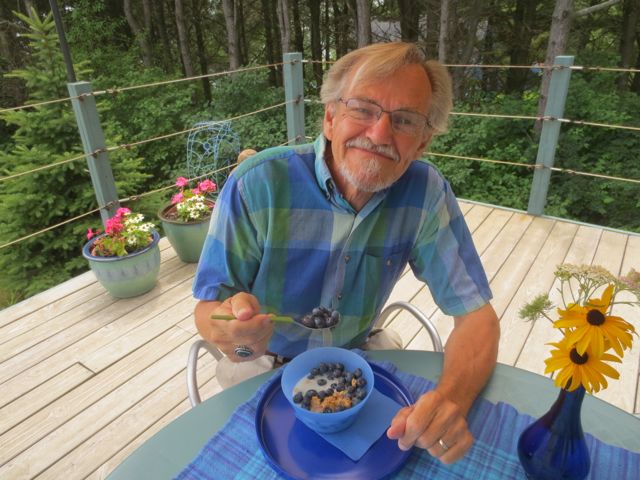
My husband loves his blues. That’s the nickname he has given his favorite fruit, blueberries. Blueberry season is in full swing, and I wouldn’t be surprised if both of us turned blue any day now. We both have been consuming blueberries in record quantities.

One year I asked my guy what he wanted to do on his birthday which fortuitously coincides with blueberry time.

“Let’s drive to southern Michigan (aka blueberry epicenter) and buy a case of blueberries,” was his reply. I love living with a man whose idea of a splendid birthday present is 3,300 blueberries and a road trip to get them.

Extravagant heath claims on the benefits of eating blueberries are rampant. Suffice it to say that blueberries are good for you. Our only motive for eating them is their delicious sweet/tart taste.

Blueberries are native to North America alone. So it would appear that the phrase, “as American as apple pie” should be modified to “as American as blueberry pie.” Apples originated in central Asia.

The big, plump blueberries we eat for breakfast are the highbush variety. Lowbush blueberries are small, wild blueberries, and Maine is the leading producer. Cranberries and huckleberries are blueberry cousins.

Blueberries are the number two berry crop in America. Only strawberries surpass them in sales. This bit of trivia makes a good image:

“If all the blueberries grown in North America in one year were spread out in a single layer, they would cover a four lane highway from New York to Chicago.”

Now that would be a road trip.

Blue

0

Corny

“I’m as corny as Kansas in August”, is a famous lyric from the musical South Pacific. We are corny now as well. At the moment I am looking out my kitchen window at acres of corn marching in tidy rows.

That corn wouldn’t exist naturally in the wild; it’s a human invention. About 9,000 years ago, native people in Mexico took a wild grass called teosinte which had hard little kernels and figured out how to breed it into what is now the world’s number one food crop. Corn, more correctly called maize, provides nutrition for about twenty percent of the world’s population.

In its various forms, field, popcorn, sweet and seed, corn is America’s largest crop. Forty percent of the world’s corn is grown in America, more than in any other country. And eighty-seven percent of that corn is grown using only natural rainfall.

President Dwight Eisenhower retired to a working farm and said, “Farming looks mighty easy when your plow is a pencil and you’re a thousand miles from a cornfield.”

As a child, I thought every field of corn I saw was sweet corn just waiting to be brought to our farmers’ market. My mother soon set me somewhat straight saying, “That’s only for cows.” She also told me why we ate it immediately after bringing it home…..the sugar quickly turns to starch and the flavor is lost.

My husband, who grew up in a farm family, taught me how to buy sweet corn. Shortly after we were married, I proudly came home with corn sporting large, deep yellow kernels. Next time, he gently told me, look for small kernels and a creamy yellow color.

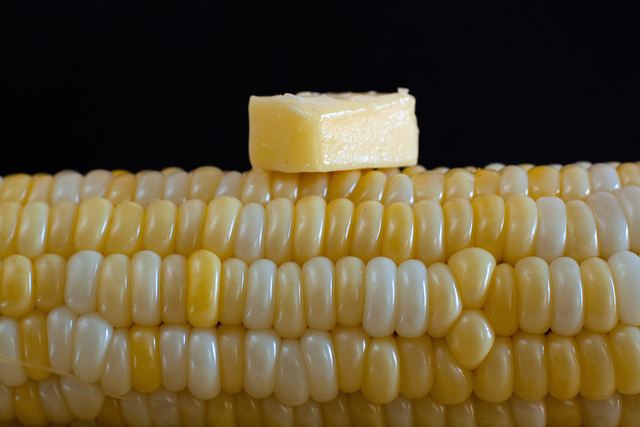
It is now the apex of summer and the sweet corn is in. So get out the big kettle, melt the butter and put a big stack of paper napkins on the table. A sweet corn dinner is the ultimate, messy grease feast. Add a leaf lettuce salad to assuage guilt.
corn

0