Remodel

After eighteen years, The Tooley Cafe has been remodeled. The revamp was not done for aesthetic reasons. It was done for squirrel reasons.

The Cafe has always been and will remain an equal opportunity feeding establishment. As long as the visitors don’t have shoes or shirts, they are welcome.

However, a few weeks ago we noted a problem. “I haven’t seen Downy for a while,” I said to my husband. Downy woodpeckers have been faithful visitors to our suet cakes for years. “The goldfinches aren’t around much either,” my husband replied.

We increased our surveillance of the Cafe and quickly discovered that the suet and all the feeders had multiple squirrels hanging off them from dawn until dusk.

We should have gotten a clue when we spotted two handsome, baby black squirrels a few weeks ago. For years, we had only one rare black squirrel who made infrequent appearances. Now, we have a family.

We have unwittingly created squirrel heaven. Ample food, a grove of pine trees and no hunters adds up to a healthy squirrel population. Our reds, grays and blacks are thriving.

Since the most incredibly overpopulated species on earth is humans, my husband and I have no desire to persecute another overpopulated species.

After brainstorming, we decided to try a “separate but equal” policy in the Cafe. Bear in mind that we are and always will be
liberals, but we do think “separate but equal” is fair when DIFFERENT SPECIES are involved.

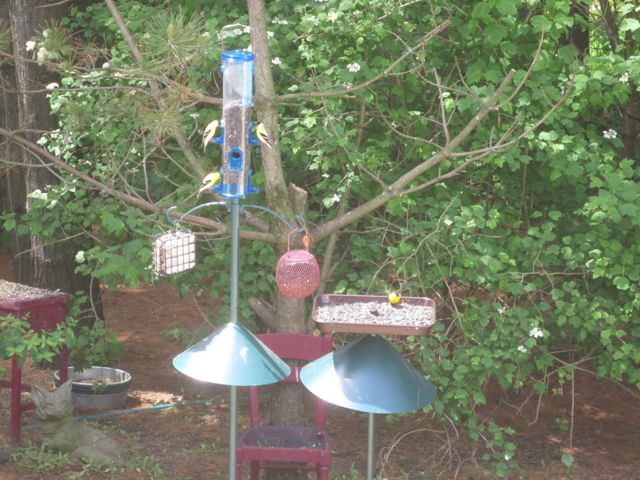
We cleared an area in the Cafe, cut nearby branches and bought two new feeding stations with squirrel baffles. Then we moved the older feeders farther back in the woods, in other words, we created a separate squirrel dining room.

Within an hour, goldfinches and house finches found their new feeders. So far, no squirrels have usurped them.
remodel

0

Porches

Southerners have raised porch sitting to an art form. A muggy summer day, a veranda with a breeze, a mint julep…..what could be better?

While we Northerners do not have as long a porch season, we also enjoy viewing the world from a fine porch. Wine or beer are substituted for the juleps.

When we designed our house, we wrapped porches around three sides. Nevertheless, we do not have enough “porch”. We did not realize that a 10 degree temperature difference would exist between the lake side and the road side of our home. We made the lake side porch a generous size and the opposite front deck only eight boards wide. Breakfast on the east facing lake side is gloriously warm. Dinner is always on the road side which provides the afternoon heat and a ringside view of the sunset.

So be forewarned, if you come for dinner at our house on a summer evening, we line up the chairs in a row like those on the front porch of a retirement home in St. Petersburg, Florida.

During dinner and until the sun sets, we note the action and growth in our front yard. The purple martins are scooping up the last bugs of the day and seem oblivious to us as we sit quietly. Numerous other birds swoop past us on their way to our feeders. Spiders are everywhere, gearing up for a night of web spinning and feasting. Moths begin fluttering around the porch light and sticking themselves to the front screen. The chipmunk who has put his hole in the middle of our gravel driveway is racing back and forth from his hole to the Tooley Cafe. Is he filling his underground home with bedtime snacks?

The plants bear watching as well. Starting with the flowering Cleveland pear trees, our front meadow is a succession of blooms which flourish amidst the clumps of little blue stem grass. When days are warm and rain abundant, the plants seem to grow by inches. The flowers are like a calendar marking summer’s progression.

We also pay close attention to Farmer Dennis’ well tended fields across the road. This year the crops are winter wheat and corn. We can report that the corn will not be knee high by the Fourth of July.

We know that our American culture is centered around consuming more and succeeding more. We, however, will be amply satisfied with our porch, our acre and the time to enjoy them.

image


0

Cocoon

Summertime has officially arrived and with it comes the world’s most charismatic insects, the butterflies and moths, a.k.a. the Lepidoptera family.

Thanks to a wonderful exhibit at a Chicago natural history museum, I can finally and clearly understand the difference between a cocoon and a chrysalis. Unfortunately, these words are often used interchangeably in our American speech, books and schools despite the scientific fact that a cocoon is not a chrysalis.

Both butterflies and moths, like all insects, metamorphose, or change, at different times in their lives. They cycle through four stages; egg, larva (caterpillar), pupa and adult. The pupa stage is where our confusion sets in.

Both butterfly and moth caterpillars truly are hungry; they eat voraciously. They outgrow their skins and molt numerous times.

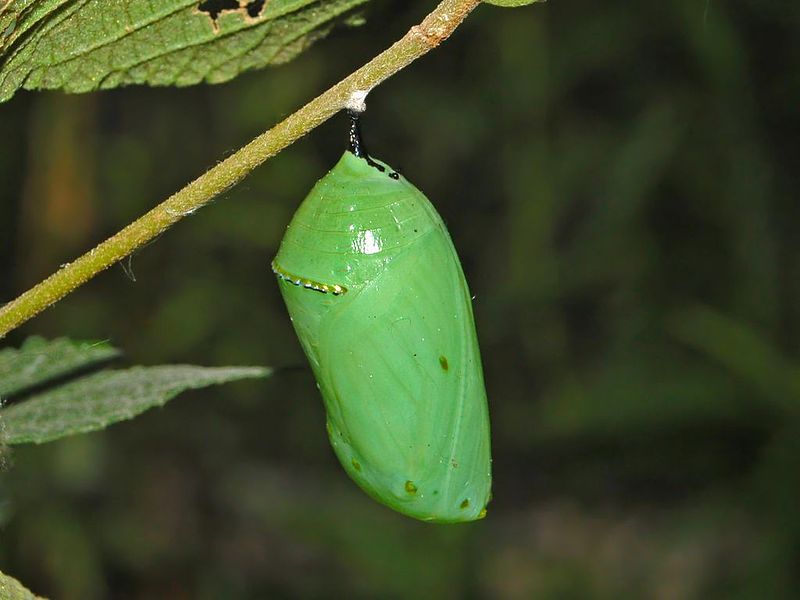
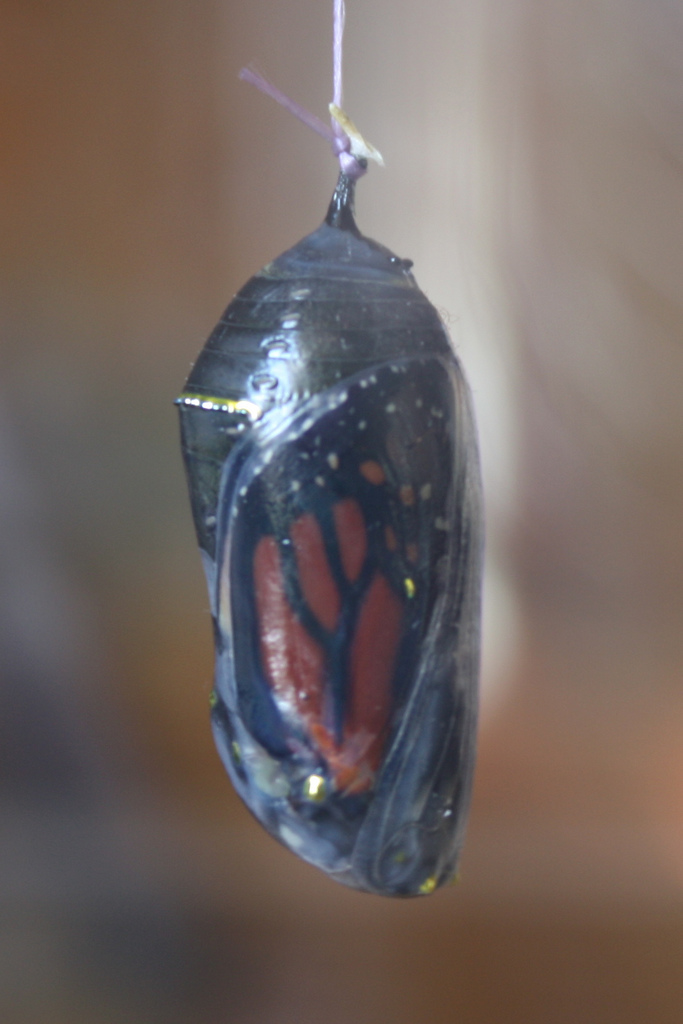
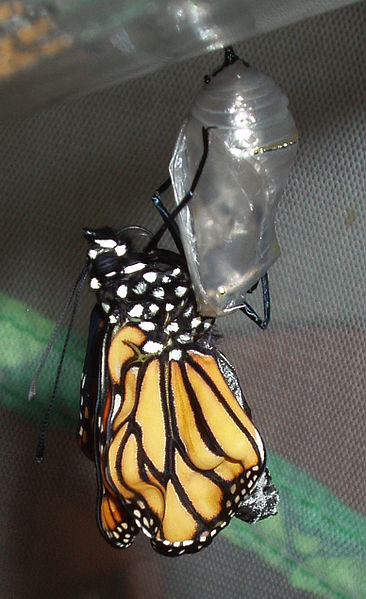
When butterfly caterpillars molt for the last time, their new skins harden into protective chrysalises. They morph right beneath their own skins. “The chrysalis is not a container, IT IS AN ACTUAL INSECT.” Some chrysalises are stunningly beautiful. The brilliant green and gold rimmed Monarch chrysalis could easily be mistaken for a pendant crafted by a master jeweler.

Most moth caterpillars do things a bit differently. They create a cocoon from silk they spin, leaves or other materials before they enter the pupa stage. Think of the cocoon as a sleeping bag around the pupating moths. The moths cut their way out of the cocoons or secrete a fluid that softens the structures. Both the butterfly and moth need to hang from their resting places until their wings stretch out and dry and their bodies harden.

I love Eric Carle and his Very Hungry Caterpillar, but his famous caterpillar made a cocoon and then emerged as a butterfly. It should have made a chrysalis.

0

Dunes

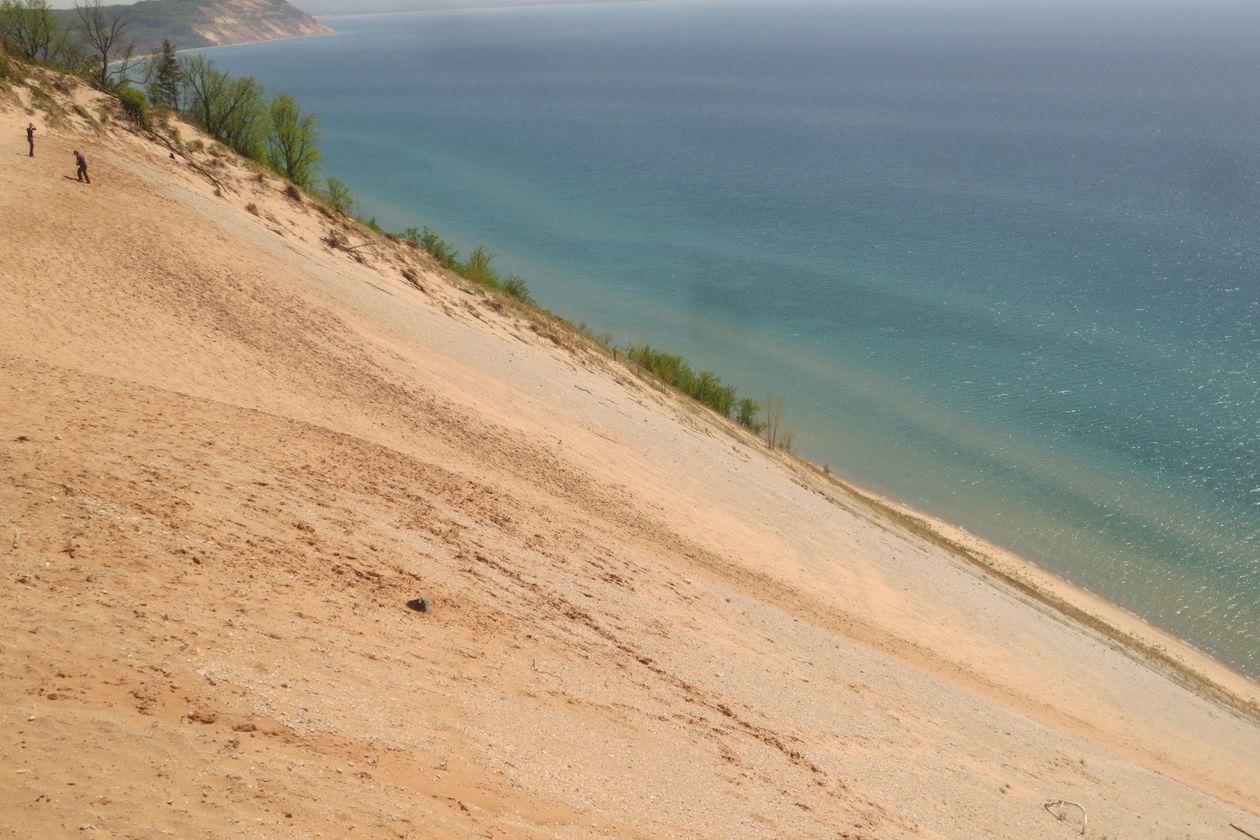
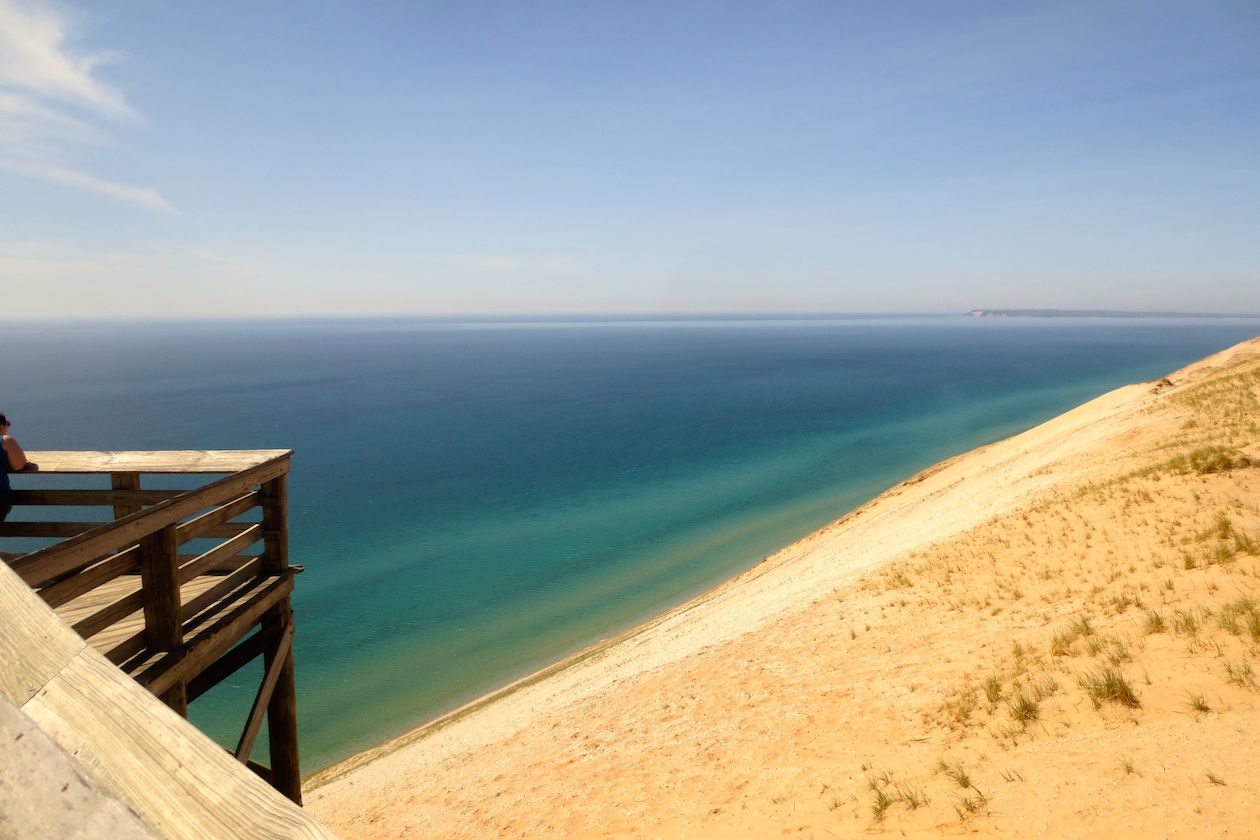
We have been ripped off. The sandy bluff in our front yard on the western shore of Lake Michigan is 70 feet high. Across the Lake and about 60 miles north, one of the dunes in Sleeping Bear Dunes National Lakeshore in Michigan is 450 feet high.

The prevailing westerly winds are the culprits. They create sand dunes that pile up spectacularly on the eastern Lake Michigan shores. A few years ago when we saw the skyscraper height dune at Sleeping Bear for the first time we were speechless. We stood on the top and the people who had ventured down to the the beach looked the size of ants. Watching them climb back up 40 stories of shifting sand was painful. The upward trek takes about an hour, and many people abandon walking and crawl up.

Every time we visit our reaction is the same. Our minds can’t grasp what our eyes are seeing, much the same way that Niagara Falls and the Rio Grande Gorge are sights which have no reference points and can produce wonder again and again.

This year we noted a new sign had been posted at the top of the phenomenal incline. It read:

WARNING
STEEP, ERODING BLUFF
KEEP OFF
MAY CAUSE INJURY OR
HEAT ILLNESS
RESCUE FEES WILL BE CHARGED

In other words, if you are macho enough or thoughtless enough to think the climb up this dune is a cakewalk, you will pay dearly for your stupidity.

Fortunately, neither my husband nor I harbor any needs to conquer that sand mountain. We just soaked in the view from the observation deck above and played in the upper parts of the world’s tallest sandbox. We also laughed at this line from the park’s visitors guide: “Wisconsin is 54 miles due west, but thanks to the curvature of the earth, you will not see any cheeseheads waving back at you.”

Dune-People
Note the people in the upper left hand corner to get some sense of the scale


0

Mailboxes

It’s hard to be creative with your mailbox. Postal, city, town and village regulations dictate the parameters for proper mailboxes and posts.

These are necessary rules, as our faithful mail carriers should not have to go on scavenger hunts to find the place to deliver our mail. Happily, creative people are not hampered by a few rules. They embellish their stock issue mailboxes or enhance the space around the boxes.

Our own box is the largest, black, rural mailbox that Fleet Farm sells, a true utilitarian object. Loving mail, I wanted the biggest size box to safely shelter magazines, book deliveries, presents and The New York Times.

We decided to dress up our plain box with numbers in an attractive, modern type style. Beautiful fonts at $30 per digit were readily available online. Finding affordable “peel and stick” digits involved a long computer search.

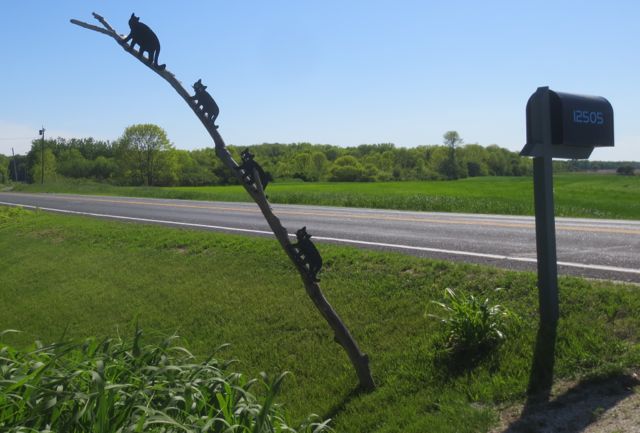
To help visitors find our home, we needed a marker. Lake Michigan obliged by washing up a huge driftwood pole to which we attached four black metal “scare cats” with marble eyes. The cats were a gift from my beloved Aunt Jane who was fond of ordering items from mail order catalogs. The cats’ purported purpose was to scare birds from fruit trees and gardens. Fortunately, they don’t scare anything away.

IMG_2545This last, brutal winter took its toll on the cat poll. The county’s enormous plows pelted snow down on it until the cats were walking parallel to the ground. When the ice melted, the pole crashed, and we hauled it into the garage for repairs.

A week later we found a note slipped into our mailbox. It read,”I enjoy the cats every time I drive by. I hope they will be coming back.” The note was signed, “The Silver Miata.”

We do not know anyone who owns a silver Miata, but we are happy that whoever they are likes our cats who are once again back and walking proudly up their pole.

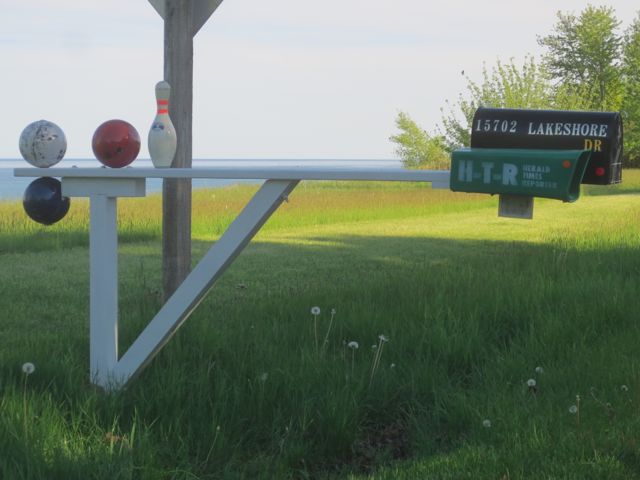
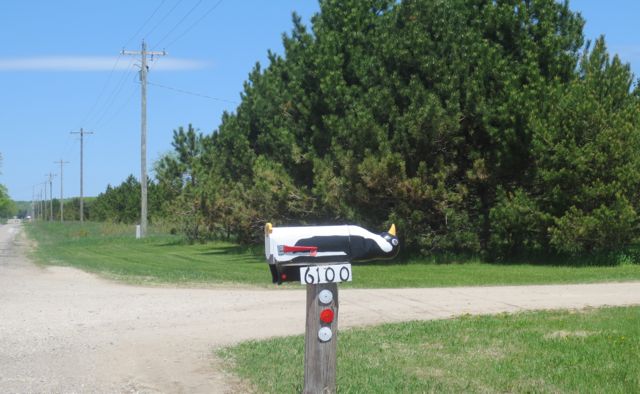
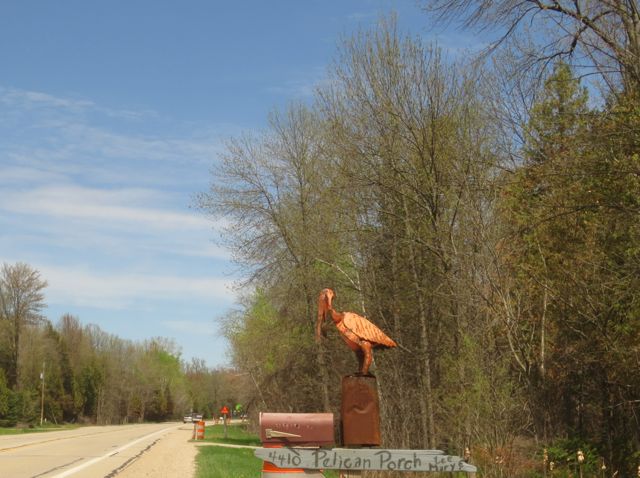
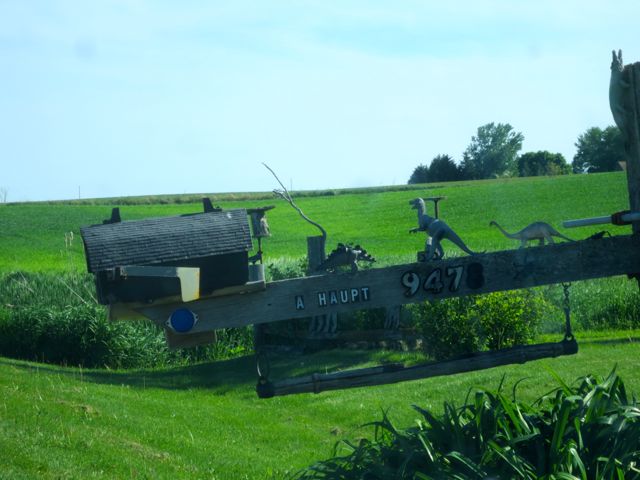
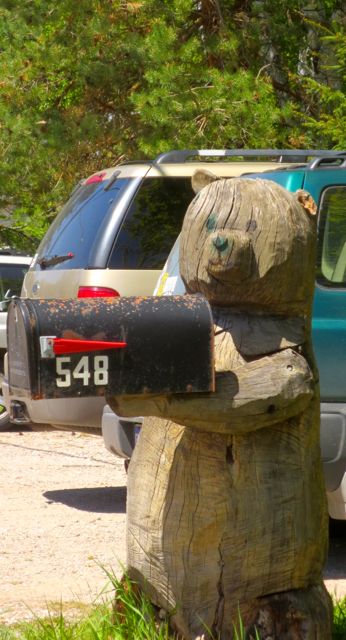
Here are some of the unique mailboxes I’ve photographed in the Lake Michigan area. There must be something in the water. (Click to enlarge images)

0