Putulik

Readers of this blog know that I am a dedicated beachcomber. For me, nothing is better than an endless beach and hours to wander searching for the treasures delivered by the waves.

The gifts from the waves are many, but they fall into two main groups. Flotsam is the stuff that accidentally falls in, while jetsam are articles that were purposely jettisoned or tossed overboard. When crossing the Atlantic on the way to her new home in America, my great, great grandmother had to jettison her entire hope chest when their sailing vessel hit a storm.

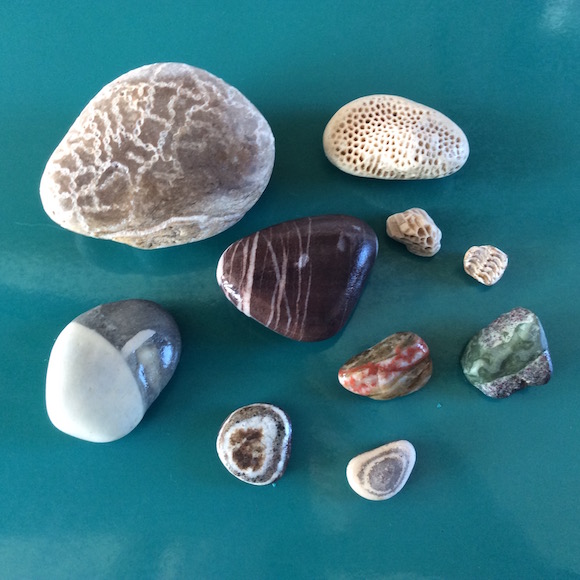
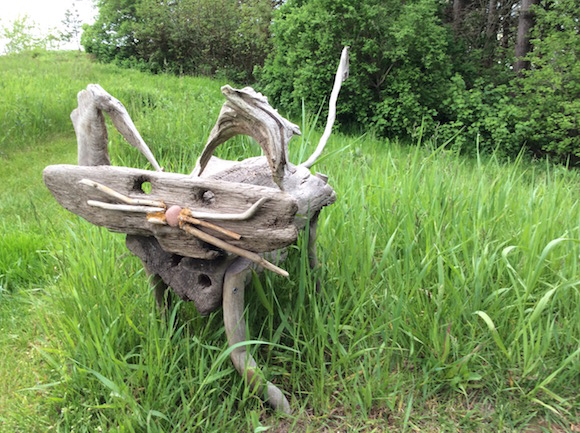
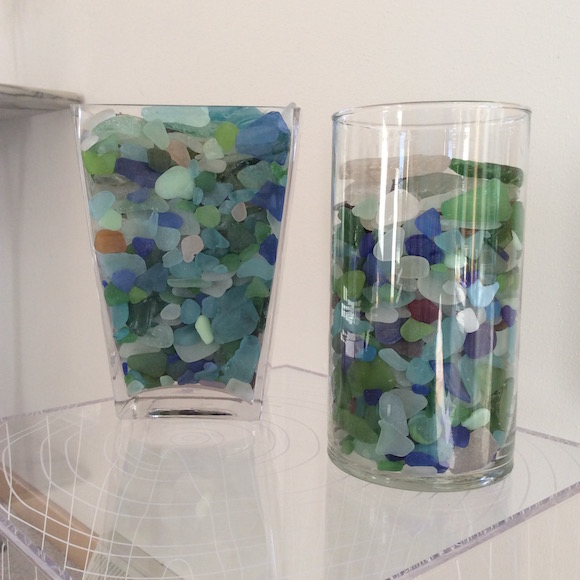
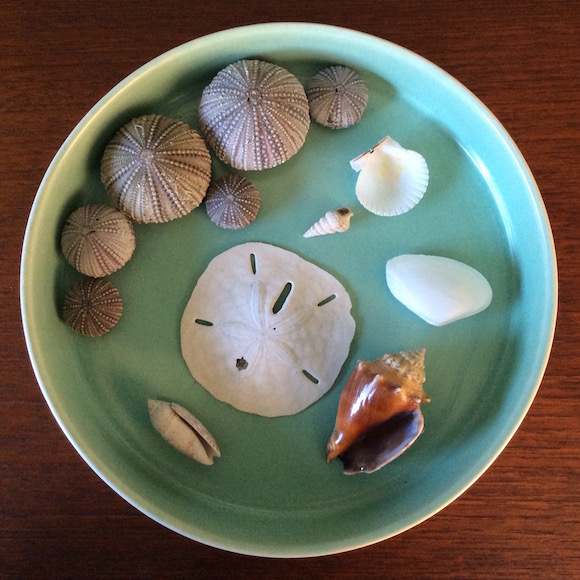
After bringing beach finds home, we enjoy looking at them in the same way we get pleasure from the artwork on our walls. We do, however, sometimes make things out of the driftwood, and a talented friend turns some of our beach glass into exquisite jewelry.

A few weeks ago, I chanced on an entirely new category of beach treasures. I was doing research for a school program on the Inupiat people who live in the Arctic Circle. In this remotest of places, the children make up their own games and entertainment. One of their favorite activities is searching the beaches for a putulik (POO-too-lik), a stone that has a hole worn through it.

In twenty years of living on a beach, I have only found two or three of these special stones. Now the hunt is on, and I will be having the summer of the putulik.

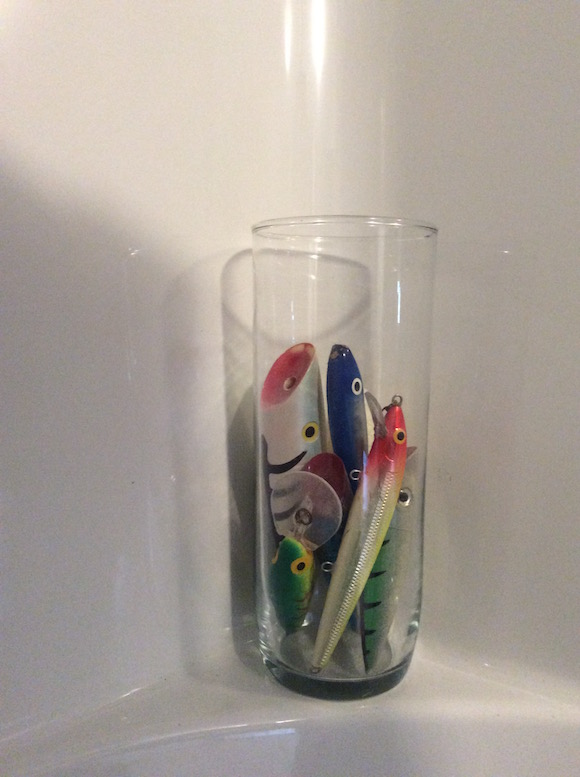
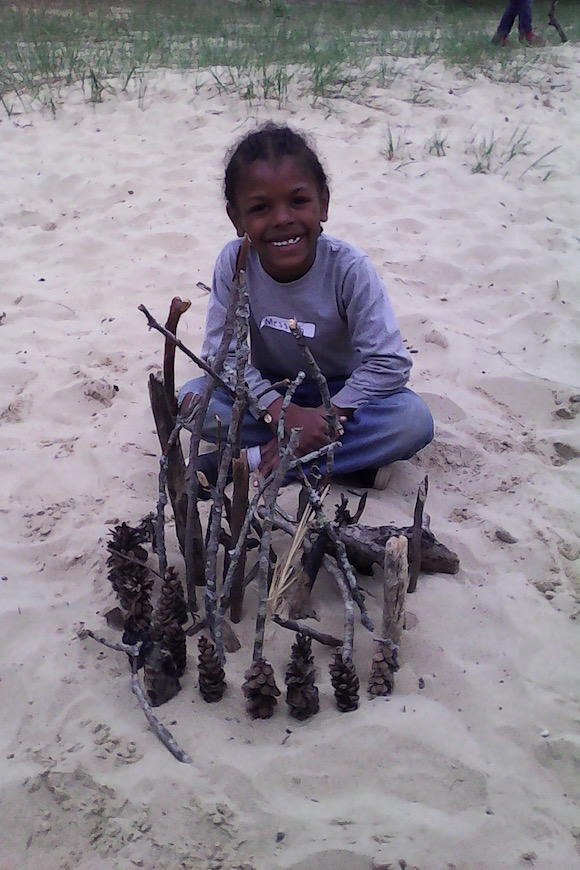
The following photos are some of our beach treasures. The last photo is one of the young students I teach who discovered the joys of beach combing while we were on a class field trip to Lake Michigan.
0

Goodbye

I will not be the art teacher at one of my favorite small schools next year. After 160 continuous years, the school is being shut down and the halls of its historic building will no longer echo with the children’s happy voices.

I never drove to the school without joyful expectation. It only had under one hundred students  grades kindergarten through eighth grade, and it was not in a wealthy neighborhood. But the feelings of community, caring and love were there in abundance. No child could possibly be left behind in this nurturing environment.

Shortly after returning to school last September, we all learned of the closing. Sadness reigned as everyone knew that something very special was coming to an end. Educational excellence was trumped by economics, and no guardian angels were in sight.

Thanks to one of the best principals I have ever worked for, the school year was a huge success. She was determined to make each day matter and lived to the fullest by her staff, students and herself. She set the tone with high expectations for all of us. Her determination to make the last year the best year was contagious.

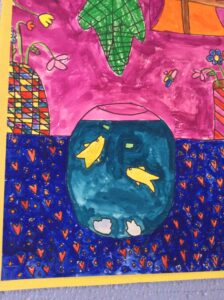
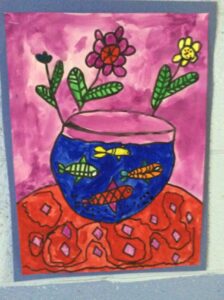
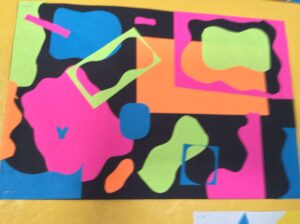
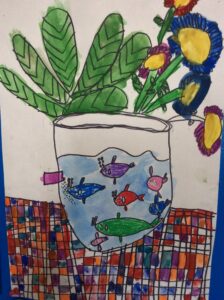
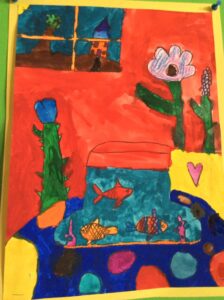
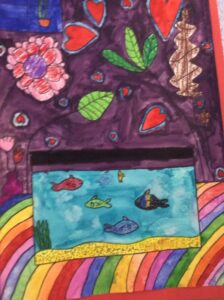
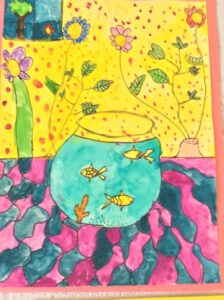
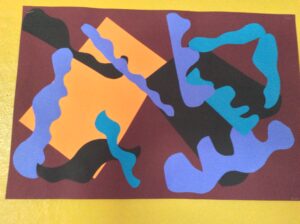
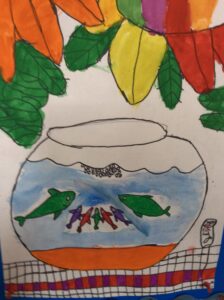
I carefully pondered which artist I would feature for the children’s last drawing project. I wanted an artist whose work radiated the joy and beauty of life. I choose Henri Matisse.

The students’ artwork will light up the halls and classrooms until the last day of school. Then, we all will scatter in different directions. But I believe we all will carry the spirit of the school wherever we go.

0

Bakeries

Every neighborhood once had a family owned bakery, and these wonderful shops each had a distinct ethnic flavor.

Many years ago, an acquaintance of mine started a tour business featuring these family run bakeries.  Italian, Greek, Polish, Mexican and German bakeries were visited with samples provided at each. The tours were wildly popular, but the business failed. The tourists literally gobbled up all the profits.

My childhood neighborhood bakery was named Pornats, and lines snaked out the door after church services on Sunday morning. My father was always in the line, and his order was always similar:

  • 1 large cream filled coffee cake with streusel, or
  • 1 large potica (a Slovenian nut filled pastry), or
  • 1 dozen assorted shnecks (sweet rolls)

To these treats was added the pie that followed Sunday night dinner. My father rotated between coconut cream and banana cream.

After I married, my husband and I started or own bakery tradition. We would drive to Chicago on a Saturday and bakery hop down Cicero Road. In those days Czech bakeries dotted every block for almost a mile. We would fill the back seat with breads and the Czech specialty, kolaches. Today, those same bakeries have changed into Panaderias offering delicious Mexican specialties.

bakery
swedishamericaninternshipsummer2013.blogspot.com

We recently decided to revive the Chicago bakery tradition and headed to Andersonville. This Chicago neighborhood is bustling and its Swedish origins are clearly evident….it is hard to miss a Dala Horse as big as a real pony standing on the sidewalk.

We took a number at the local bakery and had plenty of time to ponder the offerings as we waited in line. The cardamon coffee cakes won out. This choice proved to be excellent especially when topped with lingonberry jam and butter.

My cousin does not have to bakery hop. She lives in Racine, Wisconsin, in a part of town that has always been known affectionately as “Kringleville”. One guess why.


0

Turtles

This blog is for Joan, my favorite chelonophile.

The time has come to talk about turtles. National Turtle Day, May 23, will arrive soon, and here are some facts to celebrate.

Turtles, tortoises and terrapins are all reptiles. They belong to the order Chelonia, from the Greek word for tortoise. If you classify yourself as a lover of turtles, you are a chelonophile.

Turtles are terrific survivors. We people species are the new kids on neighborhood earth.  The oldest turtle fossils date to over 220 million years ago, the Triassic period. Amazingly, the ancient fossils are nearly identical anatomically to the turtles on earth now. (Mother Nature does not mess with designs that work.) Over 300 species of turtles currently inhabit the planet.

The three major groups of turtles display marked differences. Turtles spend most of their lives in water, either the ocean or freshwater lakes, ponds or rivers. They have webbed feet, or in the case of sea turtles, flippers.

Tortoises live on land and eat grasses, low growing shrubs and even cactuses. Their webless, round, stumpy feet are perfectly adapted to walk on land. Desert tortoises use their front legs to dig burrows.

Terrapins can’t make up their minds, dividing their time equally between land and water. They are often found in swampy places.

Desert tortoises hold the longevity record living up to 150 years. Sea turtles live about 70   years. Freshwater turtles can survive from 20 to 50 plus years.

The chelonian champion for size and weight is the leatherback sea turtle with a shell up to eight feet long. It is also the record weight holder at up to 1,800 pounds. The speckled Cape tortoise is among the smallest family members. It has a shell length of 3.1 inches  and weighs a mere five ounces.

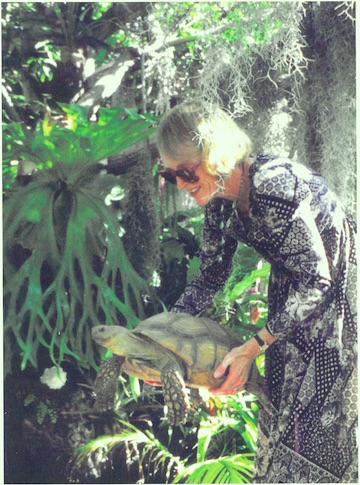
MT with friendIf you would like to invite a turtle to dinner on May 23, here are some menu tips from the San Diego Zoo.

“At the San Diego Zoo, our aquatic turtles are fed a variety of foods including earthworms, minnows, goldfish, chopped mice, fruit, yams and leafy greens. They are also given a special treat the keepers call Jell-O wigglers, a gelatin ball that contains pellets with vitamins and minerals. Our land tortoises are feed a variety of vegetables and leafy greens, along with occasional treats like hibiscus flowers, melons, cactus pads and tomatoes. Our Galapagos tortoises in particular seem to be attracted to anything red, and they love their tomatoes!”

Please note that it is inadvisable to invite a leatherback turtle over for a meal. They  love to dine on poisonous jellyfish.


0

Tulips

My first encounter with tulips did not end well. Tulips lined the side of our house, and at age two I snapped off all the opening buds and was starting to eat them when my mother rushed out of the house and sternly informed me that tulips weren’t food.

The same year I was attempting to eat the tulip flowers, the people in the Netherlands saved themselves from starvation by eating their tulip bulbs. It was the last horrific year of WWII, the Nazis still occupied the Netherlands and tulip bulbs were plentiful because all trade had stopped. Newspapers ran life saving recipes for potato, cabbage and tulip bulb stew.

Tulips and Holland are synonymous. However, the Turks get credit for cultivating the tulip from a central Asian wild flower. This occurred around 1000 A.D. The name tulip was derived from a Turkish word for “turban”.

Tulips arrived in Holland in the 1500’s, and the first major book on them was written in 1592 by a professor at The University of Leiden.

By the mid-seventeenth century, everyone in Holland was crazy for the flowers and an economic bubble, “Tulip Mania”, resulted. The bulbs became so expensive that they were used like money. The most desired bulbs were the “flame tulips”, ones with multi colored petals caused by a virus. Semper Augustus, the most valued tulip sold during the frenzy, cost 10,000 Guilders, the price of a canal house. Inevitably, the market crashed and floral sanity returned.

Photo by Alessandro Vecchi, <br>licensed under Creative Common
Photo by Alessandro Vecchi,
licensed under Creative Common

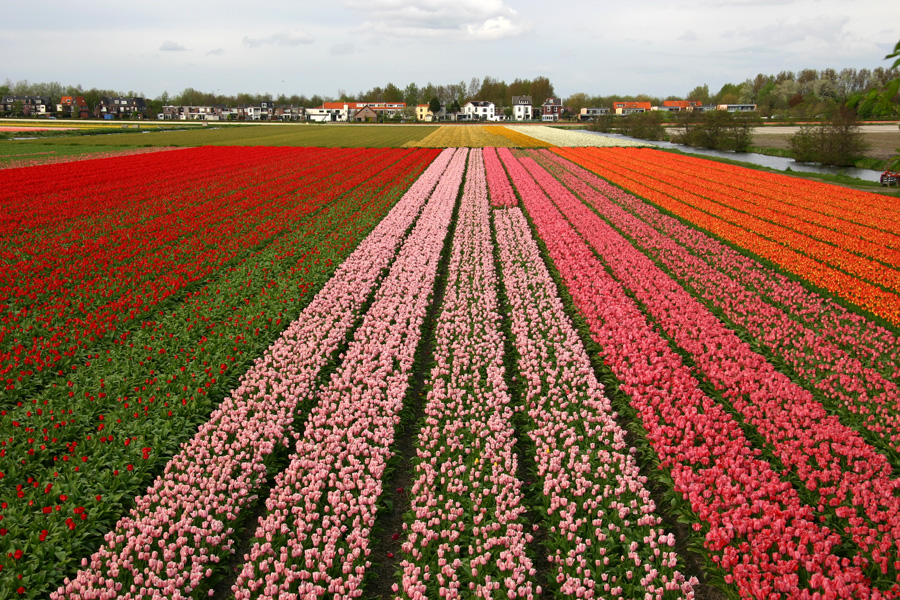
Tulips remain big business in the Netherlands; millions of bulbs are exported every year and millions of tourists are imported to view the dazzling tulip fields and festivals. The Netherlands contains half of all the greenhouses in Europe.

The Dutch register every tulip variety on an official list. The keeper of the list is the Koninklijk Algemeene voor Bloembollencultuur ( Royal General Association for Bulb Culture).

Whichever of the 8,000 varieties you choose, Sorbet, Salsa, Red Emperor, Flaming Kiss, Angel’s Dream, Carnaval de Nice or Mickey Mouse to name a few, they are guaranteed to brighten up any day. Just don’t eat them.

0