Bewitched

I know exactly where I want to be on Halloween night. I want to be in Beverly Hills, California, at 516 Walden Drive, just off Wilshire Boulevard and Santa Monica. Unfortunately, our travel budget is a bit strained and this will not be happening.

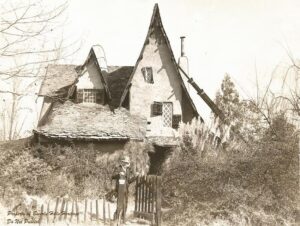
My wish is to visit the Witch’s House, a.k.a. the Spadena House, a beloved Beverly Hills landmark. A witch does not live in the house; Michael J. Libow, a real estate agent, is the current owner. Even sans witch, this quirky house rates a view.

The Witch’s cottage was not always situated in the flats of Beverly Hills…..as opposed to the hills of Beverly Hills where the really rich and supposedly non-witchy people live. This fairy tale structure was designed by Harry Oliver in 1921 and built on the lot of Willat Studio in Culver City. It housed the studio’s offices and dressing rooms and doubled as a movie set. Harry Oliver described his creation as “English Cottage Fantasy Architecture”.

When the studio went out of business, the house faced demolition. A producer, Ward Lascelle, came to its rescue and moved it to Beverly Hills in 1926. He and his wife Lucille turned it into a functioning home. They eventually divorced, and Lucille got the house and a new husband with the last name of Spadena, the official name of the house to this day.

The house changed hands again in 1965 when it was purchased by the Green family who lived there until 1997. Toward the end of their tenure, the house fell into serious disrepair. Most prospective buyers saw it as a tear down.

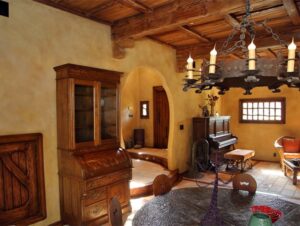
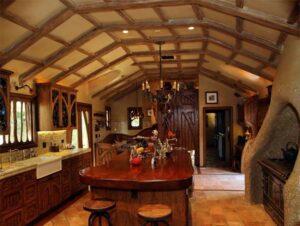
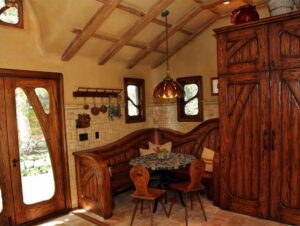
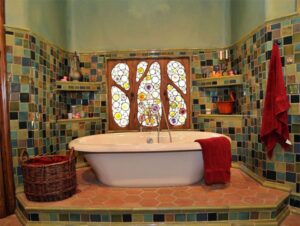
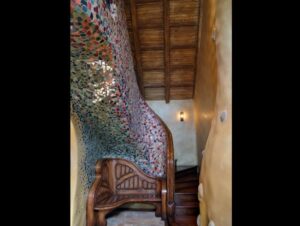
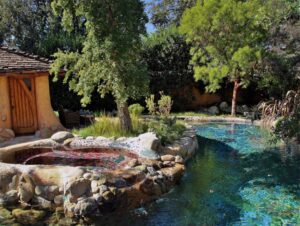
Michael J. Libow, who grew up in the area, was its savior. He bought it for $1.3 million, the price of the lot, and invested a small fortune and ten years to faithfully restore the exterior and make massive, but witch appropriate improvements to the interior. He also credits the famed Catalonian architect, Antonio Gaudi, as inspiration for the revamped interiors and garden structures.

The Spadena House was made a historic landmark by the City of Beverly Hills in 2013 and will remain the ultimate trick or treating destination for generations to come. Mr. Libow is expecting around 3,000 plus kids this year.
0

Stress

The upcoming Presidential election seems to be a choice between Democracy and decency or demagoguery, racism and misogyny. This surreal situation has landed many of us in a state of constant stress.

Stress is harmful to health. Lately, I have been hearing much advice from the media and friends on how to stay sane in the midst of this electoral madness.

One suggested option is wine…..lots of wine. My guess is that liquor stores are seeing an uptick in sales. However, drinking oneself into oblivion, while tempting, is probably not the wisest solution.

Meditation and slow breathing are also proffered as anxiety reducing techniques. Unfortunately, some of us don’t get any results from mindful breathing except slower breaths……the mind still races full speed ahead.

My only escape from the current political scene is reading. I have been checking out piles of books from my library and making sure the books are by my favorite authors.  Recently, I was overjoyed to get Alexander McCall Smith’s latest book in his No. 1 Ladies’ Detective Agency Series entitled Precious and Grace. For three blissful, stress escaping hours, I read the book straight through.

Alexander McCall Smith is a medical ethicist by profession, and his books are not detective novels. They are, however, about the mystery of love and human nature.

Here is an excerpt from Precious and Grace:

Mma Ramotswe smiled. It was some time since she had heard the word skellum, as it seemed to have passed out of favour. Yet it was such a fine word, that so effectively described a rogue or a rascal; a word that her father had used eloquently, picked up from the Boers, when describing dealers who paid poor farmers too little for their cattle, or traders who doctored their scales so that they could give short shrift to buyers of sorghum or maize meal. Obed Ramotswe had seen these as skellums and would call them that to their face; now, perhaps, the skellums could get away with it because people were afraid to stand up to them, or were no longer sure what was right or wrong, or were afraid to identify wickedness or sleaze when they saw it.

No Stress
photo: menucha.org


0

Subnivean

I added a wonderful word to my vocabulary last week and simultaneously discarded a bundle of guilt. The word is subnivean which means the space in and under the snow.

I was driving home from the post office and listening to Public Radio. A short segment about spiders came on, and I, a lover of these complex little creatures, was on full alert. The speaker was a spider expert from our nearby University of Wisconsin in Green Bay.

At the same time I was getting arachnid information, my husband was up on a ladder at home washing hundreds of spider webs and egg sacs from the eaves, clapboards and windows of our house. This is an annual fall job for us, as our spider population is enormous and by autumn the results of their handiwork makes our house look haunted.

I feel sadness every time I take down the carefully wrapped egg sacs. Spiders are such diligent and skilled workers, making up to seven distinct kinds of silk for various spider jobs. However, I have also come to realize that despite our yearly cleanup, our annual spider population never seems to decline.

The spider expert on the radio explained how spiders survive the winter. Surprisingly, most egg sacs don’t make it through the winter: they freeze and turn to mush in the spring. Most of our Wisconsin spiders who live outdoors (house spiders will be a topic for another blog) make a kind of antifreeze in their tissues when the temperatures start to drop. They overwinter in tree bark, leaf litter and the subnivean space between the warmer earth and the insulating snow. Many survive to see the spring. These same spiders would die if exposed to extremely cold temperatures in summer.

I’m delighted that our fall cleanup is not hurting our spider population. Now, wouldn’t it be wonderful if we people species could produce our own antifreeze to ward off Arctic blasts?

http://www.summitpost.org/weird-snow-spider/303791
Photo – summitpost.org/weird-snow-spider/303791
0

Cartalk

I realized the other day that only an “a” separates the names of the cars my husband and I are currently driving. Somehow, we have ended up with a Fit and a Fiat.

Buying a car should be a pleasurable experience. But for those of us who abhor bargaining, car buying is a dismal, prolonged and absurd game. Unfortunately, with few exceptions, it is the only way to get a vehicle without being run over.

When my husband’s little, 1991 Miata convertible got very, very tired two years ago, we sent it to a cozy barn near us for a rest. At around the same time, my car, a Hyundai Accent, decided it did not want to be a Cuban car and live forever. The ugly car buying ritual loomed. When you are a grown up, it’s nice to have one reliable car in the family.

We have only three criteria when buying a car: low price, high mpg and shortness. Our cars are housed in our one car garage, parked end to end. If one of us wants a longer car, it’s understood that the big car will be parked outside and be shoveled out from blizzards by the one who wanted it. Shortness remains on the criteria list.

We spent a miserable Saturday checking out short cars at multiple dealerships. All were horribly designed and overpriced, nothing either of us could get excited about. As the afternoon ended, we had a brainstorm. We remembered the Fiat 500 we had rented in Europe, drove hundreds of miles, and both loved.

Fiat dealers are few and far between, but we located one the following weekend. The Fiat was as good as we remembered. But one thing was not good, American roads. In the Netherlands, we drove on roads smooth as glass, not a crack, pothole or patch in sight. Since our American roads are a crumbling disgrace, the Fiat’s short wheel base yields a bumpy ride.

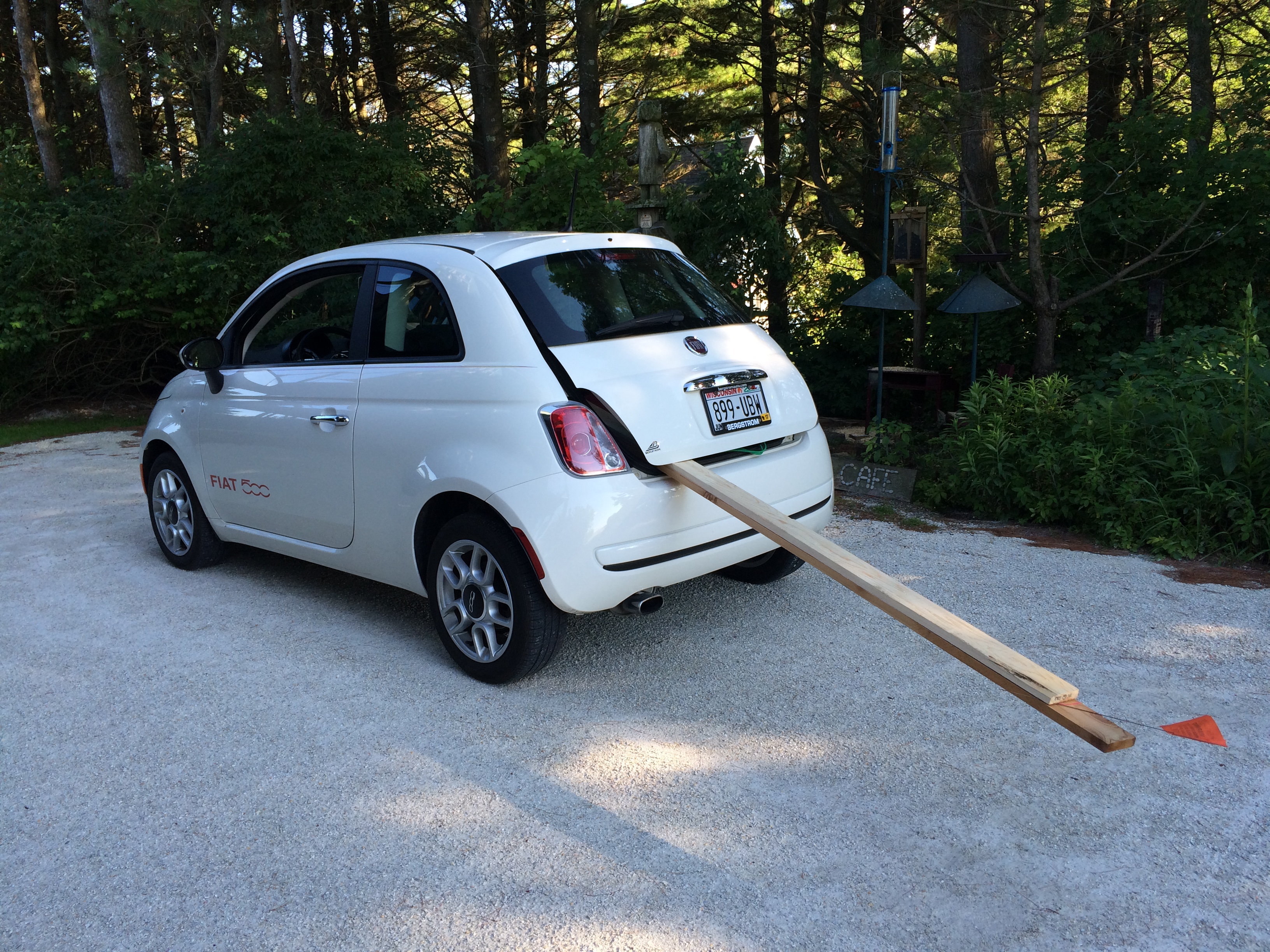
We bought the Fiat, but we bought a used one, figuring it would be used only for short trips around home. It has risen to every occasion, including bringing 14 feet long boards home from the lumber yard.

This spring when my beloved, orange Hyundai succumbed to old age, we replaced it with a “big” car, a Honda Fit. The Fit fits in the garage and regularly gets 40 miles to the gallon. Plus, we can take a 1,000 mile road trip and still have all our bones intact.

We hope to be out of the car buying business for many years.

IMG_1744

0

Beer

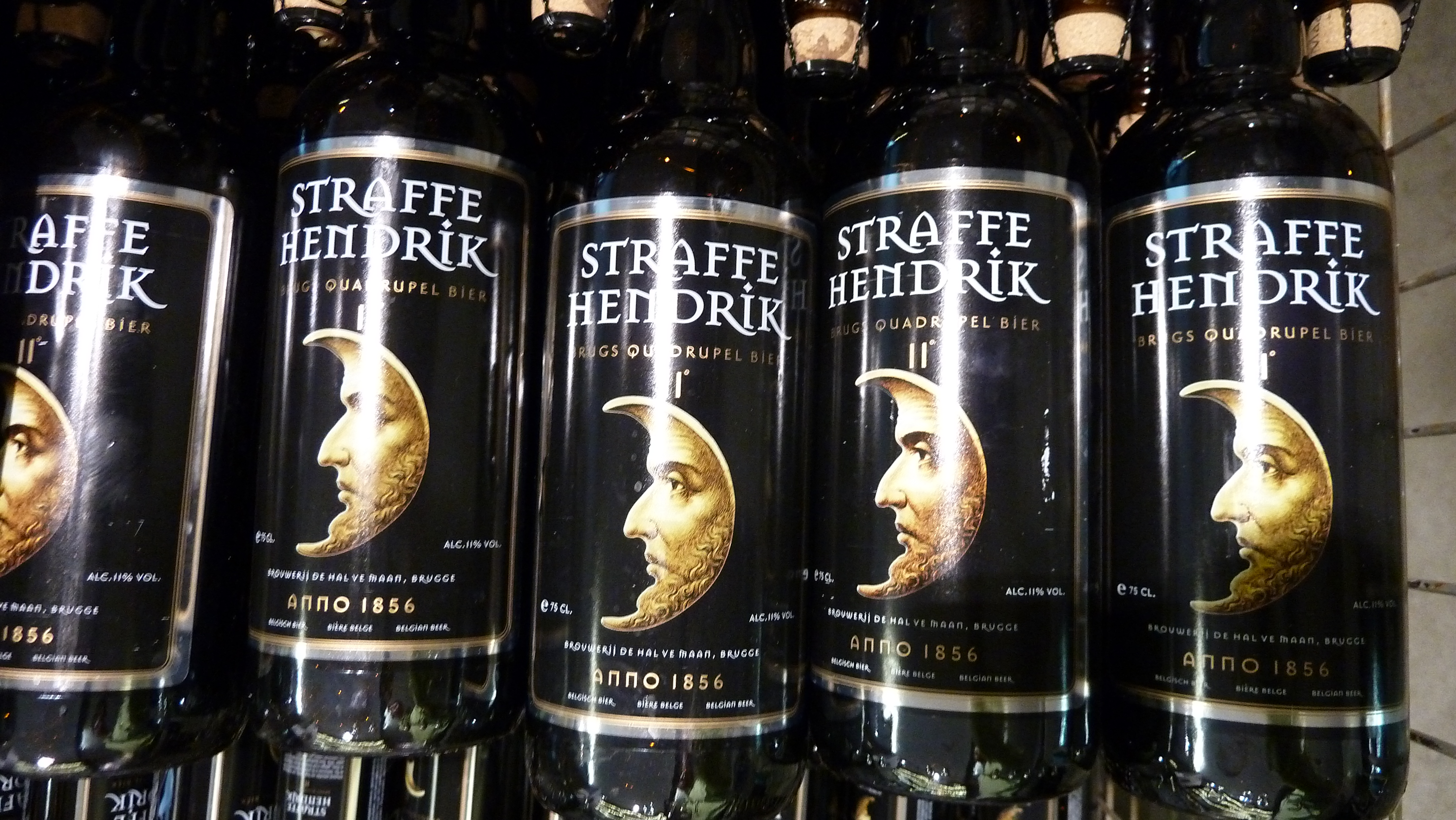
My state is populated with beer drinkers, my husband worked at the Schlitz Brewery for many years and I schlep beer home from the grocery store every week. Yet in ten years of weekly blogs, I have never written about beer….until now.

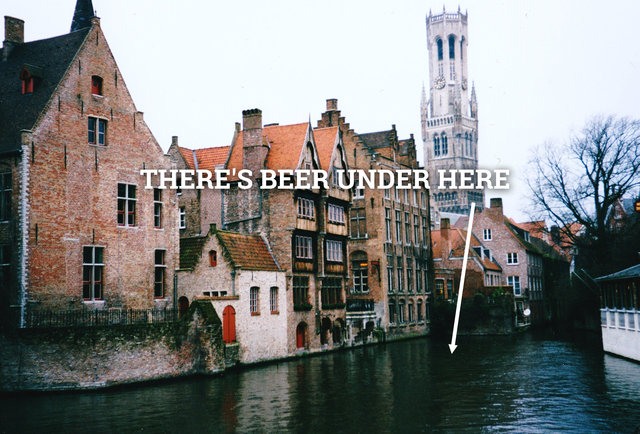
The Belgian city of Bruges is responsible for this post. Quaint little Bruges, a UNESCO World Heritage Site, has just made beer history. They have built the world’s first beer pipeline which runs two miles under the cobblestone streets and canals of their burg.

The 500 year old brewery, De Halve Mann (The Half Moon), is in the historic heart of medieval Bruges. Hordes of tourists are cited by the brewery’s owners as the impetus for the pipeline. The brewhouse’s big tanker trucks of beer could no longer navigate safely through the narrow, visitor-packed streets to reach the bottling plant on the outskirts of town.

After watching utility cables being installed under a street, the brewery’s director, Xavier Vanneste, had a “what if?” moment. He decided to create a beer pipeline. The architecture of Bruges may be frozen in the past, but the thinking of its beer barons decidedly is not.

Twenty-first century thinking was also employed to fund the 4.5 million dollar pipeline. An Internet crowdsourcing campaign was started to raise part of the money. More than 500 donors bellied up. They will be rewarded for their contributions with beer.

Mr. Vanneste explains that “someone that only made a small investment will get maybe a pack of beer every year on his birthday. But someone who paid the maximum amount may receive up to one bottle of beer a day for the rest of his or her life.”

If you love beer and can handle crowds, you may want to visit Bruges. In addition to fairytale architecture and beer, the city is famous for its Belgian chocolates and lace shops. And now you also can search for Bruges’ newest tourist attraction, a transparent manhole cover. Peer down and you will see the beer pipeline carrying 1,000 gallons or 12,000 glasses of beer per hour.

Op uw gezondheid!

Cheers!

www.cleanbeerlines.co.uk
IMG_3531
Photo – Peter Little
0