Signs

Last weekend we met the Eastern branch of our family in Cincinnati, Ohio, the halfway point between our homes. Having one day together to explore the city, we hit the jackpot when we discovered an illuminating, electrifying and exciting attraction.

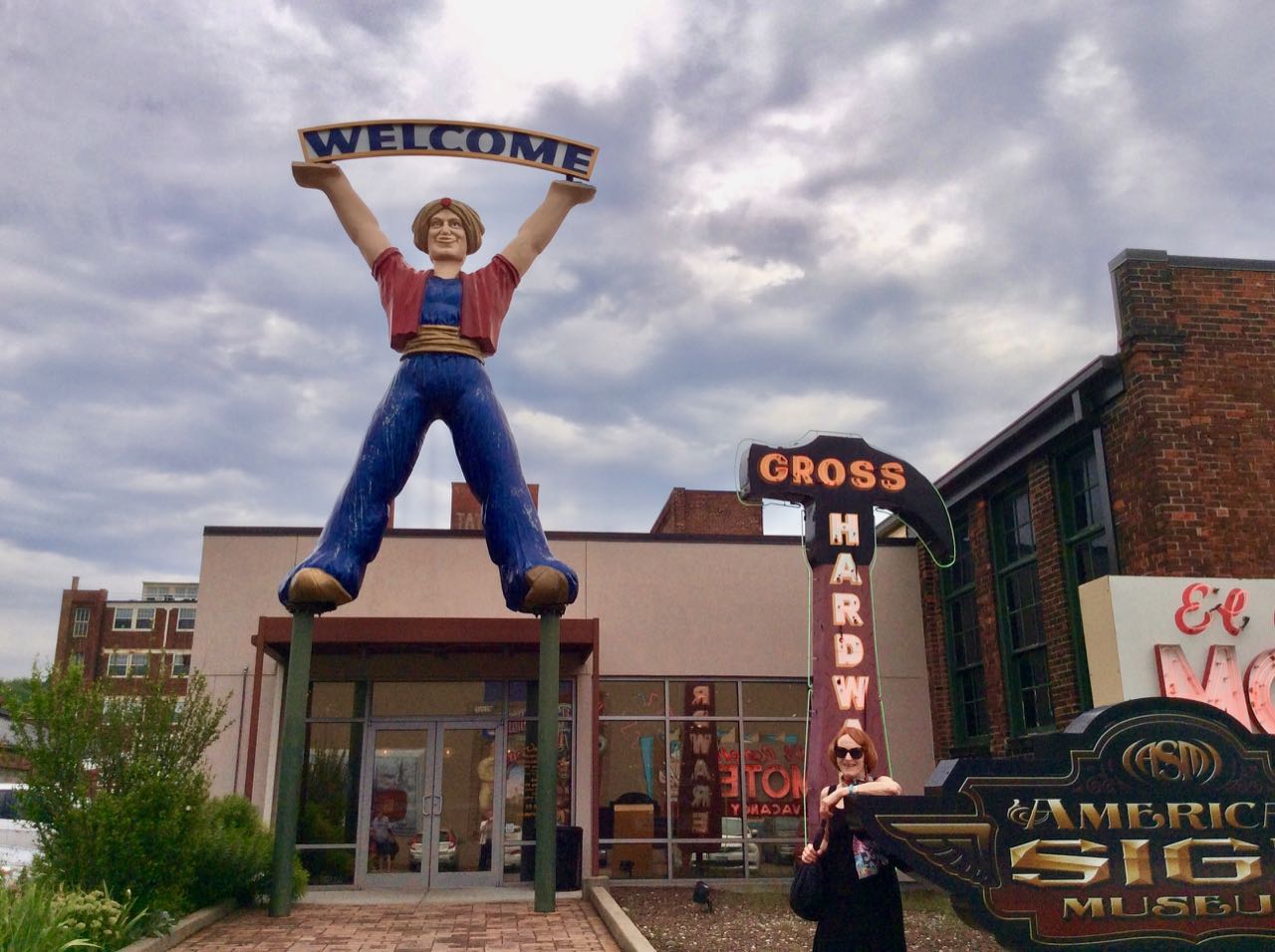
Going by the unassuming name of the American Sign Museum, it is anything but bland. All three generations of us agreed it was dazzling…in the literal sense of the word.

The American Sign Museum covers the history of commercial American signs from 1870 through 1970. Starting with hand carved signs sporting gilded letters, the displays continue to electric light bulb signs, neon era signs, metal signs and modern plastic signs.

Visitors can also walk through the adjacent neon restoration shop where old neon signs are brought back to their original splendor.

This grand museum is the creation of Tod Swormstedt who worked on SIGNS OF THE TIMES, the trade magazine of the sign industry, for 28 years. His great-grandfather was the original editor of the publication which began in 1906 and continues in print to this day.

In 1999, Mr. Swormstedt’s desire to save, restore and archive old signs led to his opening of the National Signs of the Times Museum. This morphed into the American Sign Museum in 2005. Because of the need for a huge space to display his massive and growing collection, a move was made in 2012 to the current location in a former industrial complex. Plans are now underway to double the size of the museum in the near future.

Be forewarned: older visitors to the museum should be ready to embark on a massive nostalgia trip. Here is a short video my husband and I made in an attempt to capture the feel of this amazing museum. We’ll be back when the expansion is completed.


0
Cove

About forty years ago, my husband and I decided to buy a lake lot. We looked at properties on inland lakes and rapidly concluded they were totally beyond our budget. Then we turned our attention to the world’s fifth largest lake and hit the jackpot.

We drove along the Lake Michigan shore and spotted a For Sale sign on a lovely piece of property. The sign was so old and decrepit that the phone number on it was almost undecipherable, a sure clue that something was amiss. That something turned out to be a 70 foot cliff at the end of the lot with a sheer drop off directly into the lake…no beach. We bought the lot.

Our faith in Mother Nature paid off. The only constant about shorelines is constant change. A few years later we had a beachfront property. Twenty years later, we built our current home on that piece of land.

Daily observation of the effects of waves and weather on the shore has been a fascinating experience. Our biggest surprise is the speed at which the changes occur. One day we looked down to discover a perfect cove created by shifting sandbars directly in front of our bluff. “We should call our house ‘Cat Cove’ “, I joked. (Stray cats had been turning up on our doorstep with great regularity.) Cat Cove vanished three days later, but the name stuck.

In the twenty-three years we have lived here, we have had beaches as wide as a football field or as narrow as a deer path. The cliff has fluctuated between being totally covered with vegetation to raw earth.

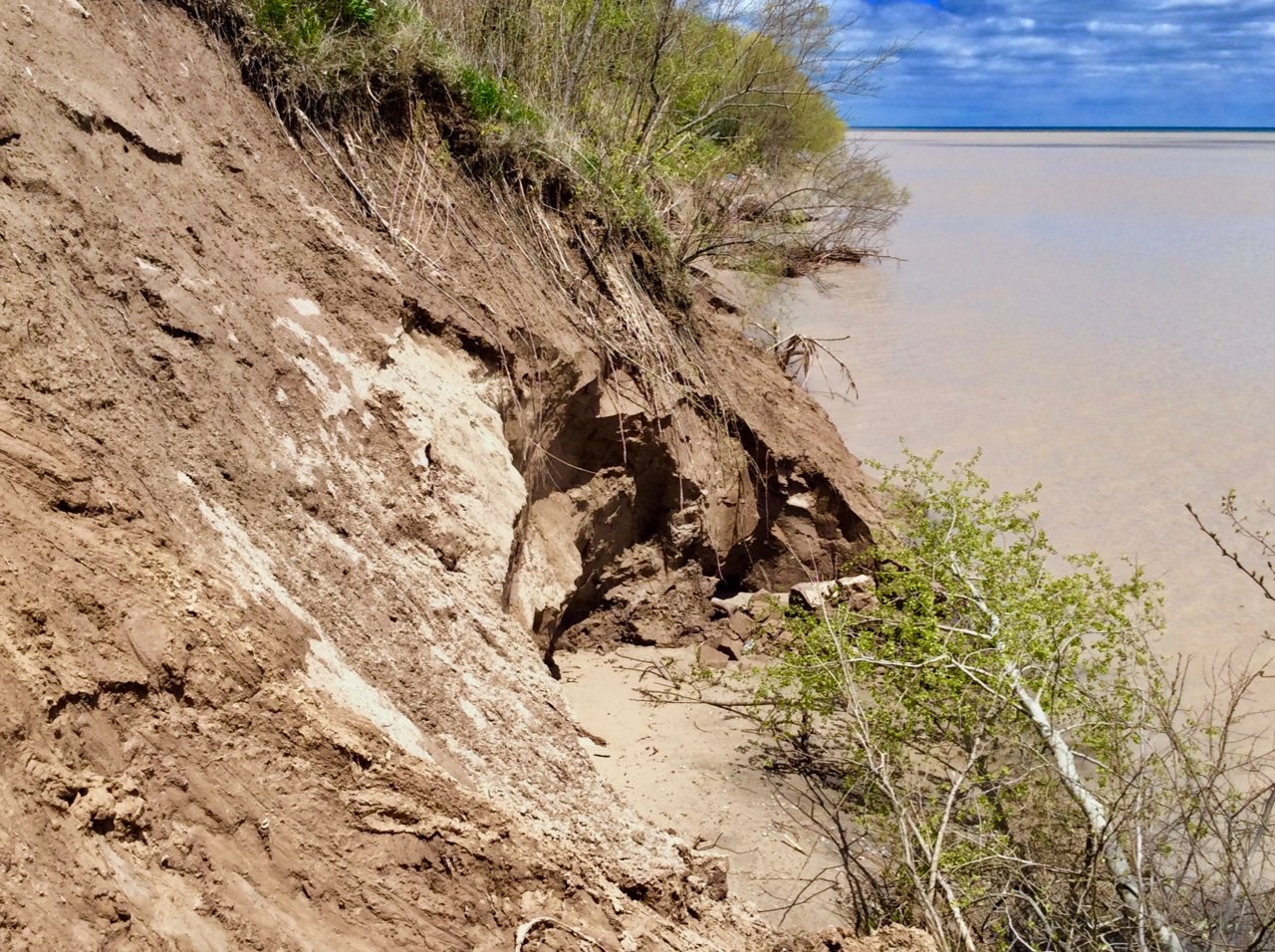
This past May has seen sensational changes. The waves have taken half the cliff, almost all the trees and half our stairs. The raw cliff is sending huge chunks of earth downward almost daily. And at this moment the crumbling bluff has created a new Cat Cove which shelters a perfect little beach. We will enjoy it while it lasts.


0

Bicycling

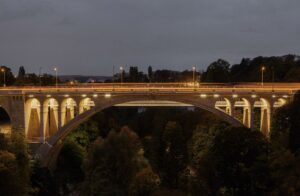
Luxembourg City is the capital of the tiny but extremely wealthy country of Luxembourg. Perched above sheer rock cliffs, the city began as a fortified medieval town. A series of bridges and viaducts span the valleys beneath the city connecting it to the rest of the world. All of Luxembourg is a UNESCO heritage site.

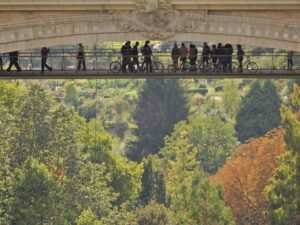
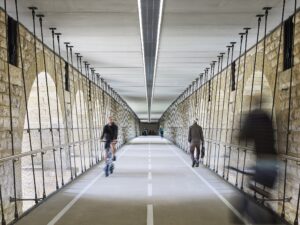
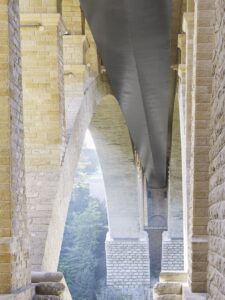
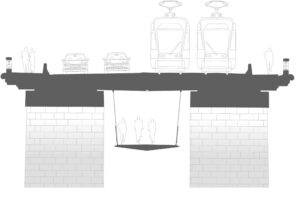
One of the most spectacular entrances to the town is the 1903 Pont Adolphe bridge, a 501 feet long stone structure and a beloved historic landmark. When cracks were discovered in the bridge in 1996, plans were made to stabilize and widen it. Great care was taken to retain the historic look of the bridge. As part of the restoration process, all the stones creating the arches were numbered, removed and taken away for cleaning.  When the work was completed in 2016, the stones were put back in place like assembling a giant puzzle. The completed bridge has two one way traffic lanes and two tram lanes plus an award-winning new feature, bicycle and pedestrian lanes hung under the vehicular roadway.

The bike lanes are suspended between the arches and are described by architect Christian Bauer “like a well-controlled spider’s web, barely visible from the outside.” Architects have long looked to animals and plants for inspiration.

Since the bike path opened, riders and walkers have turned out en masse with great enthusiasm, too much enthusiasm, in fact. The Luxembourg Times reports that it is impossible to bike a straight line through the lanes. Too many riders are stopping to enjoy the incredible views framed by the arches. They can hardly be blamed.

0

Indigo

The color indigo is a fashion star this summer, popping up in clothes and home goods in stores all over America. This is a trend I can relate to as I love both the color and its fascinating history.

Indigo is probably the world’s oldest textile dye dating back at least 6,000 years. Derived from a Greek word meaning “coming from India”, the dye was used in ancient India, China and Egypt.

While the color blue is common in many plants and berries, few produce a bright, long-lasting dye. Several varieties of the indigo plant are the only natural source for a vivid, permanent blue textile dye. Ironically, no blue color shows in the leaves, flowers or stems of the indigo plant. The dye is produced by fermenting the leaves via a tedious, smelly process.

Sadly, European demand for indigo was an important factor in colonization and the slave trade. The British, French, Dutch and Spanish all established highly lucrative indigo plantations in the New World. The labor was done by slaves.

The invention of synthetic “indigo” dye in Germany in 1897 wiped out much of the demand for field grown indigo. The intricate process of dying textiles with plant-based indigo dyes is now practiced around the world only as an art, which it truly is.

Here as several fascinating facts about indigo:

  • In the Elizabethan era, English law dictated that only royals and others with high status could wear indigo blue clothes. Hence, we still have the term, “royal blue”.
  • Years after the Elizabethans, indigo clothing was definitely not only for the elite. Working people embraced indigo blue jeans and blue-collar shirts.
  • When a fabric comes out of the indigo dye bath, it is pond scum green. When exposed to air, it slowly turns to the characteristic intense blue color.
  • When Newton named the colors of the rainbow, he threw in indigo to bring the number to seven to match the number of notes in the Western musical scale. From ancient times, seven has been cited as a “lucky number”. In the rainbow, indigo is just one of the infinite number of colors on the visible spectrum. Newton had an unscientific moment. Most scientists now have removed the “I” from ROYGBIV. But that does not make indigo one iota less beautiful.

0

Reluctant

Spring has been extremely reluctant to come this year. Dwelling in the northlands on the shore of a huge lake, we don’t expect anything to happen when the calendar hits the spring equinox. We are realists.  But when Memorial Day has come and gone and the cherry trees have yet to bloom, our patience is taxed.

We began to sense trouble back in April when it was time for our flock of purple martins to return. For almost two decades, they have come punctually in mid-April to raise their families in our large martin apartment houses. A few scout birds were spotted last month, but they must have reported back that it wasn’t bug time here yet. Finally, last week, these lovely flocks arrived to occupy their houses. It was thrilling to look out at the fields across from our house and see over thirty birds swooping in the skies scooping up insects.

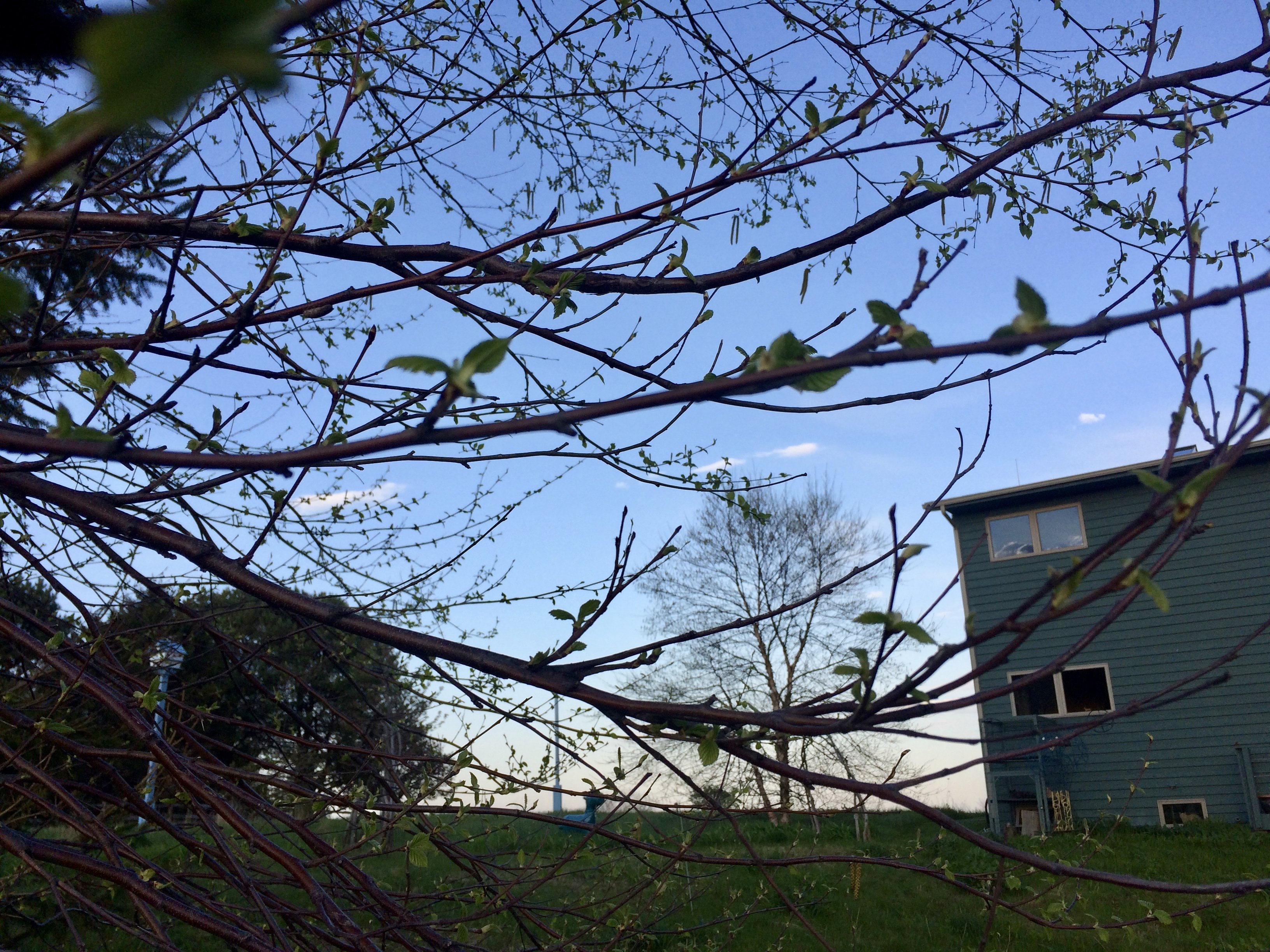
We are still waiting for the green leaves on our trees to fully open. When the first whisper of green appears on the trees, our spirits soar. This year that gauzy stage has lasted a long time, almost as if those tiny leaves tasted the air and decided to stay snuggled up in their buds until things improved. Our birch trees, always the last to leaf out, are more reluctant than ever to unfurl their greenery. Here is what they looked like last weekend.

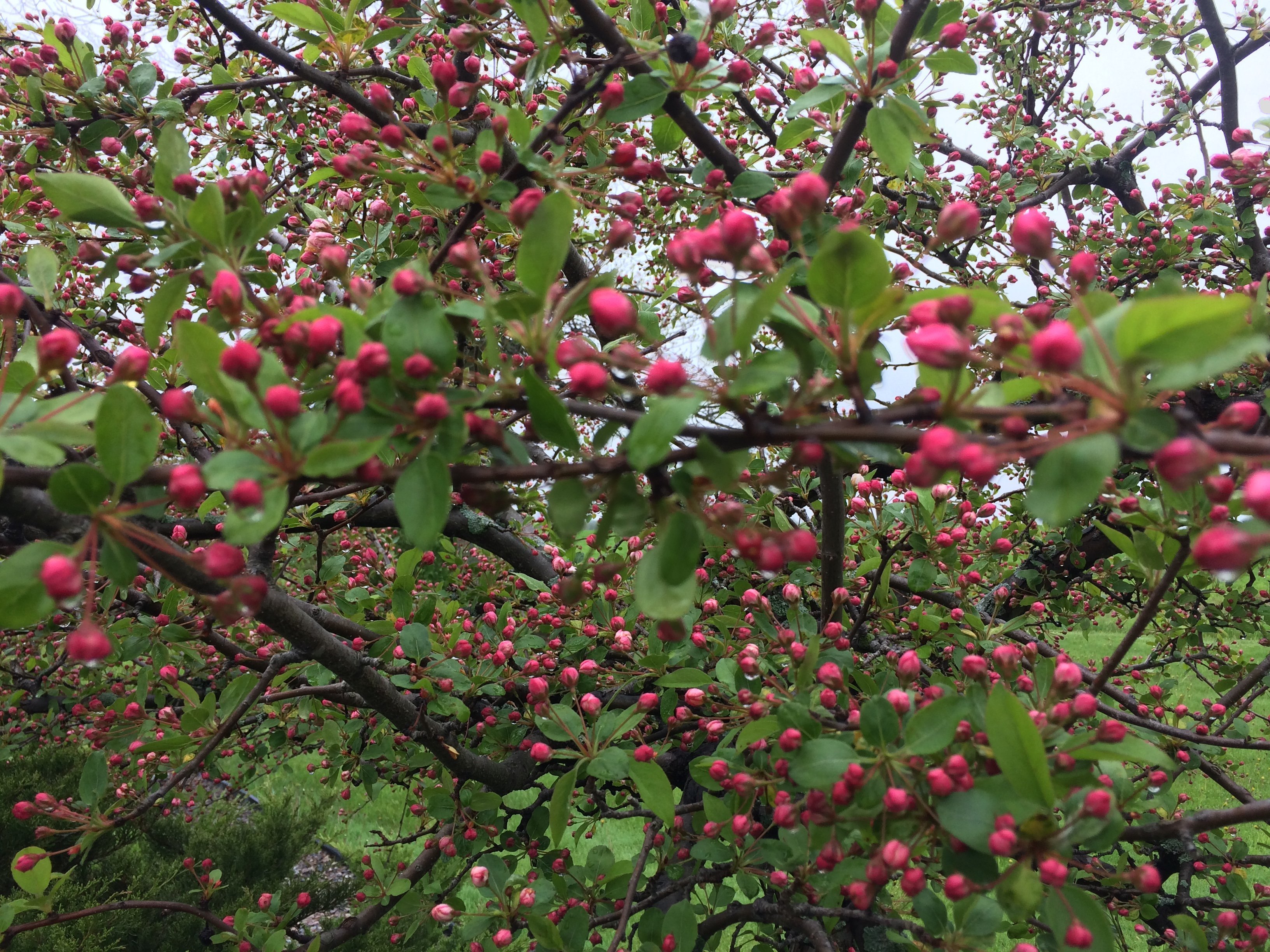
A sure sign that spring is fully present is when the flowering trees all simultaneously burst into bloom. This glorious spectacle has always occurred in May… but not this year. June will be here before our flowering trees are covered with their pink and white blossoms. They better hurry up and get their act together. Summer is just around the corner.

0