Dragons

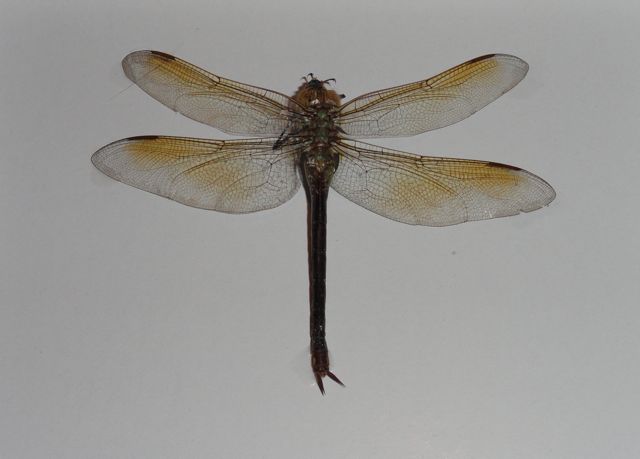
I hurry home from work on summer days eager to see what’s going on in my yard. Every summer evening is special, but last Wednesday at dusk was spectacular. As we sat having dinner on the front deck, the sky directly overhead was peppered with giant dragonflies. They were zigging, zagging, dropping straight down, zooming vertically and, in general, putting helicopters to shame with their aerial stunts. I know that as they were performing these feats, the dragonflies were simultaneously grabbing bugs with their front legs and stuffing the insects into their mouths. The only show more sensational would have taken place in prehistoric times when dragonflies had wingspans of 2.5 feet.

In the airspace above the dragonflies, about forty of our purple martins were swooping around, chattering and gobbling insects for bedtime snacks. We observed that no dragonflies got picked off by the martins. I’m guessing the dragons were too big a mouthful.

As the last rays of the sun were fading, the highest layer of the sky was filled with silent streams of gulls winging home for bedtime in the lake.

In less than an hour, we witnessed hundreds and hundreds of flight paths. Unlike O’Hare, no control tower  filled with air traffic controllers was needed. And we are happy to report that, despite the congestion, no mid-air collisions occurred. Nature certainly has her act together.
0

Lobsters

Understanding the big picture is more important than knowing the details. Delightful as they may be, details should be the dessert.

That sums up my teaching philosophy of the last forty-nine years. Whether I am teaching art or natural science, I stick to the creed of large to small.

“Plan the entire picture first,” I remind the kids in my art classes. Or, “learn about the animal’s habitat, then see how that animal adapts to its environment”. In other words, make the connections.

Which brings us to lobsters and their friends. I loved biology and lapped up information on scores of species. But throughout grade school, high school and college, no teacher ever taught me the word “arthropod”. Many years later I was in a big Canadian natural history museum which had a banner extolling “The Wonderful World of Arthropods”.

“What’s an arthropod?” I asked my husband. But his teachers had not answered that question either. To this day, grade schools mostly ignore the large arthropod group and zoom in on the insect class.

The museum clearly presented us with the big picture in brilliant ways. Arthropods are a large phylum of animals with many jointed legs, segmented bodies, an outer shell and no backbone. Then the exhibits introduced the classes of animals with these features.

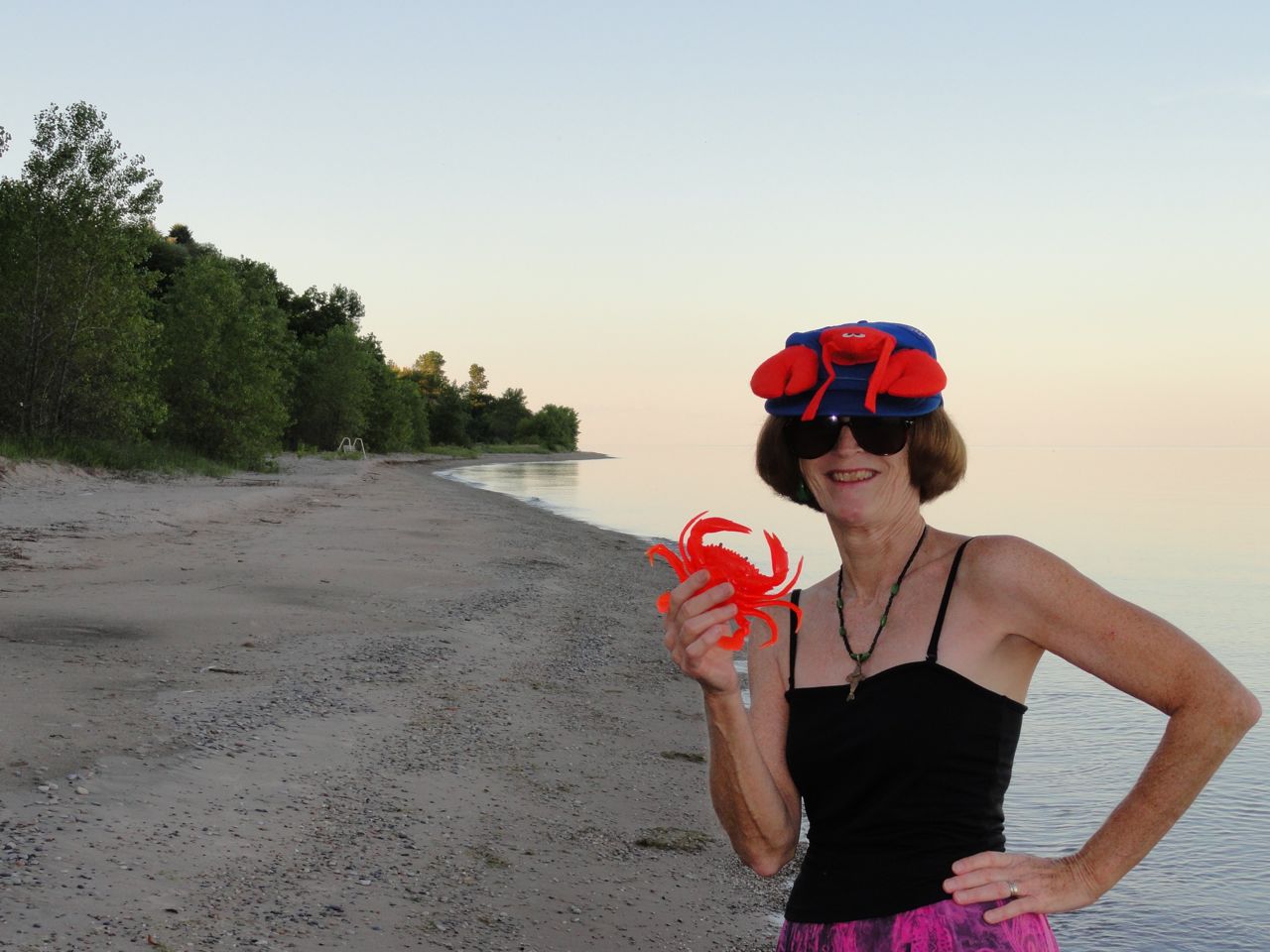
All of a sudden I saw lobsters in a whole new way. The curtain had fallen from my eyes. Lobsters look just like gigantic bugs or bugs just look like itty-bitty lobsters. These guys are all cousins along with other crustaceans, centipedes, millipedes, spiders and insects.

Arthropods are a big deal. They are the most numerous animals on earth. When we mammals mess up the planet beyond repair for our survival, the arthropods will probably continue on their merry way as they have for eons. Kids should definitely learn the big picture.

0

Ballet

The ballet is being presented daily across the road from our house. Hundreds of white and sulphur butterflies dance and pirouette all day above our neighbor’s field of oats. I have no idea why they choose this particular spot for their performance, but I’m enjoying my ringside seat.

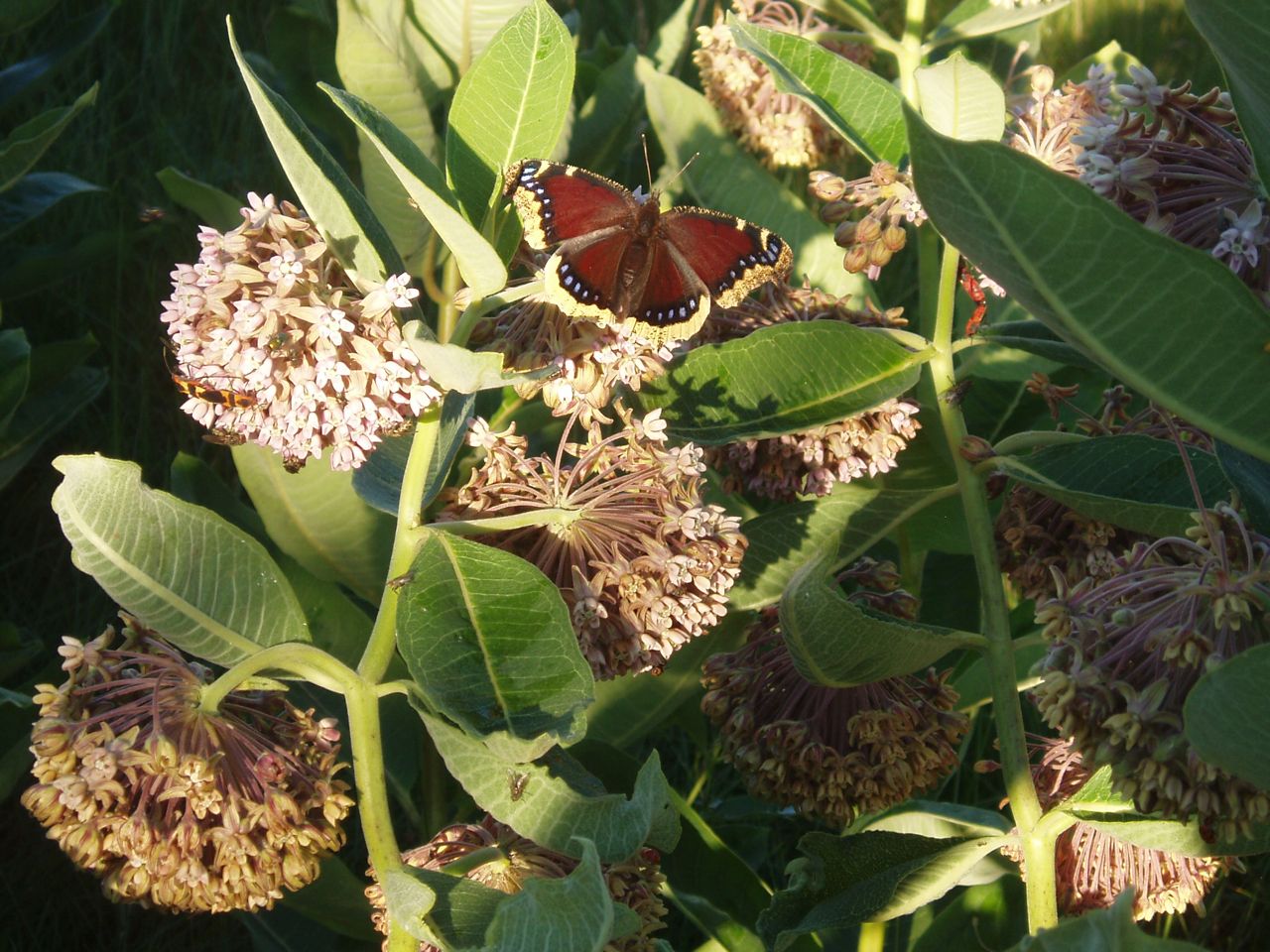
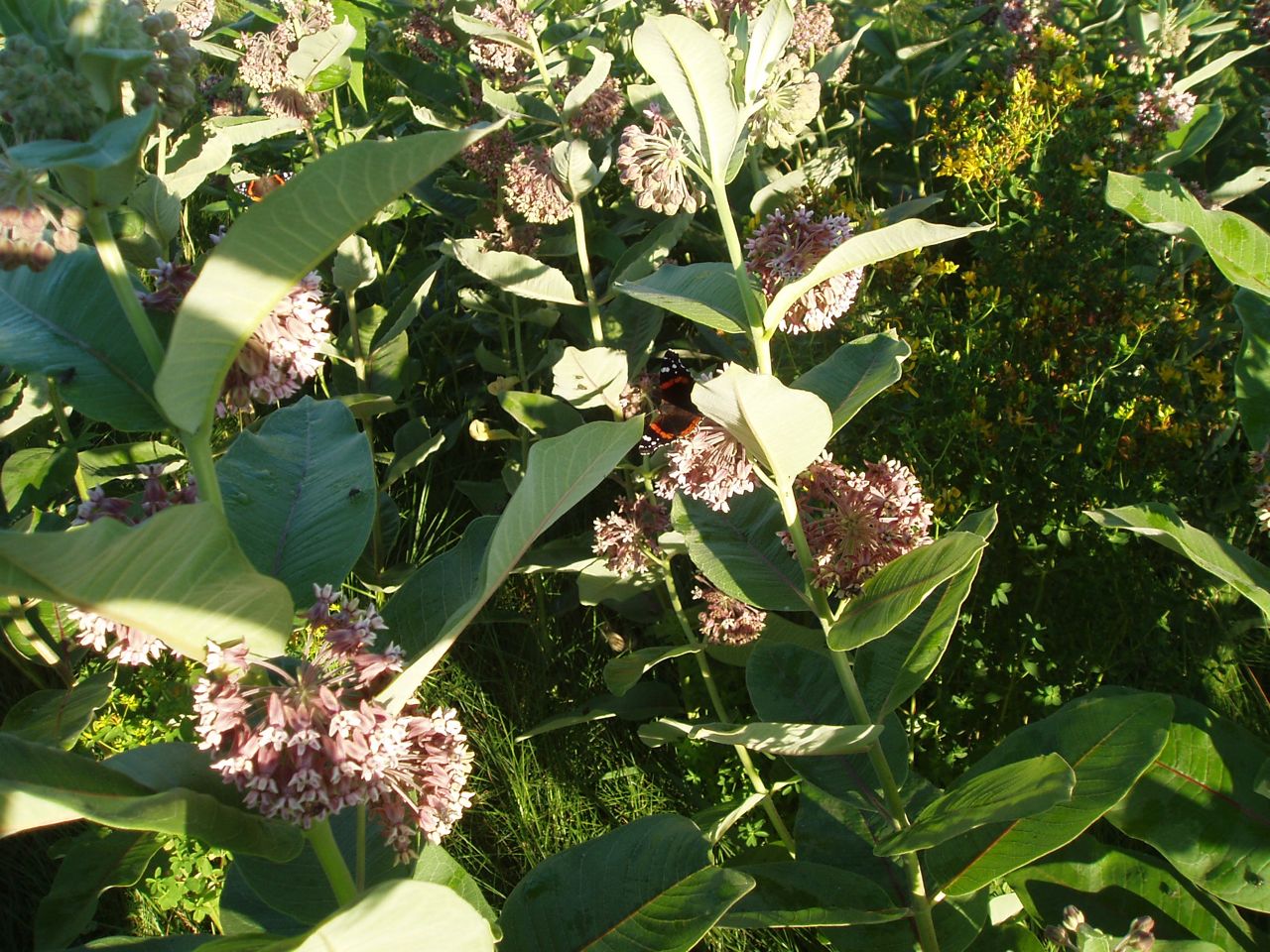
On our side of the road the principal dancers are more varied. We have provided some spectacular floral scenery for them. Monarchs flutter constantly in the milkweed blossoms, frequently doing mid-air pas de deux. Red Admirals are cavorting everywhere… the abundance of this classy little butterfly has not been this great since 1991. Stars such as the Mourning Cloak and Swallowtails stage solos through the blossoms. We are enjoying a stellar butterfly year along the shore.

When it became apparent that this was the summer of Lepidoptera, I headed for the computer and found a site listing all the families and subfamilies of Wisconsin butterflies. Throwing all caution to the winds, I hit the “Print” button and promptly depleted all the colored ink cartridges. It was worth the price. I now can stand in the front yard and identify our butterfly visitors. It would be so rude not to know the names of our guests. I’m sure we are hosting some Eastern Commas this week. They have lots of look-alike Comma cousins, but my computer generated guide book is a big help.

I know the butterfly show has a short run. The curtain of Fall will come down all too soon. I intend to see as many performances as possible.

0

Vaporize

It is a scientific fact that teenage boys vaporize food…lots of food. When my own son was a teenager, he had no problem consuming a half pound of cheddar cheese as a little after school snack. So we made a deal. If he ate all the main ingredients of the dinner I was going to make when I came home from work, he would be the one to bike to the store for replacements.

I haven’t been responsible for feeding a male adolescent for many years, so was out of practice  at a family event a while back. Three teenage boys were among the guests at our house. I split a dozen large Sheboygan hard rolls, buttered them lavishly and stuck them in the oven to toast. I put a basket with the twenty-four rolls on the kid’s table, served the other guests and was about to sit down when I noticed the rolls had vanished. So I put twenty-four more buns topped with another half pound of butter in to grill. The scenario repeated itself instantly except this time I sat down to eat, too, sans roll.

At this year’s party I was prepared. Four dozen Sheboygan hard rolls were stuffed into my freezer awaiting their apocalypse.

The younger generation of our family is awash with girls, but we do have two little boys amidst our sea of females. I will be ready when they hit their teen years. I’m going to emulate the cooking methods of Sourdough Sam, Paul Bunyan’s camp cook:

“Sam’s cookshack itself was over two miles long. One whole side was taken up by the great griddle, on which he fried the sourdough flapjacks for which he was famous. It kept a whole bunkhouse full of cookees busy hauling wood for it. The batter was mixed in a big reservoir Paul had dug on a hill back of camp. The mixing was done with an old river steamboat which was kept busy steaming back and forth all night across the lake of sourdough. When the breakfast whistle blew, the floodgates were opened and the batter poured through a flume to a sprinkler system that squirted the cakes on the griddle.

Flunkies with sides of bacon strapped to their boots skated over the smoking surface, greasing it and turning the flapjacks with scoop shovels. As fast as they were done they were stacked on wagons drawn by four horses, which galloped to the mess hall, up a ramp, and down the middle of the great table, while men with cant hooks rolled the cakes off onto the plates. Another four-horse outfit, hitched to a sprinkler wagon, followed  close behind with the syrup.”

Sounds like a plan.

Quote from  “Ol’ Paul, The Mighty Logger”, by Glen Rounds

0

Frances

Frances told me one night at dinner that she had no stories.

“Of course you do,” I replied, “you have lived ninety years.”

This conversation occurred at the dinner table at my aunt’s assisted living. My aunt ate with the same three friends, and I came to know them well during my monthly visits out west.

“No, I really don’t,” Frances insisted. “You and your aunt tell such good stories at every meal.”

My aunt, though almost deaf, entertained us with humorous tales of her world travels with my cantankerous, intrepid and globe trotting uncle.

“Frances,” I said, “if you think hard, you will definitely find some stories.” I know that the extremely elderly have an abundance of time to think.

The next night, Frances sat down and announced, “I have a story.”

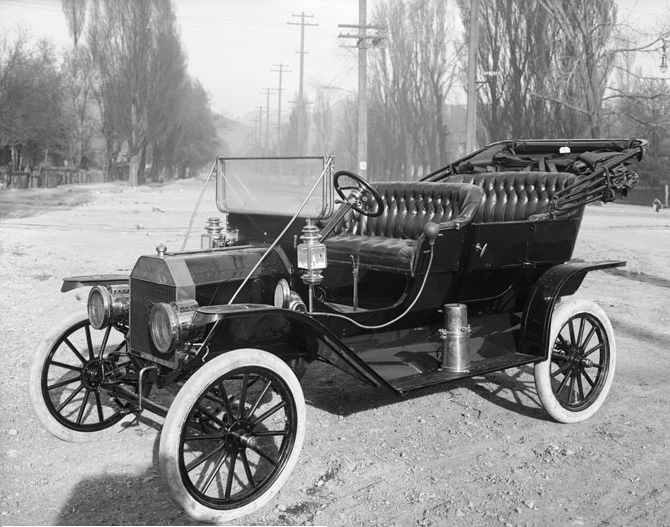
Frances had lived her whole life in Tulsa, Oklahoma. As a young girl, she was fascinated by her big brother’s brand new Model T. When out for rides with him, she carefully observed what he did. And then, one day, she “borrowed” his Model T and took it for a joy ride out into the wide, open, oil rig dotted spaces around Tulsa where she ran out of gas.

Let me tell you that at ninety, Frances was still a beautiful woman. She did not remain stranded for long.

Once Frances found her stories, many more followed. Oklahoma state troopers who hid in the cleverest places and spoiled her driving fun figured prominently in many of them. Frances obviously had a lead foot on the accelerator pedal and a true love of the endless western roads. We all enjoyed her stories for several years.

But then, one evening, the chair at Frances’ place was empty. She remained in her room for two weeks with hospice care, and then she died.  We are so lucky that  Frances did not take her stories with her.

0