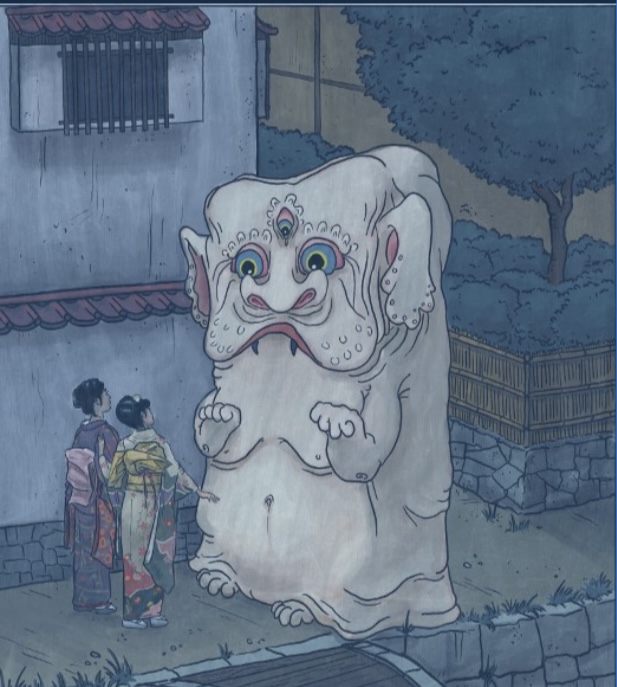
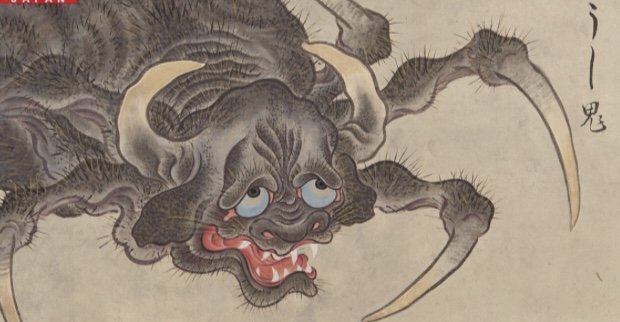
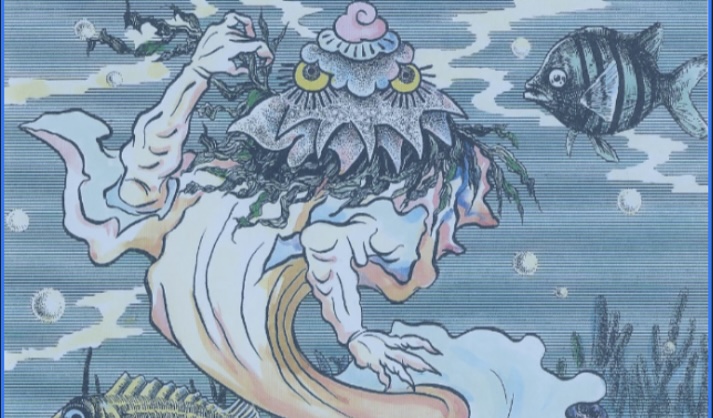
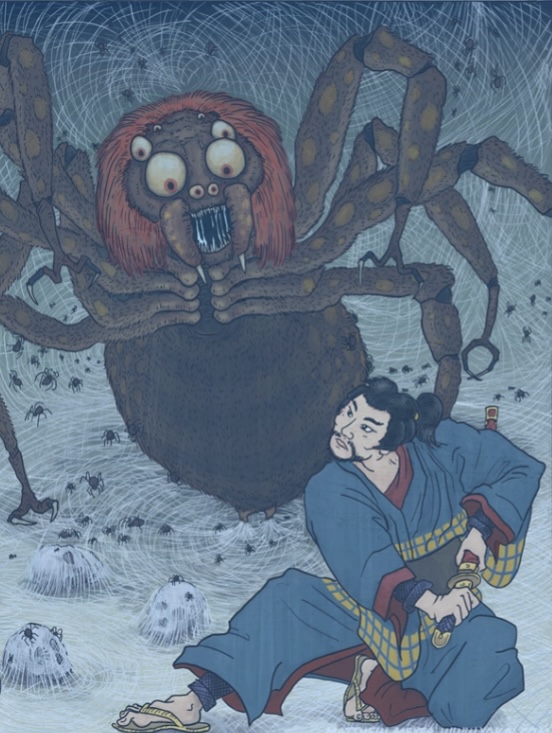
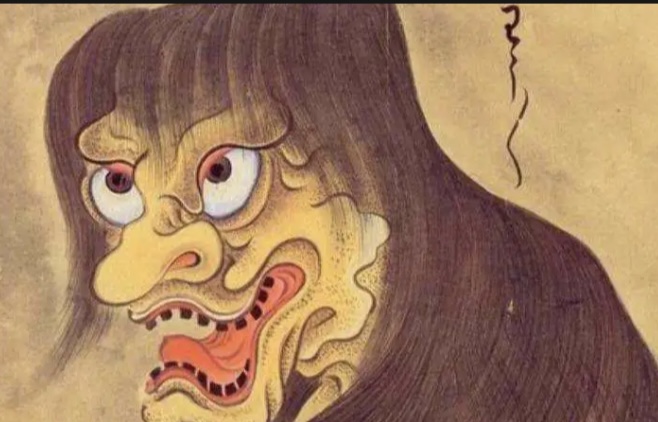
When it comes to monsters, ghosts, ghouls, spooks, tricksters and benevolent spirits, Japan has cornered the market. The most ancient religion of Japan was animism, the belief that all animals, plants, water and even rocks have a “distinct spiritual presence.” To this day, the country is awash in tales of these beings which are called Yokai, mythological creatures with supernatural powers.
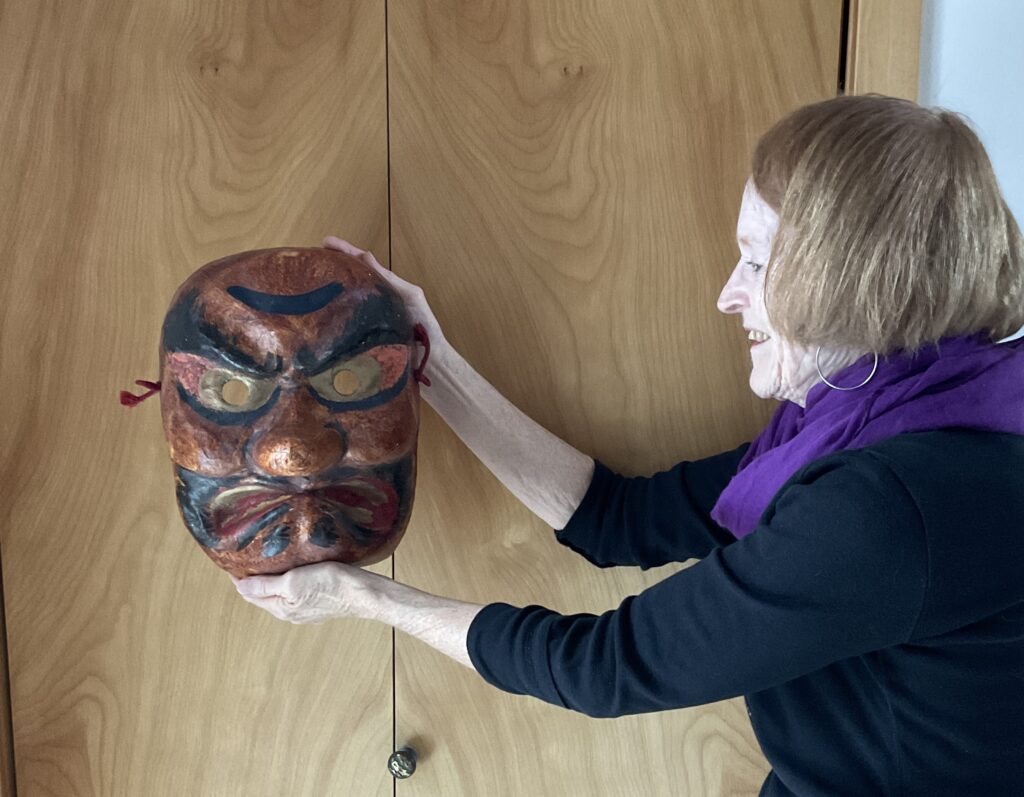
Several Yokai live at our house. The first is Tengu, the popular long-nosed trickster who is rumored to carry bad children off to the deep dark woods. He also gets the blame when things go awry for us humans. So when a can of paint spills or the bottom of a garbage bag falls out, I can always say, “Tengu did it”.
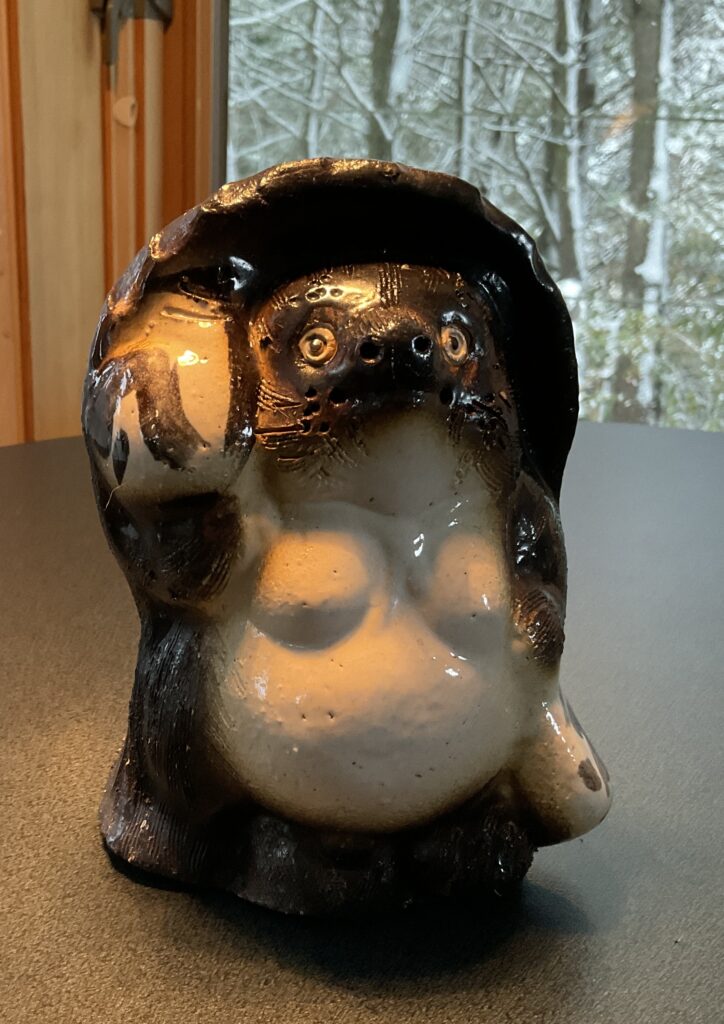
Our other yokai is Tanuki, a mischievous raccoon dog who is a master of shape-shifting. (Note that real animals called Taunki are native to Japan and are members of the canid family.) The make believe Tauki is portrayed with a straw hat, large belly, sake jug and large balls which can be expanded to use as sails, fishing nets or umbrellas. Tanukis like to make fools of people who cross their paths, and Tanuki statues are often found at the entrance to bars.
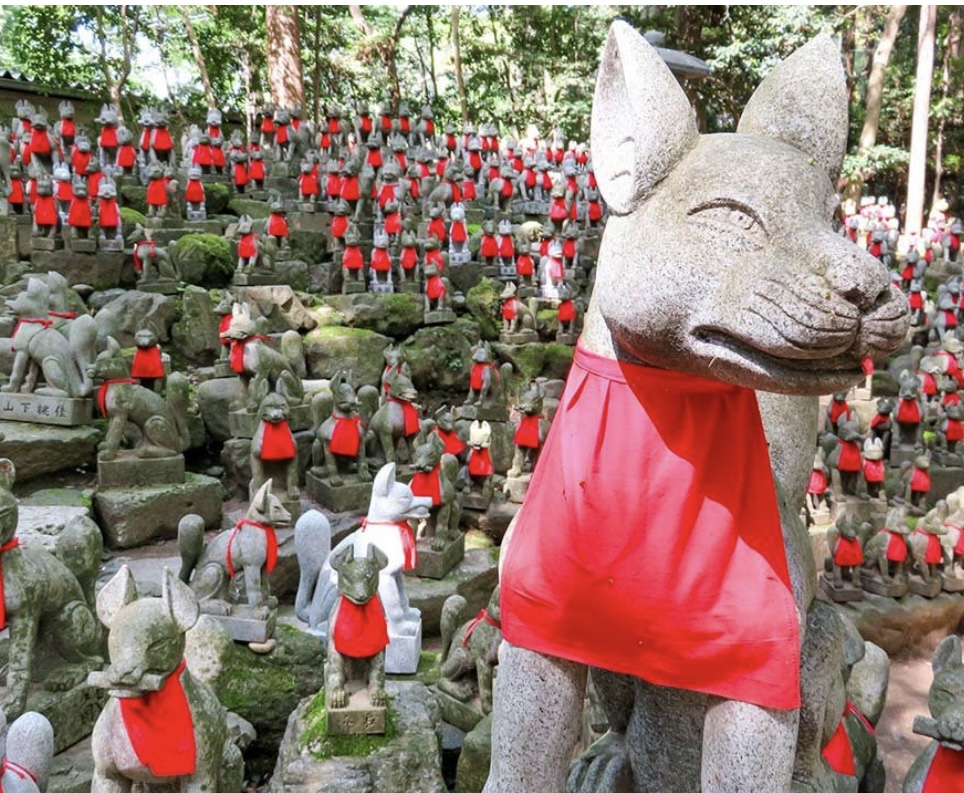
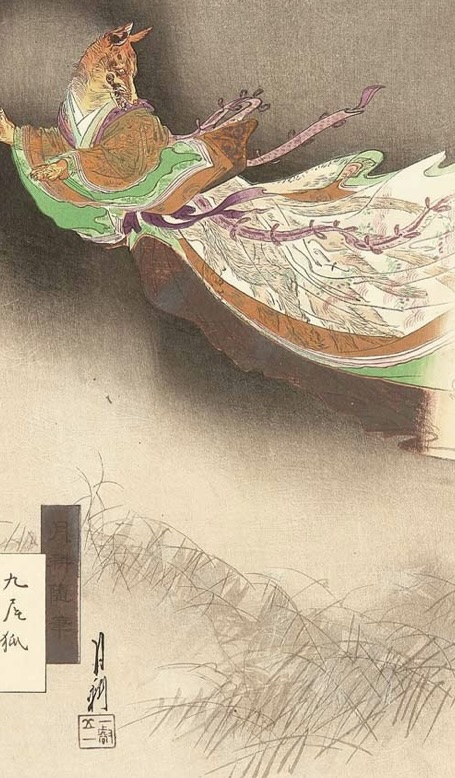
We do not believe we have any Kitsune in our home. These are trickster foxes and expert shape-shifters. Kitsune are often portrayed with multiple tails (up to nine) indicating their age and magical powers. Paradoxically, they can be a symbol of great good fortune or the bearer of evil. In folklore, Kitsune often possess women who then seduce and trick men.
Yokai are not all creatures of ancient mythology. New ones are constantly being created which reflect “present day anxieties.” The residents of the small Japanese island of Shodoshima host an art contest in which entrants create new Yokai. One of the winners in a recent competition was a furry, blue creature with red hearts glowing in its eye sockets. Artist Rita Nakamichi explains, “it embodies the current obsession of collecting approval on social media.”
Happy Halloween, and may all your Yokai be benevolent ones.

Mary, I love your research. I may have met
a couple of these creatures when I was young
and perhaps had had one too many to drink.
Tanuki strikes!
let us all hope so.
xxxevie