The other day, I painted a dinosaur. This was not an art project, but routine maintenance. Residing in our meadow, the dinosaur is a large metal sculpture by Wisconsin folk artist, Ellis Nelson.
When I finished washing and wire brushing Dino, I painted him with black spray paint. After purchasing this bent wire sculpture decades ago, I asked Ellis how I should take care of it. “Just get the cheapest can of spray paint at the hardware store”, was his unpretentious reply. I did add one deviation from the original paint job. Now Dino has a red heart, and I’m sure Ellis wouldn’t mind at all.
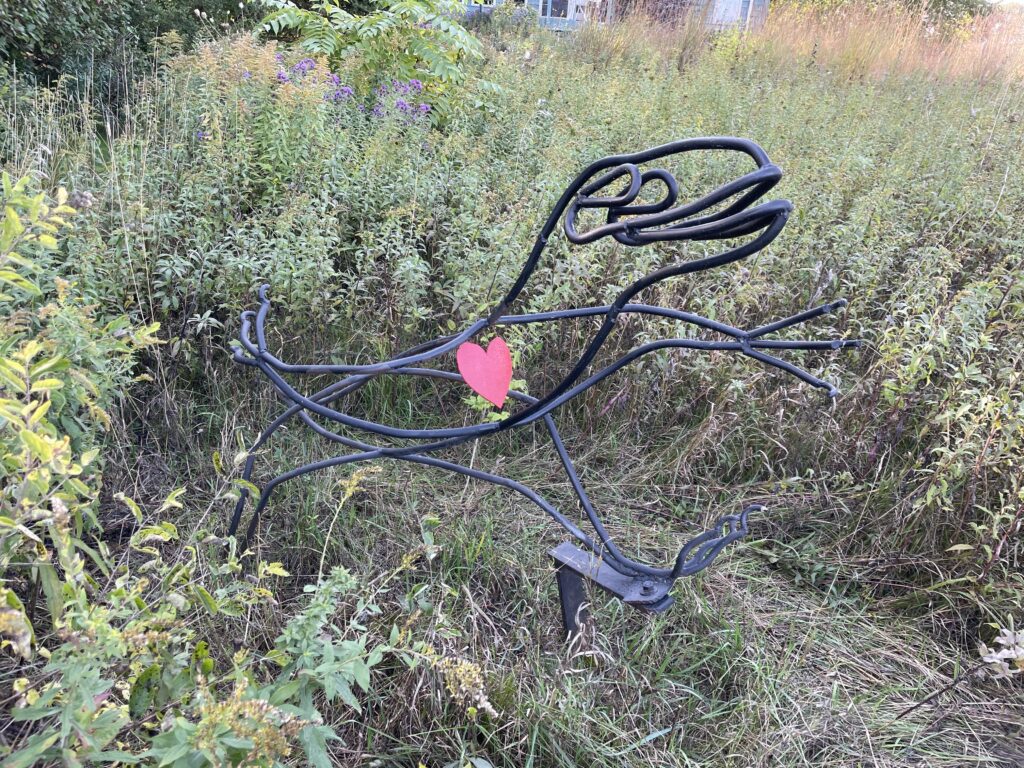
While happily spraying, I marveled at the genius of the artist. He makes it look so easy, a few simple bends, and, voilà, a racing dinosaur is captured in bent wire.
But it’s not easy, it’s devilishly difficult. I’ve seen the tears that prove my point. When I gave a class of art-talented fifth graders an assignment to create anything they wanted in bent wire, several broke out crying from frustration. They thought they could easily master it. The media proved them wrong.
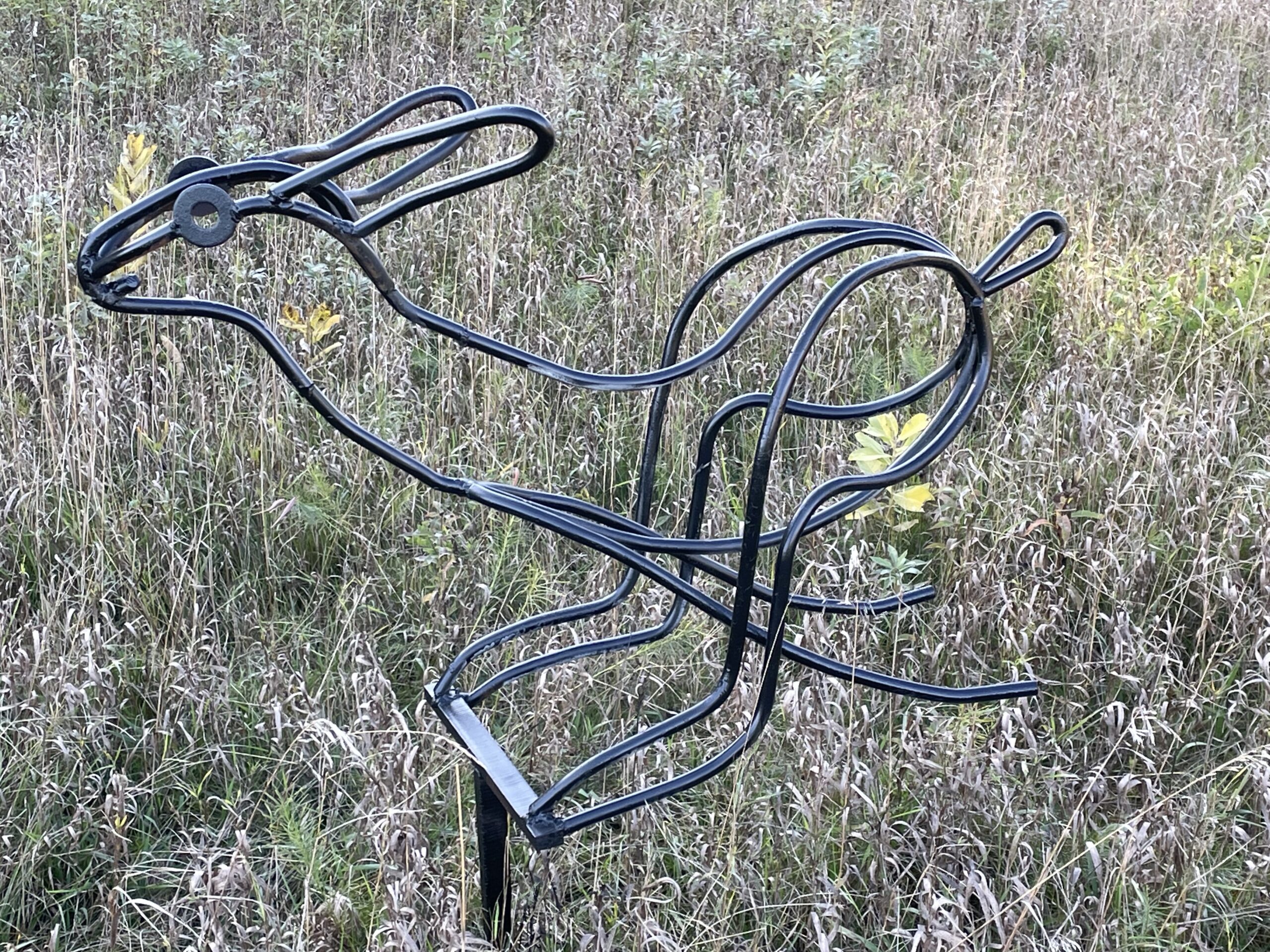
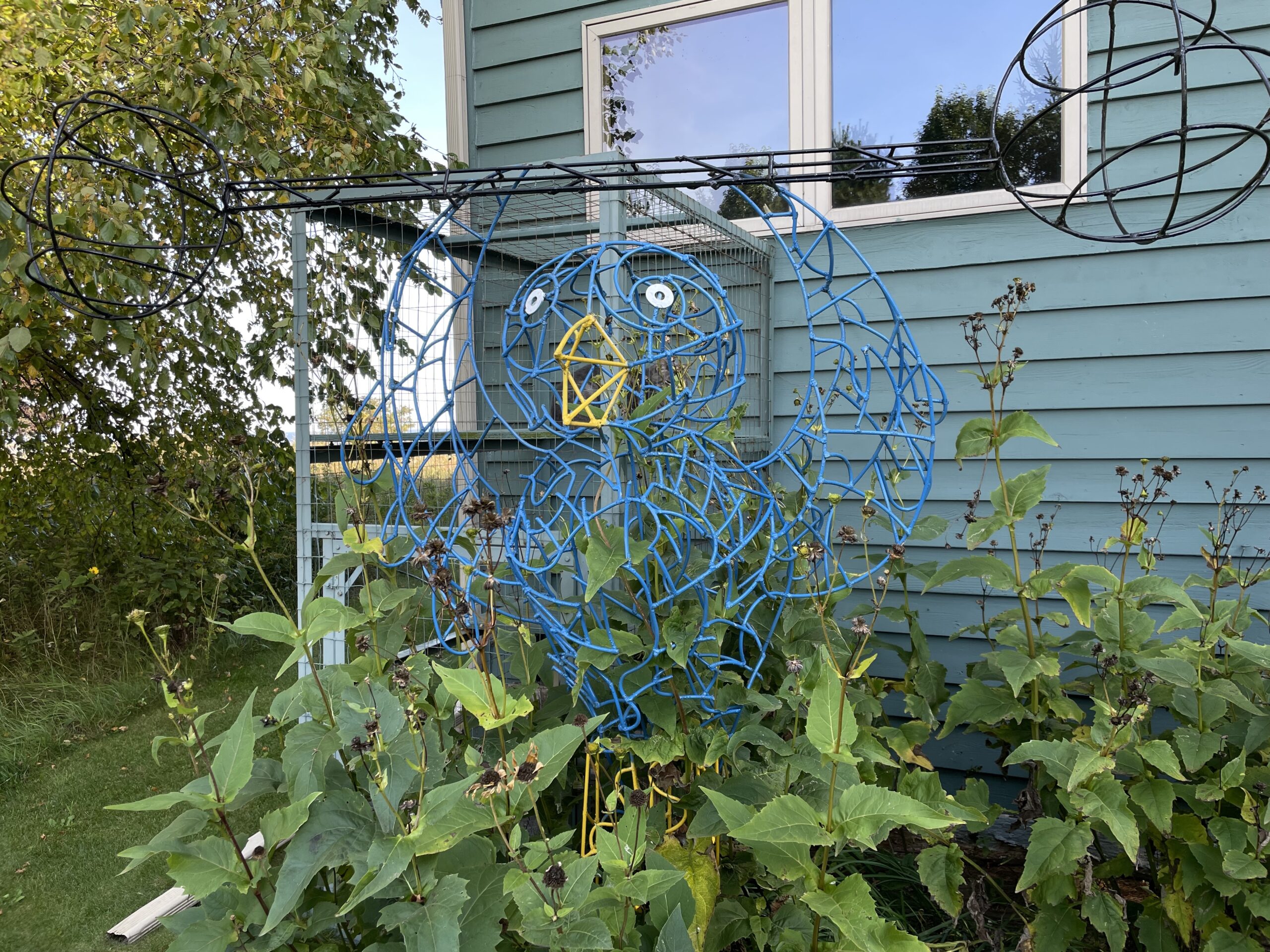
The same day that our dinosaur got his new coat of paint, his companion, Ellis Nelson’s charming rabbit, also got a touch-up. This past spring, my husband tackled a more complex spray paint job, our big bird sculpture by another Wisconsin artist, Bill Reid. It is a delight living with our metal menagerie.
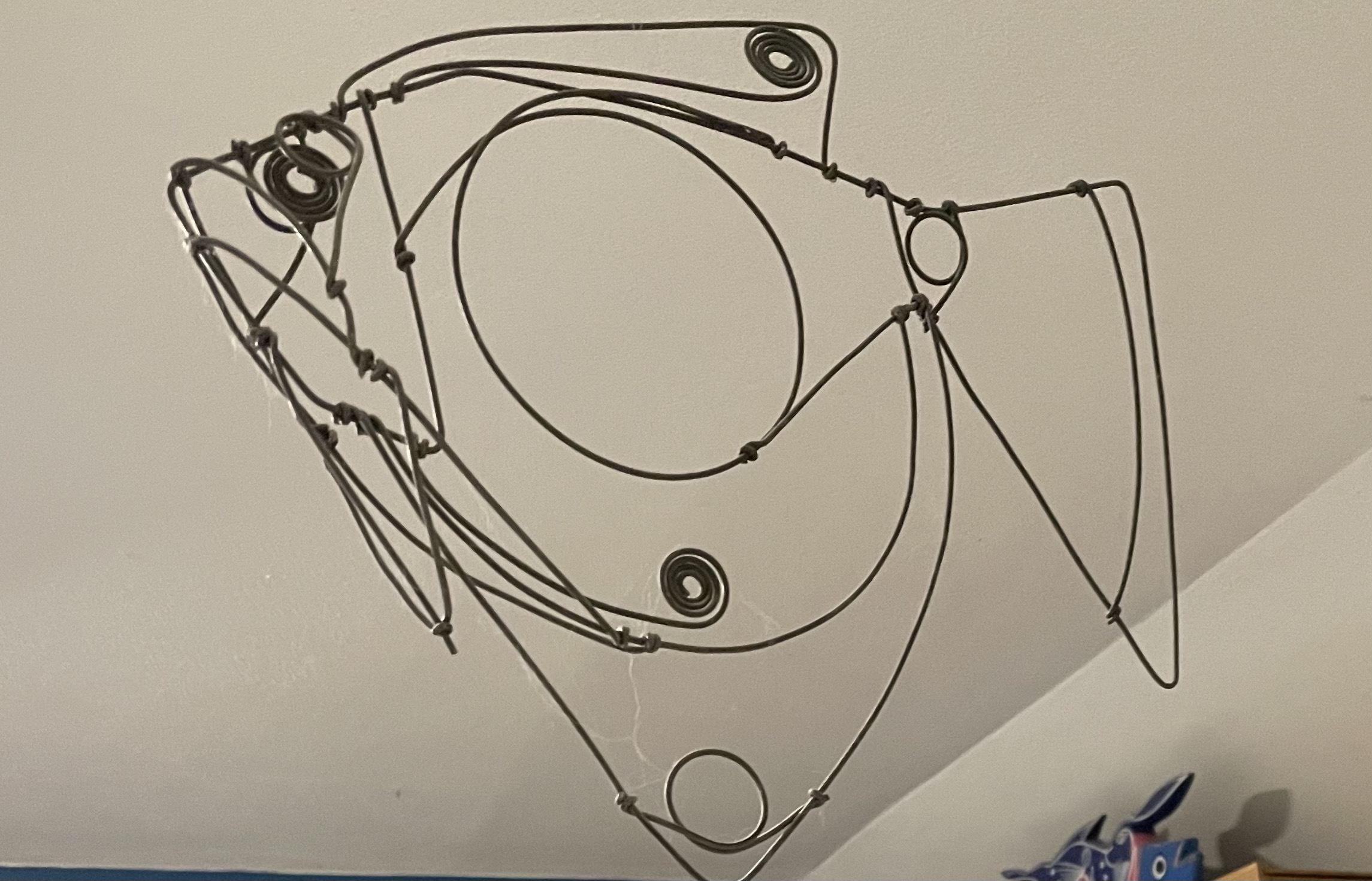
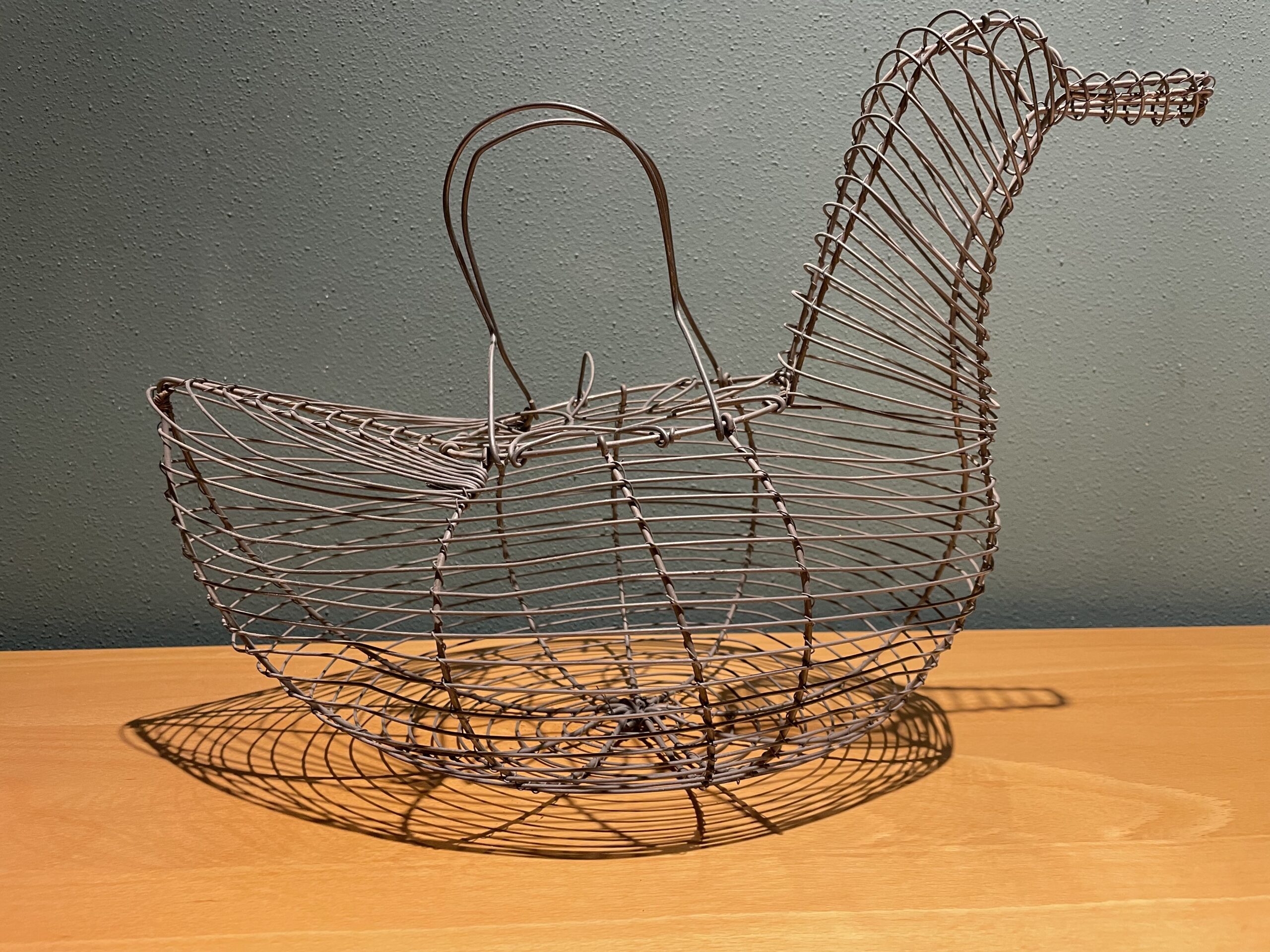
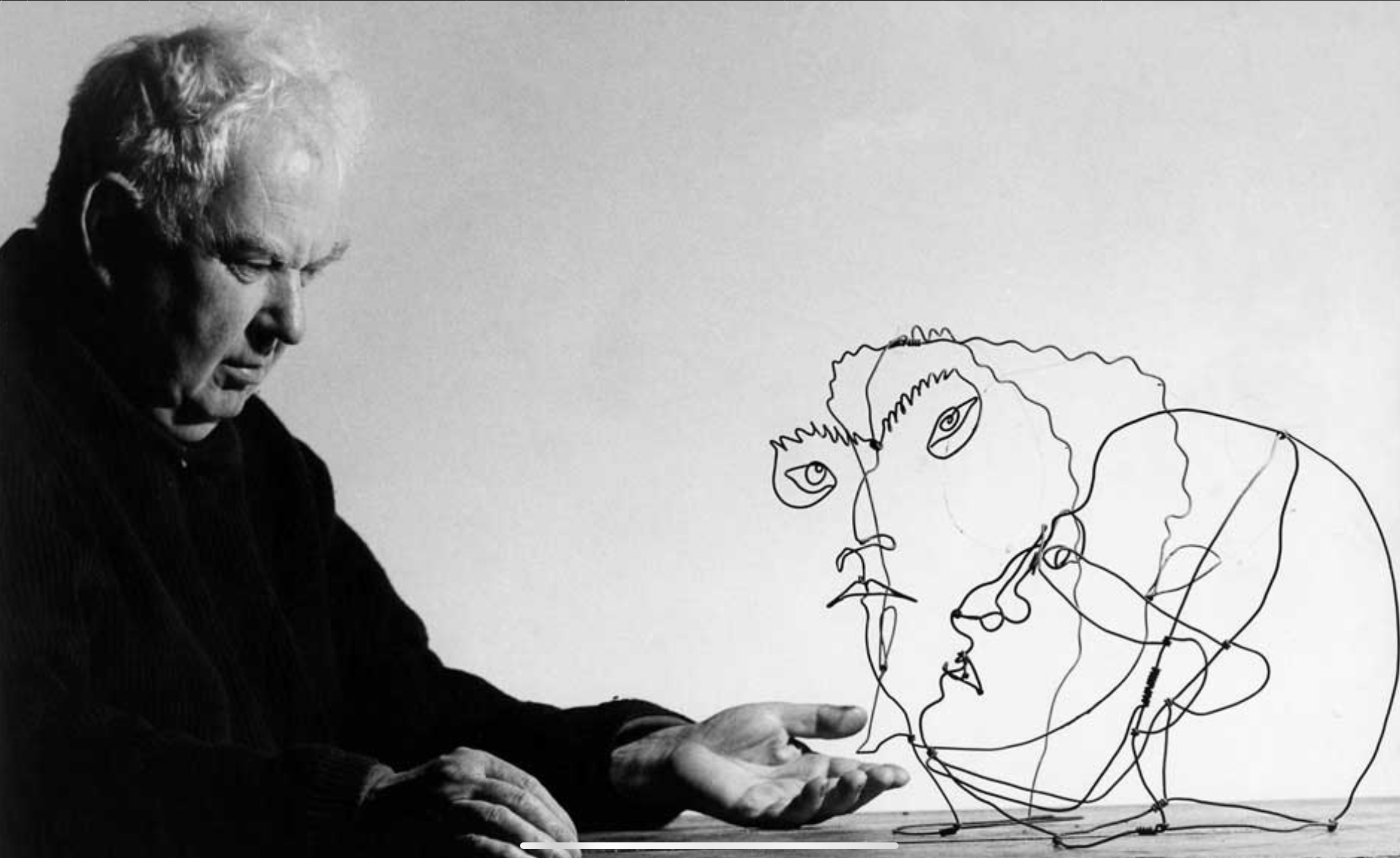
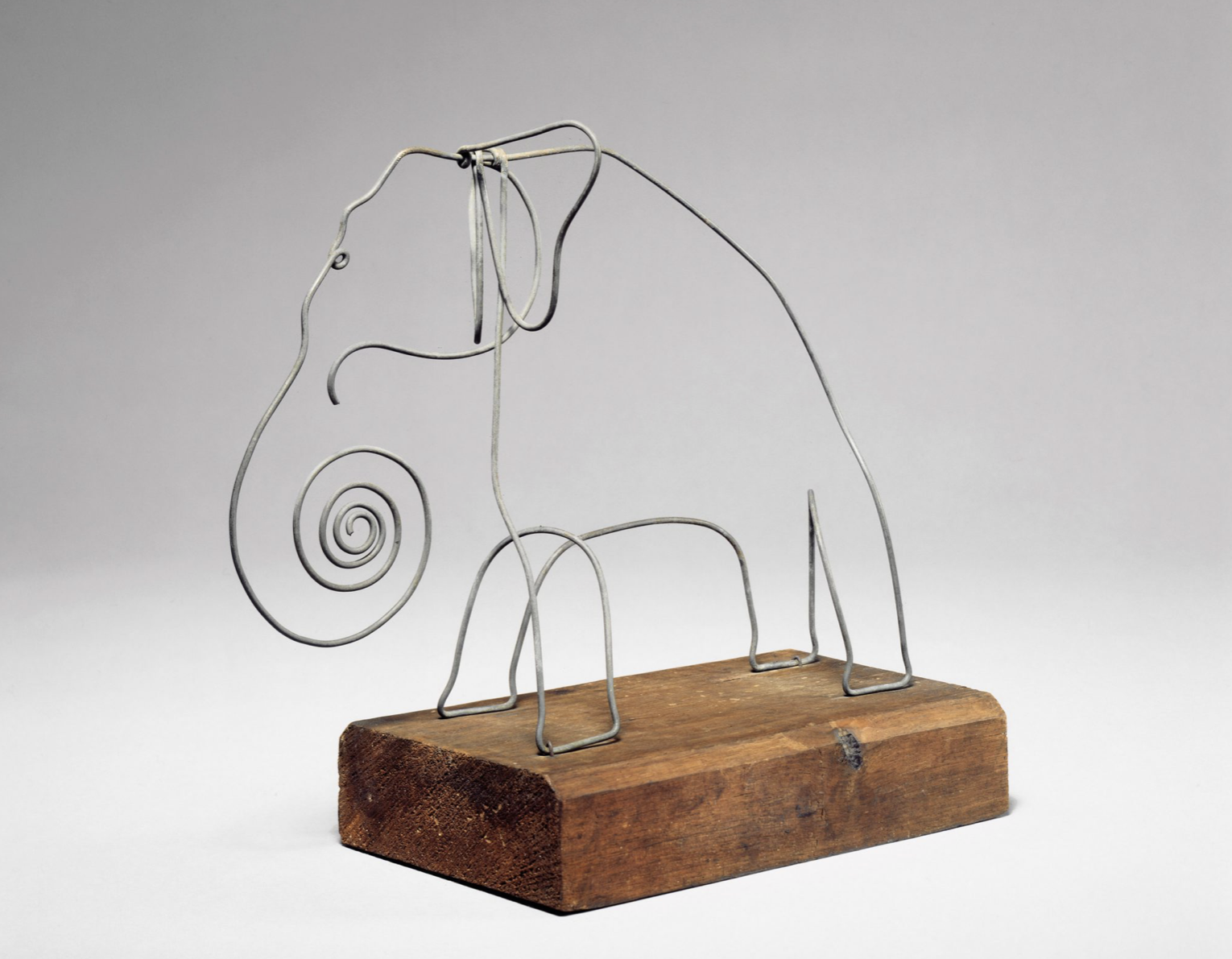
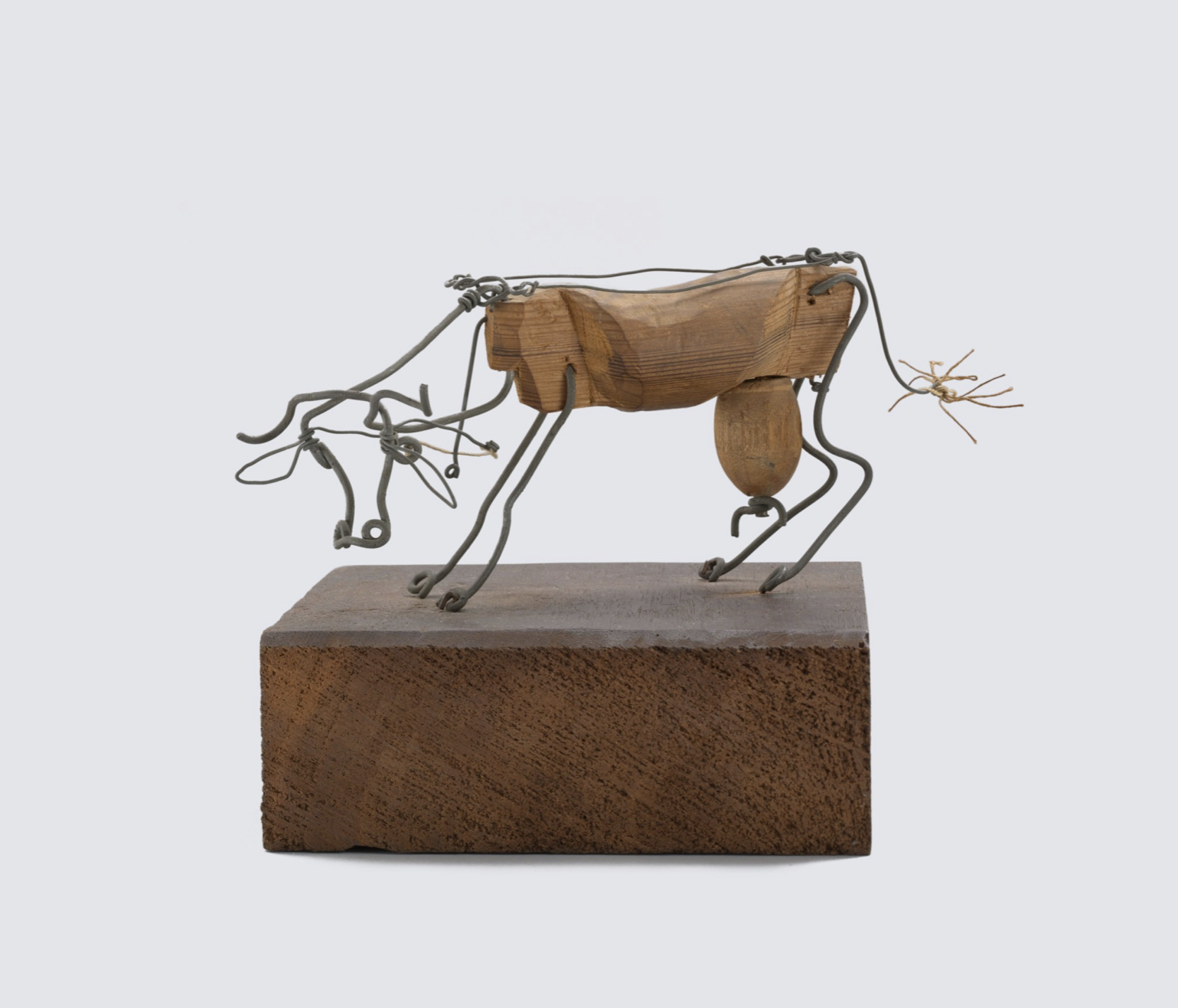
Here are pictures of wire sculptures in our collection. And finally, a few examples of the work of the artist who started it all, Alexander Calder.
If you ever find yourself with a scrap piece of wire in your hand, give a sculpture a try.
Neat. Makes me want to go to the barn and look for
some old thick wire or even small pipe. Does this
mean that I have ti buy a welder ?