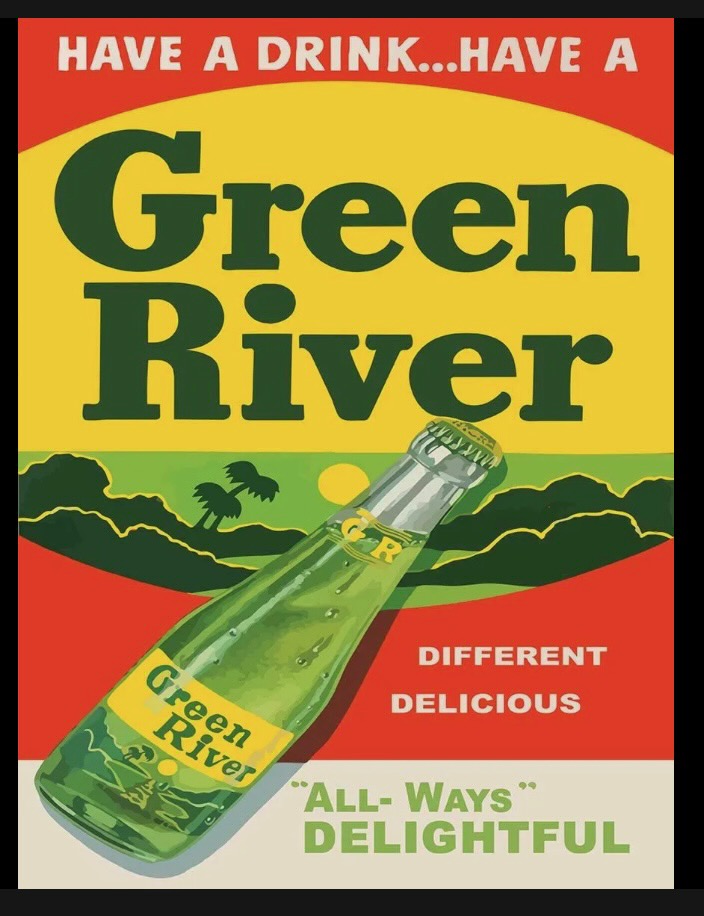
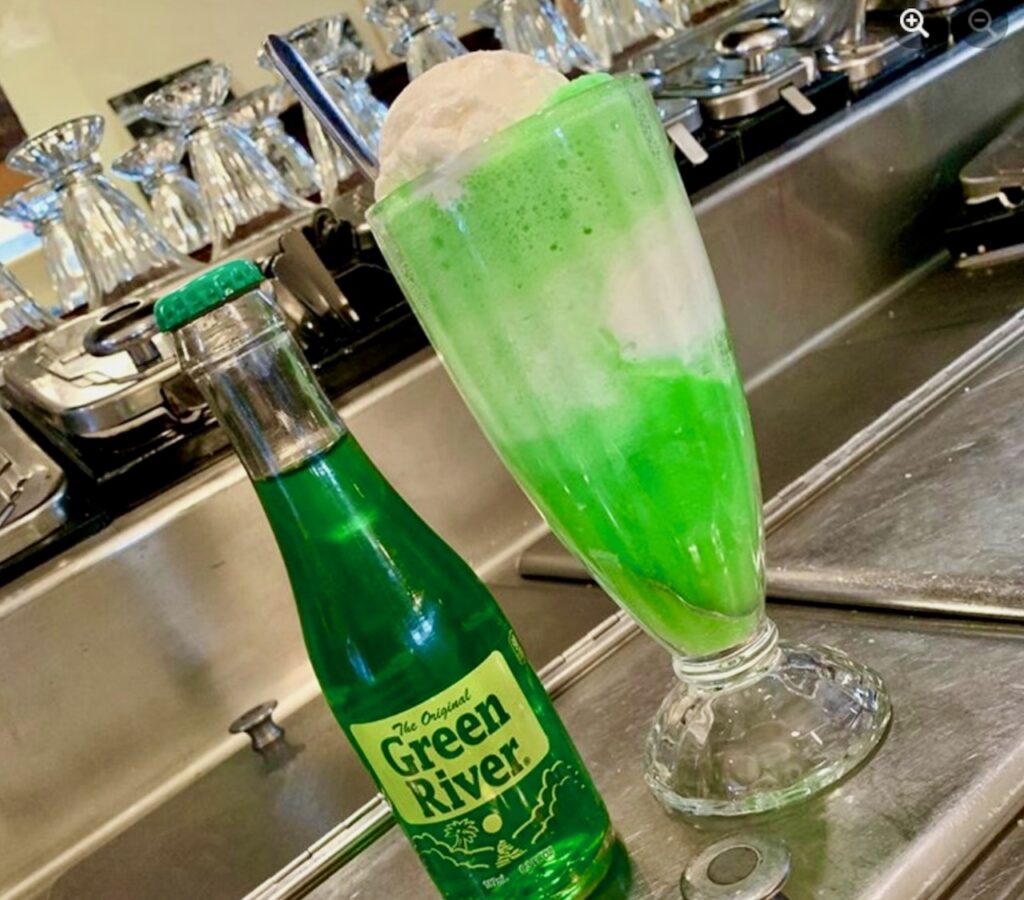
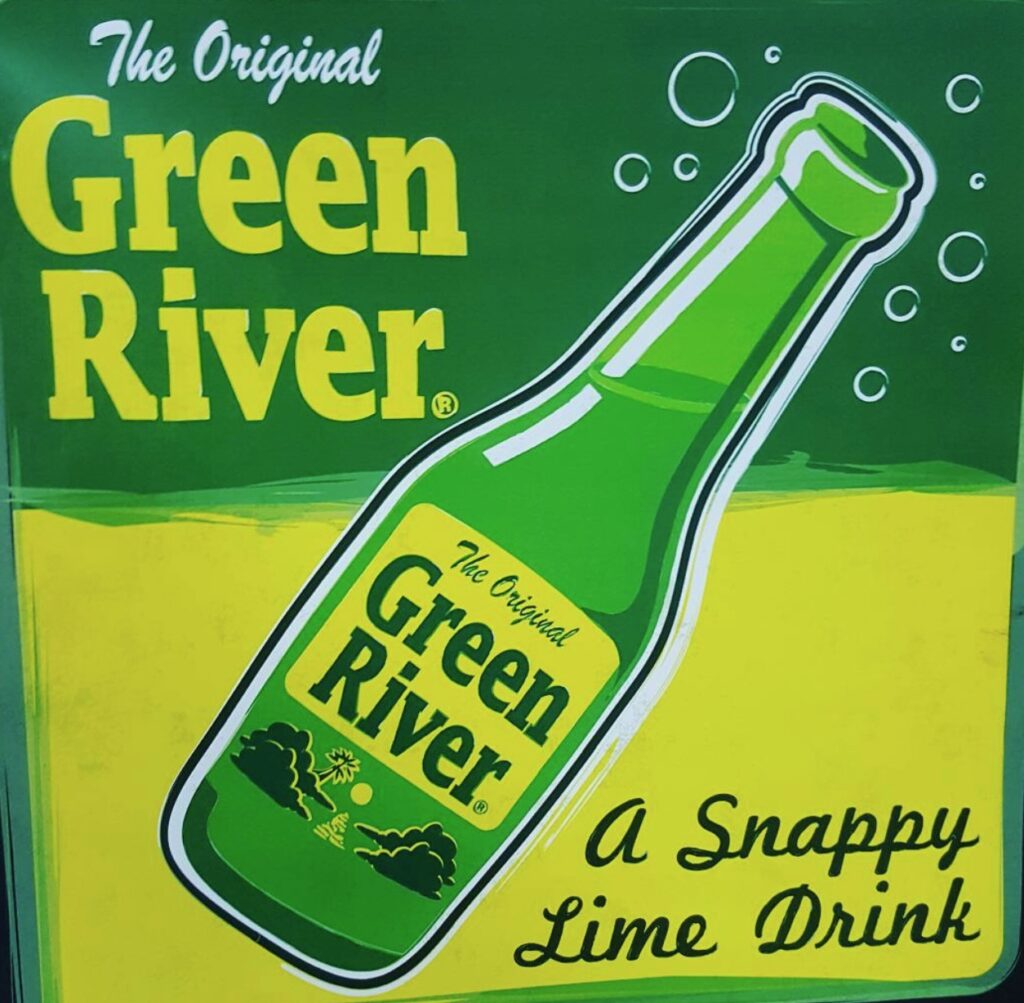
My husband and I were recently seated in an old-fashioned ice cream parlor waiting for our scoops to arrive. I began perusing the antique advertising signs that adorned the walls. Amidst the Coca-Cola, Faygo and miscellaneous other ads for pop, one sign gave me a big nostalgia hit. That sign hawked Green River.
Even as a child, most sodas did not appeal to me. But there was one exception, the eye-popping, emerald green, super-sugary, lime drink called Green River. My cousins had the good fortune to have a soda shop on the corner of their block. Whenever I visited them, we would scrape together some nickels and pennies and get Green Rivers. I’m fairly certain that it was the gorgeous neon color of the soda that was a big part of its attraction.
My love of the drink extended into my teen years. My friends and I would stop at our local drug store’s soda fountain on our way home from school. My order never varied: a Green River and a bag of chips. Sugar, salt and grease…bliss!
Recalling these happy memories prompted me to look into the history of Green Rivers. I discovered “It’s a Midwest thing”. From 1930 to 1950, it was the second most popular beverage in the Midwest after Coca-Cola.
The concoction was invented by Richard C. Jones in Davenport, Iowa. He purchased a soda and candy store near a high school in 1914 and, shortly after, created his sugary, lime flavored syrup to make fizzy sodas. It was a big hit, and he sold his formula to the Schoenhofen Brewery in Chicago. The year was 1919, and Prohibition was about to begin. Beer was banned, and Green River saved the brewery. It was originally sold in beer bottles with a marble for a cap. Legend has it that the customers would shake the bottle to get the bubbles going thus making the marble pop out. It is a fact that soda is often called “pop” in the Midwest.
The Sprecher Brewery in Milwaukee currently owns the rights to the beverage. It is made in limited quantities, however, its sales surge when the Chicago River is dyed green for St. Patrick’s Day. In the Midwest, it’s easy to be green.