Down through the ages, many creative individuals have accomplished amazing feats, broke barriers and bettered the lives of millions, yet their names are recognized by few. Fame is fickle.
This year marks the 200th anniversary of one of these barely known geniuses, Frederick Law Olmsted, who was born on April 26, 1822. If you live in or have visited New York City, Boston, Detroit, Milwaukee, Chicago, Atlanta, Louisville, Trenton, Washington D.C., Palo Alto, or scores of other places in America, you have encountered his work. Olmsted was the landscape architect who changed the face of America’s cities with his magnificent urban parks and parkways. He, and later his firm which he established with his sons, created over 700 parks across America.
I first learned about Olmsted when I was working on Milwaukee’s Historic Preservation Commission. Before that time, I always assumed that our vast city parks were natural landscapes that were miraculously saved from development and enhanced with more trees and plantings. I couldn’t have been more wrong.
Every hill, meadow, pond, vista and trail in his parks was sculpted out of the earth. They are totally artificial landscapes created with bulldozers and hard labor. Mother Nature supplied Mr. Olmsted with the ingredients, and he created the terrains with his massive engineering feats.
A quick look at how his stellar achievement, Central Park in New York City, was built is eye-opening. Starting in 1853, New York City acquired the land for Central Park via eminent domain, cleared out 1,600 residents and razed their homes, three churches and a school.* The city then asked for design submissions for the new park. Olmsted, a young topographical engineer, had just returned from a tour of England where he was profoundly impressed with English landscaping. He and Calvert Vaux, a young British architect, submitted a plan for the proposed park. Their design was the winning bid, and Olmsted would be the chief landscape architect of the park with Vaux designing the buildings and bridges.
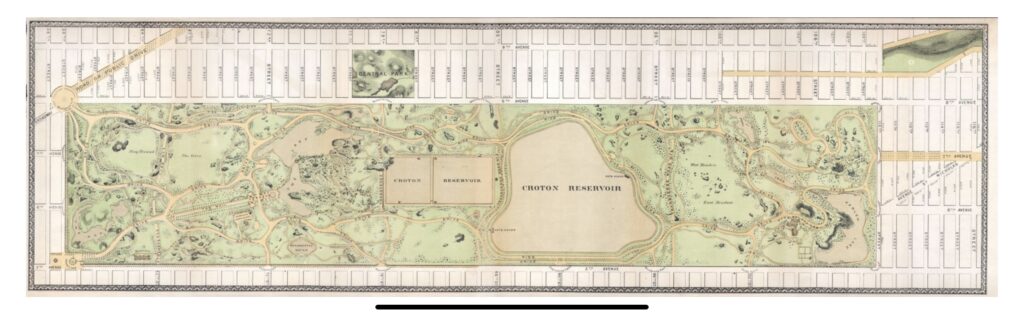
The work began: swamps were drained, more than 5 million cubic yards of stone, earth and topsoil were rearranged or moved, huge outcroppings of rocks were blasted out and 400,000 trees and shrubs were planted. The roads that would allow traffic to cross the park were sunken to not interfere with the vistas. Every detail of the park was carefully designed as seen in this plan.
Olmsted’s fabulous parks have been referred to as “the lungs of our cities”. Countless millions have been enriched by their beauty. Central Park alone had 42 million visitors last year. Surely, Olmsted deserves a prominent place in our history textbooks.
* Of the people displaced by Central Park, about 300 were residents of Seneca Village, Manhattan’s first and largest settlement of black property owners. Founded in 1825, the village had grown in three decades to include homes, gardens, cemeteries, churches and a school open to all the children living on the land of the proposed park. One family who owned land in Seneca Village ran a stop on the Underground Railroad that sheltered hundreds of people fleeing slavery.
For decades after the Central Park was completed, it became a “front yard” for the wealthy who had mansions on 5th Avenue. However, as time passed, Olmsted’s vision of public parks as a democratic ideal has been realized.
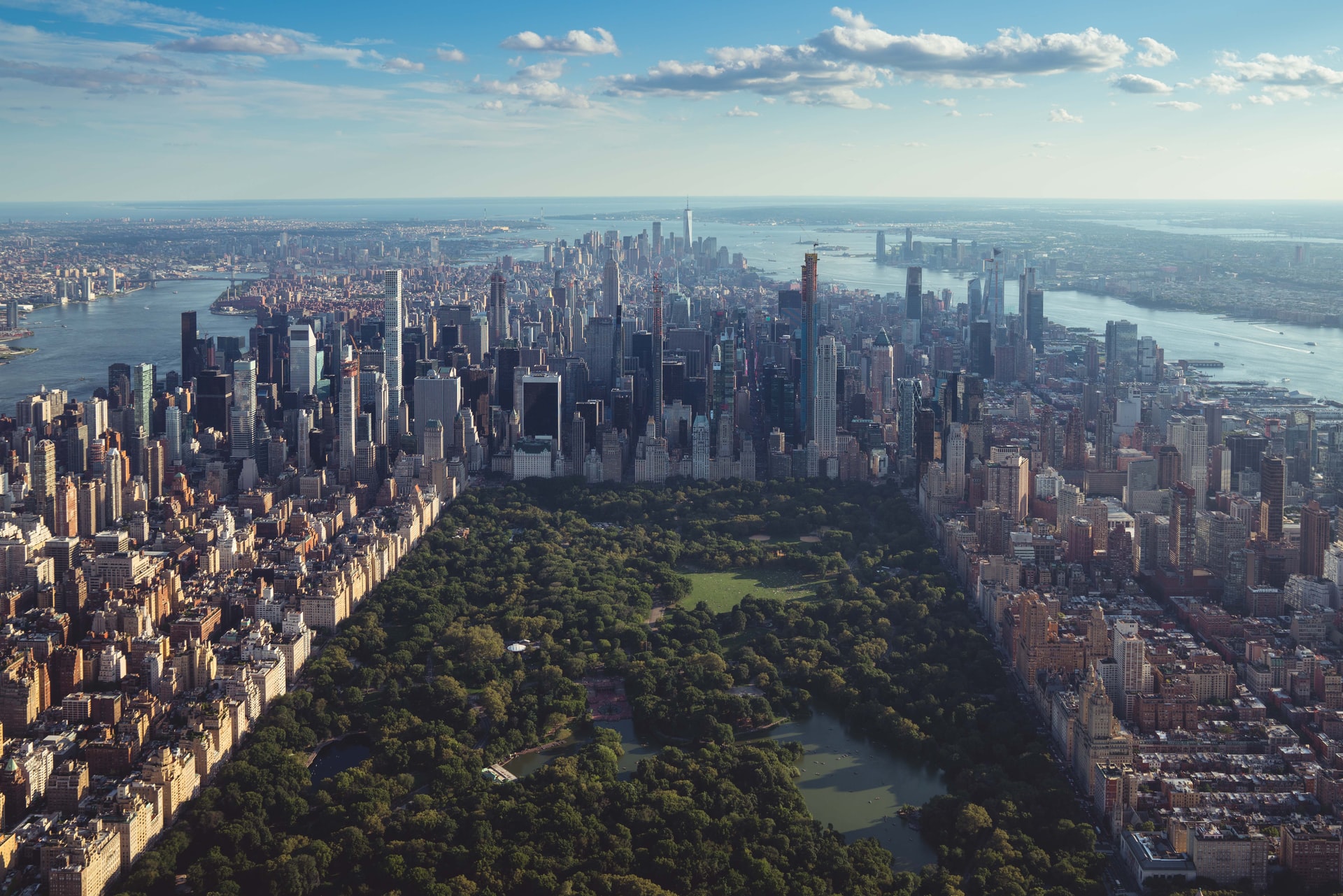
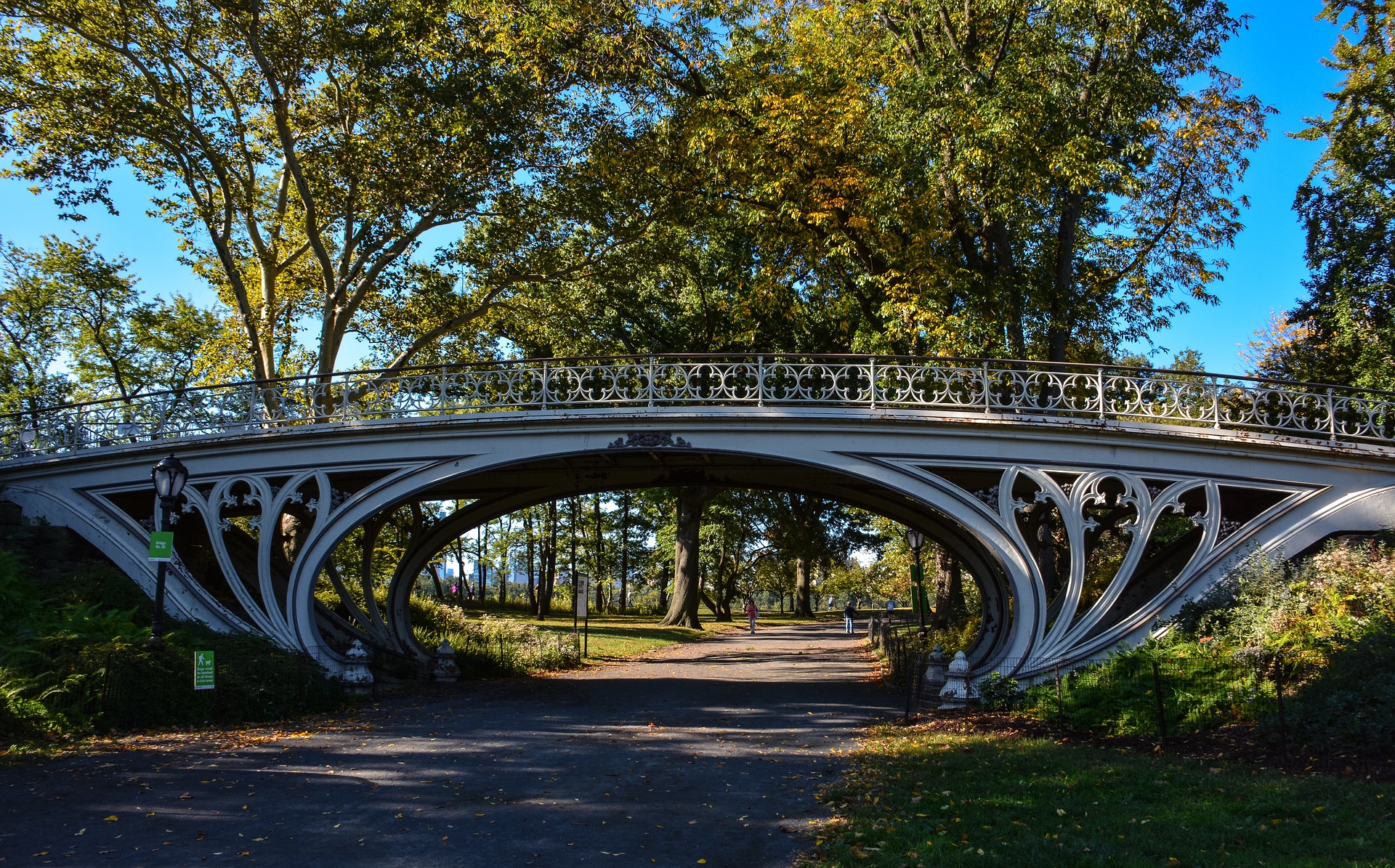
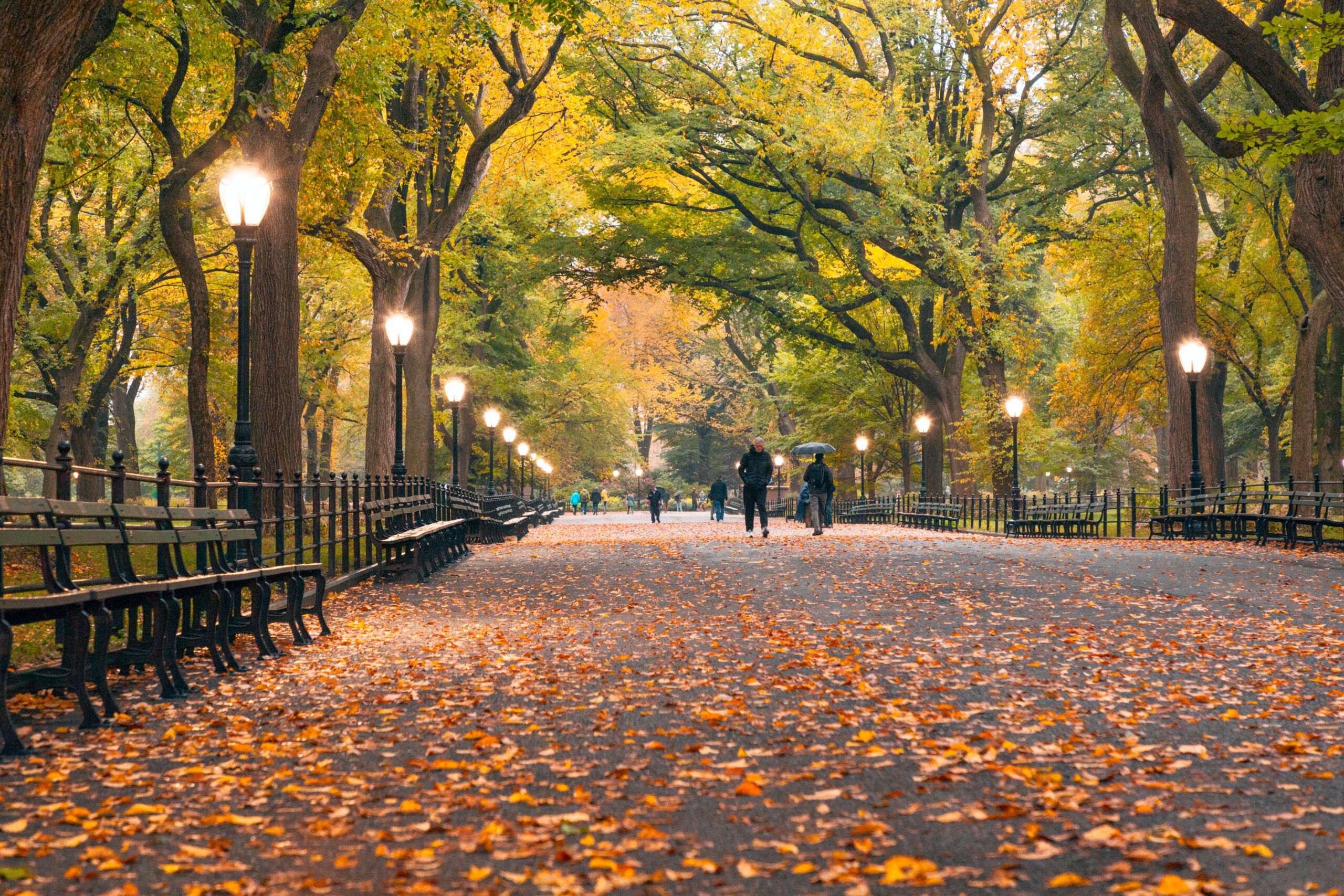

NYC is the absolute epitome of what we call ‘The Built Environment’. How very interesting to use such a lens on Central Park. But more than the trees, dirt, shrubs, etc., the main ingredient to so many such city greenspaces is the WILL of their civic leaders to make it happen. And, of course, (the wisdom of) hiring Frederick Law Olmsted.
Yes, great public works for the benefit of everyone are not in fashion. But Millennium Park in Chicago and New York’s High Line are examples of thinking big for the enjoyment of all.
Interesting. And now I’m trying to remember the guy who did great work in Chicago,
& if I’m not mistaken, Madison???
(ps: i confuse easily)
xxxevie
Daniel Burnham comes to mind!