I love clay and the resulting ceramics that are formed from it. I agree with the Native American potters who say that clay is a gift from Mother Earth.
So when the beautiful, jade green vase that held my kitchen utensils broke, a wave of sadness hit me. I had repaired it before, but the new damage appeared to be unfixable. It was time to put the pot and its shards in a sturdy paper bag and get out my hammer. Then the clay pieces could join the remains of other hand-thrown mugs and dishes in the stones under our decks. Here, out of the way of walking feet, they will gradually sink back into their original home.
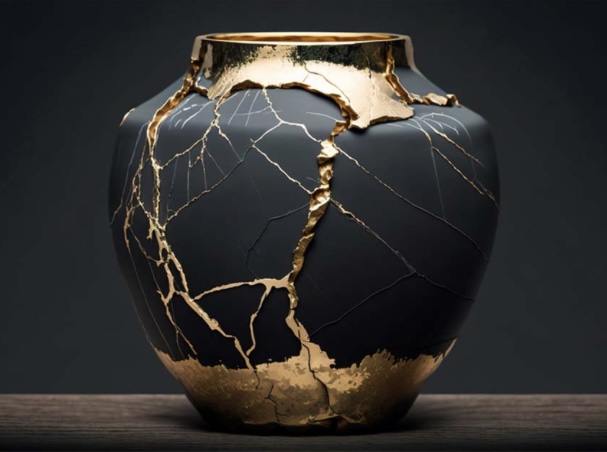
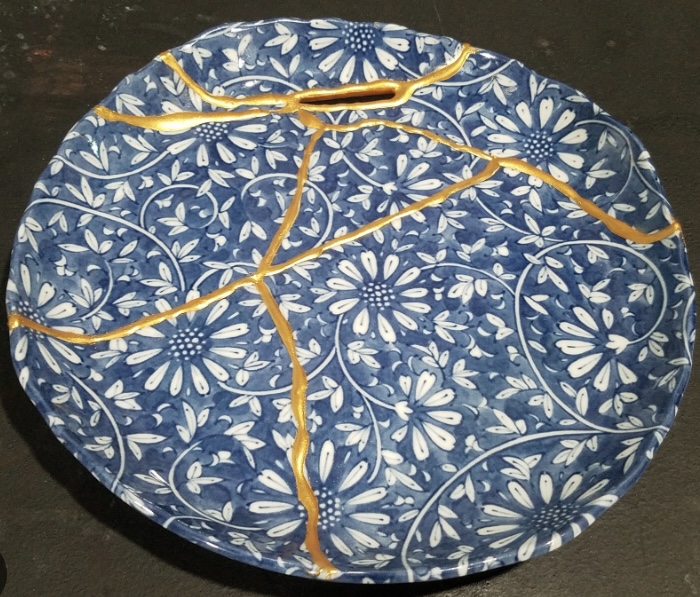
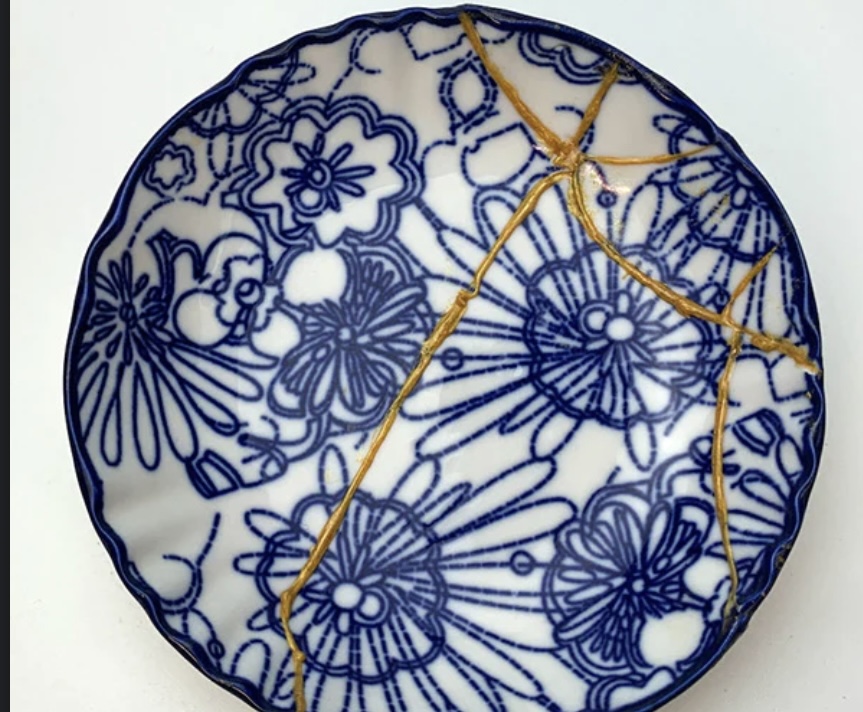
If I lived in Japan, and if I were rich, my vase might have had a different ending. A kintsugi master could have repaired it…with pure gold.
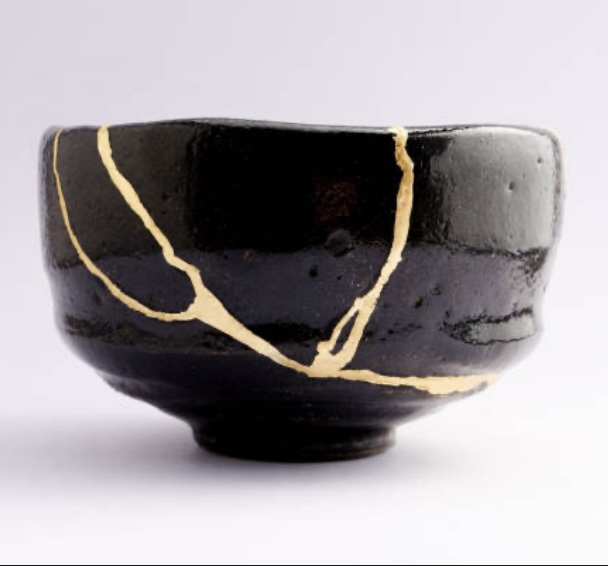
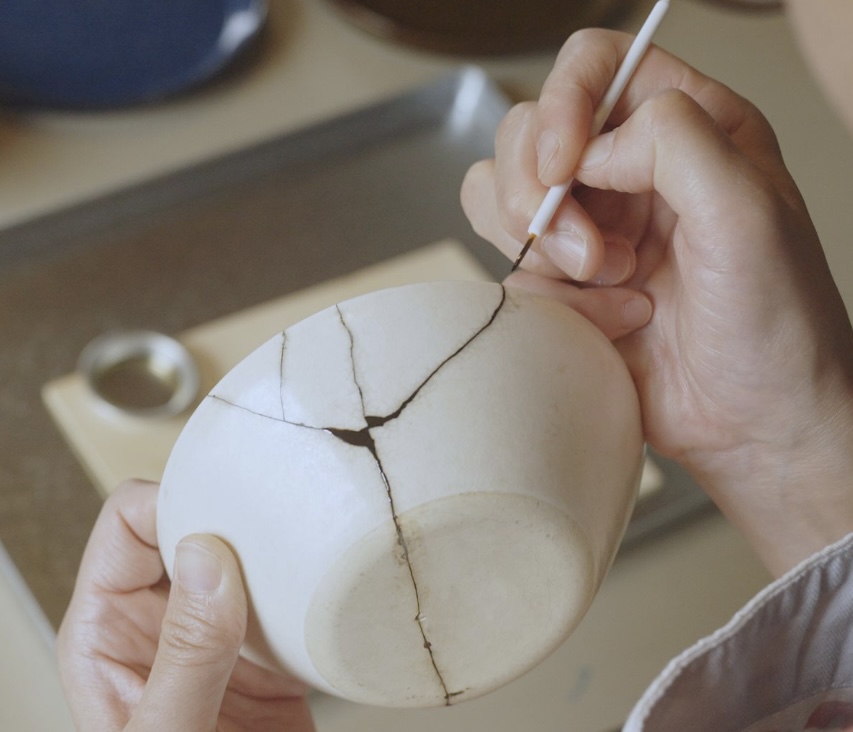
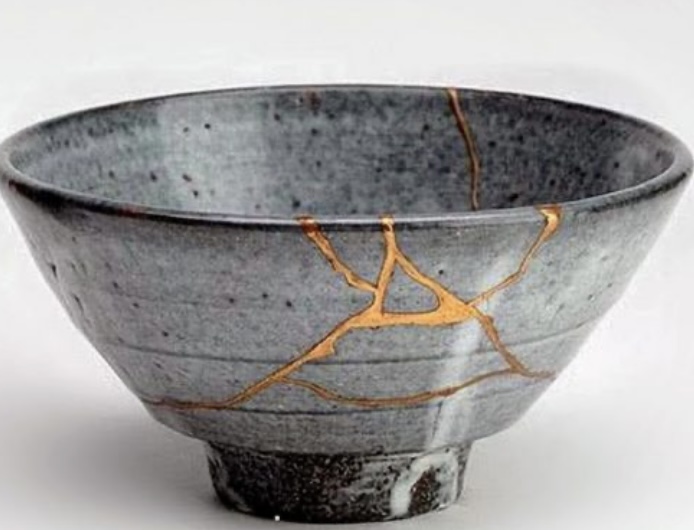
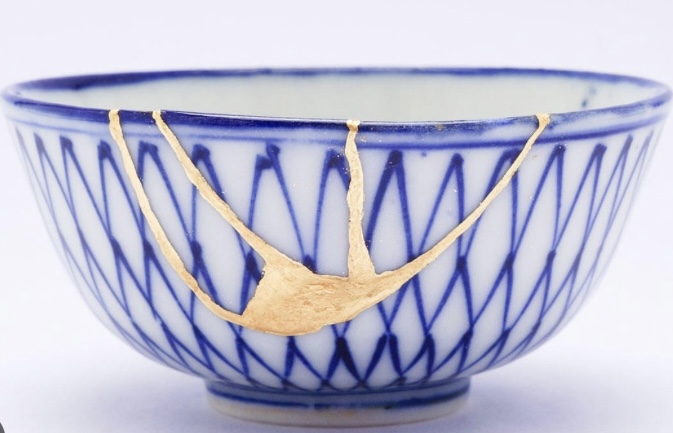
The art of kintsugi is believed to have started around the 15th century. The word literally means “joining with gold.” The sap from an indigenous Japanese tree is mixed with gold dust, silver or platinum. Then the broken pieces are rejoined with meticulous care, a process that can take months. The object is reborn with a new beauty, the beauty to be found in imperfection. The scars are highlighted.
Kintsugi is about more than fixing shattered ceramics. It is a philosophy of “embracing the beauty of human flaws, a reminder of the beauty of human fragility.”
Who has not felt broken at times? It is comforting to remember we can pick up the pieces and go on.

Whatever the subject, if Mary writes it Don’t miss it.
Thank you, Marilyn. I do love writing them. Hope all is well for you in California. All the leaves are off the trees here now, so it is a grand time to be in CA.
Mary–fascinating. And very comforting.
I love this Zen philosophy!