In a recent conversation with friends, an interesting question was raised; Why are barns painted red? None of us knew the reason, and I volunteered to search for the answer.
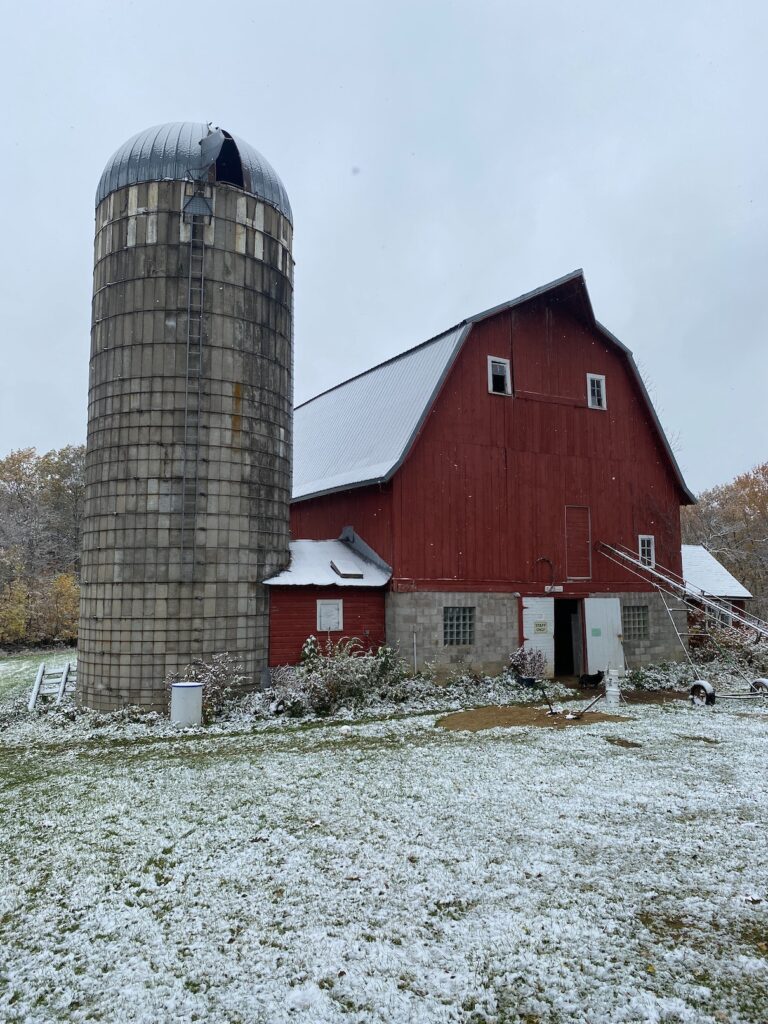
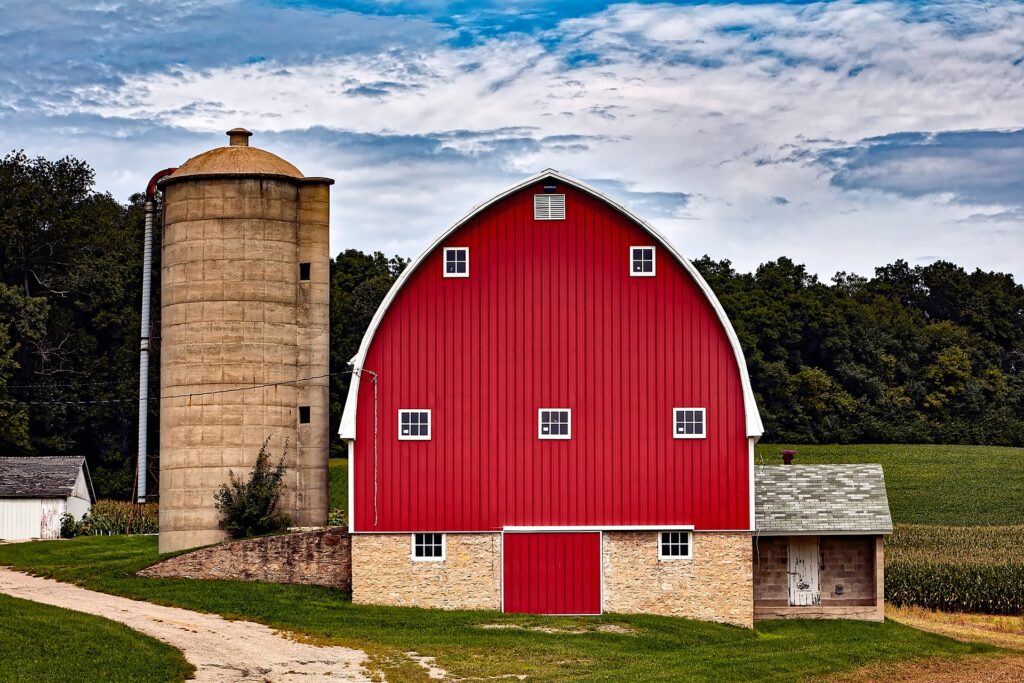
An article from Live Science best sums up the reason why red paint rules…convenience and frugality. Here’s how it all evolved.
The earliest farmers in New England didn’t have money for paint and most barns weren’t painted. But unprotected wood did not fare well during harsh New England winters. By the late 1700s, the farmers began experimenting with making their own paint. The most successful concoction turned out to be a mixture of skimmed milk, lime, linseed oil and red iron oxide (rust). The iron oxide was readily obtained from the red clay in the soil. It not only sealed the wood but also prevented fungus and moss from growing on the boards. Wealthier farmers sometimes added blood from slaughtered livestock to make a darker red.
By the late 1800s, commercial paints were becoming available. The red barn paint was the most popular color, continuing the tradition of the bucolic red barn. It was called “Venetian Red” after an ancient pigment made from the red soils near Venice.
The 1922 Sears Roebuck catalog sold red barn paint for $1.43 a gallon. Other colors were $2.25 a gallon making red the cheapest option. Today’s price is about $16.00 a gallon. Compared to the price of house paint, it is still a remarkable bargain.
Of course, every barn in America is not painted red. White is the second most popular color. In the earliest years, farmers simply whitewashed the barns. When commercial white paint was developed, it was expensive and loaded with lead which caused serious health risks.
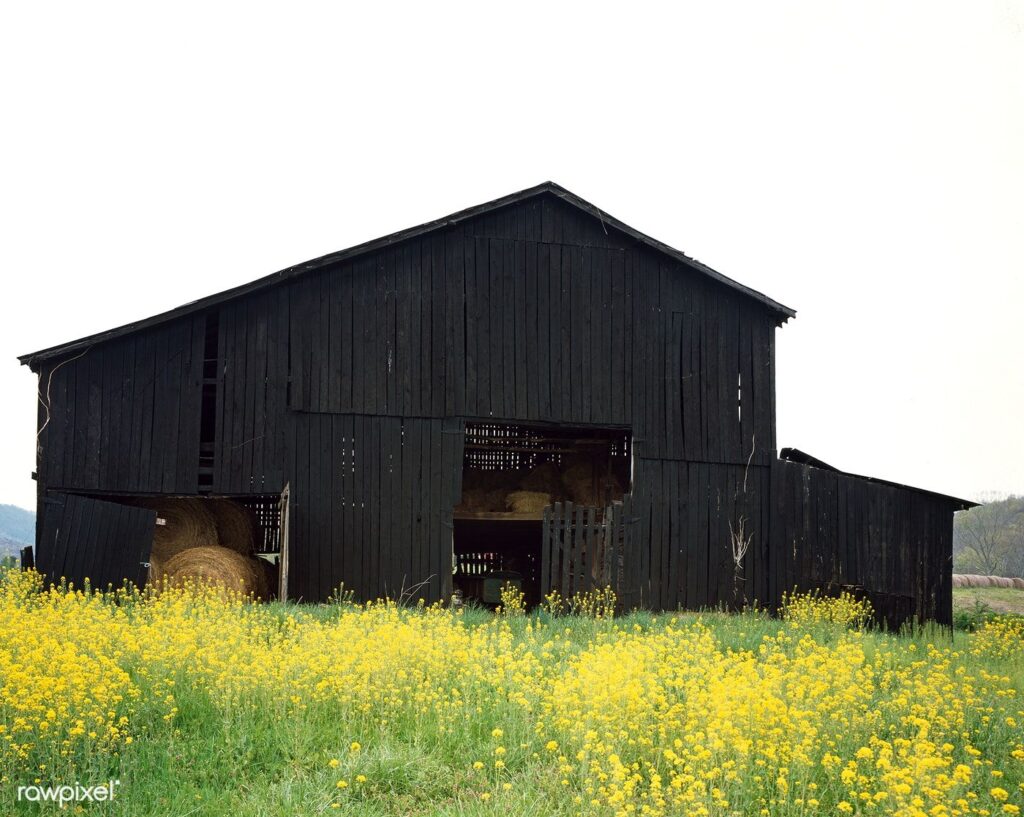
Kentucky is known for its black barns. These barns are used for drying tobacco leaves. The black color raises the heat inside the barn and aids in drying the leaves. The creosote in the black paint has the additional bonus of repelling termites.
Sadly, the iconic red barns with their companion domed silos are fast fading from the American landscape. Sprawling corporate farms are replacing the barns with industrial metal warehouses for cows. The family farm with a red barn as its centerpiece will soon be history. The only red barns left will be the miniature ones in children’s toy farm sets.

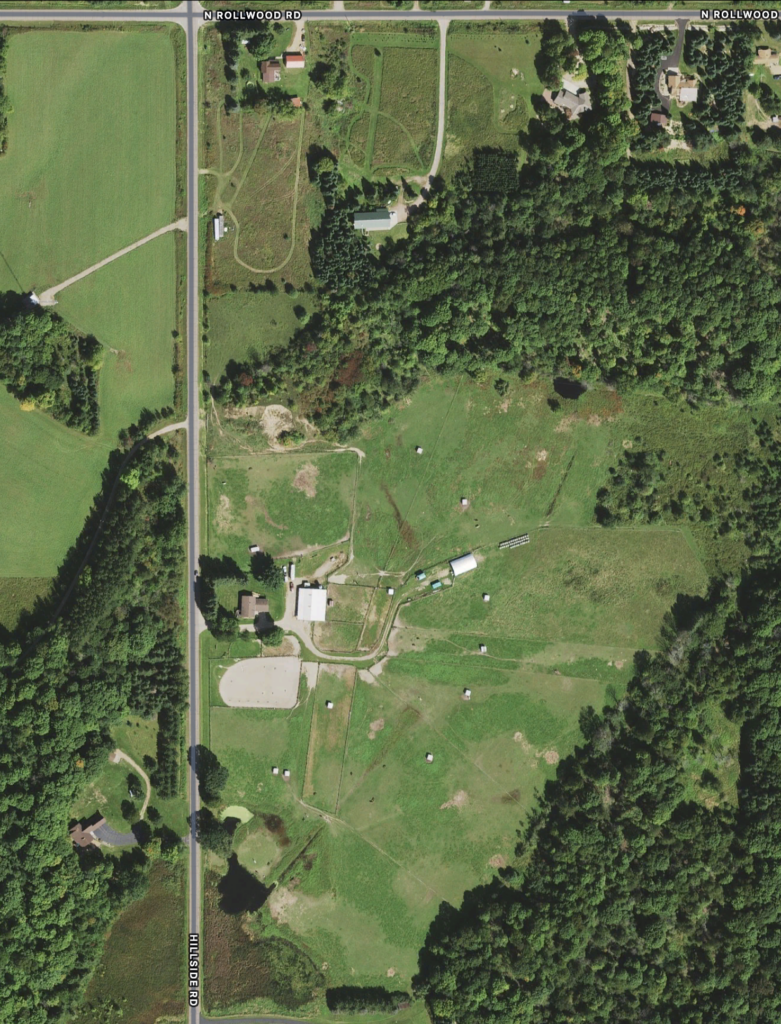
I remember the time we painted Mrs. Kelly’s barn. A fun, messy experience.
Thank you so much for bringing back that memory! We did make such a mess of it and us. Do you remember that their dog ate almost all the hot dogs? Both Mr.and Mrs. Kelly must have been saints. We were so lucky to have had her as a teacher!
Dear M & R–You’re gonna make me cry , , ,’xxxevie
You still have lots of beautiful barns left in Dane County!