Clueless

I recently saw this large sign outside a Madison business:

NOW HIRING.
MUST HAVE A CLUE.

Those succinct words say volumes about one part of our worker shortage in America.

I’m aware that the lack of workers, like so many problems, is complex. However, I also believe a great epidemic of cluelessness is sweeping America. Talk to anyone who does hiring in retail establishments and you will hear tales of woe about many of their new hires.

The old fashioned notion of a work ethic appears to be a foreign concept to many current job applicants. Perhaps a refresher course is needed. I would propose the following list.

  1. You must show up for work.
  2. Your job’s starting time is not a suggestion.
  3. “My cousin’s in town” is not an excuse for skipping work.
  4. Your vacation does not start two weeks after you are hired.
  5. You were hired to do a job. You and your phone were not hired.
  6. Your boss isn’t a descendant of Cruella de Vil.
  7. Your fellow employees aren’t all idiots.
  8. Some customers will be idiots, but they must be tolerated.
  9. Pajama bottoms and flip-flops are not casual business attire.
  10. Do not lean in if you are not financially independent.

Because of the severe worker shortage, those who do show up every day and put in an honest day’s labor have to pick up the slack. They are overworked, overwhelmed and tired out.

Kudos to everyone who shows up. Our country can’t run without you.

3

Stretchy

This intriguing picture recently popped up on my computer screen.

Leave it to the French to dream up a cheese stretching contest. Being a devoted cheese fan, I immediately had to learn more about the contest and cheese stretchiness.

For starters, I discovered the contest was held in Laguiole, France which is home to a cheese named Tomme d’Auvergne. And here’s the peculiar part; the cheese being stretched isn’t all cheese. It’s Aligot, a favorite rural dish of mashed potatoes, cheese, cream and garlic. The contest was held in July, and the cheesy Aligot reached an amazing 16 feet.

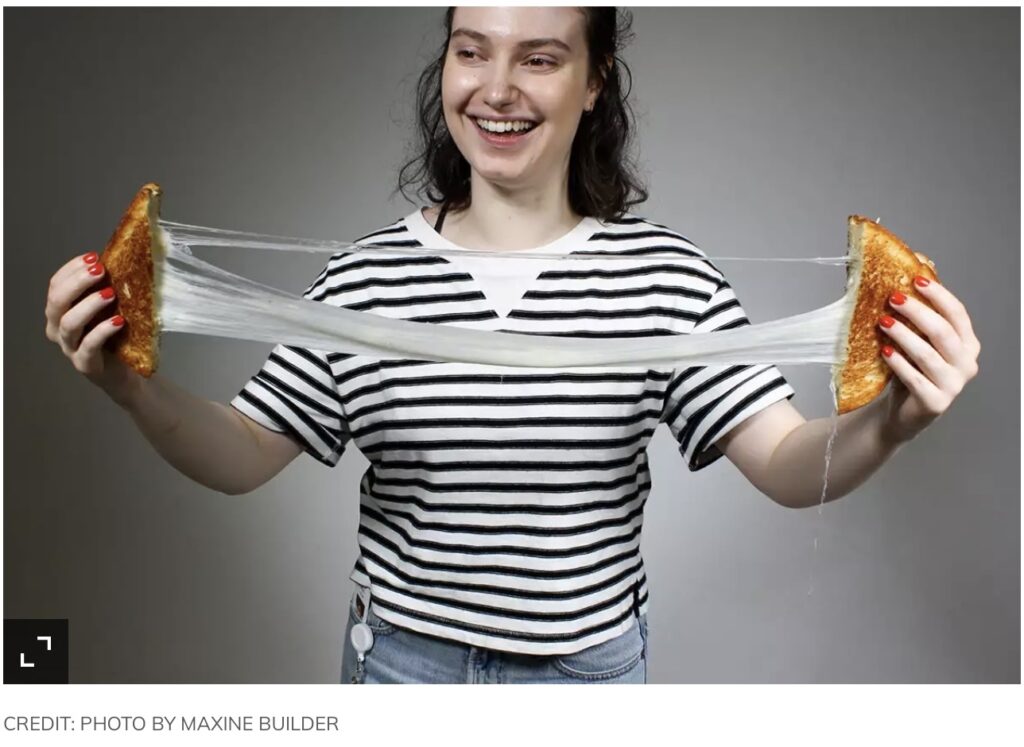
The French aren’t the only ones playing with their cheese. Here is an American checking out the stretchiness of her grilled cheese sandwich. She is not alone in her quest for the longest cheese pull. I easily found numerous posts with advice and information on cheese stretch and melt.

Cheesemakers consider good stretch to be an indication of quality cheese. The Wisconsin Center for Dairy Research gives this explanation of the process:

“Stretch requires an intact, interconnected casein (protein) network and is lost as the interactions between the casein molecules decrease. Stretch is the result of casein-casein interactions that are broken easily but readily reform at different locations in the casein network. Think of holding a piece of warm Mozzarella, take one end in each hand and gently pull it apart. The casein molecules are grabbing and releasing each other while sliding past as you pull the cheese.”

Not wanting to be a total Wisconsin chauvinist, I must add this information from the Dairy Farmers of Washington State:

“To obtain the best stretch and melt, the cheese should be aged over one year and have the right amount of protein (casein), fat, moisture and acidity.”

So which cheeses are the champion stretchers? The Washington Dairy Farmers rank these as the top five.

  • Mozzarella
  • Cheddar
  • Fontina
  • Gouda
  • Gruyere

              Now we all have an excuse to play with our grilled cheese sandwiches…we’re doing scientific research on their stretching qualities.

              4

              Nonsense

              Nonsense. We all encounter some of it every day. And the most nonsensical thing of all is that some apparent nonsense turns out to be logical after all.

              Here are some random thoughts on nonsense, and the perfect place to start is with the month of November.

              • November, the eleventh month, comes from the Roman word for “ninth”. It was the ninth month on the Roman calendar. But we use the Gregorian calendar resulting in our eleventh month being named nine.
              • Cold-blooded animals don’t always have cold blood, in fact, their blood and bodies are often much warmer than ours, the warm-blooded creatures. Cold-blooded animals have body temperatures that are the same as the air and surfaces around them. The term cold-blooded has confused countless children when I do science programs, and I do give them the correct term which is “ectothermic”. I agree with the scientists who want “cold-blooded” to be tossed in the garbage bin of words.
              • Upper Egypt is at the bottom or southern part of Egypt, and Lower Egypt is at the top of Egypt. These names appear to make no sense at all, however, a logical explanation exists. The correct term for the place where a river empties into a larger body of water is the lower part of the river. Since the Nile River flows north, the lower part is at the top of the map and the upper part is at the bottom. Again, it’s a true challenge to explain this to a group of children.
              • To raze a house, you tear it down. But you can also raise the roof, raise children, raise a garden or raise your spirits, none of which have anything to do with tearing something down.
              • Ever since my childhood, I have never understood how “robin red breast” got that name. The breast is clearly orange. Look at a cardinal or red-headed woodpecker if you want to see red.
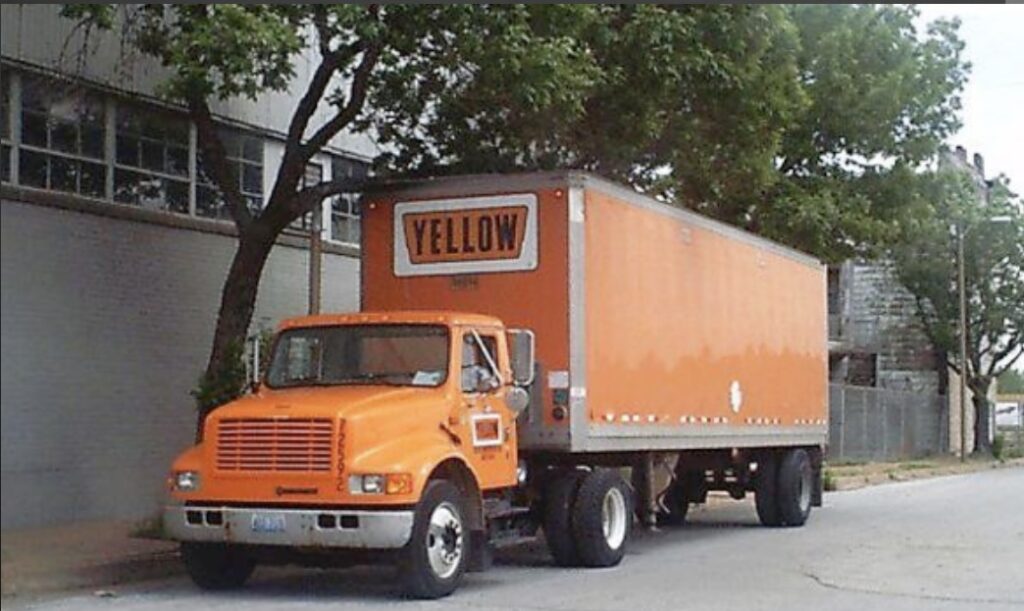
              • I frequently find myself driving down a highway behind a truck from the Yellow Trucking Company. The word “Yellow” is painted in bright orange paint as is the entire truck. I finally looked up this nonsense and found out why Yellow is orange. In 1924, A. J. Harrell founded a bus and taxi company called Yellow Cab Transit. In 1929, he branched into trucking and became the Yellow Transit Company. Concerned with road safety for his fleet of trucks, he commissioned the chemists at DuPont to determine the color that would be most visible from the greatest distance on the nation’s highways. They came up with the color “Swamp Holly Orange”. It is still used on all their trucks.
              • And, finally, as you drive down the highway, buckle up your seat belt. But don’t drive on a bridge that is about to buckle.
              3

              Surprise!

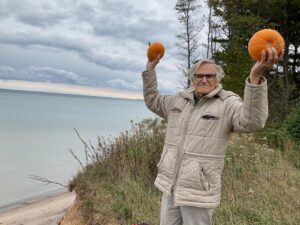
              This Halloween marks a first for my husband and me. After 57 years of buying pumpkins for our jack-o- lanterns, we have finally harvested a crop from our own land.

              Note that I did not say we grew them. All our attempts to grow vegetables and fruits have ended dismally. My pumpkin growing attempt two years ago produced nothing but a heap of dead vines despite my daily watering and tending.

              Our harvest of nine small but perfectly shaped pumpkins was a gift from the goddess of pumpkins. Here is how the miracle happened.

              Every year, after our jack-o-lanterns have crumpled and our porch pumpkins have gotten squishy, we have our annual pumpkin toss. Standing at the edge of our cliff, we pitch them over…a crude, fun form of composting.

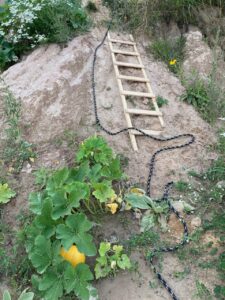
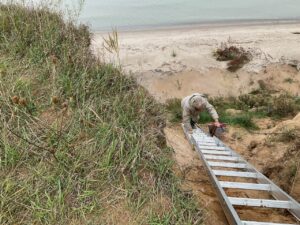
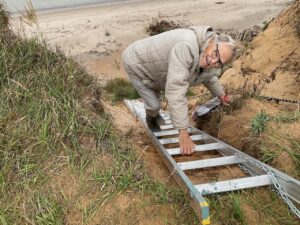
              This past spring we decided to make a temporary set of ropes and ladders to regain access to our beach. Our stairs were destroyed by high lake levels, but a big beach has now returned. The planning and construction of this scheme of secured ladders and rope took us to midsummer.

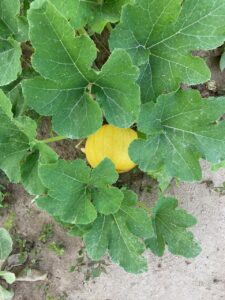
              On our first venture down the cliff, a wonderful surprise awaited us. Big, healthy pumpkin vines and leaves with lovely yellow flowers were growing out of the lower part of the cliff. Two long vines were even thriving on the sandy beach itself.

              We could not water or care for the vines because of their precarious locations. So nature had to continue doing all the work. In a few weeks, small green balls appeared where the flowers had withered. During the remaining days of summer, we watched them grow and turn bright orange.

              Last week was the big harvest. Armed with shopping bags and a small saw, we carefully navigated down the cliff to claim our treasure. I can report the pumpkins and we made it back to the top with no bumps and bruises.

              We are fairly certain this harvest is a once in a lifetime gift. One more thing to be thankful for this Thanksgiving.

              6

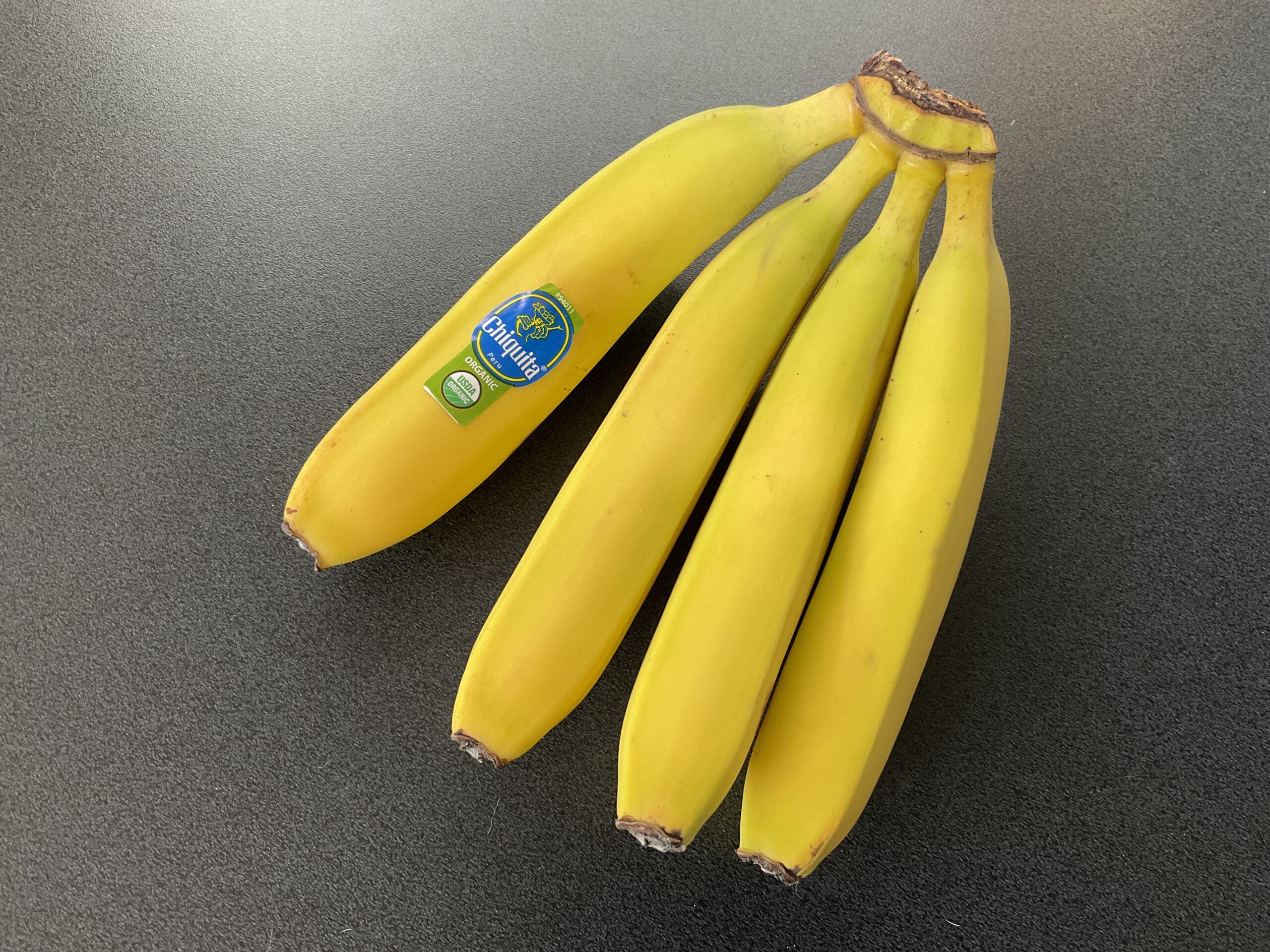
              Bananas

              Halloween is approaching, so it is a good time to talk about bananas and grapes. “What’s the connection?” you might wonder.

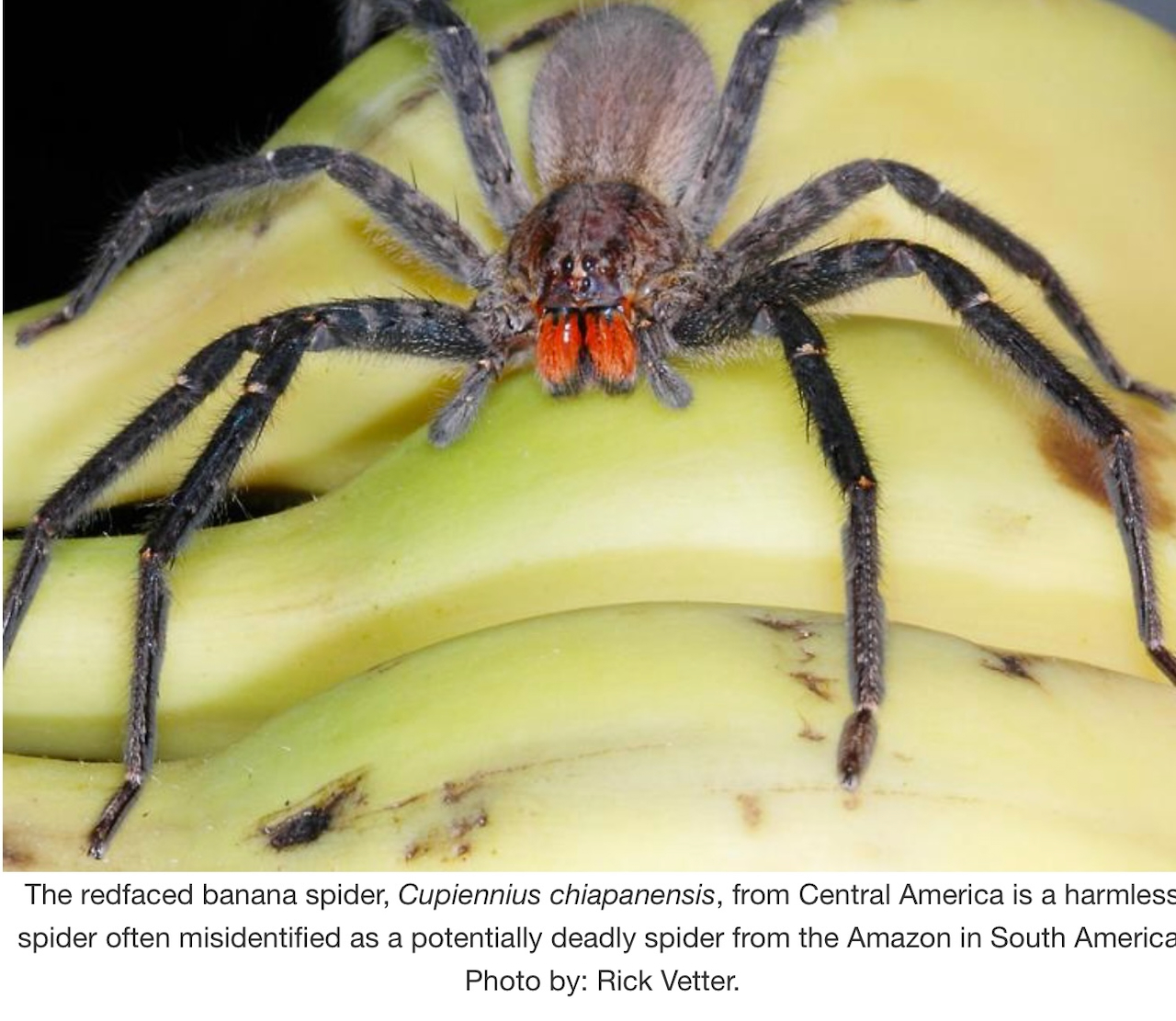
              The answer is one of my favorite creatures, spiders. These incredible arachnids love to hang out in bunches of grapes and tight clusters of banana leaves which make cozy homes complete with tasty, little insects for lunch.

              There’s no need to panic here. Your chances of finding one are slim (I know only one person who has), and, if you do, it’s a manageable situation. Here’s the non-scary and scientific scoop about spiders in supermarket produce displays.

              First, finding a spider in your fruit can be a good indicator that the fruit is organic. Most bananas and grapes are heavily sprayed with chemical pesticides. Organic farmers often welcome a few resident spiders who feed on the pesky insects that want to munch on their crops.

              Next, all fruit coming up from Central and South America is washed, inspected and chilled for shipment. If a spider manages to survive and hitch a ride to a grocery store, the warmth of the store wakes it up. Most of these spiders are huntsmen spiders or redfaced banana spiders. Both are large and both are harmless to humans.

              It must be noted that black widow spiders, which are about the size of a grape, love to hang out in grapes. Again, this is not a horrific scenario. Linda Raynor, a spider expert at Cornell University, explains:

              “Black widows are really fast in webs, but they’re pretty inadequate on the ground. They really can’t run on the ground at all. Their abdomens are just too big, so they kind of waddle around.” She goes on to say, “Black widows are really shy. They only bite when they perceive a threat, such as a hand ready to grab them.”

              I might add that no human has died in the United States in the last ten years from a black widow bite. (Source: Connecticut Poison Control Center, University of Connecticut.) Their bite is dangerous but rarely lethal with treatment.

              Since spiders do not attack people unless threatened, Erin M. Mills, the spider guru at the Houston Museum of Natural Science, gives the following suggestion:

              “If the spider drops to the ground, try throwing a cup or glass over it and slip a piece of (stiff) paper underneath to trap it inside.” Then put it all in a sealed plastic bag “in the freezer which will kill it, or the refrigerator which will slow it down until you can get it to someone for proper identification.”

              And a final word. If you truly want to be scared to death, call a pest control company. They are the fear-mongers supreme, and you might end up signing a year-long contract to live in pesticide hell.

              5