More of everything is considered a good thing in our American culture. If one house is good, two or three must be better. A Big Gulp soda is thought to be superior to an eight-ounce drink.
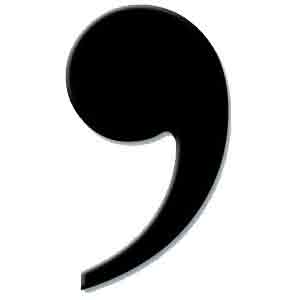
Being a minimalist, (except for cats and books), I don’t see the logic in “more is better”. I’m strictly a “less is more” person. My thinking in this vein extends to commas. I get livid about the Oxford comma.
My venom toward a tiny punctuation mark may seem absurd. But this particular use of a comma is redundant in almost every instance. It totally disrupts the flow of any piece of writing and should be banished as a pretentious waste of time, space and ink. I refuse to use it and subject any reader to such a travesty.
The Oxford comma is the little rascal that is inserted before the word “and” in a series. For example, “Mary likes cats, crows, and caterpillars.” In my opinion, if writers have a desperate need for that comma, they should leave out the word “and”.
I recognize that in rare instances the Oxford comma is needed. The following sentence is absurd without it. “I owe my success to my parents, Albert Einstein and God.” I trust we are all intelligent enough to recognize these instances and act accordingly. And if we are not intelligent enough, we will merely inject a bit of humor into the world.
Despite being named after a British university, the Oxford comma is not standard usage in U.K. writing. Most British writers only use it to avoid ambiguity. The Oxford comma is an American affectation.
On this side of the ocean, the comma does have its detractors. The New York Times Stylebook, the Associated Press Stylebook and the Canadian Press Style Guide all advise against its use. Many acclaimed authors do not litter their pages with it.
I intend to remain firmly on the side of those who do not want the beauty of the written page to collapse under the weight of superfluous commas. Those nuns in grade school taught me well, and I listened.