Everyone in America has heard the Thanksgiving story from their kindergarten days on up. The happy Pilgrims and Indians got together for a feast. Turkey was served and pumpkin pies followed.
Historians have the daunting task of sorting out the true facts of events from the folklore, myths and wishful thinking that invades our recollections of the past. In the case of Thanksgiving, the process can be described as “trying to separate the mashed potatoes from the gravy.” Fortunately, primary sources such as letters and documents do exist from those times. Here are some of what they reveal.
One of the best accounts of that first Thanksgiving comes from a letter written by an English settler, Edward Winslow, on December 11, 1621. He does not use the word “Thanksgiving”, but describes a weeklong harvest celebration with King Massasoit and 90 Wampanoag men “so we might after a more special manner rejoice together.”
Edward Winslow’s letter goes into detail about the menu. The colonists had planted (with advice from the Wampanoag) 20 acres of Indian corn and 6 acres of barley and peas in the spring. In fall he reported, “our corn did prove well, our barley indifferent good but our peas not worth the gathering.”
When the harvest was in, the Governor of the colony “sent four men ‘fowling’ (which) served the company almost a week.” Historians note that no mention can be found of what kind of wildfowl were shot, but wild turkeys were present in Massachusetts at the time. So turkey may or may not have been present on the table.
What is known with certainty is that venison was in abundance at the feast. Five deer were presented to the Governor as a gift from the Wampanoag. Records also note that the Indians often supplied the colonists with shellfish as well.
Pie was not the finale of the meal. The colonists had no wheat or butter to make a crust and no ovens for baking. However, both the Wampanoag and the colonists grew pumpkins and other indigenous squash which could have been served other ways.
The guest list at the party can be constructed from historical documents. The 90 Wampanoag men who attended were the survivors from a tidal wave of infectious diseases brought to the New World by the European explorers and fishermen who preceded the colonists. These diseases, such as smallpox, reduced the population of Native Americans in the Massachusetts Bay Area by about 90%. The colonists found empty villages and fields waiting for them to occupy.
The original colonists in Plymouth did not have an easy time that first year, either. Approximately half of them died, and only four women were alive in the fall of 1621. The preparation and celebration of our most famous harvest festival was almost entirely an all-male affair.
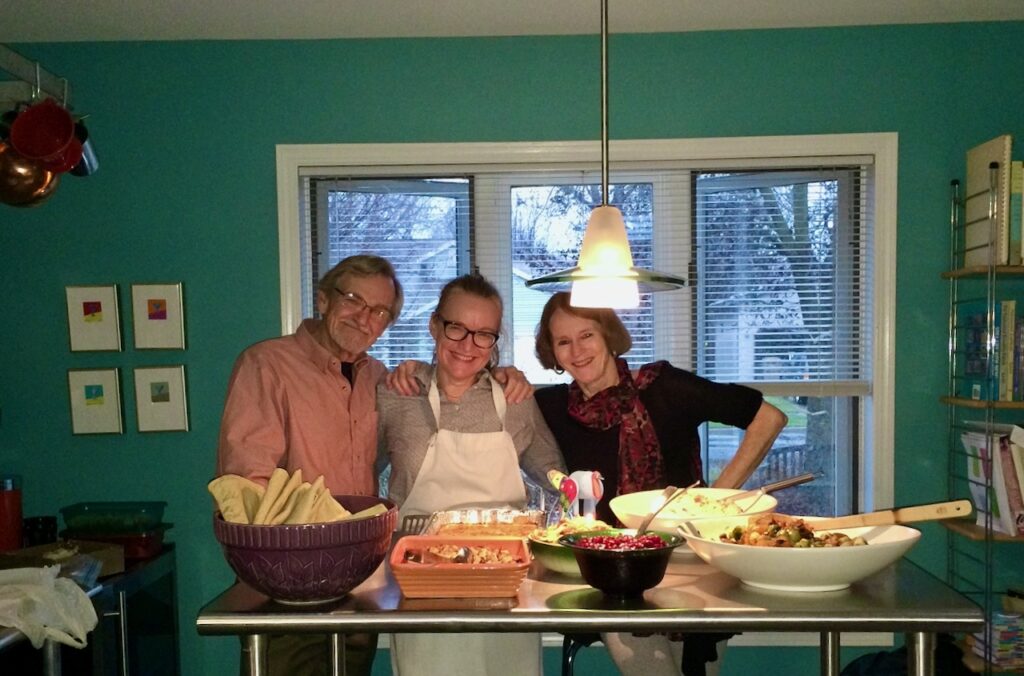
And a Happy Thanksgiving to the Tooley family. Every day we need to be aware enough to give thanks.
Mary, thanks for the historical information. I will be quoting you tomorrow at the table.